Amazon Account Health Below 95%? Emergency Recovery Guide
The Account Was Stable Until The Health Score Suddenly Dropped
One of the most stressful things for Amazon sellers is logging into Seller Central and seeing that account health has fallen below a safe level. Orders may still be coming in, listings may still be active, and the account may still technically be live, but the risk of restrictions, suspensions, or lost privileges suddenly becomes much higher.
This becomes especially frustrating because Amazon account health can drop for many different reasons at the same time. One seller may have late shipments, another may have high return rates, another may have authenticity complaints, and another may have policy violations.
That leaves you trying to figure out which problems matter most and which ones need to be fixed first.
The important thing to understand is that Amazon usually lowers account health when the account starts creating a poor customer experience, policy risk, or fulfillment issue.
Why Amazon Account Health Drops
Most account health problems happen because performance metrics start slipping.
For example, late shipments, high order defect rate, invalid tracking numbers, poor customer feedback, high cancellation rates, authenticity complaints, restricted product violations, and delayed responses to buyer messages can all reduce account health.
The same thing can happen if there are too many A-to-Z claims, chargebacks, returns, listing policy issues, or repeated product complaints.
Amazon wants buyers to have a reliable experience.
If the account starts creating too many problems, the health score often falls very quickly.
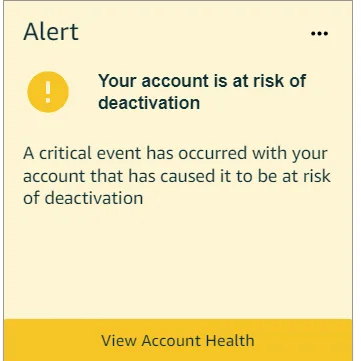
The Biggest Mistake: Trying To Fix Everything At Once
One of the biggest mistakes sellers make is trying to solve every problem immediately without prioritizing.
That often creates even more confusion.
For example, spending time on small listing issues while ignoring late shipments or authenticity complaints can make the account health situation worse.
The stronger approach is fixing the highest-risk issues first.
Late shipment rate, order defect rate, customer complaints, policy violations, and restricted products usually matter much more than smaller optimization issues.
The faster you address the biggest problems, the better the chance of protecting the account.
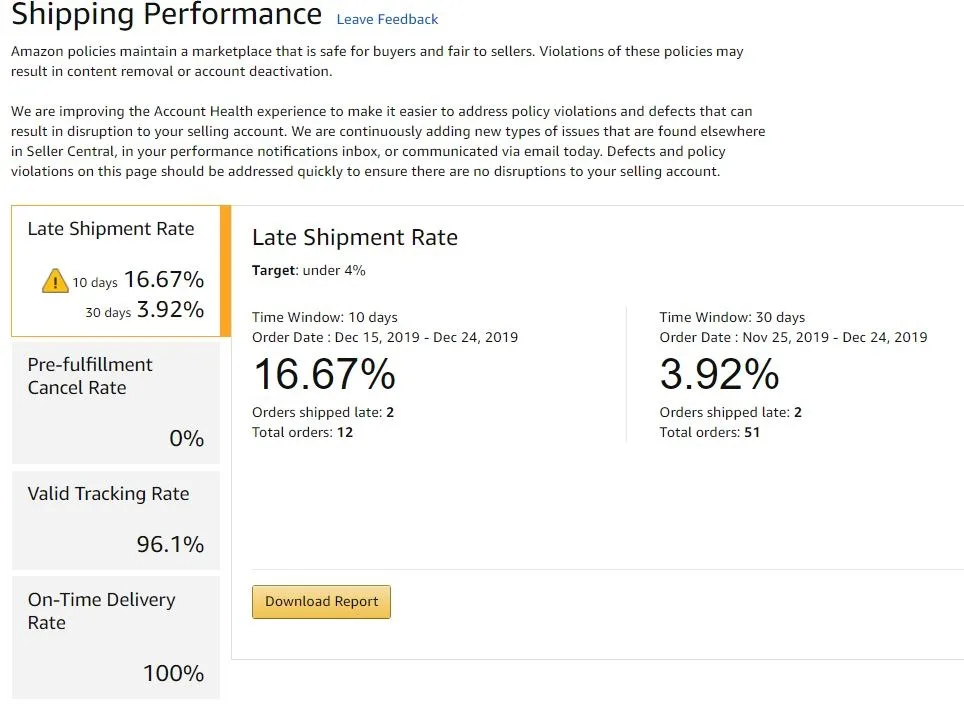
Why Late Shipments And Tracking Problems Cause So Much Damage
A lot of account health problems come from shipping issues.
Late shipments, missing tracking numbers, invalid tracking, delayed delivery scans, and poor fulfillment performance can all reduce account health very quickly.
This becomes especially common when sellers rely on manual fulfillment systems, outdated shipping processes, or suppliers who cannot deliver consistently.
Even if the products themselves are good, weak fulfillment can still create major account risk.
Why Authenticity Complaints Are So Dangerous
Authenticity complaints are one of the biggest risks to Amazon account health.
If buyers claim the products are fake, used, damaged, or not as described, Amazon may start questioning the entire sourcing process.
Even one or two authenticity complaints can create major problems if the seller does not have strong invoices and supplier records.
That is why documentation matters so much.
Invoices, supplier agreements, product photos, shipping records, and purchase history can all help defend the account if authenticity complaints appear.
Why Better Systems Reduce Account Risk
Account health problems become much harder to manage when supplier records, shipment history, customer complaints, policy warnings, and account notes are spread across different systems. You may have one place for shipping data, another for invoices, another for feedback issues, and another for account alerts. That makes it difficult to see which problems are hurting the account most.
This is one of the reasons Appilot becomes useful when Amazon operations start scaling. Instead of keeping browser workflows, Android automations, supplier records, shipment notes, customer complaints, account alerts, and task history spread across different systems, everything can stay visible from one dashboard. That makes it easier to monitor account health, review risk factors, organize recovery tasks, and reduce the chance of future account issues across multiple Amazon accounts.
Conclusion: Amazon Account Health Usually Drops When Customer Experience Problems Start Growing
If your Amazon account health has fallen below 95%, the issue is usually not that Amazon randomly decided to punish the account. The problem is often that shipping performance, customer complaints, authenticity issues, or policy violations started building up over time.
Once you focus on the biggest risks first, improve fulfillment, strengthen documentation, and organize account management more carefully, it becomes much easier to recover account health and reduce the chance of future restrictions.