Amazon Late Shipment Rate Too High? Here's the Solution
Orders Keep Coming In But Shipping Performance Is Falling Behind
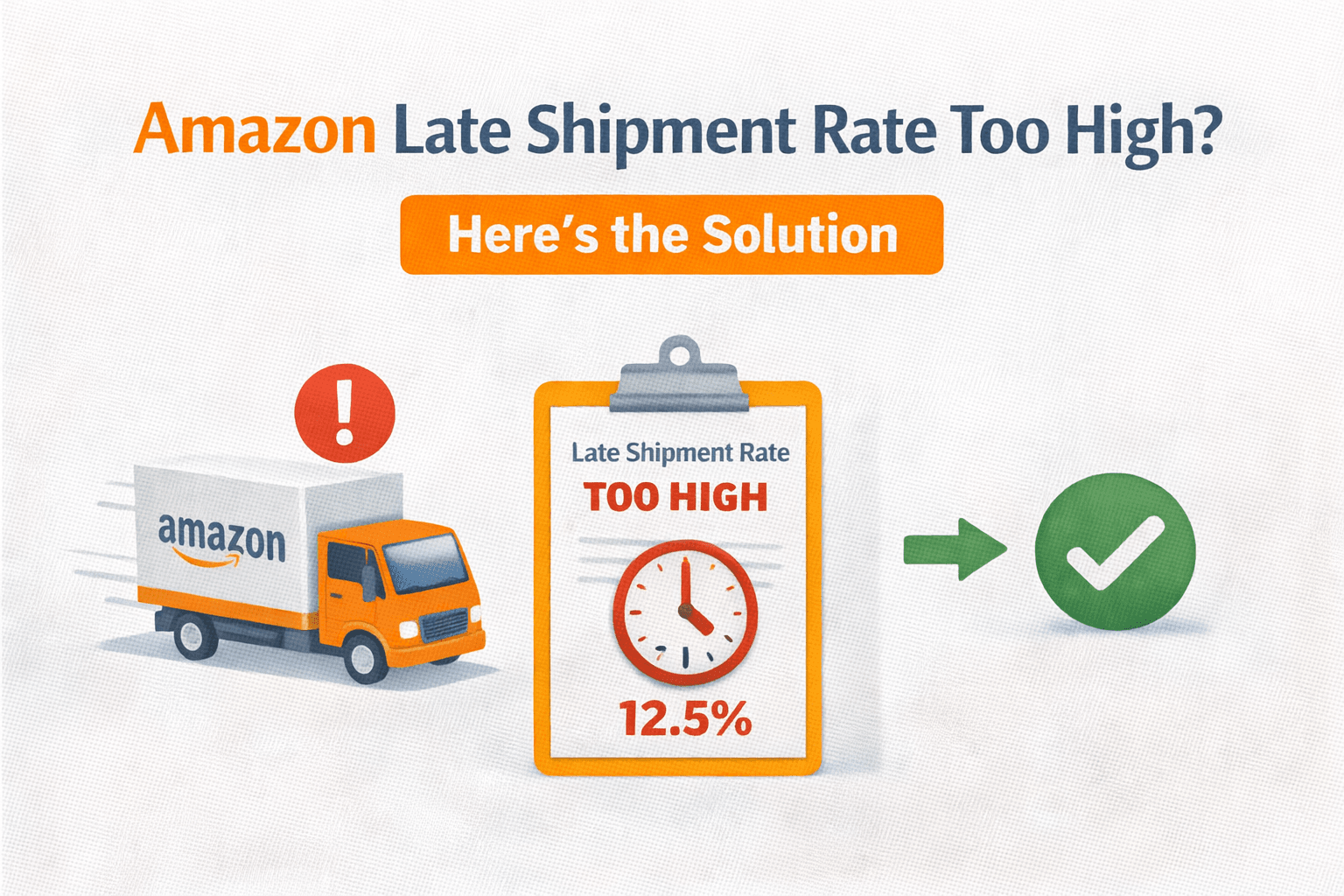
One of the most stressful things for Amazon sellers is seeing the Late Shipment Rate warning inside Seller Central. Orders may still be coming in and products may still be selling, but Amazon starts treating the account as higher risk because too many shipments are going out late.
That becomes a serious problem because late shipment rate is one of the most important performance metrics Amazon uses.
If the number stays too high for too long, it can lead to lower account health, reduced Buy Box eligibility, listing restrictions, and even suspension risk.
The important thing to understand is that Amazon usually does not see late shipments as one isolated issue. It sees them as a signal that the account may be struggling with fulfillment, inventory management, supplier reliability, or operational organization.
Why Amazon Late Shipment Rate Gets Too High
Most late shipment problems happen because orders are not being confirmed and shipped on time.
For example, weak inventory tracking, manual order processing, delayed supplier responses, warehouse mistakes, poor staffing, or unreliable carriers can all increase late shipment rate.
The same thing can happen if sellers accept too many orders without having enough stock available or if they underestimate how long fulfillment actually takes.
Amazon wants orders shipped on time with valid tracking.
If too many orders miss the expected handling time, the account risk rises quickly.
The Biggest Mistake: Blaming The Carrier For Everything
One of the biggest mistakes sellers make is blaming the shipping carrier for every delay.
Carriers do cause some delays, but in many cases the real problem starts much earlier.
For example, if the order is packed late, if inventory is missing, if labels are printed too slowly, or if the supplier sends products late, the shipment may already be behind schedule before the carrier even picks it up.
The stronger approach is reviewing the full fulfillment process from the moment the order arrives until the package is handed to the carrier.
That makes it easier to see where the delay is actually happening.
Why Inventory Problems Cause So Many Delays
A lot of late shipment issues happen because sellers do not know exactly what inventory is available.
For example, if the account oversells products, mixes up SKUs, runs out of stock unexpectedly, or depends on suppliers with slow delivery times, shipping delays become much more likely.
This becomes especially common when inventory tracking is manual or spread across multiple systems.
Even a small inventory mistake can delay dozens of orders.
Why Handling Time Matters More Than People Think
A lot of sellers promise shipping times that are too aggressive.
For example, setting one-day handling time when the operation realistically needs two or three days creates unnecessary pressure.
That often leads to late shipment warnings because the business is promising something it cannot consistently deliver.
The stronger approach is setting handling times that match the real workflow.
It is better to promise slightly slower shipping and consistently meet expectations than to promise faster shipping and miss deadlines repeatedly.
Why Better Systems Reduce Late Shipment Problems
Late shipment problems become much harder to manage when inventory records, supplier notes, shipping labels, carrier tracking, and order status are spread across different systems. You may have one place for inventory, another for orders, another for shipping labels, and another for supplier communication. That makes it difficult to see where delays are building up.
This is one of the reasons Appilot becomes useful when Amazon operations start scaling. Instead of keeping browser workflows, Android automations, inventory notes, shipping records, supplier updates, carrier tracking, and task history spread across different systems, everything can stay visible from one dashboard. That makes it easier to monitor fulfillment performance, review shipping delays, organize order processing, and reduce late shipment problems across multiple Amazon accounts.
Conclusion: Amazon Late Shipment Rate Usually Rises When Fulfillment Systems Become Disorganized
If your Amazon Late Shipment Rate is too high, the issue is usually not that carriers randomly started delaying everything. The problem is often that inventory tracking, supplier reliability, handling times, or internal fulfillment processes started breaking down.
Once you improve inventory control, organize fulfillment better, set more realistic handling times, and track delays more carefully, it becomes much easier to reduce late shipments and protect your Amazon account.