Appilot Integration with Dolphin Anty: Setup Guide
Managing dozens of browser profiles manually becomes difficult very quickly. If you are running multiple social media accounts, affiliate campaigns, e-commerce stores, or advertising accounts, you already know how frustrating it can be to constantly switch profiles, manage separate proxies, keep track of logins, and manually repeat the same tasks every day.
Dolphin Anty already does a great job of handling browser fingerprinting, profile isolation, proxy assignment, and account separation. The challenge comes after that. Once you have dozens of profiles running, you still need a way to automate repetitive work, schedule actions, launch browser sessions, and manage everything from one place.
That is where Appilot becomes useful. Appilot adds an automation layer on top of Dolphin Anty so you can manage browser tasks, schedule workflows, launch profiles automatically, and reduce the amount of manual work required every day. Instead of opening profiles one by one and performing the same actions repeatedly, you can build structured workflows that run automatically.
In this guide, you will learn exactly how to connect Dolphin Anty with Appilot, import your browser profiles, create your first workflow, and configure the setup in a way that is more reliable and easier to scale.
Why Integrate Appilot with Dolphin Anty?
Dolphin Anty is built for people who manage multiple browser profiles across different accounts, websites, and campaigns. Each profile can have its own fingerprint, cookies, timezone, proxy, user agent, and browser environment. This makes it much safer to manage multiple accounts without mixing sessions together.
The problem is that Dolphin Anty is mainly focused on profile management rather than automation. It helps you separate accounts, but it does not fully solve the problem of manually opening profiles, scheduling tasks, repeating workflows, or launching multiple actions across different browser sessions.
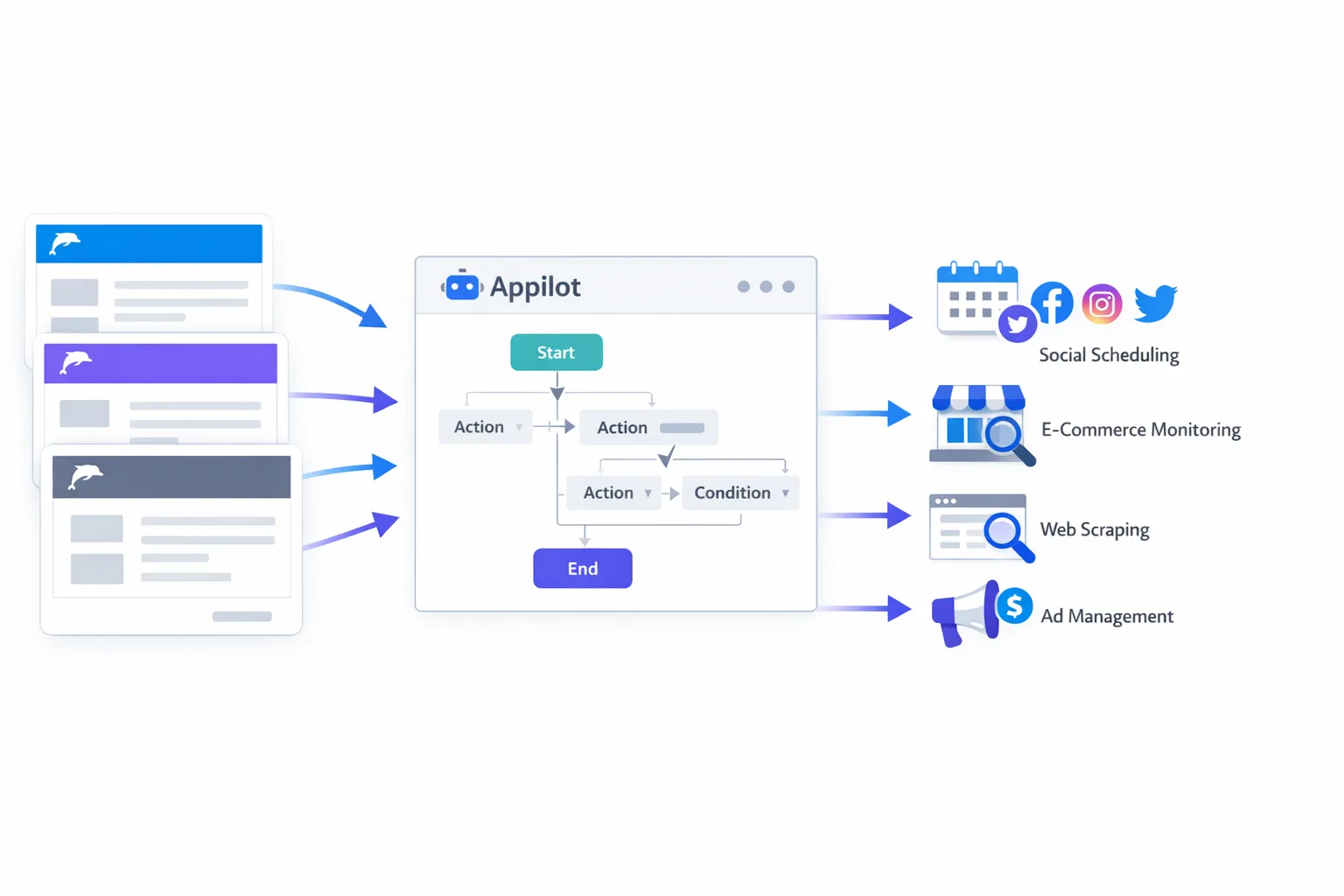
When you connect Dolphin Anty with Appilot, you can start treating your browser profiles like automated workflows instead of individual browser windows. You can schedule profile launches, automate repetitive tasks, assign actions to different groups of profiles, and manage larger operations without needing to constantly monitor every session manually.
This is especially useful for people managing social media accounts, ad campaigns, affiliate offers, Shopify stores, Amazon seller accounts, crypto wallets, lead generation workflows, and web scraping operations.
Prerequisites and Requirements
Before starting the setup process, you should make sure that you already have an active Dolphin Anty account with API access enabled, an Appilot account, a few browser profiles created for testing, and working proxies assigned to those profiles. It is also a good idea to start with a small number of accounts before expanding to larger profile groups because it allows you to test your workflows safely before scaling.
Step-by-Step Integration Tutorial
Step 1: Get Your Dolphin Anty API Key
The first step is getting your API key from Dolphin Anty. Inside the Dolphin Anty dashboard, open the settings area or developer section and look for the API access panel. Dolphin Anty provides a unique key that allows external tools like Appilot to connect to your account.
Once you find the API key, copy it and keep it somewhere secure because it acts like a password for your Dolphin Anty environment. If someone else has access to this key, they may be able to control your profiles.
Step 2: Open Appilot Dashboard
After copying your API key, open Appilot and go to the integrations section. This is where Appilot allows you to connect external tools, browsers, and automation systems.
Inside the integrations list, select Dolphin Anty as your browser environment. This creates the connection point between your Dolphin Anty account and your Appilot dashboard.
Step 3: Enter Your Credentials
Paste your Dolphin Anty API key into the connection field inside Appilot. Depending on your account type, you may also be asked for additional information such as workspace IDs, account IDs, or other profile settings.
Once the information is entered, click the connect button and wait for Appilot to verify the connection.
Step 4: Authorize the Connection
If your API key is valid and your Dolphin Anty account supports API access, the connection should be approved within a few seconds. If the connection fails, double-check the API key, make sure there are no extra spaces copied by mistake, and verify that your Dolphin Anty plan includes API access.
Step 5: Import Your Profiles
After the connection is active, Appilot can import your Dolphin Anty profiles into the dashboard. You can import all profiles at once or start with a smaller group for testing.
Most users prefer to organize profiles into categories such as Facebook Ads, TikTok Accounts, Amazon Stores, Shopify Profiles, Affiliate Campaigns, or Client Accounts. This makes it easier to manage larger operations later.
Step 6: Test the Connection
Before building large workflows, you should run a simple test. Open a browser profile through Appilot, launch a website, wait for the page to load, and confirm that everything works correctly. This helps you identify problems early before you scale the automation.
Step 7: Configure Default Settings
Once everything is connected properly, configure your default settings inside Appilot. You can define launch delays, retry rules, task intervals, proxy preferences, browser wait times, and other behavior settings. These small adjustments can make your workflows much more stable and reduce the chance of triggering platform detection systems.
Setting Up Your First Automated Task
Your first workflow should be something simple. For example, you might want to open a group of browser profiles every morning, visit a specific website, scroll through the page, stay active for a few minutes, and then close the session.
Inside Appilot, create a new task and select the profiles you want to include. Then choose the actions you want the workflow to perform. A basic task might include launching a profile, opening a target URL, waiting for a random amount of time, performing a click or scroll action, and then closing the session.
Simple workflows like this are useful because they help warm up accounts, create more natural browser activity, and give you a safer way to test your automation before moving into more advanced tasks.
Common Use Cases
One of the biggest advantages of combining Dolphin Anty with Appilot is that it works across many different industries and use cases.
E-commerce sellers can use the setup to manage multiple Shopify stores, Amazon accounts, supplier dashboards, and competitor research sessions without needing to log in and out manually. Social media marketers can schedule workflows across Facebook, Instagram, TikTok, LinkedIn, and X accounts while keeping each profile isolated.
Affiliate marketers can manage separate ad accounts, landing page profiles, and regional browser sessions for different campaigns. Agencies can organize client accounts into separate browser environments and automate routine actions across multiple profiles.
Crypto users often rely on this type of setup for airdrop farming, wallet management, exchange logins, and decentralized finance workflows. Web scraping teams can use Dolphin Anty with Appilot to rotate browser profiles, launch scraping sessions with different fingerprints, and reduce the risk of being blocked.
Best Practices and Pro Tips
The most important rule is to start small. Do not connect one hundred profiles on the first day and immediately start aggressive automation. Begin with a few profiles, monitor how the platforms respond, and slowly expand your setup over time.
It is also important to use good proxies. Cheap or low-quality proxies can cause profile failures, login problems, and suspicious behavior. Residential and mobile proxies are usually a better choice because they look more natural and reduce the chance of detection.
You should also keep your browser fingerprints realistic. If one profile claims to be a mobile device in one country while using a desktop browser fingerprint from another country, that inconsistency can raise suspicion.
Adding random delays between actions is another important step. Human behavior is never perfectly timed, so your workflows should include natural pauses, variable wait times, and small differences between actions.
Troubleshooting Common Issues
One of the most common problems is an invalid API key. If Appilot cannot connect to Dolphin Anty, the first thing you should do is recheck the API key and make sure it was copied correctly.
Another common issue is profiles failing to launch. This is often caused by expired proxies, incorrect browser settings, outdated profile configurations, or missing permissions.
Some users also experience slow loading times when too many profiles are launched at the same time. If that happens, reduce the number of active profiles and increase the delay between launches.
Scheduling problems are also common. If tasks are running at the wrong time, check your timezone settings inside both Dolphin Anty and Appilot because mismatched timezone settings can create timing errors.
Frequently Asked Questions
Q1: Do I need coding skills to use Appilot with Dolphin Anty?
No. Most users can connect Dolphin Anty with Appilot and manage workflows directly from the dashboard without writing code.
Q2: Can I automate multiple Dolphin Anty profiles at the same time?
Yes. You can automate multiple profiles simultaneously depending on your system resources, available proxies, and Appilot plan.
Q3: Is Dolphin Anty enough on its own?
Dolphin Anty is very strong for browser fingerprinting, profile isolation, and multi-account management, but it does not fully handle workflow scheduling, bulk task execution, or centralized automation. That is where Appilot becomes useful.
Q4: Can I use Appilot with other antidetect browsers?
Yes. Appilot can also be used with other antidetect browser environments such as GoLogin and Multilogin.
Q5: Is this setup completely undetectable?
No automation setup is completely undetectable. Dolphin Anty and Appilot can reduce detection risk significantly, but platforms continue updating their detection systems all the time.
Conclusion
Dolphin Anty is excellent for browser fingerprinting, proxy management, profile switching, and account separation. Appilot adds the automation layer that makes those browser profiles easier to manage at scale.
If you are already using Dolphin Anty, connecting it with Appilot can save hours of repetitive work every week while giving you a cleaner and more organized workflow.
The best approach is to start with a small number of profiles, test simple workflows, and gradually expand once you know the setup is stable. That way, you can build a much more reliable automation system without unnecessary risk.