Appilot vs Appium: Mobile Automation Showdown
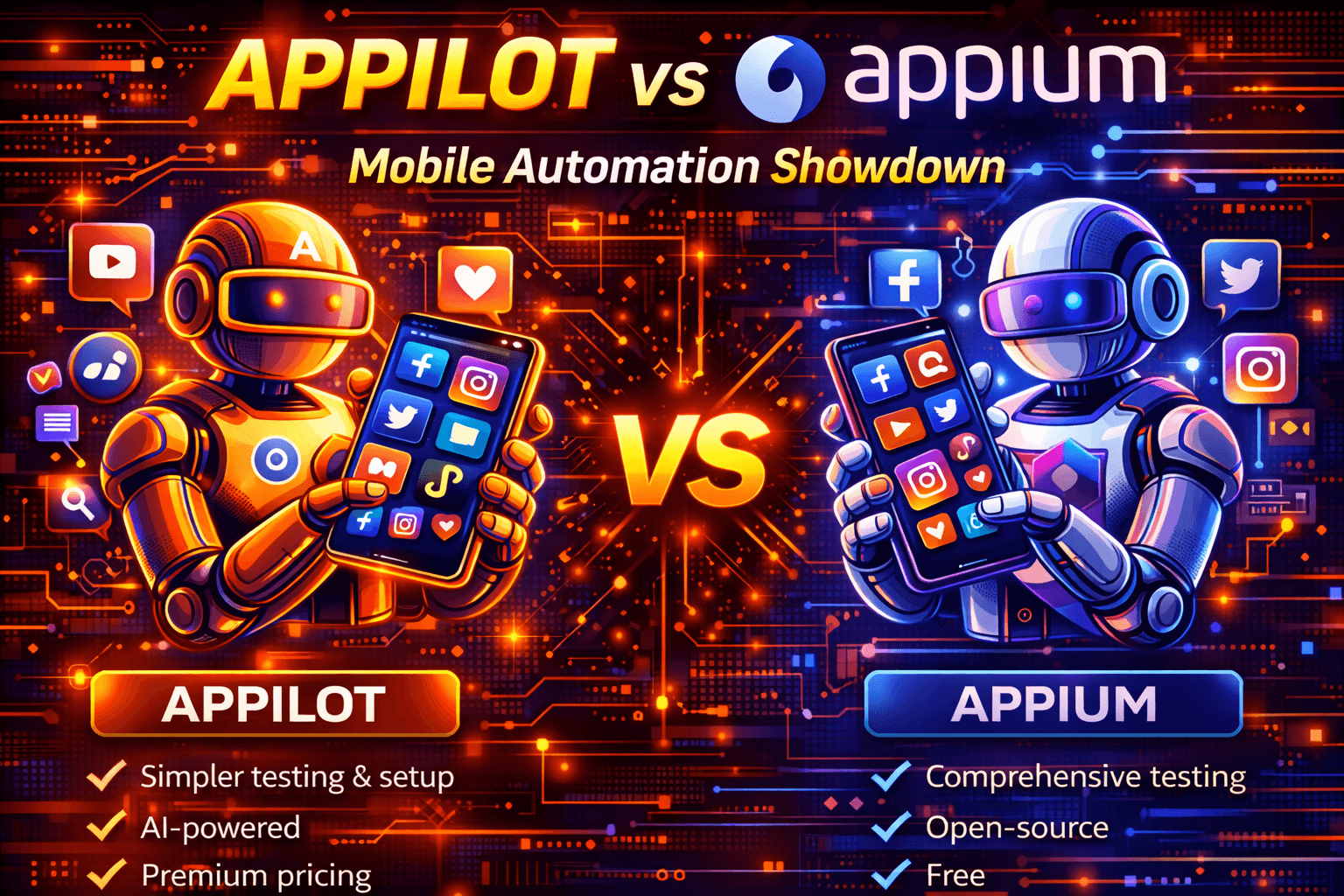
Mobile automation is essential for testing applications, managing device fleets, running repetitive workflows, and scaling mobile operations.
Two tools that are often discussed in this space are Appium and Appilot.
Both automate mobile devices, but they serve very different purposes.
Appium is a mobile test automation framework, while Appilot is an operational mobile automation platform focused on real Android devices.
This guide helps beginners, marketers, developers, and small businesses understand which tool fits their needs.
What Is Appium?
entity["software","Appium","Mobile automation framework"] is an open-source mobile automation framework used primarily for automated testing of Android apps, iOS apps, and mobile web applications.
It follows the WebDriver protocol in a similar way to Selenium.
Appium is developer-focused and test-oriented.
How Appium Works
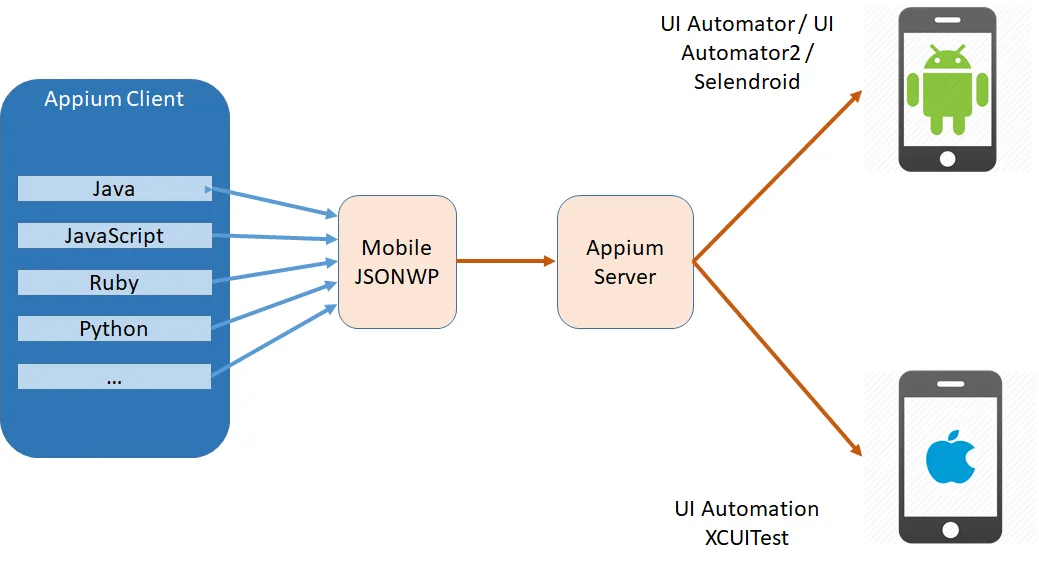
Appium architecture typically includes a test script written in languages such as Python, Java, or JavaScript, an Appium server, platform-specific drivers, and a device or emulator.
This makes it highly flexible, but also infrastructure-heavy.
Key Features
Appium supports Android and iOS, works with native, hybrid, and mobile web apps, provides multiple language bindings, supports the WebDriver protocol, and integrates with CI/CD systems.
Pros
Appium is considered an industry standard for mobile QA.
It has a large ecosystem, a strong community, high customisability, and language-agnostic support.
Cons
The main drawbacks are a steep learning curve, the need for coding knowledge, complex infrastructure setup, and the engineering effort required to scale physical devices.
Appium is built for validation and testing rather than managing operational device fleets.
What Is Appilot?
Appilot is a mobile automation platform designed to control and execute workflows across large numbers of real Android devices.
Unlike Appium, it is not focused on QA assertions.
Instead, it focuses on operational workflows, repetitive mobile actions, and device-fleet management.
How Appilot Operates
Appilot typically runs automation directly on real Android devices, uses operating-system-level interaction methods, executes workflows across device fleets, and focuses on execution rather than validation.
Strengths
One of Appilot’s biggest strengths is that it uses real devices rather than emulators.
It is suitable for repetitive operational tasks, requires less coding knowledge, and is designed for scale.
Limitations
Appilot is not a testing framework, is Android-focused, does not support iOS, is less suitable for detailed UI validation, and is a paid platform.
Appilot is built for execution at scale rather than QA testing.
Feature-by-Feature Comparison
Ease of Use
Appium requires programming knowledge and familiarity with automation frameworks.
Appilot is designed for operational execution with lower technical barriers.
Setup & Infrastructure
Appium requires drivers, test frameworks, CI integration, and device management.
Appilot assumes that you already have physical Android devices and need structured device orchestration.
Performance & Behaviour
Appium is ideal for controlled testing environments.
Appilot uses real devices, which creates more natural device-level behaviour.
Cost & Scalability
Appium is free software, but scaling infrastructure can still become expensive.
Appilot is a paid platform, but it simplifies scaling large Android fleets.
Scenario-Based Recommendations
Scenario 1: Mobile App Testing & QA Validation
The best choice is Appium.
It supports UI assertions, workflow validation, and cross-platform support.
Appilot does not provide structured test assertions.
Scenario 2: Cross-Platform Automation
The best choice is Appium.
It supports both Android and iOS.
Appilot is Android-only.
Scenario 3: Managing Many Android Devices
The best choice is Appilot.
It is specifically designed for device-fleet orchestration and makes scaling much easier.
Appium requires far more engineering effort for large fleets.
Scenario 4: Developer-Driven Custom Automation
The best choice is Appium.
It provides full programming control, flexible logic, and deep integration support.
Appilot is less suited for framework-level customisation.
Scenario 5: Operational Automation Without Building a Test Framework
The best choice is Appilot.
It focuses on execution and reduces the need to build complex testing infrastructure.
Appium requires more test design and infrastructure management.
Conceptual Difference: Testing vs Operations
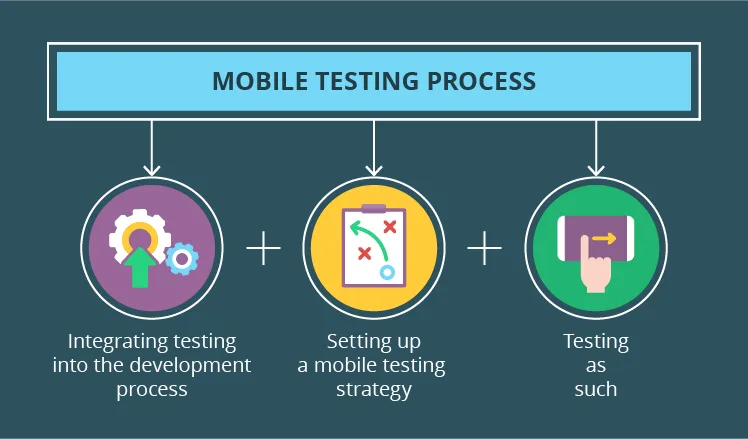
A simple way to think about the difference is that Appium validates applications while Appilot executes workflows.
Testing is focused on quality control.
Operations are focused on execution at scale.
Different objectives require different tools.
Final Verdict
Appium and Appilot are not traditional competitors.
They solve different problems.
Appium is the better choice if your goal is automated QA testing, UI validation, and cross-platform coverage.
Appilot is the better choice if your goal is managing Android device fleets, running repetitive mobile workflows, and scaling operational automation.
The right tool depends entirely on what you are trying to automate.
FAQs
Is Appium used for mobile automation testing?
Yes. It is one of the most widely used frameworks for Android and iOS testing.
Can Appilot replace Appium?
No. Appilot is not a QA testing framework.
Does Appium support mobile web?
Yes. It supports mobile browser automation.
Is Appium beginner-friendly?
It can be challenging because of setup and coding requirements.
Does Appilot support iOS?
No. It currently focuses on Android devices.