Automating Ghost Browser Workspaces Using Appilot Scheduler
Ghost Browser workspaces are useful for organizing browser sessions into separate groups based on tasks, accounts, platforms, or projects. Instead of managing every session individually, workspaces make it easier to separate workflows and keep related browser sessions together.
This is especially useful for teams handling multiple clients, campaigns, social media accounts, scraping tasks, e-commerce operations, or affiliate projects.
However, as the number of workspaces grows, manual management becomes more difficult.
Different workspaces may need to run at different times, follow different workflows, use different proxies, and support different account groups.
Without a centralized system, managing all of this manually becomes difficult very quickly.
This is where Appilot Scheduler becomes useful.
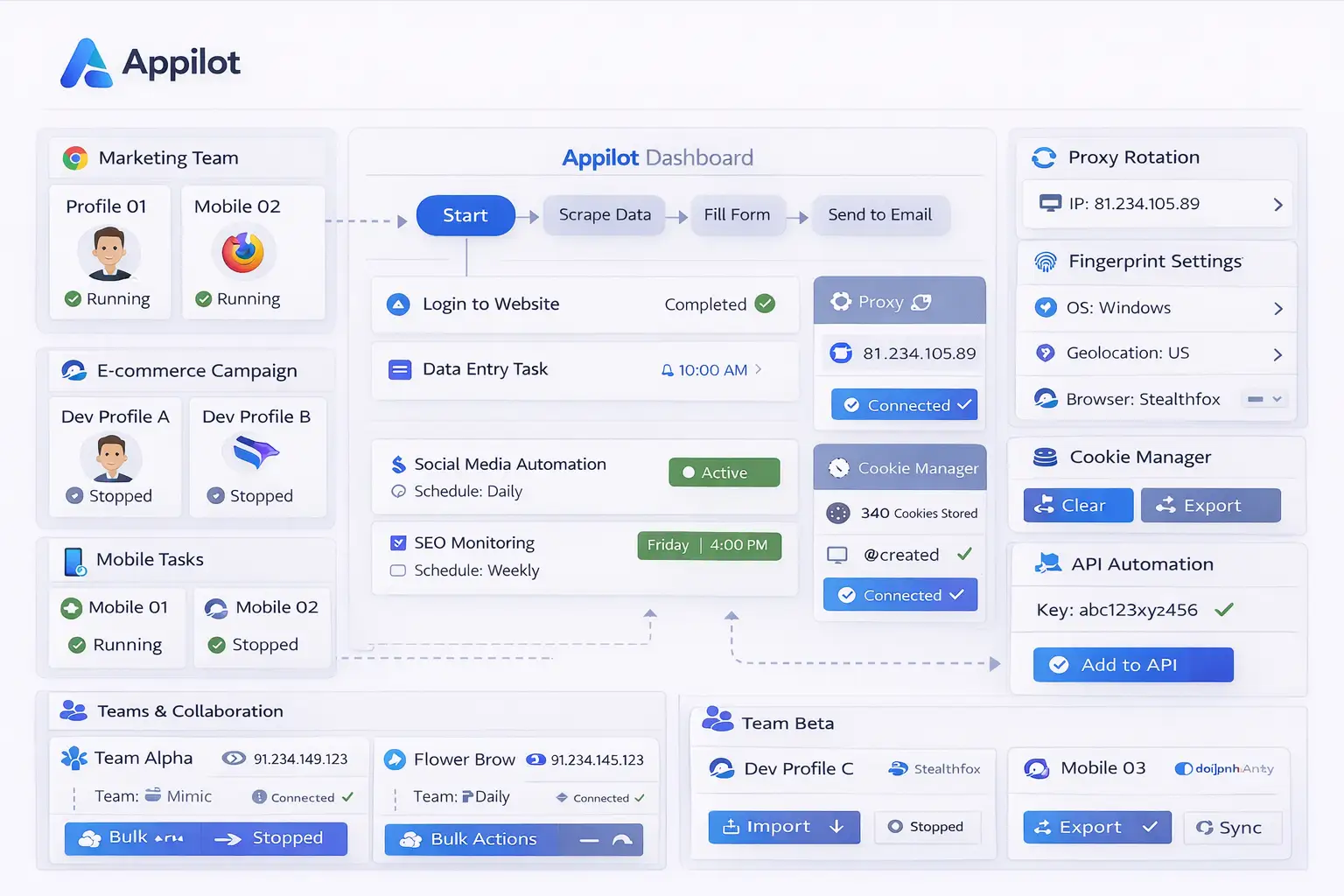
Appilot Scheduler helps organize Ghost Browser workspaces from one dashboard so you can assign schedules, group sessions, manage workflows, and monitor browser activity more efficiently.
Why Workspace Automation Matters
Ghost Browser workspaces help keep browser sessions organized, but manual workspace management still requires a lot of effort. You may spend hours opening different workspace groups, launching browser sessions, assigning tasks, checking schedules, and reviewing activity.
As the number of workspaces grows, the amount of manual work also grows.
For example, one workspace may manage social media accounts, another may handle scraping tasks, another may support e-commerce operations, and another may be used for testing workflows.
Each workspace may need different timing windows, different automation rules, and different browser settings.
Automation helps solve this problem by reducing the amount of manual work required to manage large numbers of workspaces.
How Appilot Scheduler Works with Ghost Browser Workspaces
Appilot Scheduler acts as the workflow and scheduling layer above Ghost Browser.
First, workspaces and browser sessions are created inside Ghost Browser. Each session can have its own cookies, proxy settings, account information, and browsing behavior.
Once workspaces are ready, Appilot Scheduler can help organize them into groups based on platform, campaign, workflow type, account category, region, or team responsibility.
Inside Appilot Scheduler, you can assign workflows, create schedules, define timing windows, and monitor browser activity.
For example, one workspace may handle Facebook accounts, another may manage TikTok workflows, another may support scraping operations, and another may manage e-commerce sessions.
Each workspace can have its own schedules, delays, timing rules, and automation settings.
This makes it much easier to manage large numbers of Ghost Browser workspaces without manually launching and controlling every workflow.
Benefits of Automating Workspaces
One major benefit of workspace automation is better organization because related browser sessions can be grouped together under the same workflow.
This makes it easier to understand which sessions belong to which campaigns, platforms, or tasks.
Another major benefit is time savings because Appilot Scheduler can automatically launch workflows according to assigned schedules.
This reduces the amount of manual work required to manage large numbers of browser sessions.
Automation also helps improve visibility because you can monitor which workflows are active, which sessions failed, which tasks need attention, and which schedules are running correctly.
Another important advantage is easier scaling because workflows can be reused across multiple workspace groups without rebuilding everything from scratch.
Common Workspace Workflows
Different workspaces often require different workflows depending on their purpose.
Social media workspaces may need engagement workflows, posting schedules, message checks, and account warmups.
Scraping workspaces may need website visits, data collection, exports, and monitoring workflows.
Affiliate workspaces may need landing page testing, campaign reviews, and ad monitoring.
E-commerce workspaces may need listing checks, inventory monitoring, pricing updates, and order reviews.
Appilot Scheduler makes it easier to organize these workflows into separate workspace groups so they can run automatically and remain easy to manage.
Best Practices for Workspace Automation
One of the most important rules is to keep workspaces organized.
You should use clear naming structures so it is easy to understand which workspace belongs to which workflow.
For example, a workspace named ClientA-Facebook-US is much easier to understand than Workspace-01.
You should also avoid assigning identical schedules across every workspace because repetitive timing patterns can create suspicious behavior.
It is also important to keep proxy settings stable and make sure browser sessions maintain consistent cookies and account history.
Another important rule is to review workspace health regularly because sessions expire, logins fail, and browser settings change over time.
Finally, test workflows on a small number of workspaces before scaling to larger groups.
Common Mistakes to Avoid
One common mistake is poor workspace organization.
Without clear naming conventions and workspace groups, it becomes difficult to understand which browser sessions belong to which workflows.
Another mistake is assigning identical schedules across every workspace, which creates repetitive timing patterns.
Some users also scale too quickly before testing workflows properly.
Using the same proxy across too many browser sessions is another common issue because it increases overlap and detection risks.
The best approach is to stay organized, build simple workflows first, and scale gradually.
Frequently Asked Questions
Q1: Why should I automate Ghost Browser workspaces?
Automating Ghost Browser workspaces saves time, improves organization, and makes browser workflows easier to manage at scale.
Q2: Can Appilot Scheduler manage multiple workspaces at once?
Yes. Appilot Scheduler can organize and manage large numbers of Ghost Browser workspaces from one dashboard.
Q3: What types of workflows can be automated?
Social media management, scraping, affiliate campaigns, e-commerce monitoring, and many other workflows can be automated.
Q4: Why should workspaces have different schedules?
Different schedules help make browser activity appear more natural and reduce repetitive timing patterns.
Q5: What is the biggest mistake in workspace automation?
The biggest mistake is poor organization. Without clear naming rules, schedules, and workspace groups, browser workflow management becomes much harder.
Conclusion
Ghost Browser workspaces are useful for organizing browser sessions and workflows, but manual management becomes much harder as the number of workspaces grows.
Appilot Scheduler helps solve this problem by giving you one centralized dashboard where you can organize workspaces, assign workflows, create schedules, and monitor browser activity.
The best approach is to stay organized, avoid repetitive behavior patterns, and scale gradually as your browser automation setup becomes more advanced.