Best Alternatives to Instazood for Safe Instagram Growth in 2025
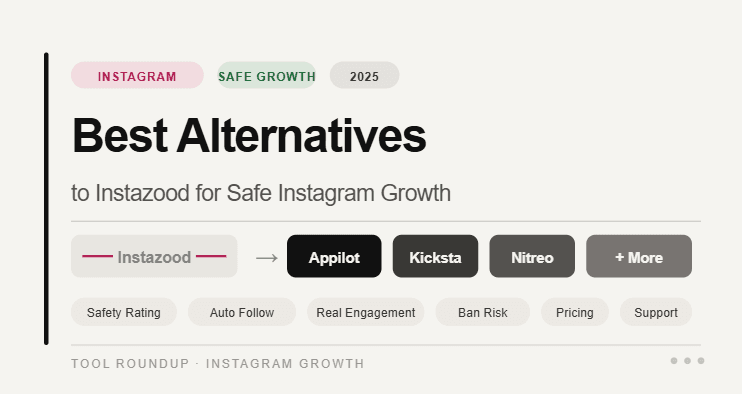
Instazood was once a popular Instagram automation tool for users who wanted faster growth through follows, likes, comments, unfollows, direct messages, and account activity automation. For small businesses, influencers, agencies, and growth marketers, tools like Instazood felt useful because they reduced manual work and made Instagram growth feel more scalable.
But Instagram growth in 2025 is very different from the older bot era. The platform is much more sensitive to repetitive actions, unnatural engagement patterns, weak account environments, inconsistent sessions, and aggressive automation behavior. A tool that simply automates likes, follows, comments, or messages is no longer enough. In many cases, that type of automation can create more risk than growth if it is not handled carefully.
This is why many users now search for Instazood alternatives that feel safer, more modern, and better aligned with how Instagram works today. The best alternative is not always another follow-unfollow bot. For many users, a better Instagram growth stack may include real-device automation, content scheduling, DM automation, analytics, visual planning, and controlled multi-account workflows.
In this guide, we will compare the best Instazood alternatives for safer Instagram growth in 2025 and explain which tool fits each type of workflow.
Why Users Are Moving Away From Instazood-Style Automation
Instazood-style automation became popular because it promised faster growth with less manual work. Users could automate engagement actions, target audiences, send messages, and keep accounts active without spending hours inside the Instagram app every day.
That model worked better when Instagram’s systems were less advanced. Today, Instagram looks at much more than the action itself. It evaluates how often actions happen, how natural the pattern looks, whether the account session is consistent, whether device behavior makes sense, and whether the account is operating like a real user over time.
This makes aggressive automation much harder to sustain. If an account follows too many people, sends too many similar messages, comments repetitively, or jumps between unstable environments, it can face friction. That friction may appear as verification requests, temporary blocks, reduced reach, login issues, or weaker account trust.
The lesson is simple: safer Instagram growth in 2025 depends on better workflow design. Users should focus on realistic activity, consistent sessions, stronger content, meaningful engagement, and automation that supports the account instead of forcing unnatural behavior.
What to Look for in an Instazood Alternative
A strong Instazood alternative should not only promise more followers. It should help create a healthier Instagram growth workflow. That means the tool should support controlled activity, stable account management, content consistency, real engagement, and better visibility into what is happening.
If your workflow depends on mobile app behavior, real-device automation is important. Instagram is a mobile-first platform, so automation that operates closer to real mobile environments can be more useful than browser-only workflows.
If your workflow depends on content, you need scheduling and planning tools. Consistent posting, better captions, Reels planning, Stories, carousels, and analytics can often create more sustainable growth than aggressive bot actions.
If your workflow depends on conversations, DM automation may be useful. But it should be used for inbound engagement, customer replies, lead capture, and comment-to-DM flows rather than spammy cold messaging.
If your workflow depends on agency operations, you need multi-account control. Managing multiple Instagram profiles requires organization, account separation, workflow monitoring, and clear limits.
The safest Instagram growth setup is usually not one tool doing everything aggressively. It is a stack of tools that match the exact workflow.
1. Appilot
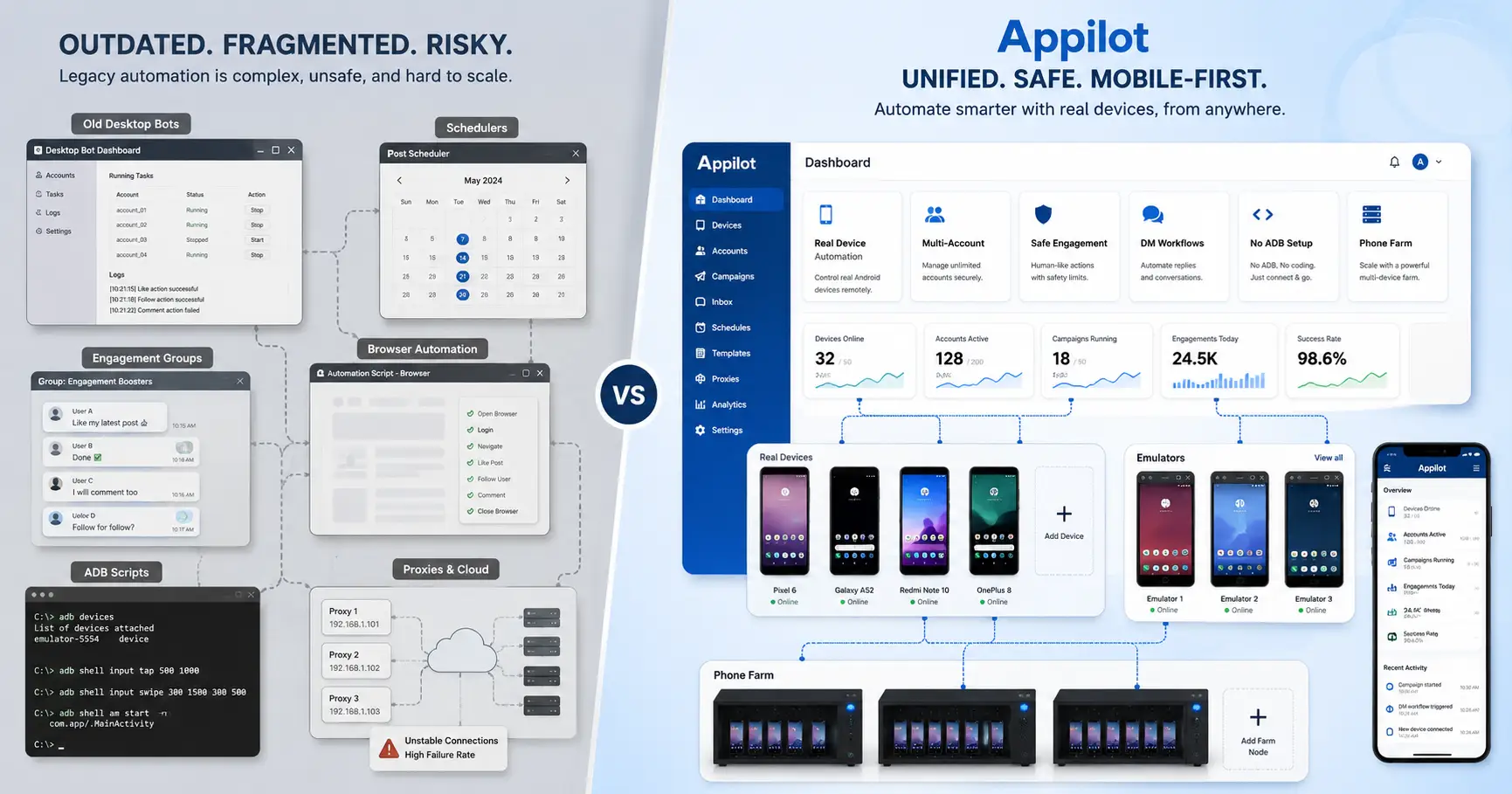
Appilot is one of the strongest Instazood alternatives for users who need real-device Instagram automation and mobile-first workflows. While Instazood belonged to the older Instagram bot category, Appilot focuses on automation through real Android devices, emulators, and mobile app environments controlled from a web dashboard.
This difference matters because Instagram is primarily a mobile app experience. Many important workflows happen inside the app, including profile checks, DMs, engagement, account management, app navigation, content handling, and multi-account operations. A tool that works closer to the mobile environment can be more useful for users who need realistic workflow execution.
Appilot is especially valuable for agencies, phone farm users, growth operators, and social media teams managing several accounts. Instead of manually handling every phone or relying only on browser-based tools, teams can use Appilot to manage mobile workflows across Android devices and emulators from one place.
For safer growth, Appilot’s value is not about pushing aggressive activity. Its value is in giving teams a more controlled environment for mobile automation. Users can build workflows around real-device behavior, better session continuity, account separation, and more organized execution. That is a stronger foundation than older tools that focused mainly on bulk actions.
Appilot is best for teams that need real-device Instagram automation, mobile app workflows, Android and emulator control, phone farm operations, and multi-account management.
2. Buffer
Buffer is a strong Instazood alternative for users who want safer Instagram growth through consistent content publishing instead of aggressive engagement automation. It helps users schedule Instagram posts, Reels, Stories, and carousels, while also offering planning and analytics features for improving content performance.
This makes Buffer a better fit for creators, small businesses, and agencies that want to grow by posting consistently, testing content ideas, and understanding what works. Instead of trying to force growth through automated likes or follows, Buffer supports a more sustainable content-led approach.
For many Instagram users, this is the safer path. Good content, posted consistently at the right times, can build trust and engagement without creating the same risks as mass automation. Buffer is also useful for managing multiple social platforms, which helps teams reuse content across Instagram, TikTok, LinkedIn, Facebook, Pinterest, and other channels.
The limitation is that Buffer is not a real-device automation tool. It will not control Android phones, run app-based actions, or manage mobile workflows. It is best for scheduling, planning, and content consistency.
Buffer is best for creators, brands, agencies, and small businesses that want safer Instagram growth through better publishing and content organization.
3. Manychat
Manychat is one of the best Instazood alternatives for Instagram DM automation and conversation-based growth. Instead of automating cold likes, follows, or comments, Manychat helps users automate inbound conversations through Instagram DMs, comment triggers, automated replies, and lead capture flows.
This is useful because many modern Instagram growth workflows are built around engagement that already exists. For example, a creator can ask followers to comment a keyword and then automatically send a DM with a link, offer, guide, discount, or next step. A brand can use automated replies to answer common questions, qualify leads, or help users find products.
This type of automation is usually more practical than old engagement bots because it is based on user intent. Someone comments, sends a message, or interacts with the account first, and the automation responds. That makes the workflow feel more natural and more useful than random mass outreach.
The limitation is that Manychat is not a full Instagram management system. It does not control real devices, run account workflows, or replace a scheduling tool. It works best alongside other tools. A team may use Buffer for scheduling, Appilot for mobile workflow automation, and Manychat for DMs.
Manychat is best for creators, ecommerce brands, coaches, agencies, and businesses that use Instagram DMs for lead generation, customer support, and sales conversations.
4. Later
Later is a useful Instazood alternative for users who want safer Instagram growth through visual planning, content organization, and campaign management. It is especially helpful for creators, influencers, ecommerce brands, lifestyle accounts, and agencies that care about how their Instagram grid and content calendar look.
Old Instagram bots focused heavily on actions. Later focuses more on content strategy. That makes it a better fit for users who want to grow through better planning rather than risky automation. With a visual planner, users can prepare campaigns, organize media, schedule posts, and keep a more consistent brand presence.
Later is particularly useful for Instagram because the platform is visual. The order of posts, the quality of creatives, the consistency of the feed, and the rhythm of content all influence how a profile feels to new visitors. A strong content system can support growth without relying on aggressive bot activity.
The limitation is that Later is not a real-device automation platform. It does not operate Android devices or run app-based workflows. It is better for content planning and scheduling than for mobile automation.
Later is best for creators, influencers, ecommerce teams, and agencies that want visual Instagram planning and safer content-led growth.
5. Hootsuite
Hootsuite is a strong Instazood alternative for agencies and professional teams that need Instagram management, scheduling, analytics, inbox workflows, social listening, and reporting. It is not an Instagram growth bot, but it can help teams build a more organized and sustainable social media operation.
For teams managing multiple Instagram accounts, Hootsuite can be useful because it provides structure. Users can plan content, track performance, monitor conversations, manage engagement, and produce reports. This makes it more suitable for brands and agencies than older tools focused mainly on bot actions.
Hootsuite is especially helpful when Instagram is part of a broader social media strategy. If a business manages Instagram alongside Facebook, LinkedIn, TikTok, X, Pinterest, or YouTube, a platform like Hootsuite can centralize planning and reporting.
The limitation is that Hootsuite is not built for real-device automation. It does not control phones, run Instagram app workflows, or operate mobile sessions. For mobile-first automation, Appilot is stronger. For social management and reporting, Hootsuite is useful.
Hootsuite is best for agencies, brands, and marketing teams that need professional Instagram management, analytics, reporting, and multi-channel social workflows.
6. Metricool
Metricool is a good Instazood alternative for users who care about analytics, reporting, planning, and performance tracking. It helps users understand what content is working, when to post, how accounts are growing, and how social media performance changes over time.
This is important because safe Instagram growth should be guided by data. Instead of relying on automated engagement to force results, users can study which posts perform well, which formats get more engagement, which times work best, and which campaigns actually drive growth.
Metricool is especially useful for agencies, freelancers, consultants, and brands that need reports for clients or internal teams. It helps turn Instagram growth into a measurable system rather than guesswork.
The limitation is that Metricool is not a real-device automation tool or a DM automation tool. It is best for planning and analytics. Users who need mobile workflows may still need Appilot, while users who need conversation automation may need Manychat.
Metricool is best for marketers, agencies, consultants, and analytics-focused Instagram users who want data-driven growth.
7. Planoly
Planoly is another useful Instazood alternative for Instagram users who want visual content planning, scheduling, and brand organization. It is especially helpful for creators, ecommerce brands, designers, agencies, and small businesses that want to plan Instagram content more intentionally.
Like Later, Planoly supports a safer growth style because it focuses on content quality and consistency. Instead of automating risky engagement actions, users can build a stronger posting workflow, prepare captions, organize media, and maintain a cleaner visual brand.
For Instagram, this matters because the profile itself acts like a landing page. When users discover an account, they often judge it quickly based on the grid, content quality, highlights, bio, and recent activity. A tool that helps keep the profile organized can indirectly support growth by improving first impressions.
The limitation is that Planoly is not a bot and not a real-device automation platform. It will not replace Instazood for users who want direct automation of mobile workflows. But it can be a safer alternative for users who want growth through better content operations.
Planoly is best for visual brands, creators, ecommerce stores, and small teams that want Instagram planning and scheduling without bot-style automation.
Which Instazood Alternative Is Best for Safe Instagram Growth?
The best Instazood alternative depends on how you want to grow. If your goal is real-device automation, multi-account workflows, phone farm operations, or mobile app control, Appilot is the strongest option. It gives users a modern mobile-first automation layer instead of relying on older bot models.
If your goal is content consistency, Buffer, Later, and Planoly are strong choices. They help users plan and publish better content without depending on risky engagement automation. If your goal is professional account management, Hootsuite is a better fit. If your goal is data-driven growth, Metricool is useful. If your goal is DM automation and inbound lead capture, Manychat is one of the best options.
The safest approach is usually to combine the right tools rather than depend on one aggressive bot. For example, a team might use Appilot for mobile workflows, Buffer or Later for scheduling, Manychat for DM automation, and Metricool for reporting.
That kind of stack is more sustainable than relying on old Instazood-style growth tactics alone.
Why Appilot Is the Best Instazood Alternative for Real-Device Instagram Automation
Appilot stands out because it solves the problem that older Instagram bots did not fully address: the environment. Traditional tools focused on automating actions, but modern Instagram growth depends heavily on how natural and consistent the account environment feels.
Appilot helps users operate through Android devices and emulators, which makes it more relevant for mobile-first workflows. Instead of treating Instagram automation as only a browser or proxy problem, Appilot gives teams a way to manage app-based workflows in a more realistic mobile environment.
For agencies and multi-account operators, this is especially important. Managing many Instagram accounts manually is slow, but running aggressive automation can be risky. Appilot gives teams a more controlled middle ground where workflows can be organized, monitored, and executed through real-device environments.
This does not mean users should automate carelessly. Any Instagram automation still needs conservative limits, account separation, realistic pacing, and careful workflow design. But for users who need mobile automation, Appilot is a stronger modern foundation than old Instazood-style tools.
Final Thoughts
Instazood belonged to an older era of Instagram automation, where users often focused on follows, likes, comments, unfollows, and mass activity. In 2025, safer Instagram growth requires a more thoughtful approach.
The best alternatives now depend on the workflow. Appilot is best for real-device automation and mobile app workflows. Buffer is best for simple scheduling and content consistency. Manychat is best for Instagram DM automation. Later and Planoly are useful for visual planning. Hootsuite is strong for professional social media management. Metricool is helpful for analytics and reporting.
The most sustainable Instagram growth strategy is not about finding another tool that copies Instazood exactly. It is about building a better system. Use automation to support real workflows, not to create unnatural activity. Focus on content, conversations, account consistency, and mobile-first execution.
For teams that need Instagram automation with real-device workflows, Appilot is the strongest Instazood alternative in 2025.
FAQs
Q1: Is Instazood still a good option for Instagram growth?
Instazood-style automation belongs to an older Instagram bot model. In 2025, safer growth usually requires controlled workflows, better content planning, real-device automation, and less aggressive activity.
Q2: What is the best Instazood alternative for real-device Instagram automation?
Appilot is the best option for real-device Instagram automation because it supports Android devices, emulators, mobile app workflows, and multi-account management.
Q3: Which Instazood alternative is best for Instagram scheduling?
Buffer, Later, and Planoly are strong options for Instagram scheduling. Buffer is better for simple publishing, while Later and Planoly are stronger for visual planning.
Q4: Which tool is best for Instagram DM automation?
Manychat is one of the best tools for Instagram DM automation because it supports comment-to-DM flows, automated replies, lead capture, and customer conversation workflows.
Q5: Is real-device automation safer than old Instagram bots?
Real-device automation is stronger for mobile-first workflows because it better matches how Instagram is normally used. It still needs careful limits, realistic pacing, and responsible workflow design.