Bright Data vs Smartproxy vs Oxylabs: Proxy Provider Comparison
Choosing a proxy provider is a major decision for web scraping, automation, market research, ad verification, and account management.
Three names dominate most discussions in this space: Bright Data, Smartproxy, and Oxylabs.
All three providers offer residential proxies, mobile proxies, datacenter proxies, and scraping APIs.
However, they differ significantly in pricing models, ease of use, target audience, infrastructure scale, and API ecosystem.
This guide provides a practical breakdown of where each provider fits.
Market Positioning Overview
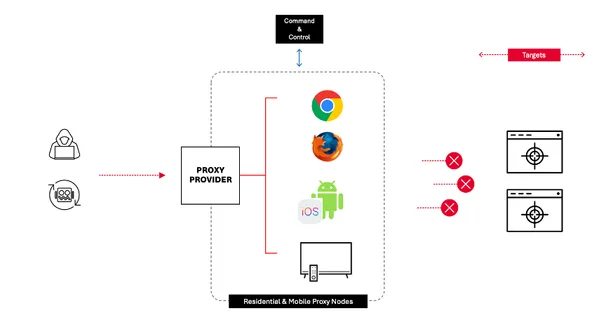
At a high level, Bright Data focuses on maximum power and flexibility, Smartproxy focuses on simplicity and affordability, and Oxylabs focuses on enterprise reliability and advanced APIs.
What Is Bright Data?
Overview
entity["company","Bright Data","Proxy and web data platform"], formerly known as Luminati, is one of the largest proxy and web-data platforms globally.
It provides more than just proxies because it also includes scraping APIs, Web Unlocker tools, SERP APIs, datasets, and enterprise dashboards.
Key Features
Bright Data provides massive residential and mobile IP pools, ISP and datacenter proxies, advanced targeting rules, Web Unlocker APIs, and compliance and governance tools.
Pros
Bright Data is extremely powerful and flexible.
It is suitable for complex scraping pipelines, has strong compliance infrastructure, and offers enterprise-grade controls.
Cons
The downside is premium pricing, a steep learning curve, and unnecessary complexity for smaller projects.
Bright Data is often chosen when scale and control matter more than simplicity.
What Is Smartproxy?
Overview
entity["company","Smartproxy","Proxy provider"] focuses on simplicity and accessibility.
It mainly targets SMBs, marketers, smaller scraping teams, and beginners.
It provides high-quality residential and mobile proxies without enterprise-level complexity.
Key Features
Smartproxy offers residential and mobile proxies, a clean dashboard, competitive pricing, and straightforward integration.
Pros
Smartproxy is easy to onboard, more affordable than enterprise providers, well documented, and balanced in overall performance.
Cons
The trade-off is fewer advanced orchestration tools, less granular targeting, and weaker support for very large enterprise scraping operations.
Smartproxy is often the practical middle ground.
What Is Oxylabs?
Overview
entity["company","Oxylabs","Proxy and web intelligence company"] is an enterprise-focused proxy and web-intelligence provider.
It is heavily used for large-scale data extraction, web intelligence, competitive monitoring, and market research.
Key Features
Oxylabs provides large residential and mobile pools, ISP proxies, advanced scraping APIs, enterprise SLAs, and Web Unblocker tools.
Pros
Oxylabs is highly reliable at scale, has a strong API ecosystem, achieves high success rates on difficult targets, and provides enterprise support.
Cons
The downside is premium pricing, more complex onboarding, and a steeper learning curve for beginners.
Oxylabs competes directly with Bright Data at the enterprise tier.
Infrastructure Comparison
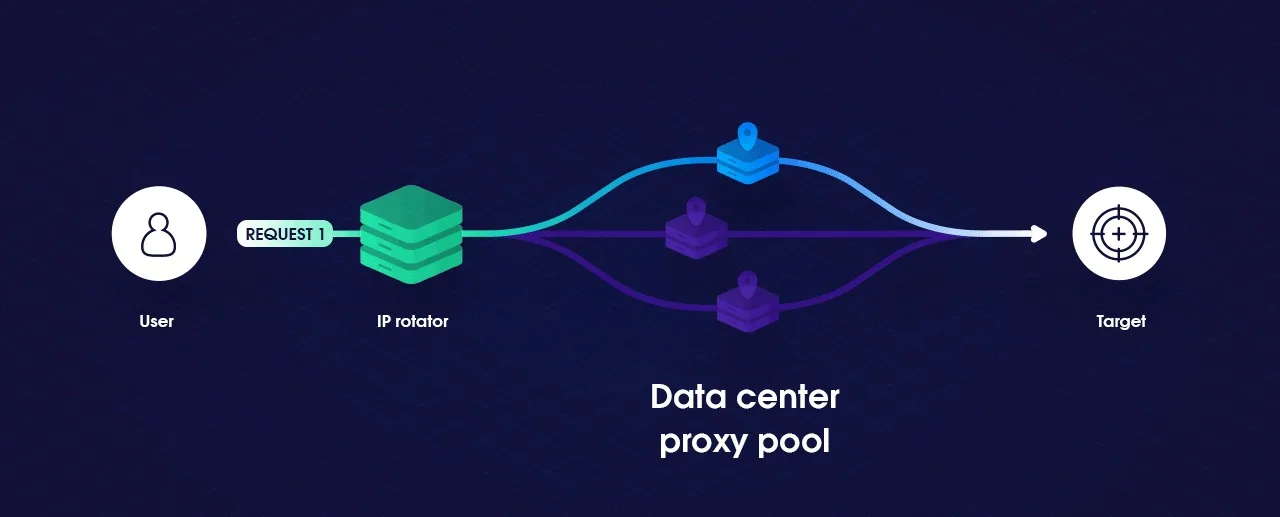
All three providers offer rotating residential IPs, mobile proxy pools, datacenter options, and API-based integration.
The main differences appear in IP pool size, API sophistication, management controls, and enterprise tooling.
Feature-by-Feature Comparison
Ease of Use
Smartproxy is generally the easiest for beginners.
Oxylabs sits in the middle.
Bright Data is usually the most complex.
Proxy Quality & Detection Resistance
All three providers offer high-quality residential and mobile IPs.
Mobile proxies from all three generally provide very low detection rates and strong geographic diversity.
Success depends more on configuration, behaviour, and rotation logic than on the provider itself.
Pricing & Cost Control
Smartproxy is usually the most budget-friendly option.
Bright Data and Oxylabs operate with premium usage-based pricing.
Enterprise tools cost more, but they also provide deeper controls.
APIs & Automation Tools
Bright Data offers the largest API ecosystem.
Oxylabs provides a strong scraping API suite.
Smartproxy focuses more on proxy access and lighter tooling.
Scalability
Bright Data and Oxylabs are usually the best fit for enterprise-scale workloads.
Smartproxy scales well for SMB and mid-market use cases.
Scenario-Based Recommendations
Scenario 1: Enterprise-Scale Scraping
The best choice is Bright Data or Oxylabs.
They provide larger IP pools, advanced orchestration, and stronger scraping APIs.
Smartproxy has fewer enterprise-level features.
Scenario 2: Beginner-Friendly Setup
The best choice is Smartproxy.
It has a simpler dashboard, easier integration, and more affordable pricing.
Bright Data and Oxylabs are more expensive and more complex.
Scenario 3: Hard-to-Scrape Targets
The best choice is Oxylabs or Bright Data.
They provide advanced Web Unlocker APIs, stronger infrastructure, and better enterprise reliability.
Smartproxy has less advanced anti-block tooling.
Scenario 4: Mobile Automation Using Real Devices
An alternative here is Appilot.
Appilot is useful because it runs automation on real Android devices and uses genuine mobile execution environments.
However, it is not a proxy provider and does not replace IP rotation infrastructure.
It works best when combined with residential or mobile proxies.
Scenario 5: Budget-Conscious Projects
The best choice is Smartproxy.
It offers competitive pricing and enough performance for most SMB workloads.
Enterprise providers may be excessive for smaller projects.
Head-to-Head Pros & Cons
Bright Data
Advantages
Bright Data offers a massive network, advanced targeting, and enterprise-grade APIs.
Limitations
It is expensive and complex to set up.
Smartproxy
Advantages
Smartproxy provides simple setup, affordable pricing, and good support for small to medium-scale workloads.
Limitations
It has fewer advanced controls and a smaller ecosystem.
Oxylabs
Advantages
Oxylabs offers enterprise reliability, large IP pools, and a strong API suite.
Limitations
It has premium pricing and more complex onboarding.
Final Verdict
There is no universal winner.
Bright Data is best for maximum power and enterprise flexibility.
Smartproxy is best for simplicity and cost-efficiency.
Oxylabs is best for enterprise reliability and API depth.
The right provider depends on scale, budget, technical experience, and target-site difficulty.
Choosing the right proxy provider is more about fit than brand name.
If your workflow includes Android-device automation, Appilot can fit naturally into the stack because it complements proxy infrastructure with real-device execution.
FAQs
Which proxy provider is best for beginners?
Smartproxy is usually the easiest option to start with.
Are Bright Data and Oxylabs better for enterprise?
Yes. Both are designed for high-scale scraping.
Do all three offer mobile proxies?
Yes.
Which provider is cheapest?
Smartproxy is generally the most affordable.
Can these be used for social media automation?
Yes, but proxy setup still needs to align with behaviour patterns and rate limits.