Understanding Browser API Blocking for Privacy
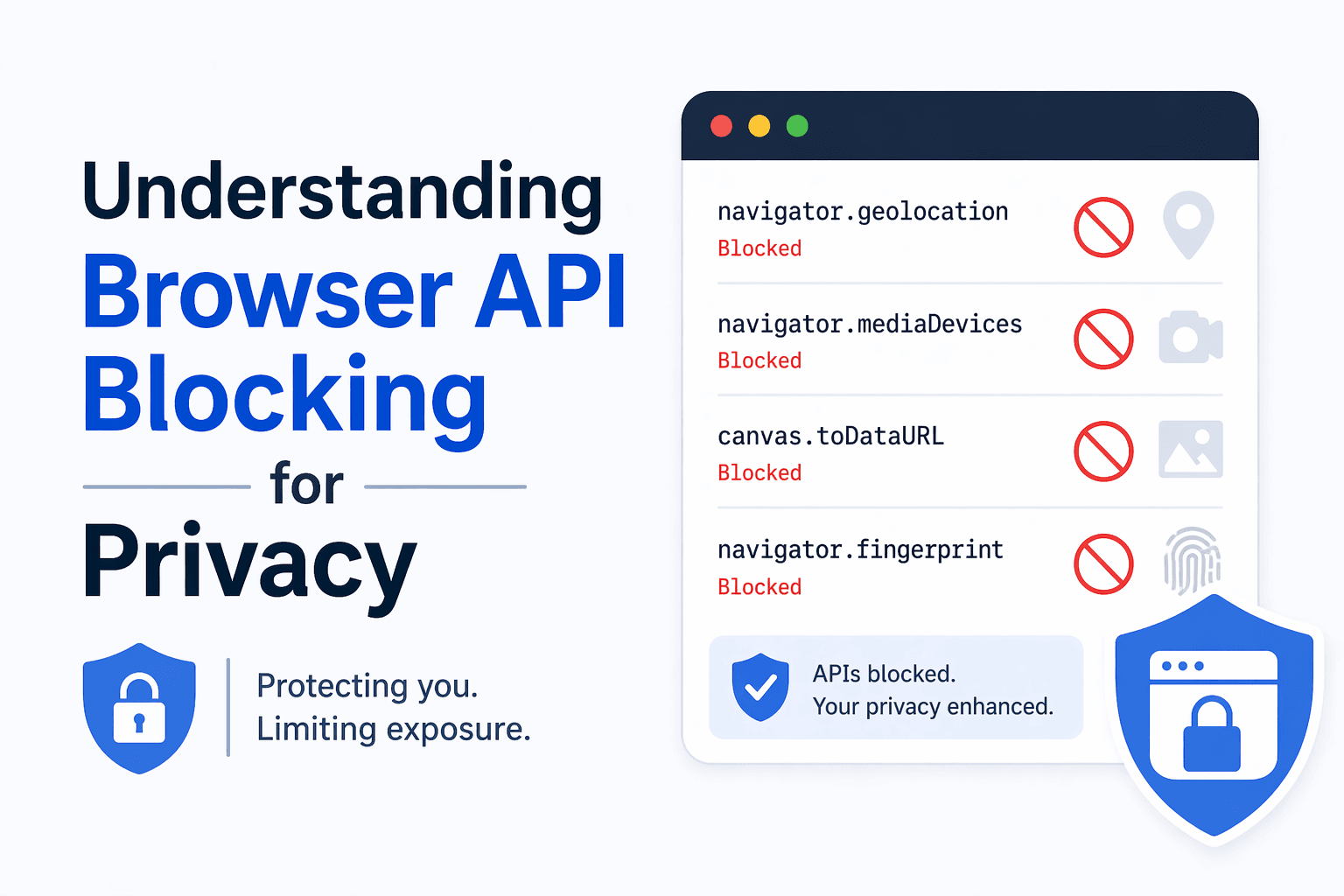
As concerns around online privacy continue to grow, browsers have started limiting access to certain APIs that expose sensitive information. This approach, known as browser API blocking, is designed to reduce tracking by restricting what websites can learn about a user’s environment.
Understanding browser API blocking is important because it changes how fingerprinting and detection systems operate. While it improves privacy, it also introduces new challenges and trade-offs. This guide explains how API blocking works and its impact on tracking.
What Is Browser API Blocking?
Browser API blocking is the practice of restricting or limiting access to certain JavaScript APIs that expose device, browser, or network information, where instead of allowing unrestricted data collection, browsers either remove access entirely or reduce the detail of the data returned. This prevents websites from easily gathering information that can be used for fingerprinting, thereby improving user privacy. Different browsers implement these restrictions in different ways, depending on their privacy policies and design goals.
The Core Idea Behind API Blocking
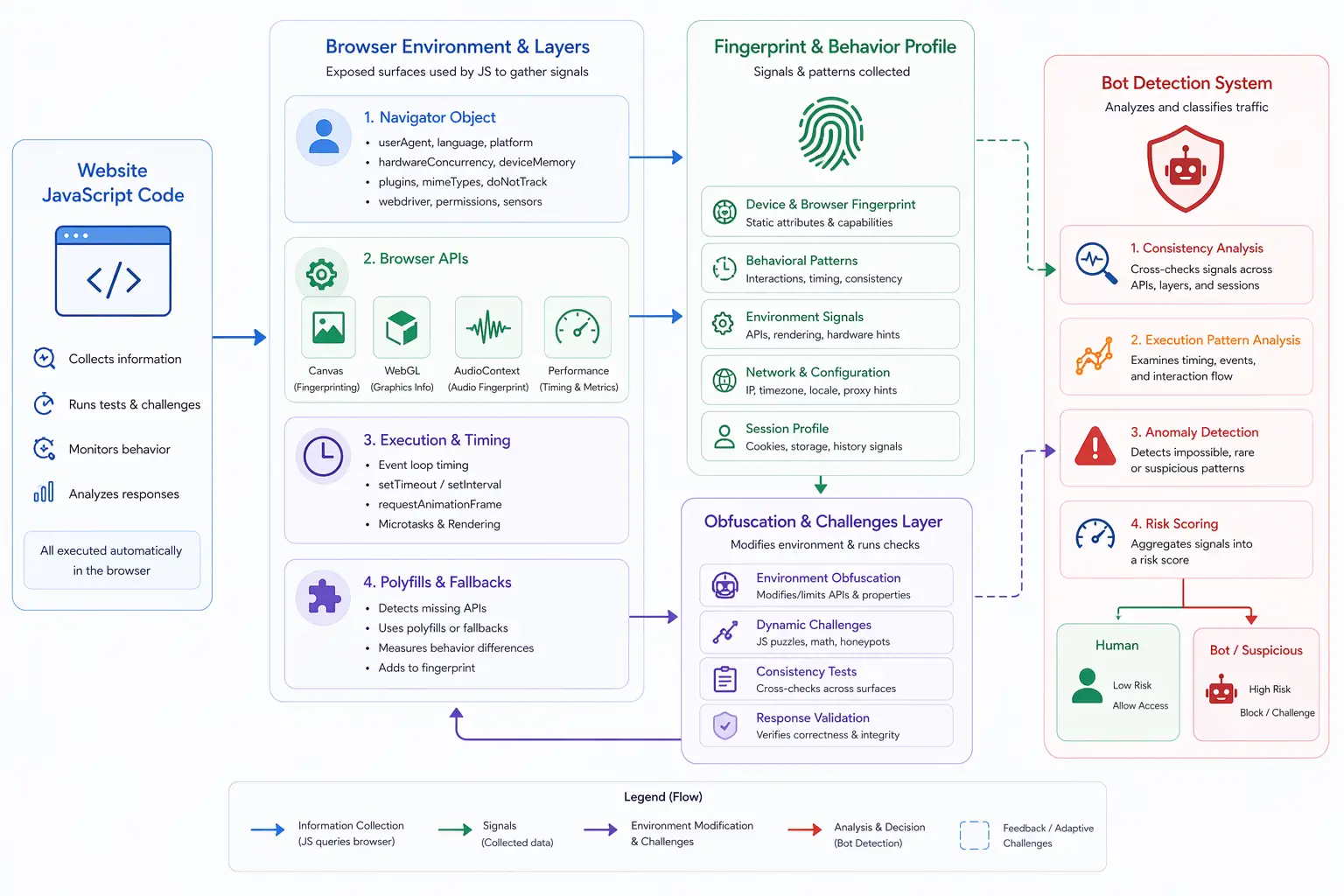
The core idea behind API blocking is reducing data exposure, where by limiting the amount of information available to websites, browsers make it harder to create unique fingerprints. Instead of allowing precise values, some APIs may return generalized or randomized data, while others may be disabled completely. This approach shifts the balance toward user privacy but also changes how detection systems gather signals.
How Browser API Blocking Works
Browser API blocking works by controlling how JavaScript APIs behave when accessed by websites, where certain APIs may be restricted, modified, or replaced with safer alternatives. For example, a browser may limit access to detailed hardware information, reduce the precision of timing data, or require user permission before exposing certain features. These changes are implemented at the browser level, making them consistent across sessions.
Types of API Blocking Techniques
Browsers use different techniques to block or limit APIs, where some APIs are completely disabled, preventing any access to the data, while others are modified to return less precise or standardized values. In some cases, data may be randomized slightly to prevent consistent fingerprinting, and permission-based access may require user approval before certain information is shared. These techniques are often combined to create a layered privacy approach.
Why API Blocking Matters for Privacy
API blocking matters because it directly reduces the amount of information available for tracking, where by limiting access to sensitive data, it becomes more difficult for websites to build unique identifiers. This helps protect users from persistent tracking and improves overall privacy. It also shifts tracking methods toward more complex and indirect approaches.
API Blocking and Fingerprinting
Browser API blocking has a significant impact on fingerprinting because it removes or alters key signals used to create fingerprints, where this reduces the accuracy and stability of fingerprints over time. However, fingerprinting does not disappear entirely, as detection systems adapt by combining remaining signals and using alternative methods. This creates an ongoing balance between privacy measures and tracking techniques.
API Blocking and Bot Detection
Bot detection systems are also affected by API blocking because they rely on browser signals to identify inconsistencies, where reduced data availability can make detection more challenging. However, detection systems can still analyze behavior, timing, and network signals to identify automation. In some cases, overly restricted environments may themselves appear suspicious, as real users typically have standard browser configurations.
Limitations of Browser API Blocking
Despite its benefits, browser API blocking has limitations because it can reduce functionality or affect user experience, where some websites rely on certain APIs to provide features or optimize performance. Additionally, blocking APIs does not eliminate tracking entirely, as detection systems can use alternative signals. Overly aggressive blocking may also create unusual patterns that stand out.
API Blocking vs Other Privacy Techniques
Browser API blocking is one of several privacy techniques, alongside methods such as cookie restrictions, network-level protections, and behavioral obfuscation, where each approach targets a different aspect of tracking. While API blocking reduces data exposure, other techniques focus on controlling how data is stored or transmitted. Combining these methods provides stronger privacy protection.
API Blocking vs Real-Device Environments
A key distinction in modern detection is the difference between restricted environments and natural device behavior, where API blocking can create environments that differ from typical user setups, potentially introducing detectable patterns. Real-device environments operate on standard hardware and browser configurations where API behavior aligns with expected norms, and tools like Appilot follow this approach by running automation on real Android devices, ensuring that API availability and behavior remain consistent with real-world usage. This reduces anomalies that detection systems may flag.
When API Blocking Is Most Relevant
Browser API blocking is most relevant in scenarios where privacy is a primary concern, such as preventing tracking across websites or reducing data exposure, where users want to limit the amount of information shared with online services. In these contexts, understanding how API blocking works helps in making informed decisions about privacy settings.
Frequently Asked Questions
Q: What is browser API blocking?
It is restricting access to APIs that expose sensitive data.
Q: Why do browsers block APIs?
To reduce tracking and improve privacy.
Q: Does API blocking stop fingerprinting?
It reduces it but does not eliminate it.
Q: Can API blocking affect websites?
Yes, it may limit functionality.
Q: Is API blocking always beneficial?
It improves privacy but may introduce trade-offs.
Q: How do real-device solutions compare?
Real-device solutions like Appilot maintain natural API behavior, avoiding anomalies caused by excessive blocking.
Key Takeaways
Browser API blocking is a privacy-focused approach that limits access to sensitive browser and device information, reducing the ability of websites to perform fingerprinting. While it improves privacy, it also affects how detection systems operate and may introduce trade-offs in functionality and consistency. Understanding these dynamics is essential for balancing privacy and usability.