Can’t Justify Automation Costs to Your Boss? Here’s the Data (And How to Prove It Clearly)
“Why Are We Paying for This?” — The Question You Can’t Easily Answer
It usually comes up during a review. Your boss looks at the monthly expenses, sees the automation tools, subscriptions, and infrastructure costs, and asks a simple question that is harder to answer than it should be.
What are we actually getting from this?
You know the system is working. Tasks are automated, workflows are running, and operations feel smoother than before. But when you try to explain the value, it becomes vague. You talk about efficiency, time saved, reduced manual effort, but without clear numbers, it feels like an argument instead of evidence.
This is where automation often fails, not in execution, but in justification. If you cannot prove its value clearly, it starts to look like an expense instead of an investment.
Why Automation Is Hard to Justify
The challenge is not that automation lacks value, but that its benefits are often indirect and poorly measured.
The first issue is invisible output. Automation removes manual work, but because that work no longer exists, it becomes difficult to quantify what was saved.
The second issue is scattered data. Costs are clear because they are billed monthly, but benefits are spread across different workflows and tools, making them harder to consolidate.
The third issue is lack of baseline comparison. Without knowing how much time or cost existed before automation, it is difficult to measure improvement.
The fourth issue is misaligned metrics. Many teams track activity instead of outcomes, which makes automation look busy rather than valuable.
The Hidden Cost of Not Proving Value
When automation cannot be justified, the consequences go beyond one conversation.
Budgets get cut or reduced because automation is seen as optional rather than essential.
Future investments become harder to approve, limiting your ability to improve systems further.
Confidence in your decisions may be questioned, even if the underlying work is effective.
Most importantly, you lose the opportunity to scale, because automation is often the foundation of growth.
The Real Problem: You’re Measuring Activity, Not Impact
The core issue is not automation itself, but how its value is measured.
Tracking how many tasks were automated or how many workflows ran does not explain why it matters. These are activity metrics, not impact metrics.
What matters is what changed because of automation.
Did it reduce time? Did it increase output? Did it improve consistency? Did it lower cost?
Without connecting automation to outcomes, it is impossible to justify its existence clearly.
The Data That Actually Proves Automation Value
To justify automation effectively, you need to focus on metrics that directly reflect impact.
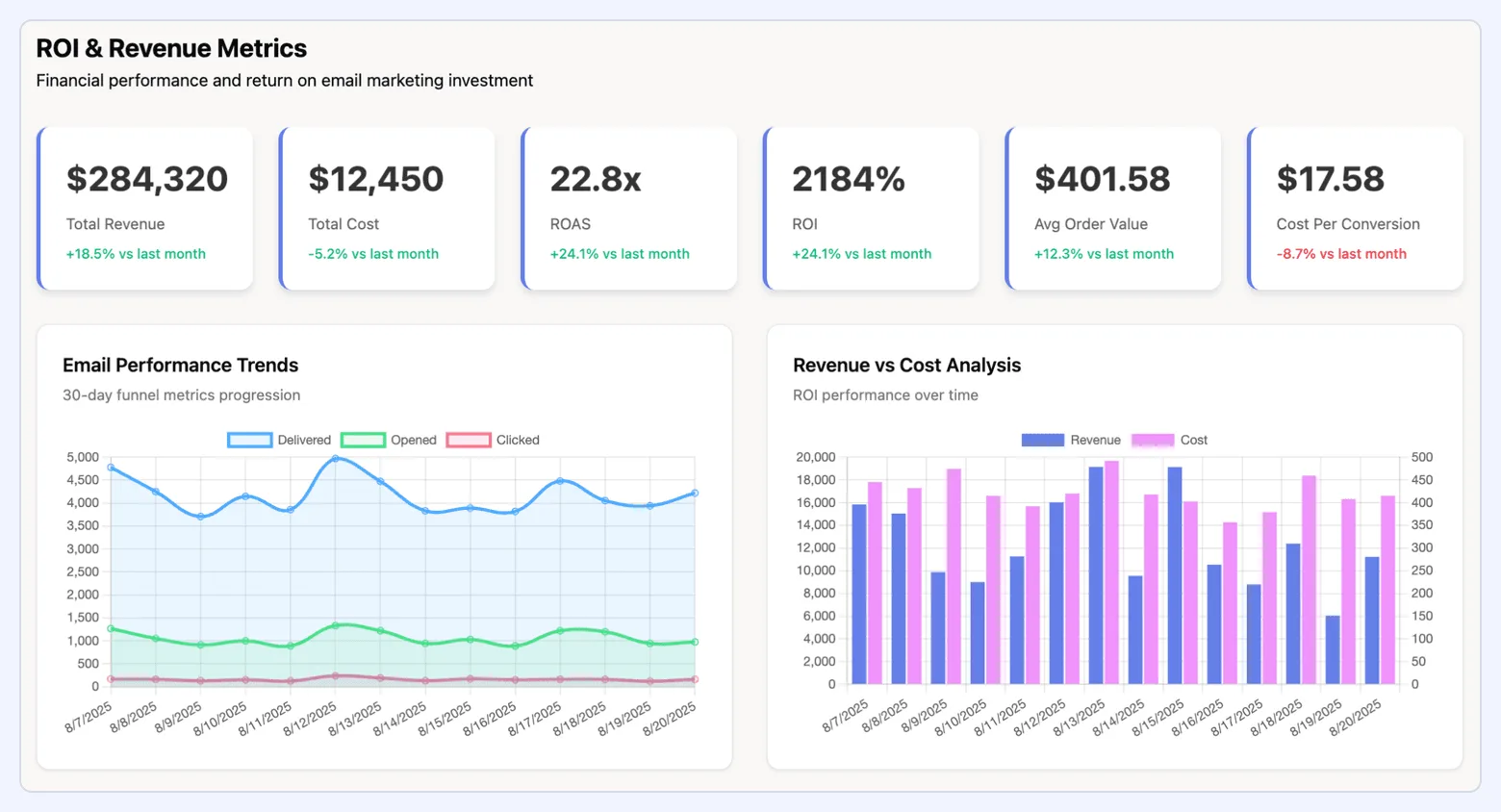
The first is time saved. You compare how long tasks took before automation versus after, translating that into hours saved per week or month.
The second is cost efficiency. You calculate the cost of automation against the cost of manual alternatives, such as hiring or outsourcing.
The third is output increase. You measure how much more work is being completed with the same or fewer resources.
The fourth is consistency. You track reductions in errors, delays, or variability, showing how automation improves reliability.
These metrics transform automation from an abstract concept into something measurable and defensible.
The Complete Solution: Connect Execution to Measurable Outcomes
The only way to justify automation consistently is to build a system where impact is visible by design.
The first step is establishing a baseline. You document how workflows operated before automation so you have a clear point of comparison.
The second step is standardizing execution. When workflows are consistent, it becomes easier to measure their impact accurately.
The third step is centralizing data. Instead of tracking results across multiple tools, you bring them into a structured system where they can be analyzed clearly.
This is where many teams struggle, because maintaining consistent execution and tracking across different tools and environments is complex.
This is also where tools like Appilot become relevant.
Instead of running workflows across fragmented systems, Appilot allows you to execute tasks on real devices within a centralized environment, making it easier to maintain consistency and track outcomes. This helps connect execution directly to measurable results.
You could attempt to build similar tracking manually using dashboards and integrations, but maintaining accuracy becomes difficult as you scale. Appilot simplifies this by ensuring that workflows run in a controlled environment, making their impact easier to measure.
The key shift is moving from activity tracking to outcome tracking.
How to Present Automation Value to Your Boss
Once you have the right data, presentation becomes much simpler.
You show the baseline versus current state, highlighting the difference in time, cost, and output.
You translate efficiency into financial terms, making it clear how automation affects the bottom line.
You focus on outcomes rather than technical details, keeping the conversation aligned with business impact.
Most importantly, you make the value visible and easy to understand.
How to Keep Justification Simple Going Forward
Proving automation value should not be a one-time effort.
You ensure that metrics are tracked continuously, so data is always available when needed.
You review performance regularly to identify improvements and maintain alignment with business goals.
You refine your system over time, ensuring that it continues to deliver measurable value.
Common Mistakes That Make This Worse
One of the most common mistakes is focusing on technical features instead of business impact.
Another mistake is not establishing a baseline, which makes it impossible to measure improvement.
Some teams track too many metrics, which creates noise instead of clarity.
The most critical mistake is assuming that value is obvious, when it actually needs to be demonstrated clearly.
Conclusion: If You Can’t Measure It, You Can’t Defend It
If you cannot justify your automation costs, it is not because automation lacks value, it is because the value is not being measured correctly.
Once you focus on impact, standardize execution, and connect workflows to measurable outcomes, the conversation changes completely.
Automation becomes easier to defend because its benefits are clear, visible, and quantifiable.
You can continue relying on assumptions, but as costs grow, those assumptions will be questioned.
At some point, you either build a system that proves its value or risk losing it entirely.
That is where platforms like Appilot fit in, not just as an execution tool, but as a way to create consistent, measurable workflows that make automation easier to justify and scale.