Can’t Track Who Did What in Your Accounts? Fix This (And Regain Full Visibility)

Everything Is Happening… But No One Knows Who Did It
At first, it feels like a minor inconvenience, a post goes live earlier than expected, a setting is changed, a message is sent, and no one is quite sure who did it, but the work continues so you ignore it and move forward.
Then it starts happening more often. Tasks overlap, actions get duplicated, mistakes appear without a clear source, and suddenly you are not just managing work, you are trying to reconstruct what happened after the fact. You ask your team, everyone gives partial answers, and even when you find the issue, you are left with uncertainty about how it happened in the first place.
This is where things begin to break down. You cannot improve what you cannot trace, and when visibility is missing, every mistake becomes harder to fix and more likely to repeat.
The frustrating part is that your team is not necessarily doing anything wrong. They are working, executing, and trying to move things forward, but the system they are working within does not provide the clarity needed to track actions reliably.
This is not a communication issue. It is a structural visibility problem, and once you fix the structure, the confusion disappears.
Why You Can’t Track Who Did What
Most teams assume that tracking issues come from poor communication or lack of discipline, but the real cause is that shared account workflows are not designed for multi-user visibility.
When multiple people use the same account, actions are recorded under a single identity, which means the platform itself does not distinguish between users. From the system’s perspective, everything is happening from one source, even if multiple people are involved.
Another major issue is the absence of a controlled access layer. When team members log in directly using shared credentials, there is no mechanism to associate actions with individuals. Everything blends together into one activity stream.
There is also a lack of structured workflows. When tasks are executed manually and independently, there is no consistent path to follow, which makes it difficult to trace actions back to a defined process.
Finally, fragmented environments contribute to the problem. Different devices, locations, and setups create variations in how actions are performed, making it even harder to track and analyze behavior.
The Hidden Cost of No Visibility
Lack of visibility does not just create confusion, it creates inefficiency at every level of your operation.
Every mistake takes longer to resolve because you first need to identify its source, which turns simple fixes into investigations. This slows down your workflow and increases the time spent on non-productive tasks.
There is also a duplication problem. When actions are not visible, team members may unknowingly repeat work that has already been done, which wastes time and creates inconsistencies.
From a management perspective, decision-making becomes harder because you do not have reliable data on how work is being performed. You cannot identify bottlenecks, measure performance, or improve processes effectively.
The most critical issue, however, is accountability. Without clear tracking, it becomes difficult to assign responsibility, which leads to ambiguity and reduces overall efficiency.
The Real Problem: Shared Accounts Without Structure
The core issue is not that your team cannot be tracked, it is that the system you are using does not support tracking in the first place.
Shared accounts collapse multiple users into a single identity, which removes the ability to distinguish actions at the source. This means that even if everything is logged, it is logged in a way that is not useful.
When combined with manual workflows and inconsistent environments, this creates a situation where visibility is inherently limited.
What you need is not better communication, but a system that restores identity and structure to your workflows.
The Complete Solution: Add a Controlled Execution Layer
The only way to fix this permanently is to introduce a controlled layer between your team and the accounts they use.
The first step is stabilizing access. You ensure that all interactions with accounts happen through a consistent environment rather than scattered logins across different devices and locations.
The second step is structuring workflows. Instead of allowing tasks to be executed in arbitrary ways, you define how they should be performed and ensure that execution follows a consistent pattern.
The third step is introducing a system that can associate actions with users without exposing raw credentials. This is where most teams struggle, because building this layer manually requires infrastructure, logging systems, and ongoing maintenance.
This is exactly the type of problem Appilot is built to solve.
Instead of having multiple people log into the same account and create untraceable activity, Appilot runs workflows on controlled devices and environments, which allows you to maintain consistency while also tracking how tasks are executed.
You could attempt to build similar tracking using custom setups or tools like Appium, but that involves significant complexity and does not scale easily. Appilot simplifies this by handling the execution layer, making it easier to maintain both consistency and visibility.
The key idea is not just tracking actions, but structuring execution so that tracking becomes natural rather than forced.
Why Structured Systems Restore Visibility
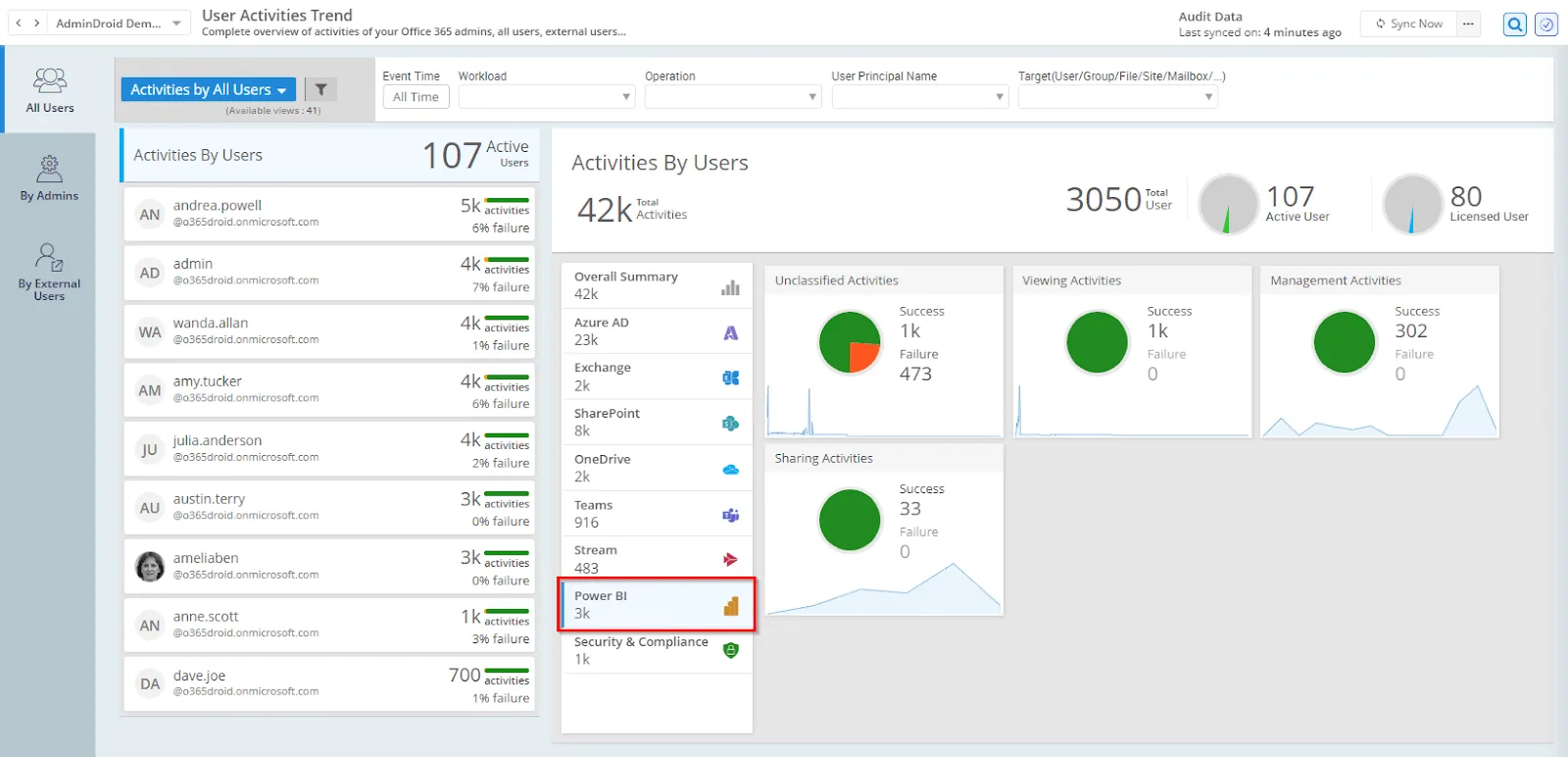
Once execution is structured, visibility becomes a natural outcome rather than an additional feature.
Actions are performed through defined workflows, which means they can be traced back to specific processes and users. This removes ambiguity and makes it easier to understand how work is being done.
Consistency improves because tasks follow the same path every time, reducing variation and making it easier to identify deviations.
Coordination becomes simpler because team members no longer need to guess what has been done, they can see it clearly within the system.
Most importantly, you gain the ability to improve your workflows, because you now have reliable data on how they are being executed.
How to Prevent This From Breaking Again
Once visibility is restored, the goal is to maintain it as your team grows.
You ensure that all account interactions go through the structured system, because allowing direct access reintroduces ambiguity.
You monitor execution patterns to detect unusual behavior early, which helps prevent issues from escalating.
You continuously refine workflows based on observed data, ensuring that your system evolves with your team.
Common Mistakes That Make This Worse
One of the most common mistakes is trying to solve visibility problems with more communication, which increases noise without improving clarity.
Another mistake is relying on manual tracking, which is inconsistent and does not scale as your team grows.
Some teams attempt to implement logging without structuring execution, which results in data that is difficult to interpret.
The most critical mistake is accepting lack of visibility as normal, when in reality it is a direct result of how your system is designed.
Conclusion: Visibility Is a System Problem
If you cannot track who did what in your accounts, it is not because your team is disorganized, it is because your system does not support visibility.
Once you move from shared, unstructured access to controlled execution, the problem resolves itself because actions become traceable by design.
You can continue trying to manage this manually, but as your team grows, the complexity will grow with it.
At some point, you either build a system that provides visibility or use one that already does.
That is where tools like Appilot fit in, not as an add-on, but as a way to ensure that your workflows remain structured, trackable, and scalable without constant oversight.