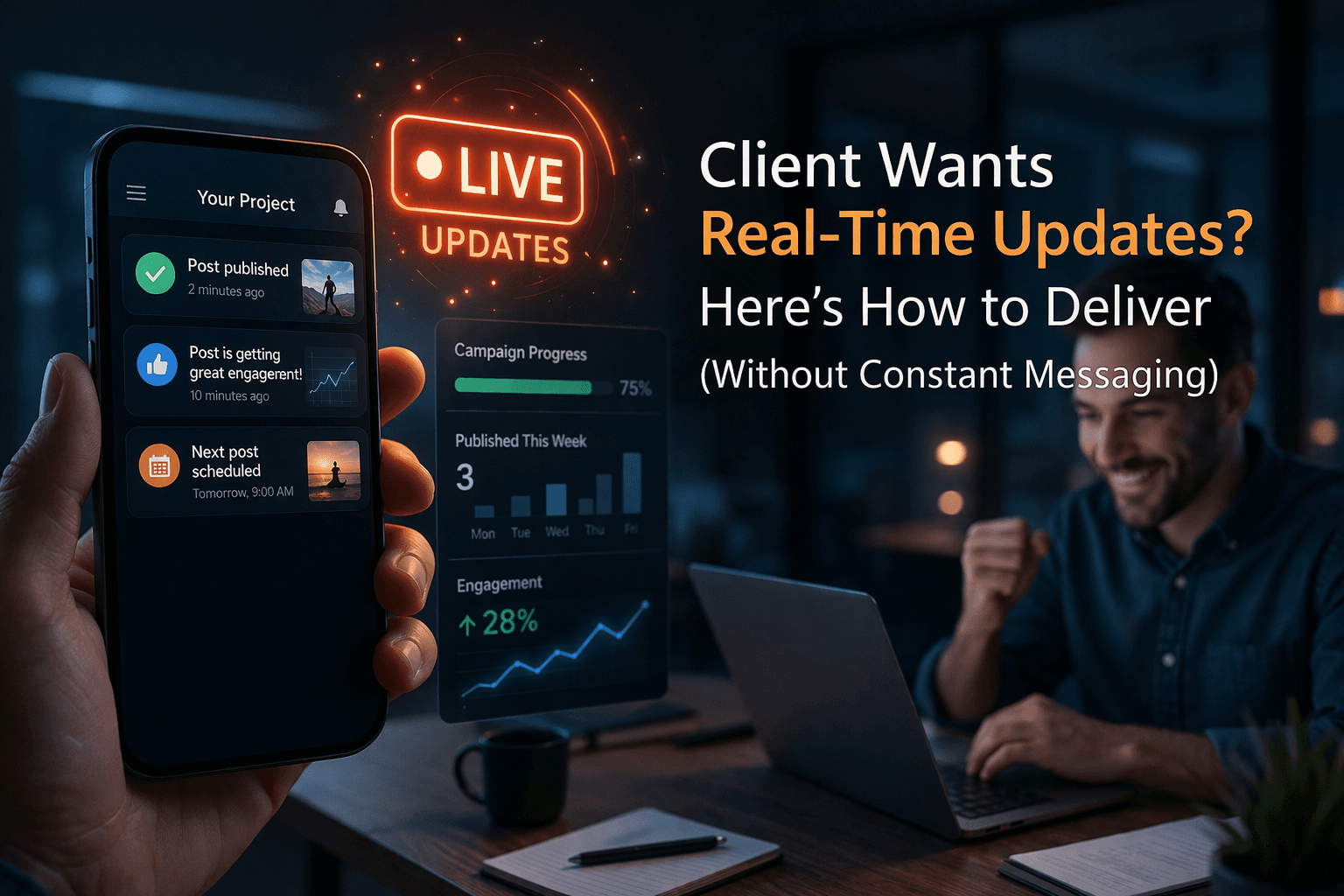
Client Wants Real-Time Updates? Here’s How to Deliver (Without Constant Messaging)
“Any Update?” — The Message That Keeps Interrupting Your Day
It rarely comes as a complaint. It usually starts as a simple message, a quick check-in from a client asking if something has been completed, whether a post has gone live, or if a task is still in progress. You respond, confirm, and move on.
Then it happens again, and again, and eventually it becomes a pattern that quietly eats into your time. You are not just doing the work anymore, you are constantly reporting on it. Every interruption forces you to stop, check status, reply, and then return to what you were doing, only to repeat the cycle later.
At first, it feels like the client is being overly involved, but over time you start to see the real reason. They are not asking because they want to interrupt you, they are asking because they cannot see what is happening.
This is where most teams misunderstand the problem. They try to improve communication, send more updates, or respond faster, but the questions never stop, because the issue is not communication speed, it is the absence of real-time visibility.
Why Clients Ask for Real-Time Updates
Clients do not wake up wanting constant updates. They ask for them because your current workflow does not give them confidence.
The first reason is lack of visibility. If clients cannot see progress as it happens, they rely on messages as their only source of truth, which naturally leads to frequent check-ins.
The second reason is inconsistency. When updates arrive at irregular times, clients cannot predict when they will receive information, so they ask instead of waiting.
The third reason is delayed confirmation. Even if work is completed on time, if confirmation is not immediate or structured, it creates doubt about whether it actually happened.
The fourth reason is trust gaps. Not because your work is unreliable, but because the system does not provide continuous proof of execution.
The Hidden Cost of Constant Updates
Answering update requests may seem like a small task, but it creates a significant operational burden when repeated frequently.
Every message interrupts your workflow, forcing you to switch context, verify progress, and respond. These interruptions reduce focus and make deep work harder to maintain.
There is also a scaling issue. As you take on more clients, the number of update requests grows, turning into a communication layer that consumes a large portion of your time.
From the client’s perspective, constant check-ins signal that the system is not fully reliable. Even if you are delivering consistently, the lack of structured visibility creates uncertainty.
Over time, this dynamic reduces efficiency on both sides, making the workflow feel heavier than it should be.
The Real Problem: Your Workflow Has No Live Visibility
The core issue is not that clients want updates, it is that your system does not provide real-time insight.
When work is executed manually or through loosely connected tools, there is no continuous signal that shows progress. Updates become an afterthought instead of an inherent part of the system.
This forces communication to fill the gap, which is why you end up answering the same types of questions repeatedly.
What you need is not faster replies, but a workflow where updates exist automatically.
The Complete Solution: Build Real-Time Visibility Into Execution
The only way to stop constant update requests is to remove the need for them by making progress visible as it happens.
The first step is stabilizing execution. Tasks need to be performed consistently so that visibility reflects reliable activity rather than unpredictable behavior.
The second step is structuring workflows. Instead of scattered actions across different tools, tasks should follow a defined path that can be observed and tracked.
The third step is introducing a system where execution and visibility are connected. Instead of completing tasks and then reporting them, the system itself becomes the source of updates.
This is where most teams encounter limitations, because building real-time visibility manually requires tracking systems, dashboards, and consistent environments.
This is also where tools like Appilot become relevant.
Instead of relying on manual reporting, Appilot allows you to run workflows on real devices through a centralized system, where execution is consistent and inherently trackable. This means updates are not something you send, they are something that exists as part of the system.
You could attempt to build similar functionality using custom dashboards or scripts, but maintaining real-time accuracy across multiple workflows becomes complex. Appilot simplifies this by handling execution in a controlled environment, making visibility reliable and consistent.
The key shift is moving from reporting work to making work observable.
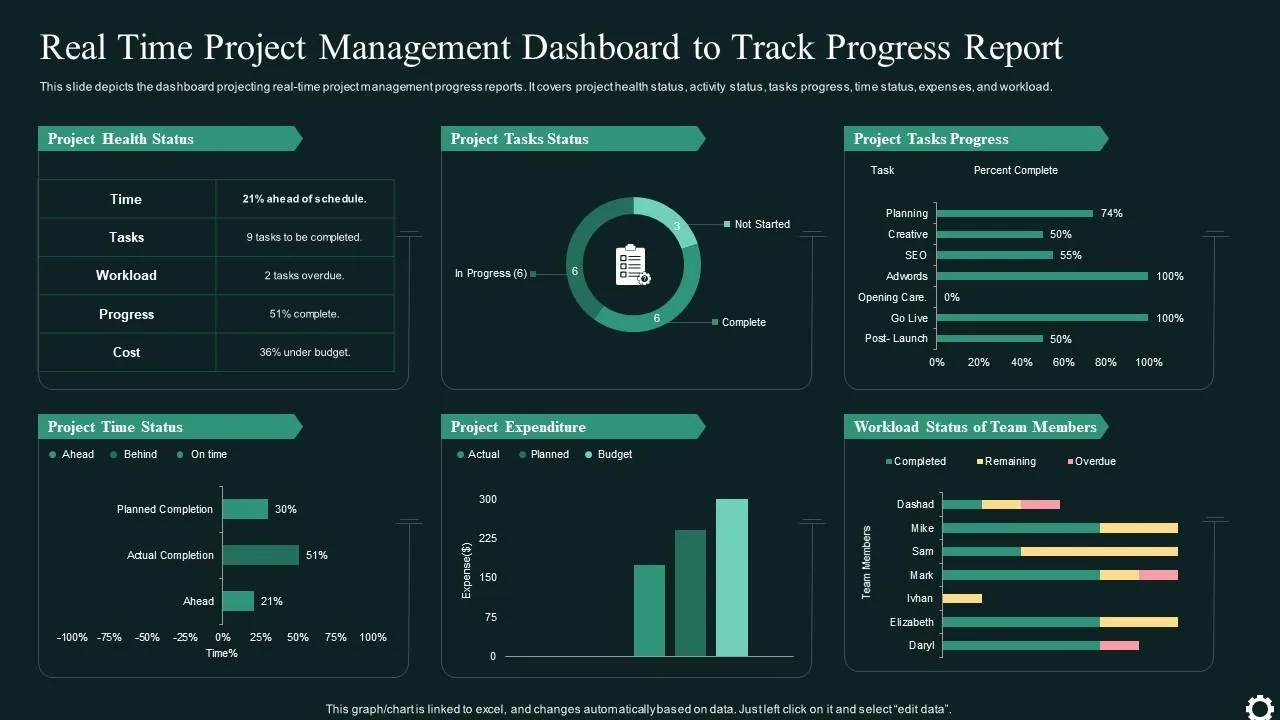
Why Real-Time Visibility Eliminates Update Requests
Once clients can see progress in real time, the need for constant messaging disappears.
Instead of asking for updates, clients can check the system and immediately understand what has been completed and what is in progress.
Consistency builds trust. When updates are always available and accurate, clients no longer feel the need to verify work manually.
Communication becomes more meaningful, shifting from status updates to strategic discussions.
Most importantly, your workflow becomes uninterrupted, allowing you to focus on execution rather than constant reporting.
How to Prevent This From Becoming a Problem Again
After implementing real-time visibility, the goal is to maintain it as your operations grow.
You ensure that all tasks are executed through the structured system, avoiding manual actions that break visibility.
You monitor workflows to ensure that updates remain accurate and consistent over time.
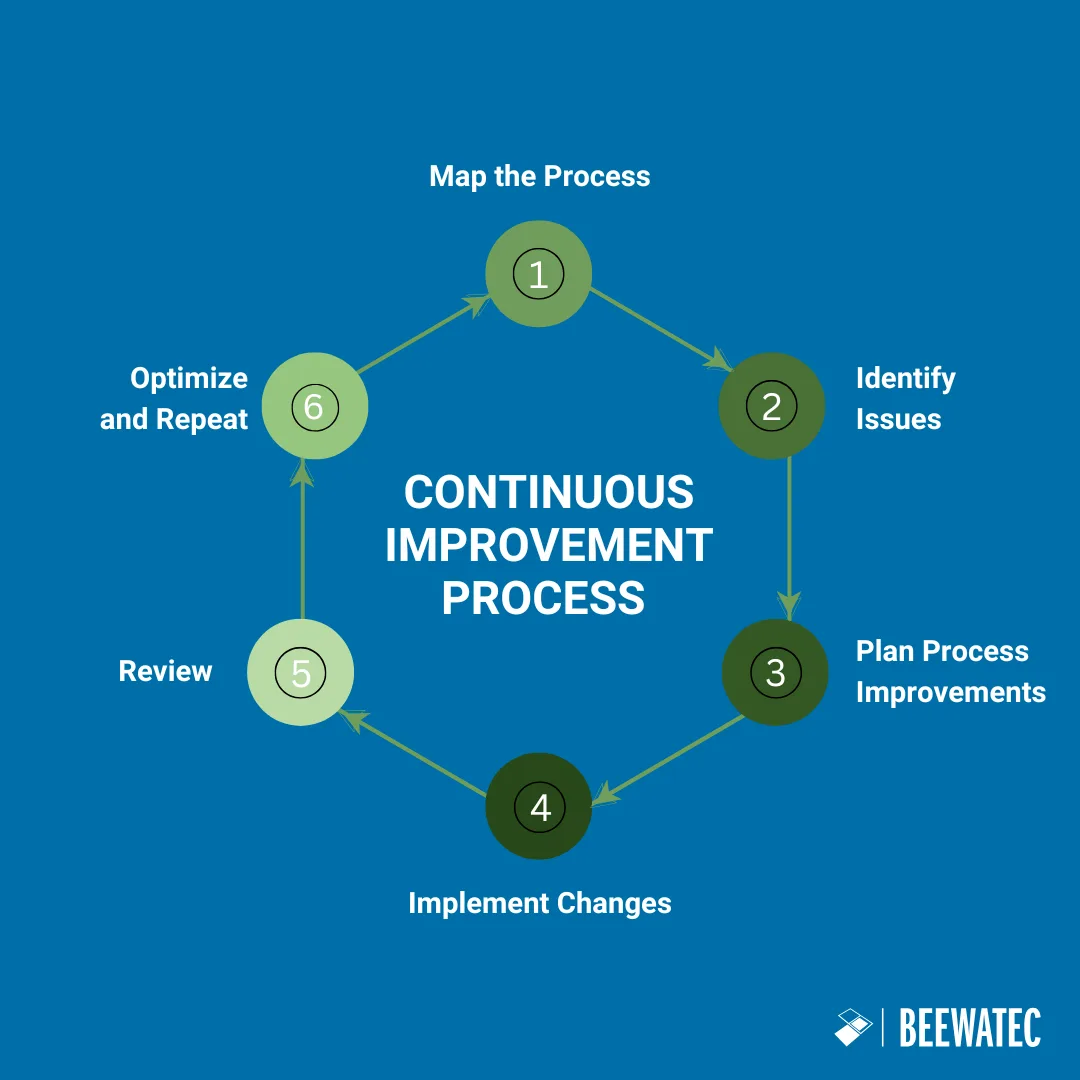
You refine processes as needed, ensuring that visibility evolves alongside your team and client needs.
Common Mistakes That Make This Worse
One of the most common mistakes is trying to solve this problem with more communication instead of improving the system, which increases effort without reducing interruptions.
Another mistake is providing delayed or inconsistent updates, which reinforces the need for clients to ask.
Some teams attempt to use multiple tools without integrating them properly, which creates fragmented visibility rather than clarity.
The most critical mistake is assuming that constant update requests are normal, when they are actually a sign that your workflow lacks structure.
Conclusion: Clients Ask Because They Can’t See
If clients are constantly asking for updates, it is not because they want to interrupt your work, it is because your system does not provide real-time visibility.
Once you move from manual reporting to structured, observable workflows, the need for constant updates disappears.
You can continue managing this through communication, but as your client base grows, the interruptions will grow with it.
At some point, you either build a system that provides real-time visibility or use one that already does.
That is where platforms like Appilot fit in, not as an extra layer, but as a way to ensure that your workflows are consistent, visible, and scalable without constant back-and-forth communication.