How to Build a Competitive Price Monitoring System for E-commerce
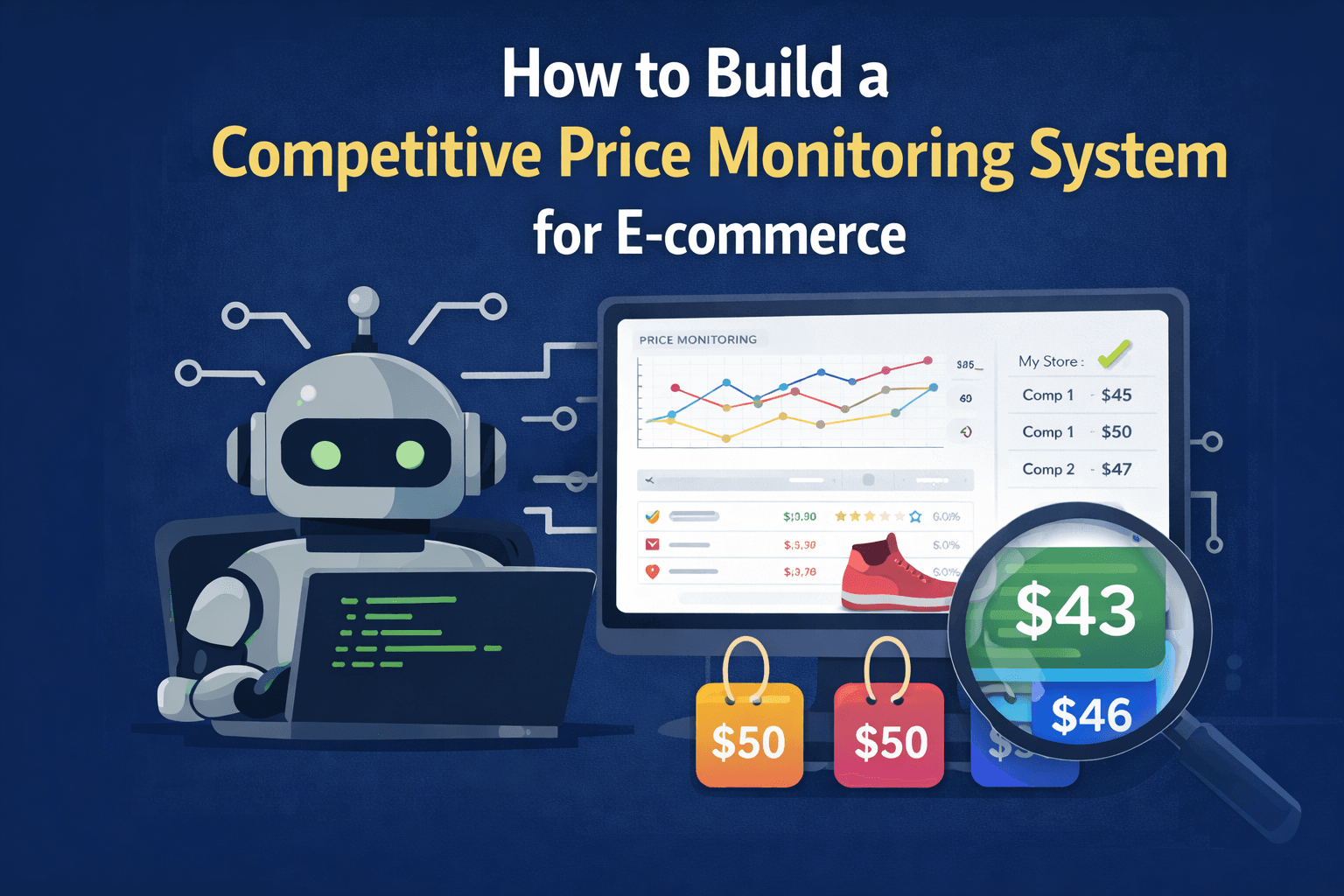
Price changes happen faster than humans can track. Competitor prices can shift during flash sales, after paid campaigns launch, when inventory drops, or when algorithmic repricing systems react to market pressure. By the time a human team notices the change manually, the opportunity to respond may already be gone. Imagine having a pricing intelligence system that shows you exactly when meaningful competitor changes happen, filters out noise, and gives your team a stable way to react without depending on brittle scraping tricks. That is not just possible, it is the more sustainable way to do competitive price monitoring in e-commerce.
This guide shows you exactly how to build a compliant and scalable competitive price monitoring system, what components matter most, the workflow to follow, and how to avoid the common mistakes that make pricing systems unstable.
Why Competitive Price Monitoring Matters / The Opportunity
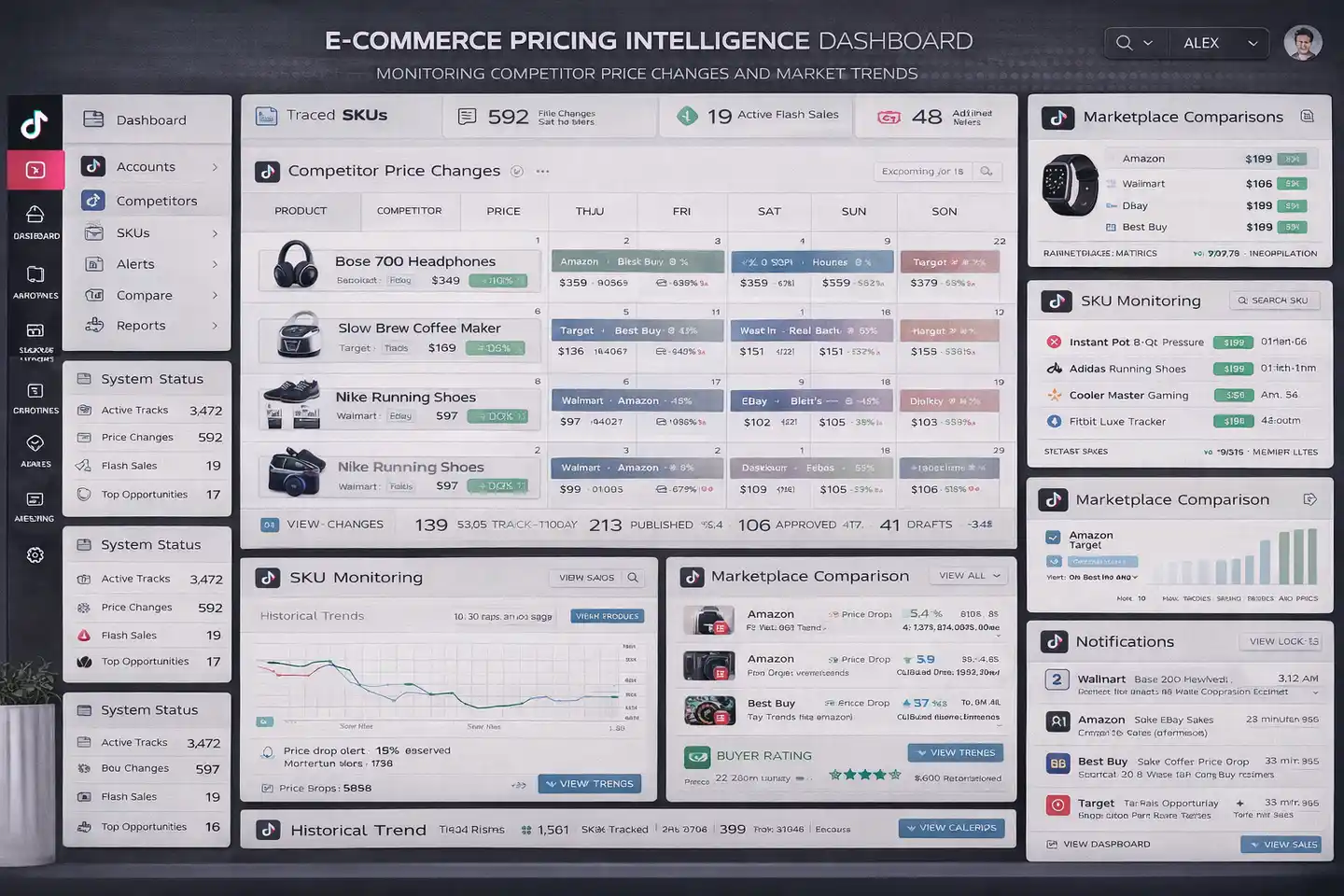
Competitive price monitoring matters because pricing is no longer something teams can review casually once or twice a week. Prices change constantly across marketplaces, direct-to-consumer stores, flash sale campaigns, and inventory-driven promotions. In many categories, competitors adjust pricing fast enough that manual monitoring becomes unreliable almost immediately.
Competitive price monitoring is becoming essential because retailers need timely and trustworthy data to protect margin, respond to discounts intelligently, and avoid being blindsided by sudden competitor moves. Businesses that master this gain an advantage not just in speed, but in decision quality, because they can separate real pricing events from noisy or misleading page-level changes.
The opportunity is especially large when a business monitors its highest-value SKUs correctly. In practice, strong monitoring systems improve pricing response time, reduce manual workload, and create a more stable foundation for margin protection and strategy.
1. Who This Use Case is For
This approach works best for ecommerce brands, multi-channel retailers, pricing teams, category managers, marketplace operators, and revenue teams that need reliable visibility into competitor price movements. It is especially useful for teams managing hundreds or thousands of SKUs where manual price checks are too slow and too inconsistent to be useful.
It is also valuable for operations teams and internal data groups that need to connect competitor monitoring to alerts, dashboards, or repricing rules. Businesses that compete heavily on price-sensitive categories will benefit the most because even small pricing delays can affect both conversion and margin.
2. What You'll Achieve
By implementing a structured competitor price monitoring system, you will be able to track meaningful pricing changes across key products, normalize prices into fair comparisons, store historical trends, reduce noise from weak signals, and trigger alerts only when a pricing event actually matters.
In real-world terms, this means you can react to competitor discounts faster, reduce the amount of manual pricing work your team does, improve the quality of pricing decisions, and create a more sustainable monitoring operation that does not collapse every time a site changes its front-end.
3. What You'll Need
Before building the system, you need to think less like a scraper and more like a pricing infrastructure designer. The goal is not collecting raw pages as aggressively as possible. The goal is building a reliable pipeline from observation to decision.
Technical Requirements
The strongest systems start with structured sources whenever possible. That includes official APIs, marketplace seller APIs, product feeds, advertising APIs used for validation, supplier files, public data endpoints, and other contract-based sources that are inherently more stable than page scraping. When those are available, they should come first because they reduce fragility dramatically.
If public price observation is still needed, the system should include product mapping, normalization logic, scheduled collection, historical storage, and alerting rather than relying on ad hoc fetch logic. For browser-based observation workflows, some teams use tools such as Puppeteer, Playwright, or Selenium for dynamic public data collection where permitted, but the monitoring logic should still be built around controlled architecture rather than scraping intensity.
If teams also need mobile-first operational visibility or Android-side workflow review in a broader monitoring environment, Appilot can be relevant in a supporting role because it works with real Android devices and mobile-first workflows. However, Appilot should be treated as a workflow support layer where relevant, not as the foundation of a competitive pricing system. The foundation should remain structured sources, controlled observation, normalization, and alert logic.
Skills and Knowledge
A technical approach benefits from knowledge of APIs, structured data handling, scheduling systems, queue-based execution, data normalization, and dashboard or alerting workflows. Teams also benefit from understanding tax treatment, shipping costs, marketplace differences, and product equivalency because raw prices are often misleading without context.
A less technical team can still operate a strong system using managed pricing platforms and dashboards, especially if the business prefers a licensed provider over building infrastructure internally.
Time and Resource Investment
A smaller pricing intelligence setup can often be designed in days, but a robust production system takes longer because mapping products, validating data quality, building alert thresholds, and handling exceptions all require care. Ongoing maintenance is also necessary because competitors change product pages, tax display logic, and promotional formatting over time.
The right question is not how fast the system can be launched. The better question is how stable it will remain six months later.
Appilot Integration Method #1 - The Complete Solution Approach
Implementing Competitive Price Monitoring with Structured Systems
There are two broad paths to competitor price monitoring. One path treats it as a scraping exercise and focuses mostly on extraction. The other path treats it as a pricing intelligence system and focuses on architecture, source quality, normalization, storage, and actionability.
The weaker DIY approach usually starts with raw page collection and scales too quickly before the product mapping and normalization logic are mature. That often creates unstable pricing comparisons, false alerts, and growing maintenance overhead.
The stronger approach starts with structured data sources first, then adds controlled observation only where needed, and finally connects that data to historical storage and decision systems. This is where the operational mindset matters more than the extraction method.
Appilot can become relevant only in a supporting operational context where a team also works across mobile-first workflows and needs Android-side review or visibility in a broader monitoring ecosystem. Because Appilot uses real Android devices and mobile-first workflows, it can support certain operational views where relevant, but it should not be positioned as the core pricing engine. Competitive price monitoring should remain centered on structured data sources, controlled collection, and pricing intelligence logic.
Step-by-Step Implementation Guide
A stable pricing system becomes much easier to build when it is broken into operational layers instead of treated like one large scraping task.
Step 1: Define Competitor SKUs and Product Mapping
The first step is mapping internal SKUs to competitor SKUs and exact competitor URLs. This is one of the most important stages because without clean mapping, the entire comparison process becomes unreliable. A price is only useful if you are certain you are comparing equivalent products.
From a technical perspective, this product mapping layer is the foundation of the system. It should connect your internal product catalog to monitored competitor entities in a way that remains stable over time. This is what prevents the team from comparing similar-looking products that are not actually equivalent.
A common mistake at this stage is relying on loose category-level matching instead of exact SKU relationships. That usually creates misleading comparisons later.
Step 2: Normalize Prices Into Comparable Values
The next step is normalization. Raw values should be converted into net versus gross price, tax-adjusted comparison, shipping-adjusted price, and bundle-adjusted equivalents where necessary. Without normalization, the system may report that a competitor is cheaper when in reality the final payable amount is not lower at all.
This is where many weak monitoring systems fail. They collect numbers correctly but compare them incorrectly. A good normalization engine is often more valuable than aggressive collection frequency because it determines whether the business can trust the final signal.
const competitorPrice = {
  basePrice: 89.99,
  shipping: 5.00,
  taxRate: 0.08
};
function normalizedTotal(price) {
  const taxed = price.basePrice * (1 + price.taxRate);
  return Number((taxed + price.shipping).toFixed(2));
}
console.log(normalizedTotal(competitorPrice));
This kind of logic is simple, but it reflects the bigger principle that competitive price monitoring should compare business-relevant values, not just visible shelf prices.
Step 3: Use Controlled Scheduling Instead of Intensity
Price monitoring should use controlled fetch intervals and structured scheduling rather than simply increasing request frequency. Competitor prices change fast, but that does not mean every product should be checked constantly. Monitoring frequency should be tied to business importance, category volatility, and alert value.
This is especially important during flash sales, ad launches, or inventory shifts, where some SKUs matter much more than others. The strongest systems schedule intelligently instead of reacting with brute force.
The goal is architecture, not scraping harder.
Step 4: Add Smart Change Detection Logic
A mature system should not react to every observed difference. It should detect meaningful events such as a price drop above a threshold, a promo tag appearing, a bundle being introduced, or an out-of-stock state changing. This reduces noise and prevents alert fatigue.
Change detection is what turns a collection system into a pricing intelligence system. Without it, the team gets too many low-value updates and begins ignoring the alerts that actually matter.
In most businesses, smart triggers are far more valuable than maximum collection frequency.
Step 5: Connect Monitoring to Real Decisions
The final step is building the alert and decision layer. Meaningful changes should trigger Slack alerts, email notifications, BI dashboard updates, or downstream repricing logic where appropriate. Automation only becomes strategically useful when it affects decisions rather than sitting in a database as unused data.
This is where pricing teams start benefiting from the system operationally. Instead of manually checking dozens of sites, they receive structured signals tied to real thresholds and real products.
Appilot Integration Method #2 - Specific Feature Showcase
Supporting Mobile-First Operational Visibility in Broader Monitoring Environments
One of the biggest challenges in large monitoring environments is that not every relevant operational view happens purely in a browser dashboard. Some teams also care about how workflows, notifications, or supporting review steps appear in mobile-first contexts.
The traditional approach is often fragmented because browser-side monitoring, analytics dashboards, and device-side review may live in separate systems. That can create blind spots in broader operations.
Appilot can support this type of mobile-first operational visibility where Android-side workflow review is genuinely relevant because it works with real Android devices and mobile-first workflows. In that role, it can help support broader monitoring operations, but it should remain separate from the core price intelligence system itself. The core system should still be built around mapping, normalization, alerts, and structured data reliability.
Common Challenges and Solutions
Even well-designed price monitoring systems run into the same few problems repeatedly, and most of them come from architectural weaknesses rather than collection failure alone.
Challenge 1: Monitoring Category Pages Instead of Exact Products
This happens when a team takes shortcuts during setup and monitors pages where prices are cached, personalized, or visually inconsistent. The result is weak data and confusing comparisons.
The solution is to monitor exact product pages, exact mapped entities, and exact regional variants where relevant. Competitive pricing only becomes useful when the monitored target is specific and stable.
Challenge 2: Ignoring Shipping and Tax
This is one of the most common causes of misleading competitor comparisons. A lower visible price can still be a worse offer after shipping, tax, or bundle logic is accounted for.
The solution is to normalize every price into a comparable business value before triggering any decision. This protects the business from reacting to false discounts.
Challenge 3: Collecting Too Frequently Without Better Signals
Some teams assume more collection means better intelligence. In practice, collecting too often often creates instability, partial results, and unnecessary operational load.
The solution is to improve scheduling logic and change detection instead of increasing request intensity. Strong systems scale through structure, queueing, and prioritization rather than brute force.
Appilot Integration Method #4 - Real-World Case Study
Case Study: A Mid-Size Retailer Builds a Sustainable Monitoring System
A mid-size retailer with 4,000 SKUs, 8 major competitors, and 3 marketplaces needed a way to react faster to competitor discounts without depending on fragile page scraping as the core system. Their requirements were clear: the data needed to be trustworthy, the monitoring needed to be maintainable, and alerts needed to be tied to real pricing decisions.
Their earlier model was too fragile because it leaned too heavily on raw page collection without strong structure behind it. That made the data inconsistent and difficult to trust during important pricing windows.
The improved model used marketplace APIs where available, supplemented those sources with monitored public pricing where needed, built a clean SKU mapping system, and added automated alert thresholds. The result was a system that could react to competitor discounts within hours, improve margin control, and reduce manual pricing work by about 80 percent.
The key lesson was that the biggest improvement did not come from collecting more data. It came from building a better system.
Scaling Competitive Price Monitoring from 100 to 10,000 Products
Once the system works for the first hundred products, the next step is scaling architecture instead of scaling intensity.
From 100 to 10,000 Products
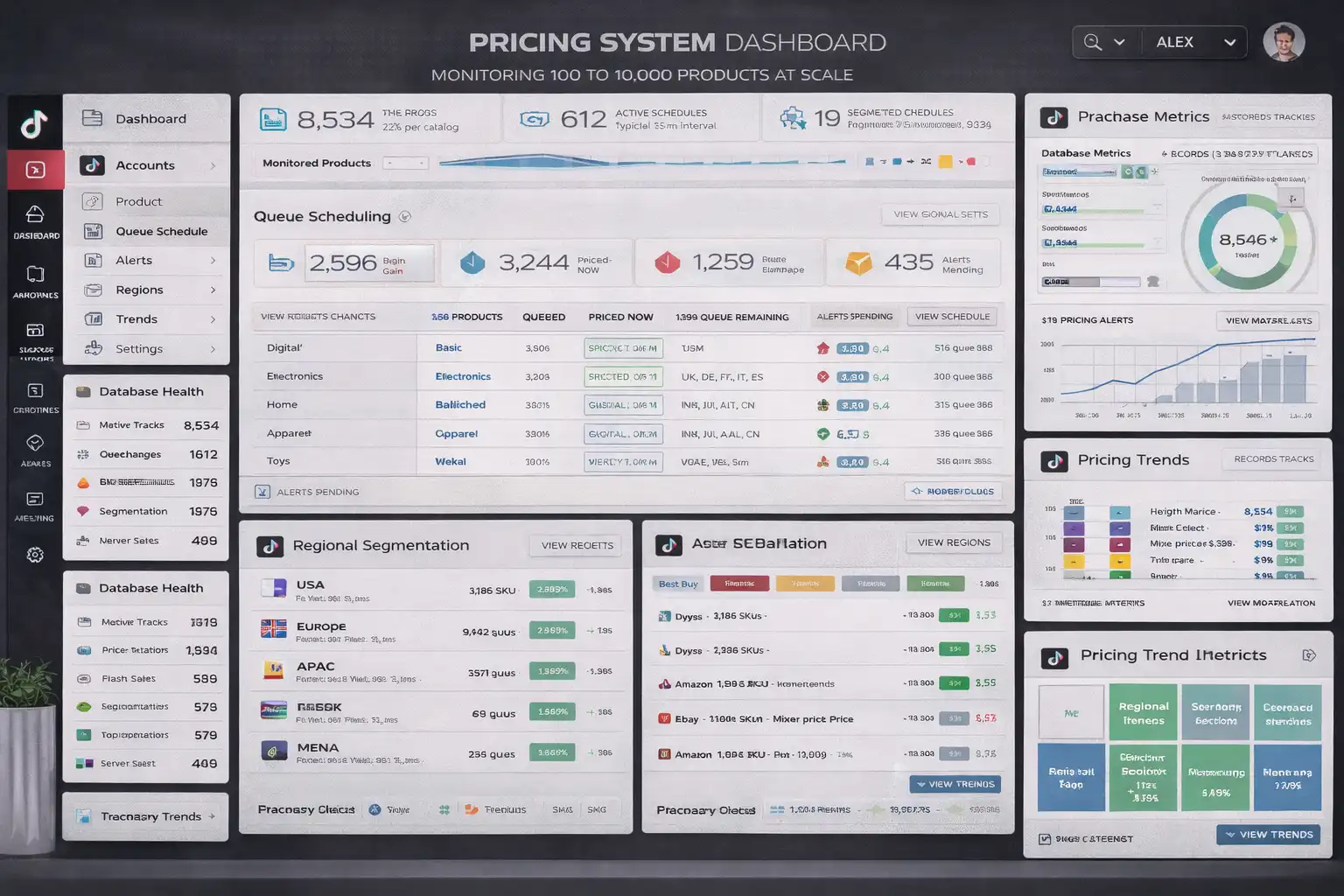
At this stage, the system needs distributed scheduling, queue-based execution, region-based segmentation, database indexing, and alert prioritization. Without those layers, every new product adds instability rather than usable intelligence.
The economics also change at scale. A business that monitors thousands of products manually wastes enormous time, while a structured system turns monitoring into a manageable operational layer. That is why platform-based solutions often become attractive once volume grows significantly.
Automation and Optimization at Scale
At scale, the right things to automate are collection scheduling, alert thresholds, dashboard updates, product health checks, and notification routing. The parts that should remain human-led are pricing strategy, exception review, and final decisions around competitive response.
That balance matters because automation is most useful when it supports judgment, not when it tries to replace it entirely.
Best Practices and Pro Tips
Best Practice 1 - Monitor What Matters First
The best place to start is the top twenty percent of revenue-driving SKUs rather than attempting full catalog coverage immediately. The implementation is simple: prioritize products with the highest commercial impact first, then expand once the monitoring logic is trusted. The impact is faster business value with less noise.
Best Practice 2 - Separate Collection From Pricing Logic
Your collection layer should gather and normalize data, while pricing decisions should be made downstream. The practical reason is that this keeps the monitoring system stable even when pricing rules change. A common pitfall is blending collection and repricing too tightly, which makes both systems harder to maintain.
Best Practice 3 - Audit Accuracy Weekly
Even strong systems need regular human validation. The best implementation is a weekly audit of a small sample of monitored products to confirm that price accuracy, tax logic, shipping treatment, and mapping quality are still holding up. The advanced version of this is region-based auditing when geo-variation matters.
Tools and Resources
For structured sources, teams should start with official APIs, marketplace seller APIs, advertising validation endpoints, supplier price files, and product feeds whenever those are available. For larger-scale operations, managed competitive intelligence platforms can often provide normalized pricing, geo-variation management, and historical trend visibility more efficiently than building from scratch.
For internal workflow structure, teams often use databases, BI dashboards, queue-based scheduling systems, Slack alerts, email notifications, and reporting tools. Where mobile-first operational visibility matters in a broader ecosystem, Appilot can support Android-side review and workflow visibility, but the pricing architecture itself should remain grounded in stable source design and structured intelligence logic.
Key Takeaways
Competitive price monitoring works best when it is treated as a pricing intelligence system, not a scraping problem. The strongest systems use structured sources first, rely on mapping and normalization, prioritize meaningful change detection, connect alerts to decisions, and scale through architecture rather than request intensity.
The biggest mistake is treating competitor monitoring like a page extraction challenge. The smarter framing is that it is a system design problem centered on accuracy, stability, and actionability.
Frequently Asked Questions
Q1: Is competitor price monitoring mainly a scraping problem?
No. The collection layer is only one part of the system. The real challenge is designing a stable pricing intelligence workflow with mapping, normalization, history, and alerts.
Q2: Why are APIs and feeds usually better than raw scraping?
Because they are more stable, more contract-based, and less likely to break unpredictably. They also reduce the risk of partial or misleading data.
Q3: What matters more, monitoring frequency or change detection?
Change detection usually matters more because it determines whether the business receives meaningful signals instead of constant noise.
Q4: Can Appilot be the core of a price monitoring system?
No. Appilot can support mobile-first operational visibility where relevant in a broader workflow environment, but the core of the system should be structured data sources, normalization, historical storage, and alerting.
Q5: When should a business use a managed platform instead of building in-house?
Managed platforms make more sense when the business monitors thousands of SKUs, needs multi-region coverage, faces marketplace-heavy competition, or has limited engineering bandwidth.
Conclusion
Competitive price monitoring in ecommerce should not be built around scraping hacks. It should be built around source quality, product mapping, normalization, historical tracking, and smart alerting.
The strongest retailers do not win by collecting more random data. They win by creating systems that turn monitored pricing into reliable business decisions. When the architecture is sound, the pricing team reacts faster, works more efficiently, and makes better decisions with less operational stress.