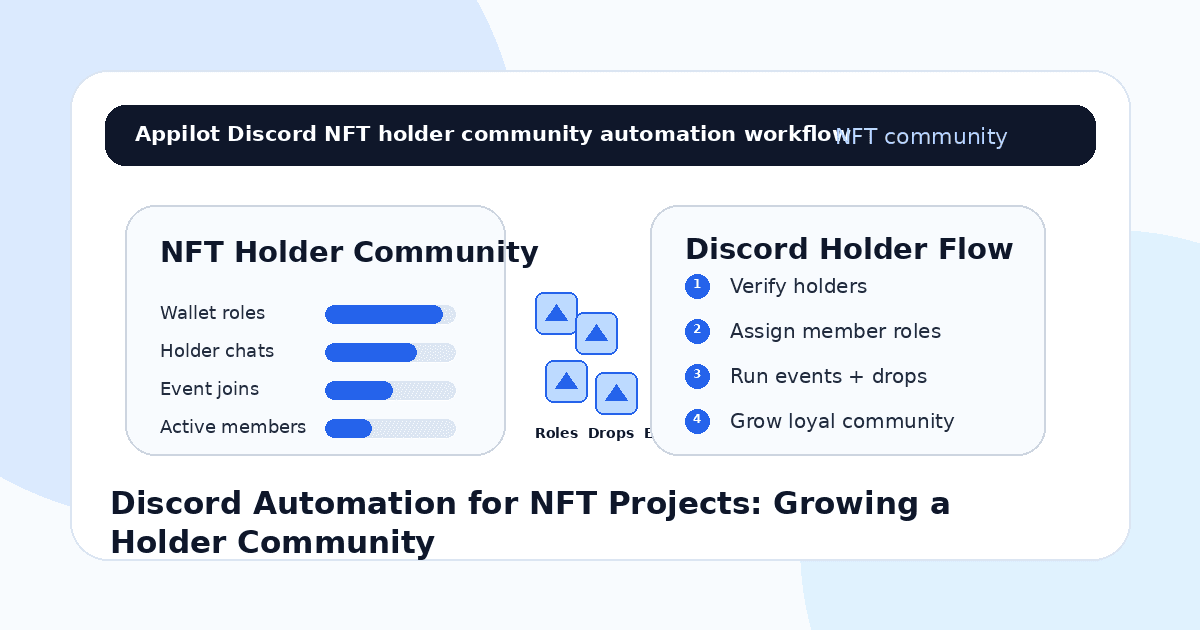
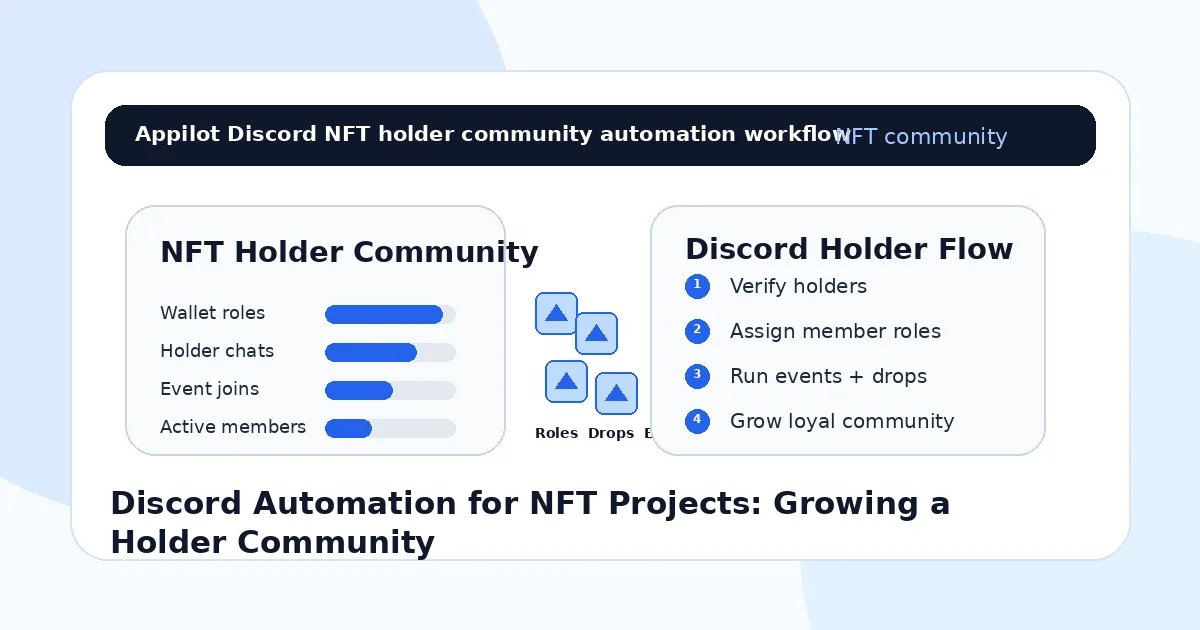
Discord Automation for NFT Projects: Growing a Holder Community
You launch an NFT project, open the Discord server, announce the roadmap, and invite early supporters to join.
A few people enter the server. Some ask how to verify their wallet. Others want to know what holders get. A few are waiting for allowlist details, event updates, or future utility announcements.
Then the server starts getting messy.
New members ask the same questions. Holders need private access. Non-holders need onboarding. Moderators need help managing roles, spam, announcements, and support requests. Without structure, even a promising NFT community can feel chaotic.
That is where Discord automation helps. It gives NFT projects a system for verification, role assignment, onboarding, announcements, events, holder-only channels, support routing, and long-term community engagement.
The goal is not to fake activity. The goal is to make the community easier to manage, safer to join, and more valuable for real holders.
Why Discord Matters for NFT Holder Communities
Discord is often the main home for NFT communities.
Twitter/X may create awareness, mint pages may handle transactions, and marketplaces may show collections, but Discord is where holders ask questions, join events, get updates, share feedback, and build relationships with the project team.
That makes Discord especially important after the first hype cycle.
A strong holder community needs more than announcements. It needs clear access, useful channels, responsive moderation, holder benefits, event reminders, roadmap updates, and reasons for members to keep returning.
Many NFT projects fail because they treat Discord like a launch room. They open channels, announce a mint, and expect the community to stay active forever. But holders need structure and value after the mint.
Automation helps create that structure.
What Discord Automation Means for NFT Projects
Discord automation means using bots and workflows to manage repeated community actions. For NFT projects, that can include wallet verification, role assignment, holder-only access, anti-spam rules, welcome messages, ticket routing, event reminders, snapshot announcements, giveaway entries, community polls, and support flows.
The safest and most useful automation does not replace community managers. It supports them.
A platform like Appilot can fit into the wider NFT growth system by helping projects connect Discord with social automation across platforms like Twitter/X, Instagram, TikTok, Reddit, and Telegram. Appilot runs workflows through Android devices or emulators from a browser dashboard, without coding, ADB setup, or manual device handling. That means teams can manage social discovery and community touchpoints more consistently while Discord bots organize what happens inside the server.
Discord becomes the holder hub. Social automation brings attention in. Community automation keeps that attention organized.
Step 1: Verify Holders Before Giving Access
Holder verification is one of the most important Discord automation steps for NFT projects.
Without verification, anyone can claim to be a holder, enter private channels, access benefits, or create confusion. A verification bot helps connect wallet ownership to Discord roles, so real holders get the right access.
This can unlock holder-only channels, alpha rooms, event access, voting areas, claim information, or future utility updates.
The key is to make verification simple and secure. Members should know which links are official, what permissions are required, and how to avoid scams. NFT communities are common targets for phishing, so verification flows need clear instructions and strong moderation.
A smooth verification process builds trust from the first interaction.
Step 2: Use Roles to Segment the Community
Not every member needs the same access.
NFT projects can use roles to separate holders, non-holders, allowlist members, moderators, contributors, artists, builders, partners, OG members, event participants, and support staff.
This keeps the server organized.
For example, verified holders can access private roadmap discussions, while new members see onboarding channels. Allowlist members can receive mint reminders. Contributors can join collaboration rooms. Moderators can manage support and safety channels.
Roles also help personalize announcements. A holder update does not always need to go to everyone. A public marketing announcement may not need to ping private holder rooms.
Automation keeps role management consistent as the community grows.
Step 3: Create a Clear Onboarding Flow
New members should not enter the server and feel lost.
A Discord automation flow can welcome them, explain the project, show official links, highlight safety rules, guide them to verification, and tell them where to ask questions.
For NFT projects, onboarding should answer the basics quickly: what the collection is, where the official links are, how to verify, where roadmap updates live, how support works, and what holders can access.
Do not overwhelm users with too many channels at once. A clean onboarding path is better than a server full of empty rooms.
Appilot can support the wider funnel by helping projects bring people from social platforms into Discord, while Discord bots handle onboarding, roles, and verification once they arrive.
The easier the first five minutes feel, the more likely members are to stay.
Step 4: Automate Announcements and Event Reminders
NFT communities need regular communication.
That can include roadmap updates, mint details, allowlist reminders, art reveals, voting deadlines, game nights, holder calls, partnership news, snapshot dates, claim windows, and community contests.
Discord automation can schedule reminders, ping the right roles, and keep updates consistent.
This matters because holders may miss announcements if the server is too active or if updates are scattered across channels. A structured announcement system reduces confusion.
Be careful with pings. Too many notifications can make members mute the server. Use roles and timing wisely so the right people get the right updates.
Good automation keeps holders informed without annoying them.
Step 5: Use Tickets for Support and Safety
NFT communities often receive repeated support questions.
Members may ask about wallet verification, marketplace links, mint issues, role access, scams, missing roles, claim windows, or technical bugs. If these questions appear randomly across channels, moderators can miss them.
Ticket bots help organize support.
A member can open a ticket, describe the issue, and get help from the right team member. This keeps private issues out of public chat and helps moderators track unresolved problems.
Tickets are also useful for security. If someone reports a scam link, fake account, or suspicious DM, the moderation team can respond faster.
A safer community is more likely to retain serious holders.
Step 6: Build Holder Engagement Beyond Announcements
Announcements alone do not create a community.
NFT projects need ways for holders to participate. That might include polls, voting, alpha discussions, community calls, art feedback, lore building, holder spotlights, collaboration ideas, contests, games, or roadmap input.
Discord bots can help run polls, collect feedback, assign event roles, track participation, and organize community activities.
The point is not to create artificial chat volume. The point is to give holders real reasons to engage.
A holder who feels heard is more likely to stay, support the project publicly, and invite others into the ecosystem.
Step 7: Connect Discord With Social Growth
Discord should not sit alone.
NFT communities usually grow through Twitter/X, Telegram, Instagram, TikTok, Reddit, collaborations, Spaces, giveaways, and ecosystem partnerships. Discord is where those people land after discovering the project.
This is where Appilot can help the broader workflow. NFT teams can use Appilot to manage social automation across Android devices or emulators, helping route interested users from platforms like Twitter/X and Reddit into Discord, while Discord automation handles verification, roles, onboarding, and holder engagement inside the server.
The best growth system connects awareness, onboarding, and retention.
Social platforms bring attention. Discord turns attention into community.
Step 8: Track Community Quality, Not Just Member Count
A Discord server with thousands of members is not always healthy.
NFT projects should track verified holders, active holders, event attendance, ticket resolution time, role verification completion, announcement engagement, community poll participation, support quality, retention, and meaningful conversations.
Member count can be misleading if many users are inactive, bots, or only there for giveaways.
The strongest NFT communities are measured by trust, participation, and holder value.
Automation gives you more community data. The team still needs to decide what that data means.
Common Mistakes NFT Projects Should Avoid
Creating Too Many Channels
A server with too many empty channels feels dead. Start with a clear structure and expand only when the community needs it.
Overusing Pings
Constant notifications train members to mute the server. Use role-based pings and important updates only.
Ignoring Security
NFT communities are scam targets. Use official links, clear verification flows, anti-spam tools, and active moderation.
Treating Discord Like an Announcement Board
Holders need interaction, support, events, and reasons to return. Announcements alone are not enough.
Chasing Member Count Over Holder Quality
A large server does not mean a loyal community. Verified holders, active participation, and trust matter more.
Is Discord Automation Right for NFT Projects?
Discord automation is a good fit if your NFT project has holders, allowlists, community events, token-gated access, roadmap updates, or active member support. It works especially well for PFP projects, gaming NFTs, art collections, utility-based NFTs, DAOs, creator communities, and Web3 membership projects.
It may not be right if the project has no real community value or only wants artificial activity. Automation can organize a community, but it cannot create trust or utility by itself.
Think of Discord automation as community infrastructure. It helps holders feel organized, safe, and informed, but real value still comes from the project team.
Final Thoughts
Discord automation helps NFT projects grow stronger holder communities by making verification, roles, onboarding, announcements, events, support, and engagement easier to manage.
The best workflows are simple, secure, and useful. They verify real holders, route new members clearly, protect the server from scams, and give people reasons to participate after the mint.
If you want to connect Discord with wider social automation, Appilot gives NFT teams a browser-based way to control Android devices, emulators, and ready-to-use bots for Discord, Twitter/X, Telegram, Reddit, Instagram, TikTok, and more. You can check it out at appilot.app.
FAQs
Q1: Can Discord automation help NFT projects grow holder communities?
Yes, it can help verify holders, assign roles, onboard members, manage support, announce updates, and run events.
Q2: What should NFT projects automate first in Discord?
Start with wallet verification, role assignment, welcome flows, official links, support tickets, event reminders, and anti-spam protection.
Q3: Is Discord automation safe for NFT communities?
It is safer when verification links are official, permissions are limited, scam protection is active, and moderators review sensitive issues.
Q4: Can Appilot help NFT projects with Discord automation?
Yes, Appilot can support Discord and wider social automation workflows across Android devices or emulators from a browser dashboard.
Q5: Do Discord bots replace community managers?
No. Bots organize repeated tasks, but community managers still handle trust, moderation, hard questions, and holder relationships.