Understanding Dwell Time and Engagement Metrics
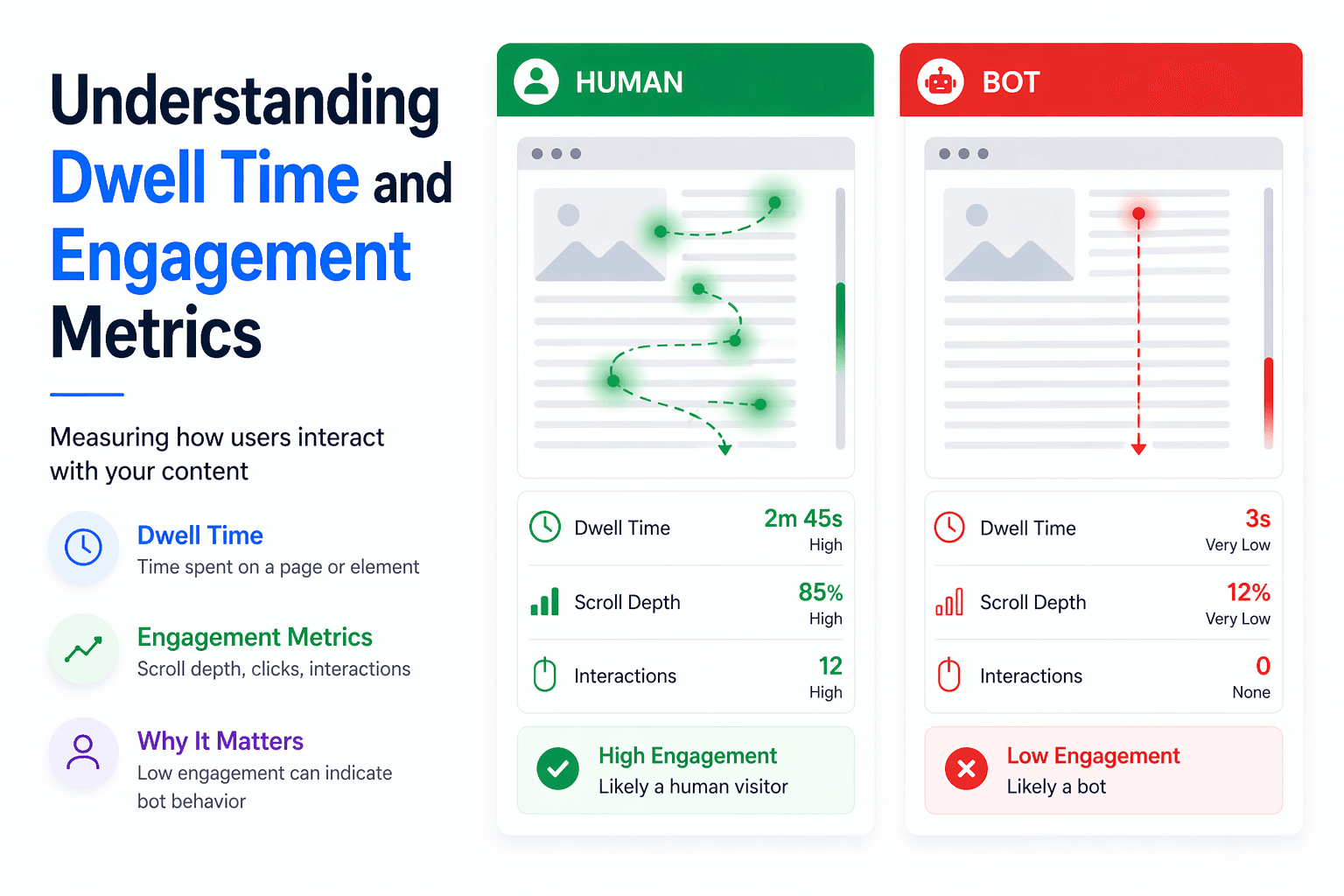
As bot detection systems become more behavior-focused, they increasingly analyze not just individual actions but overall engagement patterns. One of the most important signals in this context is dwell time, which measures how long a user stays on a page and how they interact with it. Combined with other engagement metrics, dwell time provides insight into whether a session reflects genuine user interest or automated activity.
Understanding dwell time and engagement metrics is important because they capture user intent and interaction depth. This guide explains how these metrics work and how they are used in detection systems.
What Is Dwell Time?
Dwell time refers to the amount of time a user spends on a webpage before leaving or navigating to another page, where it reflects how long the user remains engaged with the content. Unlike simple session duration, dwell time is often measured in relation to specific actions, such as clicking a link and then returning or continuing navigation. This metric provides insight into whether the user is actively consuming content or simply passing through.
What Are Engagement Metrics?
Engagement metrics are measurements that capture how users interact with a webpage, where these include actions such as scrolling, clicking, typing, and time spent on different sections of the page. These metrics go beyond basic activity and focus on the quality and depth of interaction. By analyzing these signals together, systems can build a detailed picture of user behavior.
The Core Idea Behind Engagement Analysis
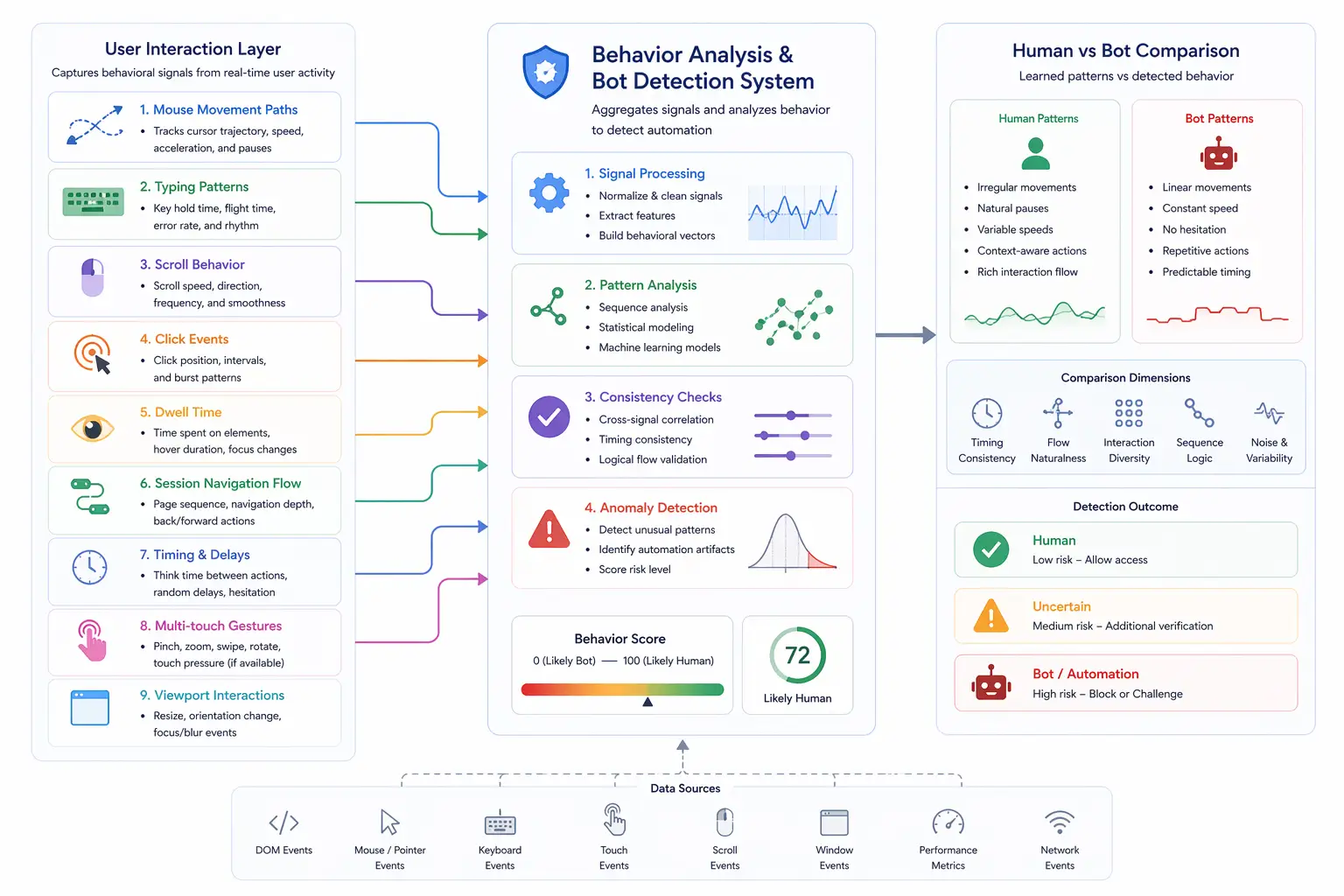
The core idea behind engagement analysis is that real users interact with content in meaningful and varied ways, where they spend time reading, exploring, and reacting to what they see. Automated systems, on the other hand, often exhibit shallow or unnatural engagement, such as very short visits, no interaction, or overly consistent behavior. Detection systems use these differences to distinguish between human and bot activity.
How Dwell Time and Engagement Are Measured
Dwell time and engagement metrics are measured using JavaScript that tracks user activity throughout a session, where events such as page load, scroll position, clicks, and focus changes are recorded with timestamps. By analyzing these events over time, systems can calculate how long a user stays, how deeply they interact, and how their behavior evolves during the session.
Key Characteristics of Human Engagement
Human engagement typically includes variable dwell times, interaction with multiple elements, and pauses that reflect reading or decision-making, where users may scroll through content at different speeds, click on links based on interest, and spend more time on sections that require attention. Engagement patterns are influenced by content complexity, user intent, and personal preferences, resulting in behavior that is irregular and context-driven.
Common Bot Engagement Patterns
Bot engagement patterns often differ significantly from human behavior, where sessions may be extremely short or unnaturally long without meaningful interaction. Bots may not scroll, click, or engage with content, or they may perform actions in a repetitive and predictable manner. In some cases, bots simulate engagement but fail to match realistic timing and variability, resulting in patterns that appear artificial.
Why Dwell Time Analysis Is Effective
Dwell time analysis is effective because it captures user intent and interaction depth, where real users naturally spend time engaging with content, while bots often lack this behavior. By analyzing how long users stay and how they interact, detection systems can identify anomalies that indicate automation. This makes dwell time a valuable signal in bot detection.
Dwell Time vs Other Behavioral Signals
Dwell time is often analyzed alongside other behavioral signals such as mouse movement, typing patterns, and scroll behavior, where each signal provides additional context about user interaction. While dwell time measures overall engagement, other signals capture specific actions. Combining these metrics creates a more comprehensive behavioral profile.
Limitations of Engagement Metrics
Despite their usefulness, engagement metrics have limitations because user behavior can vary widely depending on context, where some users may leave quickly while others may remain inactive for extended periods. These variations can lead to false positives if not properly accounted for. Additionally, advanced automation tools may attempt to simulate engagement, reducing the effectiveness of simple metrics.
Engagement Metrics vs Simulated Behavior
A key distinction in modern detection is the difference between genuine engagement and simulated interaction, where simulated behavior attempts to mimic human patterns but often lacks the depth and context of real user activity. Real engagement is driven by intent and content interaction, while simulated engagement may appear mechanical or inconsistent when analyzed closely. Detection systems focus on these differences.
Engagement Metrics vs Real-Device Environments
Another important distinction is between simulated environments and real-device environments, where simulated setups generate engagement patterns through code, while real-device environments reflect actual user interaction or realistic system behavior. Tools like Appilot follow this approach by running automation on real Android devices, where engagement signals such as timing, interaction depth, and system response align with real-world usage. This reduces inconsistencies that detection systems rely on.
When Dwell Time Is Most Critical
Dwell time and engagement metrics are most critical in scenarios where understanding user intent is essential, such as content platforms, search engines, and high-security applications, where distinguishing between genuine users and automated traffic is important. In these contexts, engagement analysis provides valuable insight into user authenticity.
Frequently Asked Questions
Q: What is dwell time?
It is the time a user spends on a webpage.
Q: What are engagement metrics?
They are measures of how users interact with content.
Q: How do they detect bots?
By identifying unrealistic or shallow engagement patterns.
Q: Can bots simulate engagement?
Yes, but it is difficult to replicate real user behavior fully.
Q: Are these metrics used alone?
No, they are combined with other behavioral signals.
Q: How do real-device solutions compare?
Real-device solutions like Appilot produce natural engagement patterns, reducing detection risk.
Key Takeaways
Dwell time and engagement metrics provide a powerful way to analyze user behavior by measuring how long users stay on a page and how they interact with it. Human engagement is variable, context-driven, and reflects real interest, while bot engagement tends to be shallow or overly consistent. By analyzing these patterns, detection systems can identify automation more effectively. Understanding these metrics is essential for navigating modern bot detection systems.