eBay Fraud Prevention: Multi-Account Detection Systems
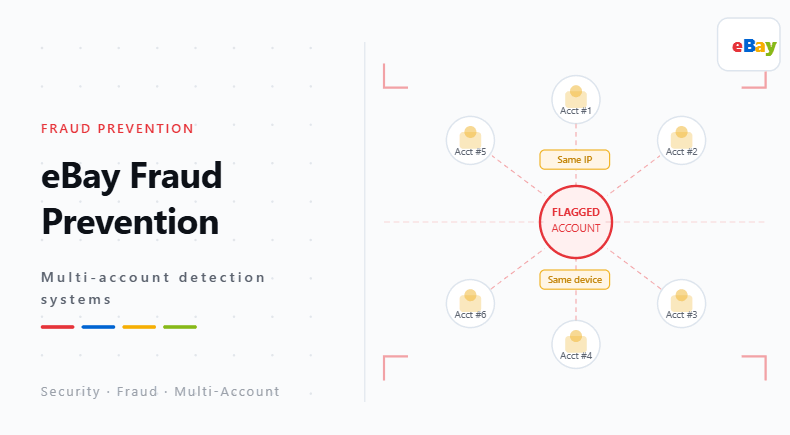
eBay operates a highly advanced fraud prevention system designed to protect buyers, sellers, and the integrity of its marketplace. One of its key challenges is detecting users who operate multiple accounts for manipulation, abuse, or fraudulent activity. To address this, eBay uses a combination of behavioral analysis, device fingerprinting, and machine learning to identify linked accounts and suspicious patterns.
Understanding how eBay detects multi-account activity is important because it reveals how modern marketplaces maintain trust and prevent abuse. This guide explains the key detection methods used by eBay.
What Is eBay Multi-Account Detection?
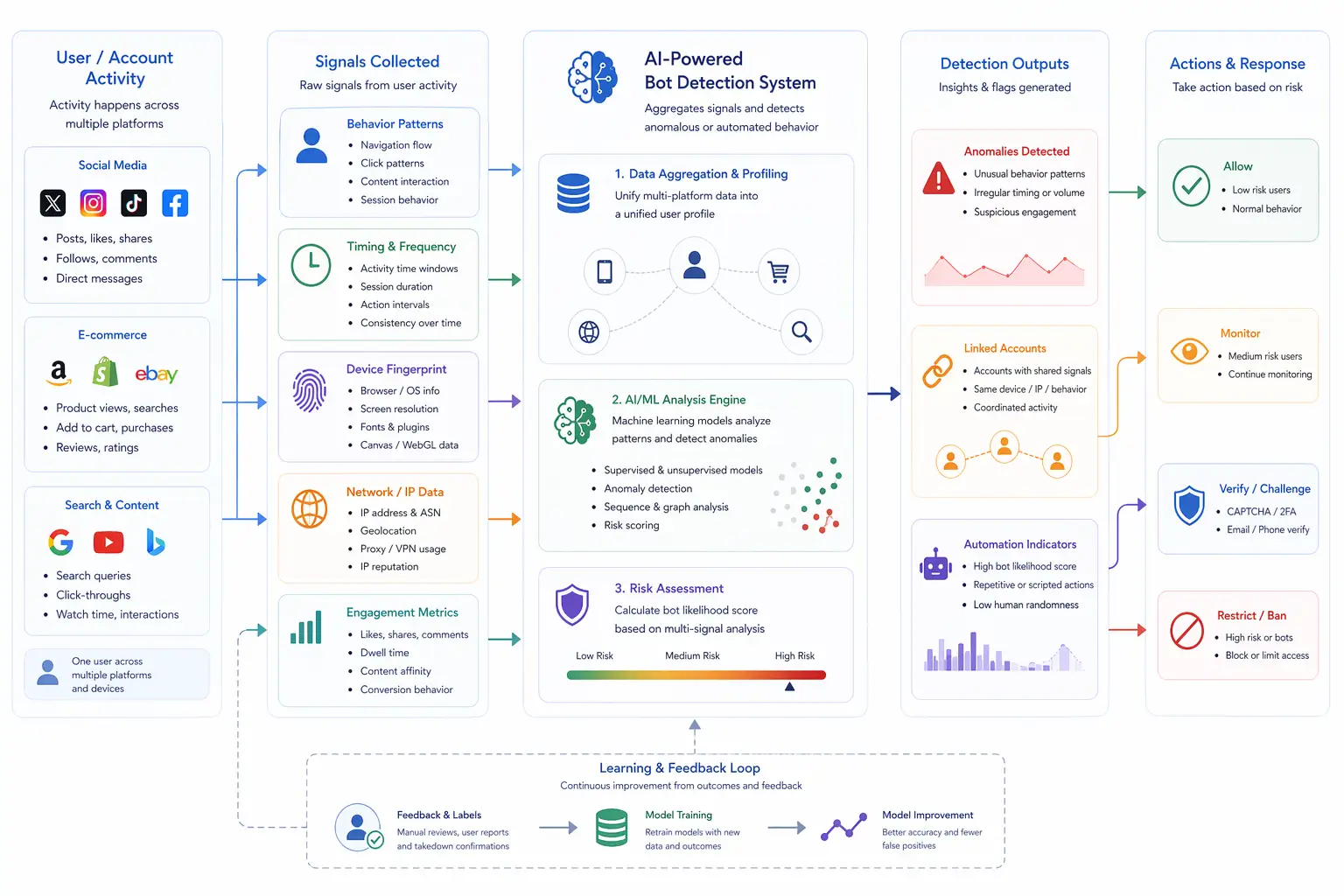
eBay multi-account detection refers to the systems and algorithms used to identify when multiple accounts are controlled by the same user or entity, where it analyzes behavior, device data, and network signals to find connections between accounts. Instead of relying on a single identifier, eBay correlates multiple data points to determine whether accounts are linked. This allows it to detect even subtle relationships between accounts.
The Core Idea Behind eBay’s Detection System
The core idea behind eBay’s detection system is correlation across signals, where behavior, device characteristics, and network activity are analyzed together. Real users typically operate accounts independently, while fraudulent setups often share patterns or infrastructure. By identifying overlaps and inconsistencies, eBay can link accounts and detect abuse.
Behavioral Pattern Analysis
Behavioral analysis is a key component of eBay’s fraud prevention, where it tracks how users interact with listings, bids, purchases, and account settings. Human behavior is varied and context-driven, while coordinated accounts often show similar patterns, such as identical bidding strategies or synchronized activity. Repetitive or mirrored behavior across accounts is a strong indicator of linkage.
Timing and Activity Correlation
eBay closely analyzes timing patterns to detect coordinated activity between accounts, where it evaluates when actions occur and how frequently they happen. Accounts that perform actions at the same time or follow similar schedules may be linked. Even slight timing correlations can reveal automation or coordination.
Device Fingerprinting and Environment Matching
eBay collects detailed information about the device and environment used to access accounts, where this includes browser properties, operating system details, and session behavior. Fingerprinting allows eBay to recognize devices across accounts and sessions, making it possible to detect when multiple accounts are accessed from similar environments. Inconsistencies or overlaps in device data can trigger alerts.
Network and IP Analysis
Network-level signals play a critical role in multi-account detection, where eBay evaluates IP addresses, geolocation, and connection patterns. Multiple accounts accessing from the same IP range or showing similar location patterns can indicate linkage. Sudden changes in location or inconsistent network behavior may also raise suspicion.
Transaction and Listing Behavior
eBay analyzes transaction patterns and listing activity to identify coordinated behavior, where it monitors how accounts buy, sell, and interact with listings. Patterns such as accounts repeatedly interacting with each other, unusual bidding activity, or coordinated listing updates can indicate fraudulent activity or account linkage.
Interaction Quality and Engagement
eBay evaluates how users engage with the platform, where real users browse listings, compare options, and interact naturally. Linked or automated accounts may perform actions without meaningful engagement, resulting in shallow or repetitive interaction patterns. Metrics such as session depth and dwell time help differentiate authentic users from coordinated accounts.
AI and Machine Learning Models
eBay uses machine learning models to analyze large-scale data and detect patterns associated with fraud and multi-account activity, where these models continuously learn from new data and adapt to evolving techniques. By combining historical patterns with real-time signals, eBay can identify subtle connections between accounts.
Account Relationship Mapping
One of the most advanced aspects of eBay’s system is relationship mapping, where it builds networks of accounts based on shared signals and interactions. This allows eBay to identify clusters of linked accounts and detect coordinated activity at scale. Even indirect connections can be used to identify relationships.
Limitations and False Positives
Despite its advanced systems, eBay’s detection may occasionally flag legitimate users, especially those who share devices or networks, such as family members or businesses. These cases highlight the challenge of balancing fraud prevention with user flexibility.
eBay Detection vs Other Platforms
Compared to many platforms, eBay places a stronger emphasis on transaction integrity and account relationships, where its detection system focuses heavily on linking accounts and identifying coordinated behavior. This makes it particularly effective at preventing fraud.
Detection vs Real-Device Environments
A key distinction in modern detection is the difference between simulated environments and real-device environments, where simulated setups often struggle to maintain consistency across behavior, device signals, and network data. Real-device environments operate on actual hardware where all signals naturally align, and tools like Appilot follow this approach by running automation on real Android devices, ensuring that behavior, device characteristics, and network signals reflect real-world usage. This reduces inconsistencies that detection systems rely on.
When eBay Detection Is Most Strict
eBay’s fraud prevention systems are most strict in scenarios involving high-value transactions, unusual bidding patterns, or multiple accounts interacting with each other, where protecting marketplace integrity is critical. In these contexts, even small anomalies can trigger detection or restrictions.
Frequently Asked Questions
Q: How does eBay detect multiple accounts?
By correlating behavior, device data, and network signals.
Q: What triggers detection?
Synchronized activity, shared environments, and unusual transactions.
Q: Does eBay use AI?
Yes, machine learning models analyze patterns and relationships.
Q: Can multi-account setups avoid detection?
It is difficult due to signal correlation.
Q: Are false positives possible?
Yes, especially for shared devices or networks.
Q: How do real-device solutions compare?
Real-device solutions like Appilot produce consistent signals across all layers, reducing detection risk.
Key Takeaways
eBay multi-account detection uses a multi-layered approach that combines behavioral analysis, timing correlation, device fingerprinting, network monitoring, transaction analysis, and machine learning. By linking accounts through shared signals and patterns, eBay can identify coordinated activity and prevent fraud. Understanding these systems is essential for navigating detection on e-commerce platforms.