Etsy Deactivated Your Listings for "Handmade Policy" Violation
Your Products Were Selling Fine Until Etsy Suddenly Took Them Down
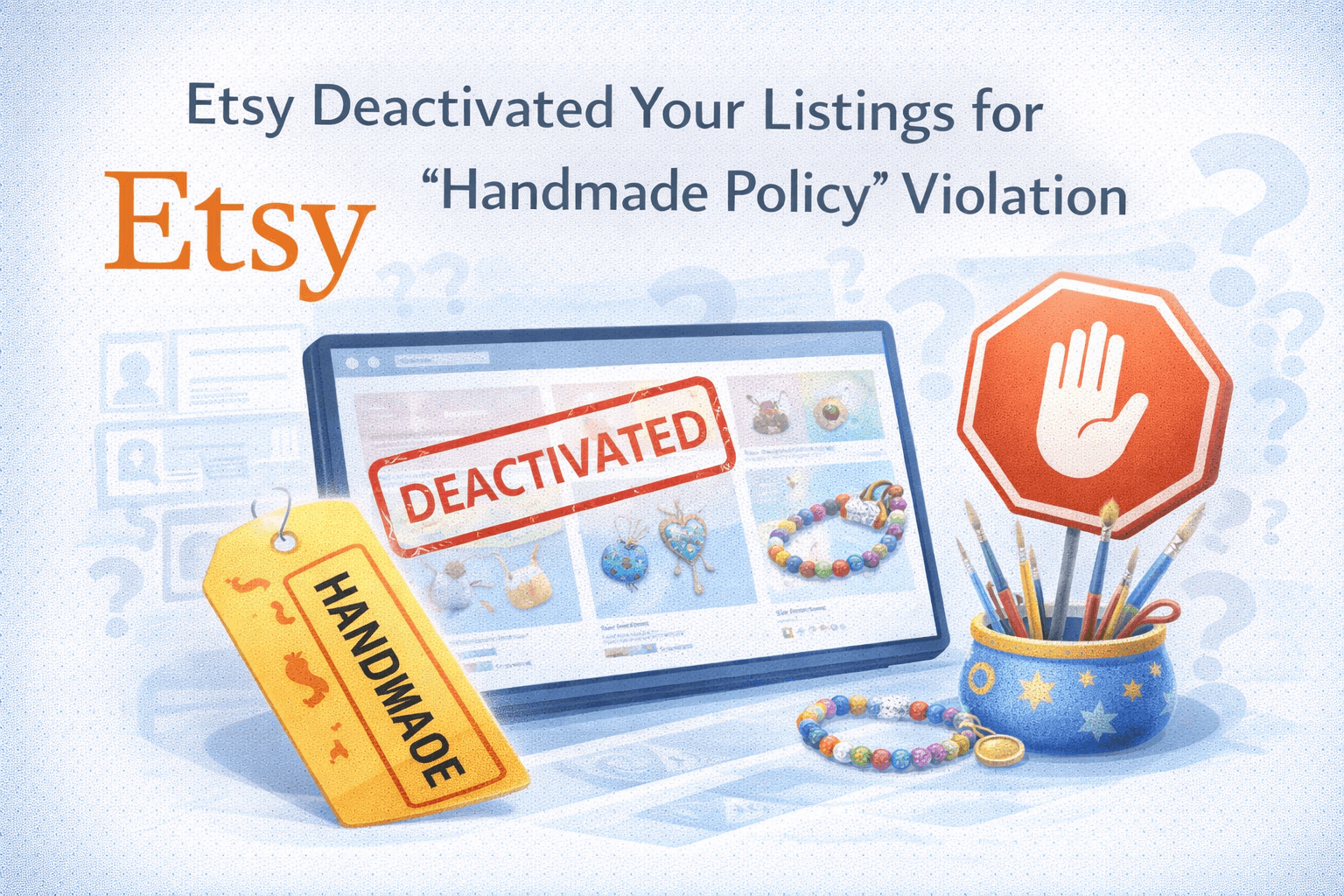
One of the most frustrating things for Etsy sellers is waking up and seeing that listings were deactivated for a handmade policy violation. The products may still be available, customers may still be interested, and the store may still technically be open, but the listings disappear and sales slow down immediately.
That becomes a serious problem because Etsy takes handmade policy issues very seriously.
If the platform believes products do not meet handmade requirements, it can remove listings, lower shop visibility, or even put the whole account at risk.
This becomes especially confusing because many sellers do not fully understand what Etsy considers handmade.
Some people assume that using production partners is not allowed, while others assume that anything designed by them automatically qualifies.
The important thing to understand is that Etsy usually removes listings when the platform believes the seller is reselling mass-produced products without enough original design work or transparency.
Why Etsy Flags Handmade Policy Violations
Most handmade policy violations happen because the products look too generic, too mass-produced, or too similar to items found on large retail marketplaces.
For example, generic packaging, stock photos, identical listings across multiple sellers, factory-made items without customization, or products copied directly from wholesale suppliers can all increase risk.
The same thing can happen if the listing does not clearly explain the design process or if production partners are not disclosed properly.
Etsy wants buyers to feel like they are purchasing from a real creator or small business.
If the products look like standard retail inventory, the platform becomes much more likely to review the listing.
The Biggest Mistake: Trying To Relist The Same Product Without Changes
One of the biggest mistakes sellers make is relisting the exact same product with the exact same photos and description after Etsy removes it.
That usually leads to another removal.
If Etsy already decided the listing looked too mass-produced or unclear, sending the same version again rarely changes the outcome.
The stronger approach is improving the listing first.
Add better photos, explain the design process more clearly, mention customization details, disclose production partners properly, and make the product feel more original.
Even small improvements in transparency can make a major difference.
Why Photos Cause So Many Handmade Policy Problems
Photos are one of the biggest reasons Etsy flags listings.
If the product images look like stock photos, supplier photos, or generic ecommerce images, Etsy may assume the item is mass-produced.
This becomes especially common for print-on-demand products, jewelry, home decor, clothing, and accessories because many sellers use the same supplier images.
The stronger approach is using more original photos.
Behind-the-scenes images, workspace photos, close-ups, packaging shots, and process photos can all help prove that the product is genuinely connected to your shop.

Why Production Partner Transparency Matters
A lot of Etsy handmade policy problems happen because sellers do not explain how the product is made.
For example, if you use a print-on-demand supplier, a laser cutter, a manufacturer, or a fulfillment partner, Etsy still expects you to disclose that relationship clearly.
That does not automatically mean the product violates policy.
You can still sell on Etsy if you designed the product yourself and use a production partner to help create it.
The problem starts when the listing hides that information or makes the product look completely handmade when it is not.
Why Better Systems Reduce Handmade Policy Problems
Handmade policy problems become much harder to manage when product photos, production partner details, supplier notes, listing drafts, and account alerts are spread across different systems. You may have one place for photos, another for supplier information, another for listing drafts, and another for account warnings. That makes it difficult to see which products are creating the biggest risk.
This is one of the reasons Appilot becomes useful when Etsy operations start scaling. Instead of keeping browser workflows, Android automations, supplier records, production partner notes, listing drafts, product photos, and task history spread across different systems, everything can stay visible from one dashboard. That makes it easier to review handmade policy risks, organize listing details, track supplier relationships, and reduce the chance of future Etsy removals across multiple shops.
Conclusion: Etsy Usually Removes Listings When Products Look Too Mass-Produced
If Etsy deactivated your listings for a handmade policy violation, the issue is usually not that the platform randomly decided to target the shop. The problem is often that the products looked too generic, the photos looked like supplier images, or the production process was not explained clearly enough.
Once you improve the listing, use more original photos, explain the design process, and disclose production partners properly, it becomes much easier to recover listings and reduce the chance of future removals.