Facebook & Instagram DM Automation for Real Estate Lead Nurturing
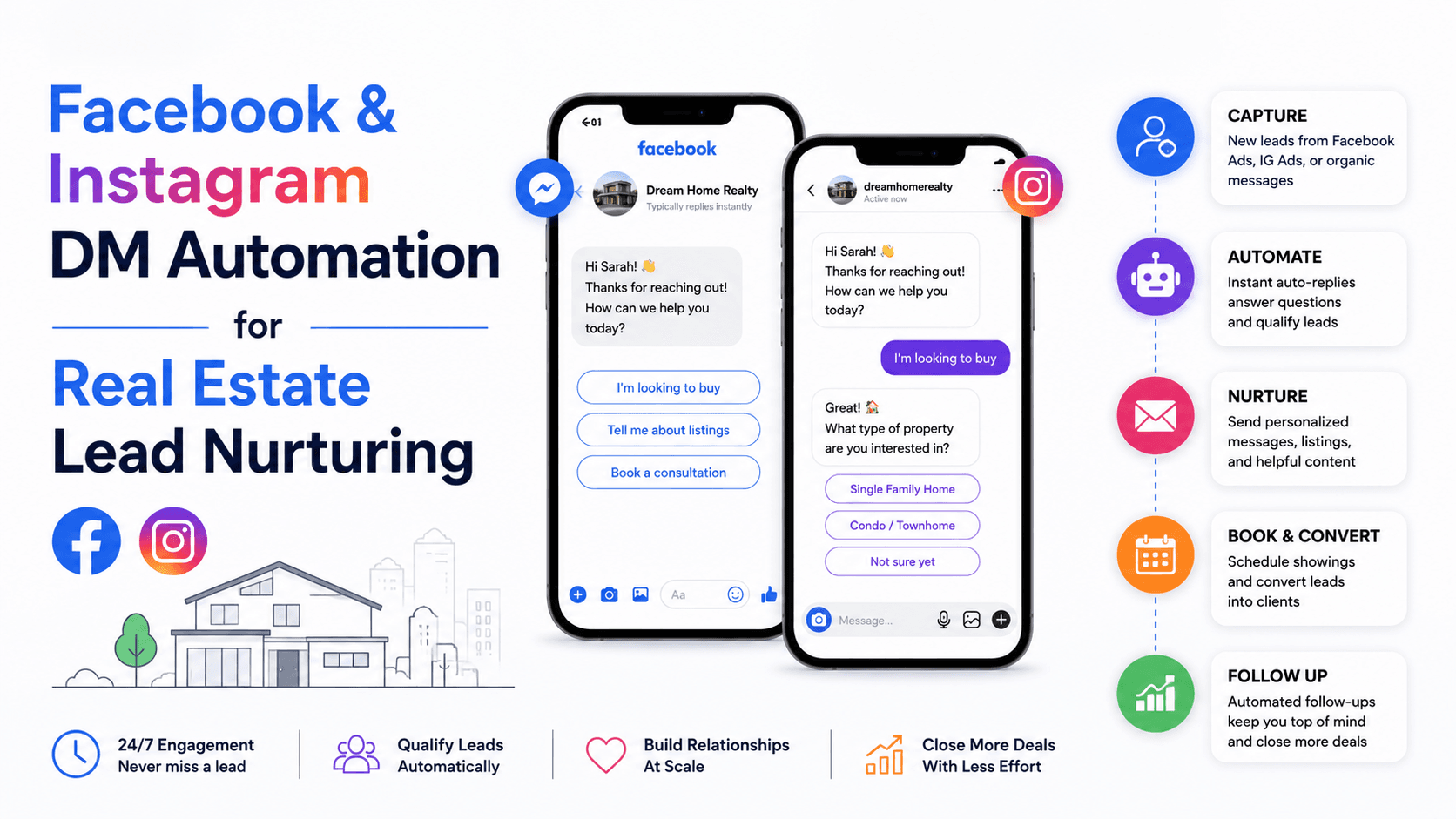
A buyer sees your Instagram Reel about a starter home and sends a quick message: “Is this still available?”
Five minutes later, someone replies to your Facebook listing post asking about the school district. Another person reacts to your Story about mortgage pre-approval. Then a seller sends a vague message asking what their home might be worth.
None of these leads look urgent at first. But in real estate, slow follow-up is where good opportunities disappear.
Most agencies do not lose leads because they never get inquiries. They lose them because the first reply takes too long, the follow-up is inconsistent, or the conversation gets buried under showings, inspections, open houses, and client calls.
Facebook and Instagram DM automation can help real estate teams respond faster and nurture leads more consistently. The key is using automation to support conversations, not replace the agent. A bot can acknowledge, qualify, and organize. A real agent still needs to build trust, answer specific questions, and move the lead toward the next step.
Why Real Estate Teams Struggle With DM Lead Nurturing
Real estate leads rarely arrive in a neat, predictable way. Some come from paid ads. Some come from Instagram Stories. Some come from Facebook comments. Some ask about a listing but are actually six months away from buying. Others look casual but are ready to book a showing today.
That makes DM management messy.
Agents are also not sitting at a desk all day waiting for messages. They are driving between appointments, negotiating offers, walking through homes, talking with lenders, checking inspection reports, and helping clients through emotional decisions. A message can sit unread for 20 minutes, two hours, or a full day.
That delay matters. A buyer who messages three agents will usually continue with the one who responds first and sounds helpful.
What many agencies get wrong is treating DMs like casual social chatter. They are not. A DM is often the first sign of buying or selling intent. Even a simple “price?” or “location?” can become a real conversation if handled quickly.
Manual replies can work when volume is low. But once an agency has multiple listings, agents, ad campaigns, and social channels active, the follow-up process needs structure.
What DM Automation Means for Real Estate
DM automation means using software to handle repetitive parts of Facebook and Instagram conversations. This can include instant replies, lead qualification questions, saved responses, follow-up reminders, tagging, routing, and handoff to the right agent.
For real estate, the best automation is not a fake human pretending to be an agent. That usually feels awkward. The better approach is simple and transparent. The automation acknowledges the lead, asks one useful question, provides basic direction, and alerts the team when a real person should step in.
For example, if someone asks about a property, the automation can reply with a short message confirming interest and asking whether they want the price, showing times, financing details, or similar homes. If someone asks about selling, the workflow can ask for the neighborhood and timeline before routing the lead to a listing agent.
A platform like Appilot fits this kind of workflow because it can run automation through real Android devices or emulators while teams manage activity from a web dashboard. Instead of depending only on fragile desktop scripts or manual phone checking, Appilot helps agencies run mobile-first social workflows with more consistent session behavior.
That does not mean every reply should be automated. Real estate is too personal for that. The strongest setup uses automation for speed and organization, then brings in the agent when the lead shows intent.
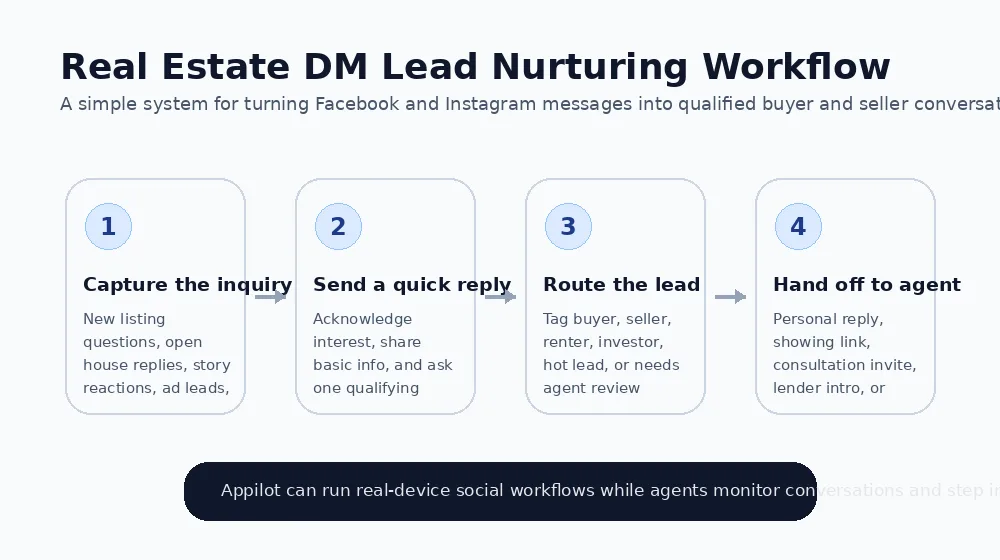
How Real Estate Agencies Use DM Automation in Practice
The first practical use case is instant lead acknowledgment. When someone messages your agency about a listing, they should not wait hours for the first reply. A quick response like “Thanks for reaching out. Are you interested in scheduling a showing, getting the price details, or seeing similar homes nearby?” keeps the conversation alive.
Manually, an agent would need to stop what they are doing and reply immediately. Automation can handle that first touch while the agent is busy, then route the lead once the person responds.
Appilot can support this kind of real-device workflow by helping agencies manage social automation from a dashboard while actions run through mobile device sessions. For agencies that receive Facebook and Instagram inquiries throughout the day, this can reduce missed conversations without forcing agents to live inside their inboxes.
The second use case is buyer qualification. Not every person who asks about a home is ready to buy. A simple automated question can help identify whether someone is pre-approved, still researching, relocating, renting, or actively booking showings. The goal is not to interrogate the lead. It is to collect enough context so the agent can respond intelligently.
The third use case is seller lead routing. Seller inquiries often start vaguely. Someone might ask, “How much is my home worth?” or “Are homes still selling fast here?” Automation can ask for the city, property type, and selling timeline before routing the lead to the right person.
The fourth use case is open house follow-up. If someone comments on a Facebook post or replies to an Instagram Story about an open house, a DM workflow can send the address, time, parking details, or a reminder. After the event, the agency can follow up with similar homes or ask whether they want a private showing.
The fifth use case is long-term nurturing. Many real estate leads are not ready today. Automation can help keep the conversation organized with follow-ups around saved searches, market updates, buyer guides, mortgage readiness, or seller preparation. The agent still controls the relationship, but the system reduces the chance that a warm lead goes cold.
What Results Should Agencies Realistically Expect?
DM automation will not turn every Instagram or Facebook message into a client. Real estate decisions take time, and many leads are early-stage.
A realistic result is faster response time, fewer missed inquiries, cleaner lead routing, and more conversations reaching the agent while the lead is still warm. If your team currently takes hours to reply, even a simple instant-response workflow can improve the experience.
The first two to four weeks should be treated as a tuning period. You will learn which questions qualify leads best, which messages feel natural, which inquiries need immediate agent handoff, and which follow-ups are worth automating.
Your social content still matters. If your posts are vague, your listings lack context, or your profile does not explain who you help, automation will only do so much. The DM workflow can nurture attention, but your content creates the initial reason to message.
The strongest agencies usually pair automation with useful content. They post buyer tips, neighborhood breakdowns, seller advice, financing explainers, open house clips, and realistic market updates. Then DM automation helps turn that attention into structured conversations.
Setting Up Facebook and Instagram DM Automation
Before setting up automation, map your most common lead types. For real estate, this usually includes buyer inquiries, seller inquiries, rental questions, open house interest, relocation leads, valuation requests, and general market questions.
Next, write short reply flows. Keep them simple. A first response should not be a long script. It should acknowledge the message and ask one clear question. For example, “Are you looking to buy in the next 3 months, 6 months, or just researching right now?” is easier to answer than a full questionnaire.
Then decide when the agent should step in. A hot lead asking for a showing should be routed quickly. A buyer asking basic questions can go through a short qualification flow first. A seller asking for valuation should be handed to someone who can personalize the response.
One reason real estate teams may prefer Appilot is that it keeps the workflow manageable from a browser dashboard. Agencies can run mobile-first social automation without dealing with custom scripts, ADB setup, or constant manual phone checking. For a busy real estate team, that simplicity is the difference between a system that gets used and one that gets abandoned.
You should also set limits and review conversations daily. Automation should never send misleading property details, make promises about financing, or answer legal questions it should not handle. The safest setup keeps automated replies general and moves specific questions to a licensed agent.
Finally, track outcomes. Measure reply time, booked calls, showing requests, seller consultations, and dead leads revived through follow-up. If you do not track what happens after the message, you will not know whether the workflow is actually improving lead nurturing.
Common Mistakes Real Estate Teams Should Avoid
Making the Bot Sound Too Human
Trying too hard to hide automation can backfire. If the message sounds like a person but responds oddly, the lead loses trust.
Keep automated replies simple, helpful, and easy to hand off to an agent.
Asking Too Many Questions at Once
A long qualification form inside a DM feels like work. Most people will ignore it.
Ask one question at a time and move serious leads to a real conversation quickly.
Automating Property Details Without Review
Listing information changes. Prices, availability, open house times, and status updates can become outdated fast.
Avoid sending specific property claims unless your data is reliable and regularly checked.
Ignoring Facebook Comments
Many DM conversations start from comments. Someone asks “price?” or “location?” publicly, then disappears if nobody responds.
Your workflow should include both comment monitoring and DM follow-up where appropriate.
Forgetting Compliance
Real estate messaging has legal and ethical boundaries. Fair housing, advertising rules, privacy, and brokerage requirements still apply.
Automation should support compliant communication, not create risk.
Is DM Automation Right for Your Real Estate Agency?
DM automation is a good fit if your agency already receives Facebook or Instagram inquiries, runs listing posts, uses Stories, promotes open houses, or spends money on social ads.
It is especially useful for teams that struggle with response speed, lead organization, or consistent follow-up. A solo agent can use it to avoid missing messages. A larger agency can use it to route leads to the right person faster.
It may not be right if your team has no clear follow-up process, rarely checks replies, or expects automation to close deals without human involvement. It also needs careful setup because real estate conversations can involve legal, financial, and personal details.
The best use is straightforward: automate the first touch and organization, then let agents build the relationship.
Final Thoughts
Facebook and Instagram DMs are not just casual inboxes anymore. For real estate agencies, they are lead channels.
The agencies that respond quickly, qualify gently, and follow up consistently will usually outperform teams that rely on memory and manual checking. DM automation helps create that consistency, but the human agent still matters most once the lead shows intent.
If your team is tired of losing inquiries in Facebook and Instagram inboxes, Appilot is worth exploring. It offers ready-to-use bots for Instagram, TikTok, LinkedIn, and other platforms through a web dashboard, with no coding required. You can check it out at appilot.app.
FAQs
Q1: Can real estate agencies automate Facebook and Instagram DMs?
Yes, agencies can automate first replies, lead qualification, routing, and follow-up reminders. Specific property questions should still be reviewed by an agent.
Q2: Is DM automation safe for real estate lead nurturing?
It can be safe when messages are general, compliant, and not overly aggressive. Avoid misleading claims, outdated listing details, and spammy follow-ups.
Q3: What should an automated real estate DM ask first?
Start with one simple question, such as whether the lead wants a showing, price details, similar homes, or help understanding the buying process.
Q4: Can Appilot help with real estate DM automation?
Yes. Appilot can support social automation workflows from a web dashboard while actions run through real Android devices or emulators.
Q5: Should agents still reply manually after automation?
Yes. Automation should handle speed and organization, but agents should personally respond once the lead shows serious buying or selling intent.