Facebook Page Unpublished: Recovery Steps That Actually Work
You log into Facebook, open your business page, and suddenly it is gone.
The page may still exist, but it is unpublished and no longer visible to the public.
Your followers cannot see it. Your posts disappear. Ads connected to the page may stop working. Leads, messages, and engagement drop immediately.
For many businesses, this is one of the most frustrating Facebook issues because it can happen without much warning.
Sometimes Facebook says the page violated policies. Other times it only says the page is under review or restricted.
You are left guessing whether the problem came from the content, the ads, the page name, the browser setup, the login behavior, or something else entirely.
The good news is that many unpublished Facebook pages can be recovered.
Once you understand what usually causes page restrictions, you can improve the setup, rebuild trust, and reduce the chances of future problems.
In this guide, you will learn why Facebook pages get unpublished, what warning signs appear before it happens, how to recover safely, and how to prevent it from happening again.
Time to recover: Usually between 2 and 14 days depending on the type of restriction. Success rate: High if the underlying issue is fixed quickly. Cost: Usually low if you already have the right browser, account structure, and page setup.
Why Facebook Unpublishes Pages
Facebook usually unpublishes pages when it believes there is too much risk associated with the page.
The platform looks at page quality, content history, policy violations, page name changes, ad activity, login patterns, Business Manager behavior, payment methods, and how the page is connected to other assets.
If too many of these signals look suspicious, Facebook may unpublish the page.
One common reason is repeated policy violations.
If the page posts misleading content, restricted products, unrealistic claims, spammy promotions, or copyrighted material, Facebook may restrict it.
Another common issue is unstable admin behavior.
If multiple admins log in from different countries, devices, browsers, or IP addresses in a short period of time, Facebook may think the page was compromised.
Frequent page name changes, category changes, and ownership transfers can also create risk.
This is exactly why I built Appilot. The goal was to create safer browser environments, more stable admin behavior, and better asset separation instead of constantly triggering Facebook trust issues.
Warning Signs Before a Facebook Page Gets Unpublished
In many cases, Facebook gives smaller warning signs before a page gets unpublished.
You may notice reduced reach, more content removals, post restrictions, ad rejections, unusual activity warnings, or requests for identity verification.
Some people also see more page quality warnings, Business Manager issues, or reduced messaging access.
These are usually signs that Facebook is starting to lose trust in the page.
The earlier you react, the easier it is to avoid a full page restriction.
The Most Common Reasons Facebook Pages Get Unpublished
One major reason is repeated content violations.
Pages that repeatedly post misleading claims, restricted offers, spammy promotions, copied content, or sensitive topics are much more likely to be unpublished.
Another common issue is aggressive advertising.
If ads connected to the page keep getting rejected or violate policies repeatedly, Facebook may reduce trust in the page itself.
Poor page quality is another major problem.
Pages with very little content, no real engagement, incomplete information, or suspicious follower growth may look less trustworthy.
Repeated changes in admins, login locations, devices, browsers, and Business Managers can also create risk.
If Facebook sees too much instability, it may decide to restrict the page.
How to Recover an Unpublished Facebook Page
Step 1: Review Page Quality and Policy Warnings
The first step is reviewing the page quality section and checking for any policy warnings.
Look for removed posts, restricted content, rejected ads, or any messages about guideline violations.
This helps identify what may have triggered the page restriction.
Step 2: Remove Risky Content
Go through recent posts, images, videos, ads, and page descriptions.
Delete anything that may look misleading, spammy, aggressive, copyrighted, or close to Facebook policy boundaries.
Even small content changes can help improve trust.
Step 3: Stabilize Admin Behavior
Keep the page connected to the same admins, same browser profiles, same devices, and same IP addresses whenever possible.
Avoid adding and removing admins constantly.
Facebook is much more likely to trust a page with stable management.
Step 4: Fix Business Manager and Ad Account Problems
If the page is connected to restricted ad accounts, disabled Business Managers, or failing payment methods, fix those issues as quickly as possible.
Facebook often looks at the full environment around the page, not just the page itself.
Step 5: Appeal the Restriction Carefully
Once the page is cleaned up and the environment is more stable, submit an appeal through Facebook.
Keep the appeal short, professional, and focused on the improvements you made.
Do not submit multiple appeals repeatedly because this can slow down the review process.
Step 6: Separate Assets Properly
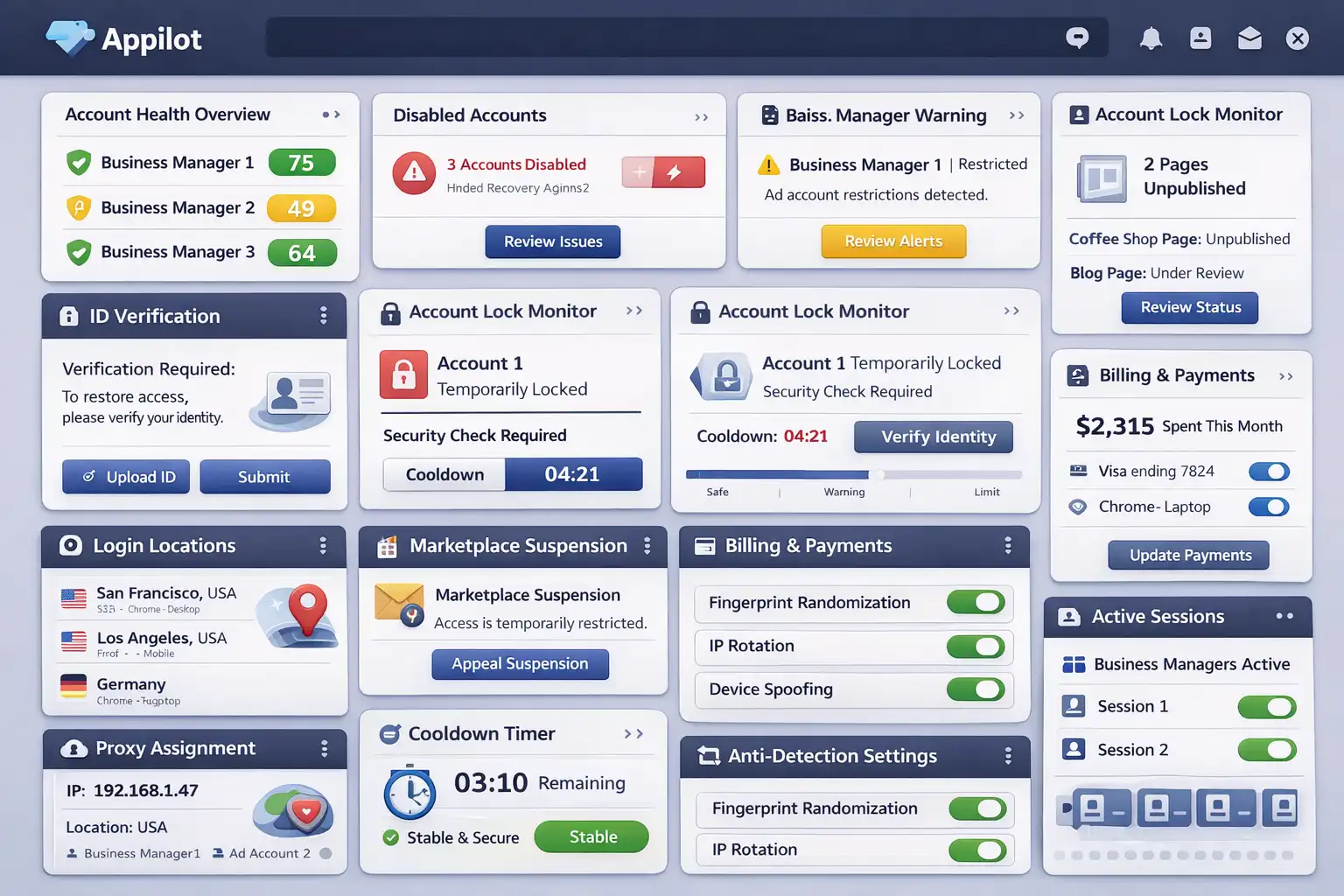
If you manage multiple pages, Business Managers, and ad accounts, separate them with different browser profiles, cookies, proxies, and device fingerprints.
This makes every page appear more independent.
If one page gets restricted, the others are less likely to be affected.
Appilot is useful here because it helps create safer browser environments and more stable admin behavior instead of connecting everything together in one place.
How to Prevent Facebook Pages From Being Unpublished in the Future
The best way to avoid future page restrictions is creating a more trustworthy environment.
Use high-quality content, stable admin behavior, consistent login locations, and safer Business Manager structures.
Avoid repeated page name changes, aggressive ad copy, spammy promotions, and unstable browser environments.
Monitor warning signs early. If page quality issues, ad rejections, or unusual activity warnings increase, fix the problem before the page gets unpublished.
The more stable and trustworthy the page looks, the easier it becomes to keep it active long term.
Common Mistakes That Make Page Restrictions Worse
One major mistake is constantly changing admins, browsers, devices, and locations.
Another mistake is creating new pages immediately after one gets unpublished.
If the underlying setup is still broken, the new pages may get restricted too.
People also make the mistake of continuing to run risky ads, post questionable content, or connect too many assets together in the same browser environment.
If one asset gets flagged, the others may lose trust too.
Frequently Asked Questions
Q1: Why did Facebook unpublish my page?
Facebook usually unpublishes pages because of content violations, unstable admin behavior, ad policy issues, or suspicious account activity.
Q2: Can I recover an unpublished Facebook page?
Yes. Many unpublished pages can be recovered if the underlying problems are fixed and an appeal is submitted.
Q3: Do ad account issues affect page trust?
Yes. Restricted ad accounts and Business Managers can reduce trust in connected pages.
Q4: Are proxies safe for Facebook page management?
Yes, if they are high-quality residential proxies used consistently.
Q5: Does Appilot help reduce page restriction risk?
Appilot helps create safer browser environments, account separation, and more stable admin behavior.
Conclusion
Facebook pages usually get unpublished because the platform sees too many suspicious signals or policy issues at once.
The safest approach is improving content quality, stabilizing admin behavior, separating assets properly, and fixing connected account issues.
The goal is not to grow as aggressively as possible.
The goal is to build long-term trust so pages can stay active and stable over time.