What Is Google’s Anti-Scraping Technology?
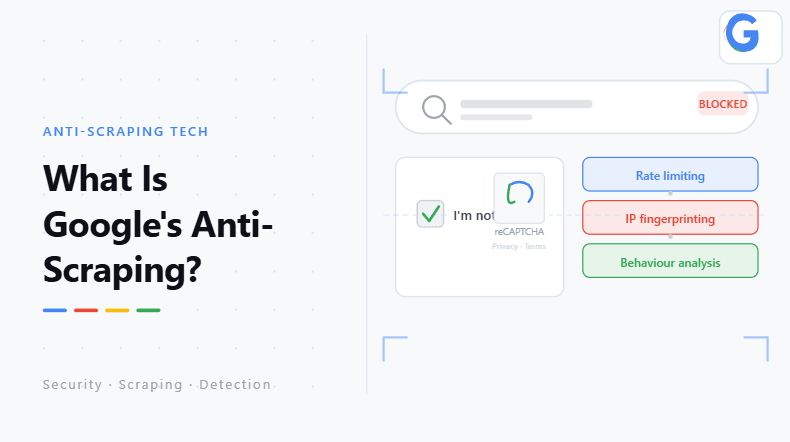
Google operates one of the most sophisticated anti-scraping systems on the internet. Because its services—like Search, Maps, and Gmail—handle massive amounts of valuable data, Google actively protects them from automated extraction and abuse. Unlike simple blocking mechanisms, Google uses a combination of behavioral analysis, network monitoring, and machine learning to detect and stop scraping attempts.
Understanding Google’s anti-scraping technology is important because it represents the most advanced form of large-scale bot detection. This guide explains how it works and why it is so effective.
What Is Google’s Anti-Scraping Technology?
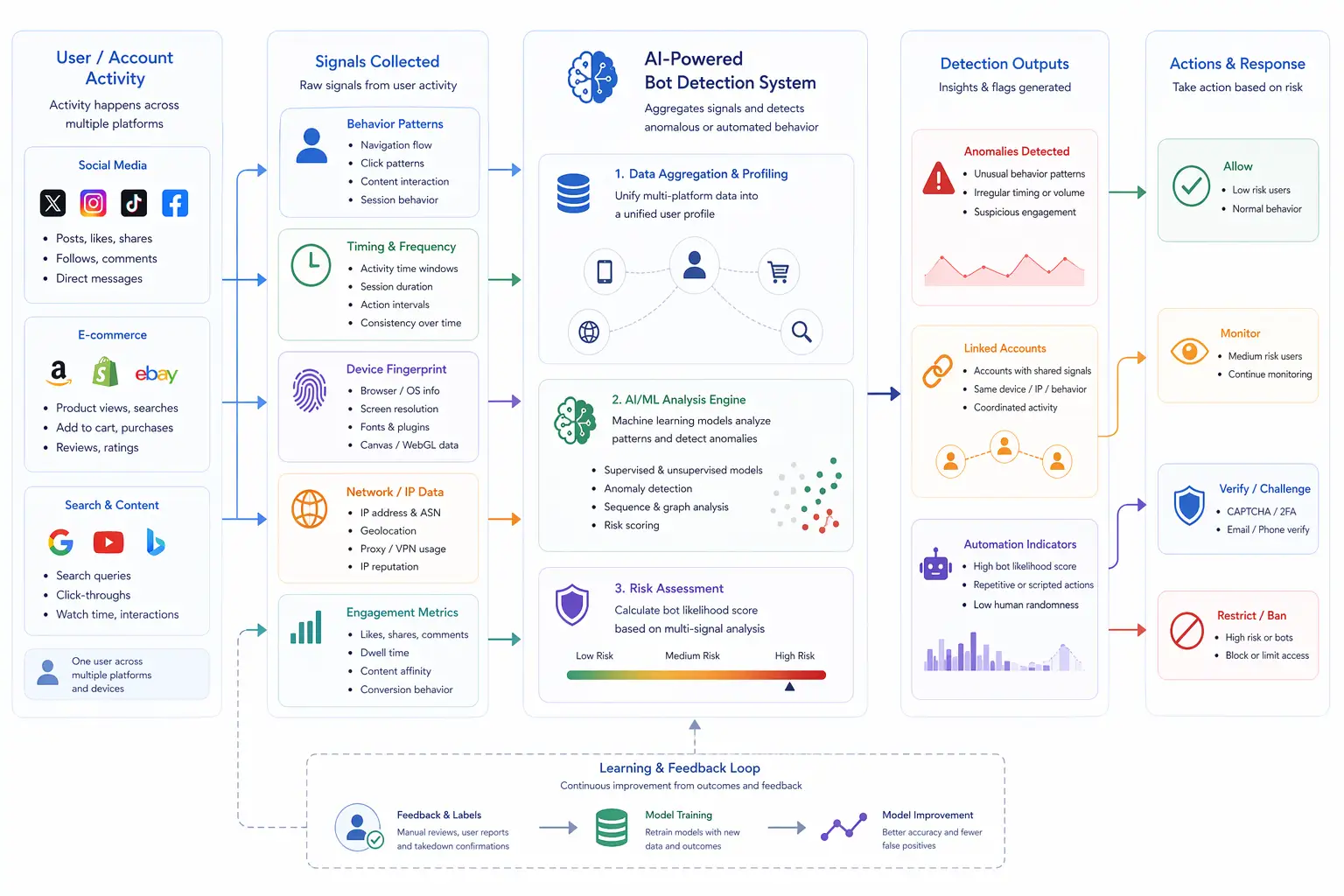
Google’s anti-scraping technology refers to the set of systems and algorithms designed to detect and prevent automated data collection from its services, where it monitors user behavior, request patterns, device signals, and network activity to identify non-human interactions. Instead of relying on a single rule, Google evaluates multiple signals together to determine whether activity is legitimate.
The Core Idea Behind Google’s Detection System
The core idea behind Google’s detection system is multi-signal correlation, where different layers of data are analyzed simultaneously. Human users generate natural, context-driven behavior, while scraping tools often produce structured and repetitive patterns. By correlating signals such as timing, navigation, and device data, Google can identify inconsistencies that indicate automation.
Request Rate Limiting and Traffic Analysis
One of the first lines of defense is request rate limiting, where Google monitors how frequently requests are made and flags unusually high activity. Real users naturally space out their actions, while scraping tools may send large volumes of requests in a short time. Traffic analysis helps identify abnormal spikes and patterns.
Behavioral Analysis and Interaction Patterns
Google analyzes how users interact with its services, where it tracks actions such as clicking search results, scrolling pages, and navigating between links. Human behavior is irregular and influenced by intent, while bots often follow predictable paths or skip interaction entirely. Patterns such as rapid navigation or lack of engagement can indicate scraping.
Device Fingerprinting and Environment Signals
Google collects detailed information about the device and browser environment, where this includes user agent, screen properties, and API behavior. Fingerprinting allows Google to recognize devices across sessions and detect inconsistencies. If multiple requests come from environments that appear identical or unnatural, it can indicate automation.
Network and IP Monitoring
Network-level signals are critical in detecting scraping, where Google evaluates IP addresses, geolocation, and connection patterns. Sudden location changes, use of proxy networks, or repeated access from specific IP ranges can raise flags. Consistent scraping activity from a single source is a strong indicator of automation.
JavaScript Challenges and Client-Side Checks
Google uses JavaScript-based challenges to verify that the browser behaves like a real user environment, where scripts test API availability, execution timing, and interaction patterns. Automated tools may fail these checks or produce inconsistent results. These challenges are often dynamic and change frequently, making them difficult to bypass.
CAPTCHA and Challenge Systems
One of the most visible aspects of Google’s anti-scraping system is its use of CAPTCHA challenges, such as reCAPTCHA, where users are required to complete tasks that are easy for humans but difficult for bots. These challenges are triggered when suspicious activity is detected and serve as an additional verification layer.
Machine Learning and AI Models
Google uses advanced machine learning models to analyze large-scale data and detect patterns associated with scraping, where these models continuously learn from new activity and adapt to evolving techniques. By combining historical data with real-time signals, Google can identify subtle anomalies that indicate automation.
Account and Session-Level Analysis
Google evaluates behavior across entire sessions and accounts, where it analyzes long-term patterns such as search behavior, navigation trends, and interaction consistency. Sessions that show unusual patterns over time are more likely to be flagged. This holistic approach improves detection accuracy.
Limitations and False Positives
Despite its advanced systems, Google’s detection may occasionally flag legitimate users, especially those with unusual browsing patterns or high activity levels. These cases highlight the challenge of balancing security with usability, and the system must account for diverse user behavior.
Google vs Other Anti-Scraping Systems
Compared to most platforms, Google’s anti-scraping technology is more advanced due to its scale and access to massive datasets, where it combines behavioral analysis, fingerprinting, network monitoring, and AI into a unified system. This makes it highly effective at detecting and preventing automated data extraction.
Detection vs Real-Device Environments
A key distinction in modern detection is the difference between simulated environments and real-device environments, where simulated setups often struggle to maintain consistency across behavior, device signals, and network data. Real-device environments operate on actual hardware where all signals naturally align, and tools like Appilot follow this approach by running automation on real Android devices, ensuring that behavior, device characteristics, and network signals reflect real-world usage. This reduces inconsistencies that detection systems rely on.
When Google Anti-Scraping Is Most Strict
Google’s anti-scraping systems are most strict in scenarios involving high-frequency requests, automated search queries, and data extraction attempts, where protecting service integrity and data access is critical. In these contexts, even small anomalies can trigger detection or restrictions.
Frequently Asked Questions
Q: How does Google detect scraping?
By analyzing request patterns, behavior, and technical signals.
Q: What triggers detection?
High-speed requests, repetitive patterns, and low engagement.
Q: Does Google use AI?
Yes, machine learning models analyze patterns and anomalies.
Q: What is reCAPTCHA?
A challenge system used to verify human users.
Q: Can scraping avoid detection?
It is difficult due to multi-layered analysis.
Q: How do real-device solutions compare?
Real-device solutions like Appilot produce consistent signals across all layers, reducing detection risk.
Key Takeaways
Google’s anti-scraping technology uses a multi-layered approach that combines request rate limiting, behavioral analysis, device fingerprinting, network monitoring, JavaScript challenges, and machine learning. By analyzing both real-time activity and long-term patterns, it can detect automated data extraction with high accuracy. Understanding these systems is essential for navigating modern web scraping and detection environments.