How Accountants and CPAs Use LinkedIn Bots to Find Business Clients
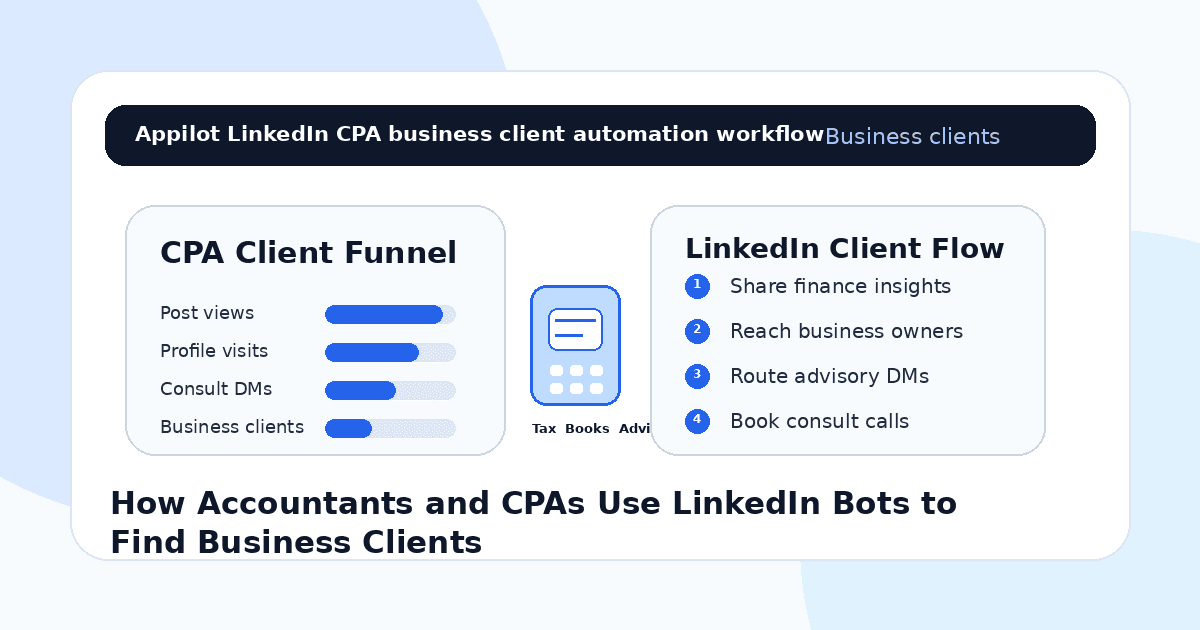
You publish a LinkedIn post about tax planning, cash flow, bookkeeping mistakes, payroll issues, audit readiness, business deductions, entity structure, or year-end financial cleanup.
A few business owners engage. Someone comments with a question. A founder visits your profile. Another operator sends a DM asking if your firm works with companies like theirs, but the message gets buried under other notifications.
That is the challenge for accountants and CPAs on LinkedIn. The platform is full of founders, agencies, consultants, e-commerce sellers, real estate investors, SaaS teams, healthcare clinics, and local business owners, but client inquiries do not come from one post alone. They come from repeated visibility, useful financial education, clear positioning, and a simple path from interest to consultation.
LinkedIn bots help accountants and CPAs manage the repeatable parts of that process. They can support profile discovery, connection requests, light follow-ups, content engagement, resource delivery, and consultation routing without manually prospecting all day.
The goal is not to automate accounting advice. The goal is to help the right business owners discover your expertise and start a responsible professional conversation.
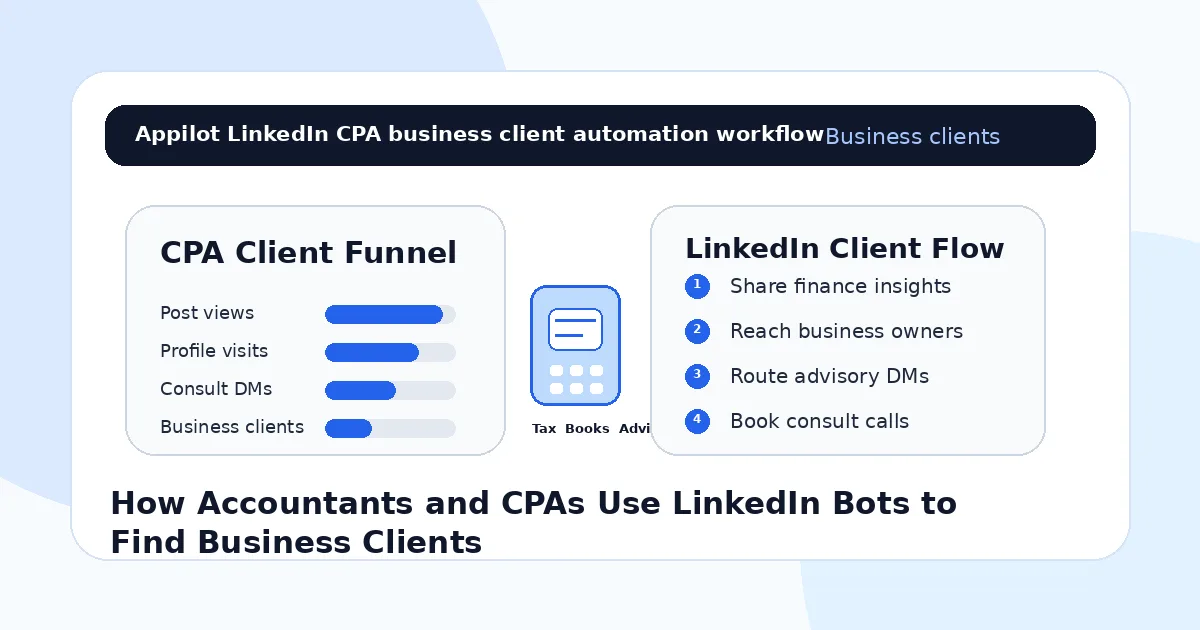
Why LinkedIn Works for Accountants and CPAs
LinkedIn works well for accountants and CPAs because business owners are already thinking about growth, hiring, taxes, operations, funding, expenses, compliance, payroll, and profitability.
A founder may need cleanup bookkeeping before fundraising. An agency owner may need better monthly reporting. An e-commerce seller may need sales tax guidance. A clinic owner may need payroll and expense control. A consultant may need entity and tax planning support.
These are business problems that naturally connect to accounting services.
But accounting is trust-heavy. A business owner does not usually hire a CPA after one cold message. They need to see clarity, professionalism, relevant expertise, and proof that the firm understands their type of business.
LinkedIn automation works best when it supports education and relationship-building, not spammy outreach.
What LinkedIn Bots Mean for Accounting Firms
LinkedIn bots use workflows to support repeated actions like profile discovery, connection requests, profile visits, content engagement, follow-ups, DM routing, and resource sharing.
For accountants and CPAs, the safest use is professional networking and general education. Bots can help connect with target business owners, send approved follow-ups, share guides, route consultation inquiries, and keep warm conversations organized.
Real-device automation is useful because it runs workflows through Android devices or emulators instead of relying only on fragile browser scripts or risky shortcuts. This makes LinkedIn activity easier to manage in a controlled way.
A platform like Appilot is built for this kind of workflow. It lets accountants and CPAs run LinkedIn automation on Android devices or emulators from a browser dashboard, without coding, ADB setup, or keeping a laptop connected all day. That means firms can stay visible while focusing on client work, tax deadlines, reporting, advisory calls, and practice operations.
Automation should support professional trust. It should not replace CPA judgment or client-specific review.
Step 1: Define the Business Client You Want
Before using LinkedIn bots, accountants and CPAs need a clear client profile.
A vague audience like “small business owners” is too broad. A stronger target might be “e-commerce brands doing $1M to $10M in revenue,” “agency owners needing monthly reporting,” “real estate investors with multiple properties,” “SaaS founders preparing for fundraising,” “medical practice owners,” or “consultants who need tax planning.”
This matters because automation magnifies targeting.
If the audience is broad, your outreach will feel generic and the inquiries may be weak. If the audience is specific, your content and messages can speak directly to the problems that business owners already feel.
A CPA serving Shopify sellers should not use the same workflow as a firm serving construction businesses, law firms, startups, or real estate investors.
Clear targeting makes every automated action more useful.
Step 2: Make the LinkedIn Profile Client-Ready
Automation can bring more people to your profile, but your profile needs to convert attention into trust.
Your headline should explain who you help and what accounting outcome you support. Your about section should clearly describe your services, industries served, process, and next step. Your featured section can include tax guides, bookkeeping checklists, case studies, webinar links, service pages, or consultation forms.
Avoid vague language like “helping businesses succeed.” Be specific.
For example, “CPA firm helping e-commerce brands clean up books, improve reporting, and prepare for tax season” is clearer than “accounting and advisory services.”
When a business owner checks your profile, they should quickly understand whether your firm is relevant to them.
Step 3: Use Content to Educate Before Selling
Business owners often do not realize they need accounting help until a problem becomes painful.
LinkedIn content can help reveal those problems earlier.
Accountants and CPAs can post about common bookkeeping mistakes, tax planning deadlines, cash flow issues, payroll risks, owner compensation, sales tax, profit margins, financial reporting, audit preparation, contractor classification, entity structure, and year-end cleanup.
The content should be general education, not personalized accounting or tax advice.
For example, a CPA can explain questions business owners should ask before year-end, but should not tell a specific person what deduction they can claim without review.
Automation can support visibility around this content, but the expertise still comes from the firm.
Step 4: Use Relevant Connection Requests
A connection request should not feel like a pitch.
The goal is to create professional context and open the door to future trust. Keep it short, relevant, and tied to the business owner’s world.
For example, an accounting firm serving agencies might say, “Hi Sarah, I share practical finance and tax notes for agency owners around reporting, cash flow, and year-end planning. Thought it made sense to connect.”
A CPA serving e-commerce brands might say, “Hi David, I work around finance systems for online stores and share notes on bookkeeping, tax planning, and margin visibility. Thought it would be useful to connect.”
This is where Appilot’s LinkedIn automation can fit naturally. Accountants can run targeted connection workflows through Android devices or emulators while controlling audience, pacing, and message quality from one dashboard.
The message should feel professional, not automated.
Step 5: Follow Up With Value
Follow-ups should not immediately push a sales call.
A better follow-up offers a useful resource, asks a light business question, or points the person toward helpful content.
For example, a CPA could say, “Thanks for connecting. I often share practical notes for business owners on cash flow, bookkeeping cleanup, and tax planning. Is there a finance topic you are most focused on this quarter?”
This creates a conversation without pressure.
If the person engages, asks a question, or describes a real issue, the firm can route them toward a consultation or intake form.
Automation can help send light follow-ups, but client-specific accounting or tax questions should be handled by a human.
Step 6: Route Inquiries Into a Proper Intake Process
When someone shows real interest, make the next step simple.
A business owner may ask whether you handle their industry, what your monthly packages cost, whether you do cleanup bookkeeping, whether you offer tax planning, or whether you can review their books.
Automation can route that person to the correct intake form, consultation page, service page, or scheduling link.
But bots should not assess tax liability, recommend entity changes, calculate deductions, or give personalized accounting advice inside LinkedIn DMs.
A safe automated response might say, “This depends on your business details, so the best next step is a consultation or intake form so the team can review your situation properly.”
Automation organizes the inquiry. The accountant or CPA handles the advice.
Step 7: Build Trust With Industry-Specific Resources
Industry-specific resources can make LinkedIn automation much stronger.
Instead of sending every lead the same generic brochure, accountants can create resources for specific client types. An e-commerce checklist, agency cash flow guide, real estate investor bookkeeping checklist, startup tax planning guide, or medical practice reporting guide will feel more relevant than a general accounting flyer.
Automation can send these resources when prospects ask or engage with related content.
If someone comments “checklist,” the workflow can send the appropriate guide. If someone asks about cleanup, it can send a bookkeeping cleanup resource. If someone asks about advisory, it can route them to a service page.
Relevance turns automation into helpful business development instead of generic outreach.
Step 8: Track Qualified Business Conversations
Do not measure LinkedIn bots only by connection count.
For accountants and CPAs, better metrics include accepted connections from target industries, profile visits from business owners, content engagement from ideal clients, guide downloads, consultation requests, qualified DMs, booked discovery calls, signed clients, and average client value.
You should also track which content creates better inquiries. Tax deadline posts may bring urgent leads. Cash flow posts may attract advisory clients. Bookkeeping cleanup content may bring cleanup projects. Industry-specific reporting posts may attract higher-value retainers.
Automation gives the firm more visibility. Tracking shows which visibility creates real business.
Common Mistakes Accountants and CPAs Should Avoid
Sending Generic Sales Pitches
Business owners ignore messages that feel copied and pasted. Use relevant, industry-specific outreach instead.
Automating Accounting or Tax Advice
Bots should not provide personalized tax, accounting, payroll, or entity advice. Route those questions to a professional review.
Targeting Too Broadly
A clear niche creates better conversations than broad “small business owner” outreach.
Ignoring Follow-Up Quality
Follow-ups should offer value, not pressure. A helpful resource often works better than a hard pitch.
Measuring Only Connections
Connections do not equal clients. Track qualified inquiries, consultations, signed clients, and recurring revenue.
Is LinkedIn Automation Right for Accountants and CPAs?
LinkedIn automation is a good fit if your firm serves business owners, founders, agencies, e-commerce brands, consultants, real estate investors, clinics, startups, or professional service firms. It works especially well when your firm has a clear niche, helpful financial content, approved messaging, and a proper intake process.
It may not be right if your positioning is unclear, your services are not defined, or your team cannot follow up with qualified leads. Automation can increase visibility, but it cannot replace trust, financial judgment, or client service.
Think of LinkedIn bots as business development assistants. They help open conversations, but the firm still earns the client.
Final Thoughts
Accountants and CPAs use LinkedIn bots to find business clients by making professional visibility more consistent.
The strongest workflow starts with a clear client segment, a client-ready profile, educational content, relevant connection requests, value-led follow-ups, proper intake routing, industry-specific resources, and qualified lead tracking. Automation handles repeated visibility and reply actions while the accountant keeps advice and trust human.
If you want to run LinkedIn automation without coding, ADB setup, or manual device management, Appilot gives accountants and CPAs a browser-based way to control Android devices, emulators, and ready-to-use bots for LinkedIn and other platforms. You can check it out at appilot.app.
FAQs
Q1: Can accountants and CPAs use LinkedIn bots?
Yes, they can use LinkedIn bots for profile discovery, connection requests, light follow-ups, resource sharing, and intake routing.
Q2: What should accounting firms automate first?
Start with targeted profile discovery, relevant connection requests, approved follow-ups, guide delivery, and consultation links.
Q3: Is LinkedIn automation safe for CPAs?
It is safer when messages are professional, gradual, compliant, and avoid personalized tax or accounting advice.
Q4: Can Appilot help accountants automate LinkedIn?
Yes, Appilot can run LinkedIn workflows on Android devices or emulators from a browser dashboard without coding or ADB setup.
Q5: Should bots answer tax questions?
No. Bots should not give personalized tax advice. They should route tax questions to a proper CPA-reviewed consultation.