How Business Coaches Use Twitter/X Automation to Grow Their Audience
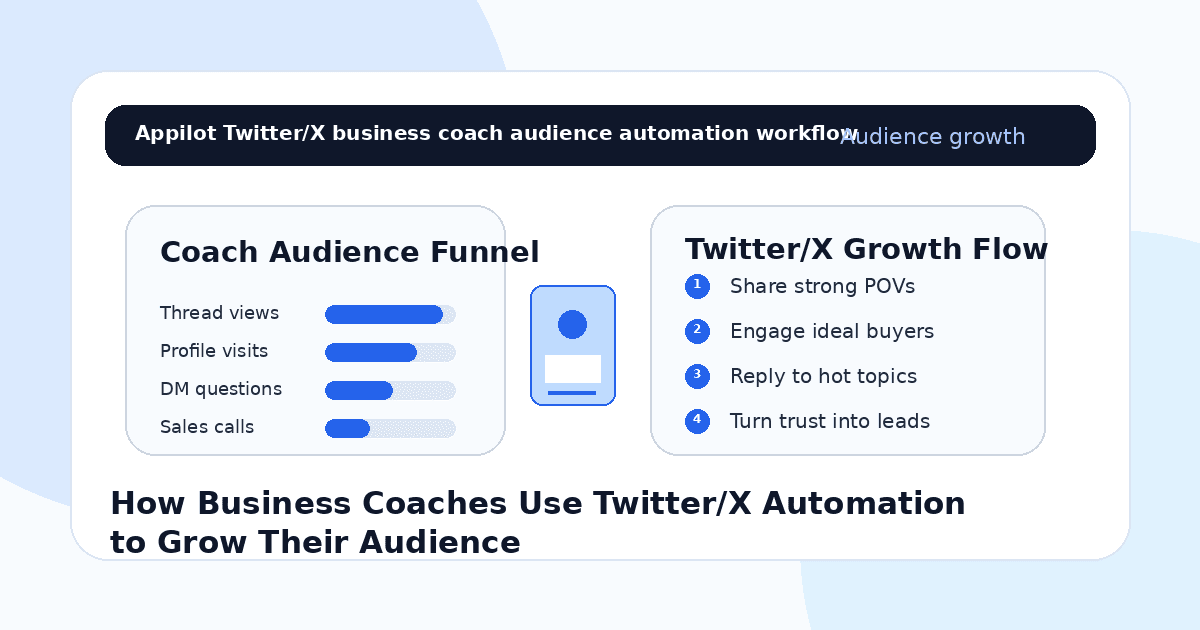
You post a sharp business insight on Twitter/X. It explains a problem your ideal clients face, gives a useful takeaway, and shows how you think.
A few people like it. Someone replies with “this is exactly what I needed.” Another asks how you help clients with that problem. A few people visit your profile, but most do not follow, DM, or book a call.
Then the post disappears into the feed.
That is the challenge for business coaches on Twitter/X. The platform rewards strong ideas, but audience growth depends on showing up repeatedly in the right conversations. One good post is rarely enough.
Twitter/X automation helps business coaches stay visible, engage with ideal buyers, reply faster, and turn attention into warm leads without manually living inside the platform all day.
The goal is not to spam replies or fake engagement. The goal is to make your coaching ideas easier for the right audience to discover.
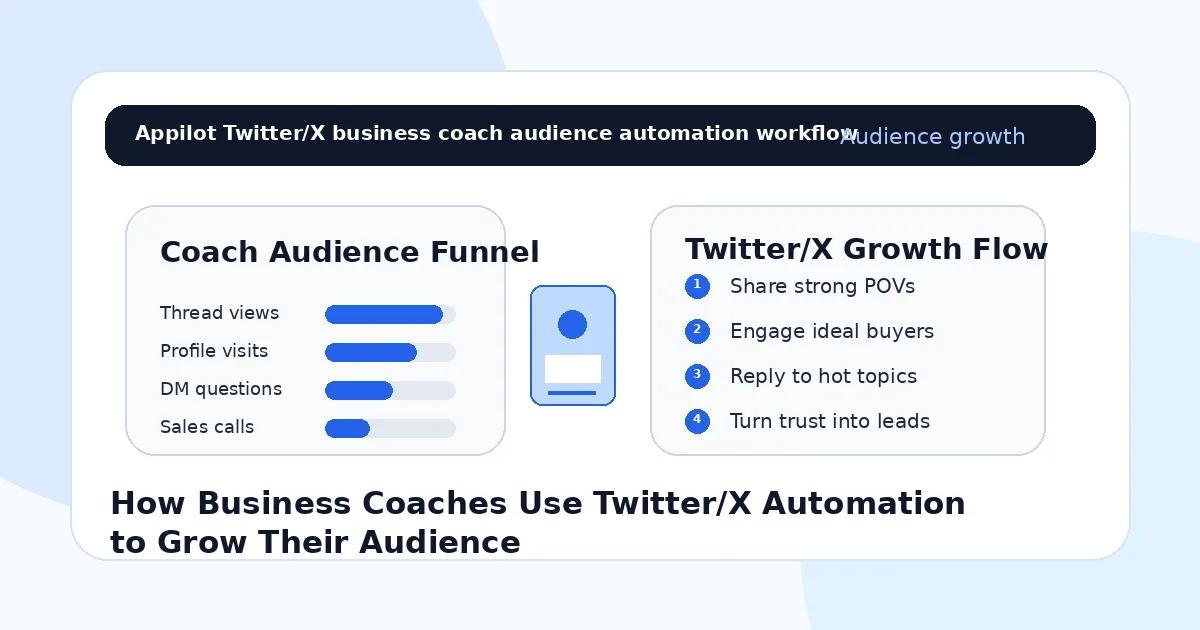
Why Twitter/X Works for Business Coaches
Twitter/X is a strong platform for business coaches because buyers often discuss business problems in public.
Founders talk about growth bottlenecks. Agency owners discuss pricing. Consultants share positioning struggles. Sales leaders talk about pipeline. Creators discuss monetization. Operators talk about systems, hiring, and scale.
These conversations are useful because they reveal real pain.
A business coach can build authority by joining those conversations with clear thinking, practical advice, and a strong point of view. When the right people see your replies, threads, and short posts repeatedly, they begin to associate you with a specific business outcome.
Most coaches get this wrong by posting only motivational content. Motivation may get likes, but specific business insight creates trust.
Automation helps coaches find and support the right conversations more consistently.
What Twitter/X Automation Means for Business Coaches
Twitter/X automation means using software to support repeated actions like keyword monitoring, profile discovery, thread tracking, reply opportunities, follow-up reminders, DM routing, and social engagement.
For business coaches, the best use is not mass posting or generic replies. It is controlled automation that helps you find ideal clients, engage with relevant posts, and respond to warm interest faster.
Real-device automation is useful because it runs workflows through Android devices or emulators instead of relying only on fragile browser scripts or risky shortcuts. This can make social workflows easier to manage across accounts and campaigns.
A platform like Appilot is built for this kind of workflow. It lets business coaches run Twitter/X automation on Android devices or emulators from a browser dashboard, without coding, ADB setup, or keeping a laptop connected all day. That means coaches can keep discovery and engagement active while focusing on clients, content, offers, and sales conversations.
Automation should support authority. It should not replace your thinking.
Step 1: Decide What You Want to Be Known For
Before automating anything, define your coaching position clearly.
A vague message like “I help businesses grow” is too broad. A stronger position is “I help agency owners move from referrals to predictable sales,” “I help founders build operating systems,” or “I help consultants package high-ticket advisory offers.”
This matters because Twitter/X rewards repeated association.
If people see you talk about random business topics every day, they may enjoy the content but forget what you do. If they repeatedly see you solve one specific type of problem, they begin to remember you as the person for that problem.
Your automation should support that positioning. The keywords you monitor, accounts you engage with, threads you reply to, and content you publish should all point back to the same core coaching theme.
Audience growth starts with clarity.
Step 2: Find Conversations Where Your Buyers Already Are
Twitter/X automation is most useful when it helps you find active conversations.
A business coach should monitor keywords, phrases, and accounts tied to their niche. If you coach agency owners, track discussions around pricing, retainers, lead generation, client churn, delivery systems, and sales calls. If you coach founders, track topics like hiring, operations, fundraising, growth, leadership, and product-market fit.
This is where Appilot’s Twitter/X automation can fit naturally. You can run repeated discovery workflows through Android devices or emulators while managing your target topics and campaigns from one dashboard.
The key is to avoid jumping into every conversation. Choose the ones where you can add real value.
Good automation helps you find the right room. Your insight earns the attention.
Step 3: Use Replies to Build Authority
Replies are one of the fastest ways for business coaches to grow on Twitter/X.
You do not need a massive audience to be seen by the right people. A thoughtful reply under a strong founder, operator, consultant, or agency thread can put your thinking in front of buyers who already care about the topic.
But the reply needs substance.
A weak reply says “great point” or “totally agree.” A strong reply adds a practical example, a sharper distinction, a short framework, or a useful warning.
For example, if someone posts about low-ticket offers, a business coach might reply with a clear explanation of when low-ticket works, when it creates delivery drag, and how to move buyers toward premium offers.
Automation can surface reply opportunities, but the best replies should still sound like your real coaching brain.
Step 4: Publish Short Ideas Consistently
Business coaches do not need every post to be a long thread.
Short, clear ideas can build authority when they repeat a strong point of view. A good post might explain a mistake, challenge a common belief, share a client lesson, or give a simple framework.
For example, a coach can post about why more leads do not fix weak positioning, why founders should not hire before fixing process, why consultants undercharge, or why content without a sales system rarely converts.
The point is to make your audience think differently.
Automation can help keep engagement around these posts active, but the ideas should come from your experience.
People follow coaches for clarity. Automation only helps distribute that clarity.
Step 5: Use DMs Around Real Interest
Twitter/X DMs can help business coaches, but they need restraint.
A cold DM pitching coaching to a stranger usually feels generic. A DM sent after someone asks for a resource, replies to your thread, comments on your offer, or requests more details feels natural.
Use automation around warm triggers.
If someone asks for a checklist, send it. If someone replies “how does this work?” send a short explanation. If someone asks whether you help with their specific problem, continue the conversation and qualify before sending a call link.
One reason coaches use Appilot-style workflows is that it helps manage repeated social actions without scripts or manual device handling. But the DM tone still needs to feel human, relevant, and specific.
High-trust coaching relationships do not start with robotic pitches.
Step 6: Turn Audience Growth Into Leads
Followers are useful, but business coaches need a path from attention to revenue.
Your profile should make the next step clear. It should explain who you help, what result you create, and how someone can go deeper. That might be a newsletter, lead magnet, diagnostic call, workshop, group program, private coaching offer, or application form.
Your pinned post should support the same path.
If someone likes your thread and visits your profile, they should not have to guess what you do. A clear profile turns curiosity into action.
Automation helps bring more people to your profile. Your positioning and offer turn that traffic into leads.
Step 7: Track the Right Audience Metrics
Do not measure Twitter/X automation only by follower count.
For business coaches, better metrics include profile visits, quality replies, DMs from ideal clients, lead magnet requests, newsletter signups, discovery calls booked, qualified applications, and coaching clients closed.
You should also track which topics create buying intent. A motivational post may get likes, but a post about a painful business bottleneck may bring better leads. A tactical thread may get saves. A client lesson may bring DMs.
Automation gives you more signals. Tracking tells you which signals matter.
Common Mistakes Business Coaches Should Avoid
Automating Generic Replies
Replies like “great post” or “love this” do not build authority. They make the account look automated and forgettable.
Chasing Followers Instead of Buyers
A large audience is not useful if it does not include people who need and can afford your coaching.
Sending Cold Coaching Pitches
Cold DMs usually damage trust. Use DMs around warm interest, resource requests, and real conversations.
Posting Without Positioning
Random business advice may get attention, but clear repeated positioning builds a memorable coaching brand.
Measuring Only Impressions
Impressions are not enough. Track qualified DMs, calls booked, applications, and coaching revenue.
Is Twitter/X Automation Right for Business Coaches?
Twitter/X automation is a good fit if your ideal clients are active on the platform and your coaching can be explained through short ideas, threads, replies, and public conversations. It works especially well for business coaches, founder coaches, agency coaches, sales coaches, leadership coaches, consultant coaches, and creator business mentors.
It may not be right if your audience is not active on Twitter/X or your positioning is unclear. Automation can increase visibility, but it cannot make a vague coaching offer compelling.
Think of automation as an audience-growth assistant. It helps you show up more consistently, but your insight and trust turn followers into clients.
Final Thoughts
Business coaches use Twitter/X automation to grow their audience by making authority-building more consistent.
The strongest workflow starts with clear positioning, relevant conversation discovery, useful replies, strong short-form ideas, warm DMs, and a profile that converts attention into leads. Automation handles the repetitive discovery and engagement work while the coach keeps the thinking human.
If you want to run Twitter/X automation without coding, ADB setup, or manual device management, Appilot gives business coaches a browser-based way to control Android devices, emulators, and ready-to-use bots for Twitter/X and other platforms. You can check it out at appilot.app.
FAQs
Q1: Can Twitter/X automation help business coaches grow?
Yes, it can help coaches find relevant conversations, engage ideal buyers, reply faster, and turn attention into warm leads.
Q2: What should business coaches automate first?
Start with keyword monitoring, thread discovery, profile engagement, warm DM routing, and tracking replies from ideal clients.
Q3: Is Twitter/X automation safe for coaches?
It is safer when activity is gradual, relevant, and human-reviewed. Generic replies or spam DMs can damage trust.
Q4: Can Appilot help coaches automate Twitter/X?
Yes, Appilot can run Twitter/X workflows on Android devices or emulators from a browser dashboard without coding or ADB setup.
Q5: Does automation replace coaching content?
No. Automation supports visibility and engagement, but strong ideas, clear positioning, and real coaching proof drive growth.