How Clinics and Med Spas Use Instagram Automation to Book Appointments
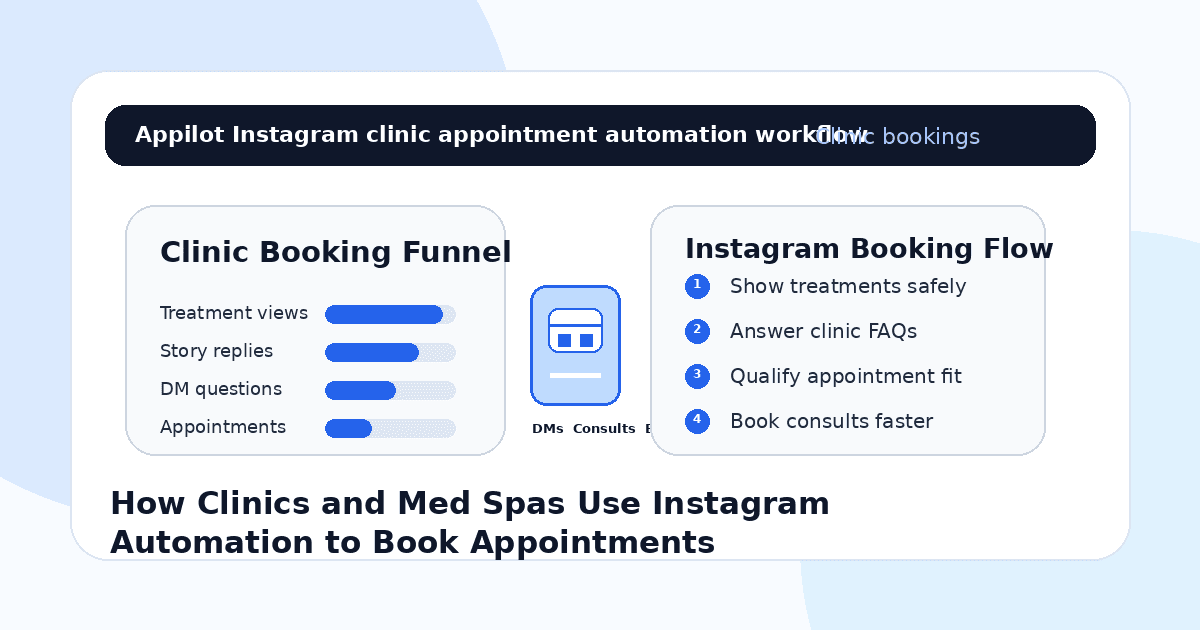
You post a reel showing a treatment room, a skincare result, a facial service, a laser procedure, an injectables consultation, or a wellness offer.
A few people save it. Someone asks for the price. Another wants to know if the treatment is right for their skin type. A prospective client replies to your story asking for availability, but the message gets buried under other DMs.
That is the challenge for clinics and med spas on Instagram. People are interested in aesthetic treatments, wellness services, skincare, injectables, laser treatments, facials, body treatments, and consultations, but they often need fast answers and trust before they book.
Instagram automation helps clinics and med spas respond faster, send service details, route questions, qualify appointment interest, and move warm leads toward booking without manually checking every message all day.
The goal is not to replace professional consultation. The goal is to help interested clients get basic information and book the right next step.
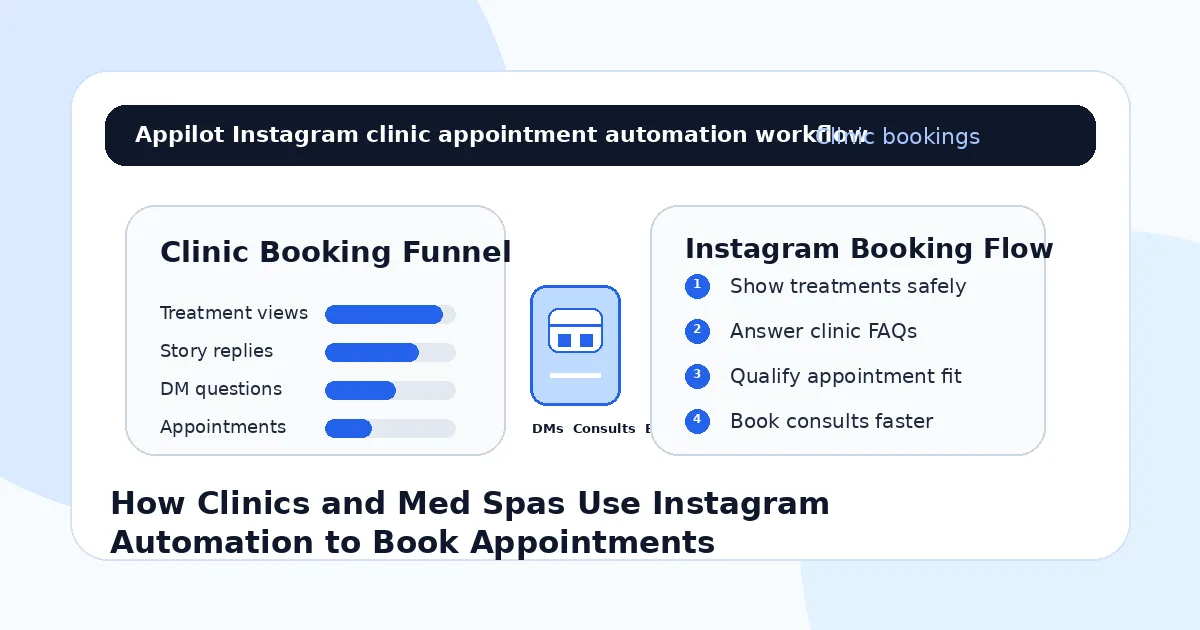
Why Instagram Works for Clinics and Med Spas
Instagram is one of the strongest platforms for clinics and med spas because it is visual, local, and trust-driven.
Clients want to see the clinic environment, treatment process, provider credibility, before-and-after style results where allowed, client education, skincare tips, service explanations, and real appointment experience before they decide to book.
A person may watch several reels before asking a question. They may save a skincare post, reply to a story, compare service options, and then ask about pricing or availability.
That means Instagram is not just a content platform. It is a client inquiry channel.
Most clinics lose appointments because they post useful content but respond slowly, answer inconsistently, or fail to route interested people toward the booking page. Automation helps close that gap.
What Instagram Automation Means for Clinics
Instagram automation means using workflows that respond to comments, story replies, DMs, keyword triggers, polls, and booking requests.
For clinics and med spas, automation can send service menus, consultation links, booking pages, location details, availability prompts, treatment preparation guides, aftercare links, and basic FAQs.
Real-device automation is useful because it runs through the actual Instagram mobile app on Android devices or emulators. This behaves more like normal mobile usage than fragile desktop scripts or risky shortcuts.
A platform like Appilot is built for this type of workflow. It lets clinics and med spas run Instagram automation on Android devices or emulators from a browser dashboard, without coding, ADB setup, or keeping a phone connected all day. That means the team can keep appointment conversations moving while focusing on consultations, treatments, patient care, and front-desk operations.
Automation should support safe communication. It should not diagnose, prescribe, or make treatment decisions.
Step 1: Build Automation Around Warm Treatment Interest
The best clinic automation starts when someone shows interest.
A warm trigger might be someone commenting “price,” replying “consultation” to a story, asking about availability, requesting a service menu, or sending a DM about a specific treatment.
This works because the client starts the conversation.
For example, a med spa can post a story saying, “Reply GLOW for facial appointment details,” or “Reply CONSULT to book a treatment consultation.” When someone replies, automation can send the booking link, location, and a short explanation of the next step.
Cold medical or aesthetic pitches can feel uncomfortable. Warm-trigger automation feels more helpful and professional.
Step 2: Use Educational Content Before Booking Pushes
Clients need education before they book.
A clinic can post about treatment expectations, who a service may be suitable for, preparation steps, downtime, common myths, skincare routines, consultation process, provider experience, and aftercare guidance.
This kind of content builds trust because it helps clients understand what they are considering.
Automation can support that education by sending resources when people ask. If someone comments “aftercare,” the workflow can send a general aftercare guide. If someone asks “consult,” it can send the consultation booking link. If someone asks “menu,” it can send the service list.
This is where Appilot fits naturally. Clinics can run Instagram reply and DM workflows through Android devices or emulators while managing service education and booking inquiries from one dashboard.
Education creates trust. Trust leads to better appointments.
Step 3: Automate Replies to Common Appointment Questions
Clinics and med spas receive repeated questions every day.
People ask about pricing, availability, location, provider schedule, treatment duration, downtime, packages, consultation fees, payment options, preparation, aftercare, and whether they need a consultation first.
These questions are perfect for automation because they repeat and directly affect booking.
If someone asks “price,” the workflow can send starting pricing or invite them to book a consultation for an exact quote. If someone asks “availability,” the bot can send the booking page. If someone asks “location,” it can share the clinic address and hours.
Keep replies short and clear.
A person asking about a treatment does not need a long sales pitch. They need the right information and a safe next step.
Step 4: Qualify Leads Without Giving Medical Advice
Not every Instagram inquiry should go straight to booking.
Some clients need a consultation. Some may not be suitable for a specific treatment. Some may have medical history, medications, pregnancy status, allergies, skin conditions, or previous procedures that require professional review.
Automation can collect basic non-sensitive intent, such as which service they are interested in, preferred appointment timing, location, and whether they want a consultation.
But bots should not decide whether a treatment is medically appropriate.
A safe automated response might say, “A provider will review your needs during the consultation and confirm the best option for you.”
This keeps the workflow helpful without crossing into medical advice.
Step 5: Use Stories to Drive Appointments
Instagram stories are strong for clinics because they create daily visibility.
A clinic can post available appointment slots, treatment room clips, skincare tips, provider introductions, service reminders, seasonal offers, client education, or “ask us anything” prompts.
Stories can also use keyword triggers.
For example, “Reply FACIAL for this week’s facial openings,” “Reply LASER for consultation details,” “Reply SKIN for the service menu,” or “Reply BOOK to schedule a visit.”
When someone replies, automation can send the booking link or ask which service they are interested in.
Appilot-style workflows help manage these repeated story and DM actions without scripts, command-line tools, or manual device work.
Stories create urgency. Automation helps capture it.
Step 6: Route Sensitive Questions to Humans
Some questions should not be answered by a bot.
If someone asks whether a treatment is safe with a medication, pregnancy, a medical condition, allergy, skin disorder, previous procedure, or specific health concern, automation should route them to a human provider or consultation process.
This protects both the client and the clinic.
Bots can share general service information, but they should not diagnose, recommend treatment plans, assess medical suitability, or provide personalized medical guidance.
A responsible clinic workflow makes the handoff clear.
Automation can say, “This needs provider review. Please book a consultation or contact our team so we can guide you properly.”
Step 7: Make the Booking Path Simple
A warm lead should not have to search for the booking link.
Once someone asks about appointments, availability, or services, automation should make the next step easy. That might be a booking calendar, phone number, WhatsApp link, consultation form, treatment menu, or front-desk contact path.
The booking flow should be short.
If the clinic asks too many questions before offering the appointment path, the lead may drop off. If the booking page is confusing, the lead may never finish.
The best flow gives enough information to build confidence, then sends the client to a simple booking step.
Step 8: Track What Creates Appointments
Do not measure Instagram automation only by likes or followers.
For clinics and med spas, better metrics include story replies, service menu requests, booking link clicks, consultation bookings, appointment requests, no-show rate, repeat visits, treatment inquiries, and revenue by campaign.
You should also track which content creates better clients. Educational posts may bring high-trust consultations. Before-and-after style content may bring interest where compliant and allowed. Provider introductions may build confidence. Seasonal offers may drive short-term bookings.
Automation gives you more signals. Tracking tells you which signals create real appointments.
Common Mistakes Clinics and Med Spas Should Avoid
Letting Bots Give Treatment Advice
Bots should not diagnose, recommend treatment plans, or decide suitability. Personal treatment questions need human review.
Sending Booking Links Too Early
If the client needs education or consultation first, guide them clearly instead of pushing a generic booking link immediately.
Ignoring Pricing Questions
Clients often need basic pricing guidance before booking. Offer starting prices or explain that consultation is needed for exact quotes.
Using Generic Replies
A facial lead, laser lead, injectables lead, and skincare lead need different answers. Match replies to the service.
Measuring Only Engagement
Likes and views matter, but booked consultations, appointment requests, no-shows, repeat visits, and revenue matter more.
Is Instagram Automation Right for Clinics and Med Spas?
Instagram automation is a good fit if your clinic already posts treatment education, gets DMs, receives pricing questions, runs promotions, or uses Instagram stories to create appointment interest. It works especially well for med spas, aesthetic clinics, skincare clinics, dental aesthetic clinics, wellness studios, laser clinics, facial studios, and cosmetic service providers.
It may not be right if your service information is unclear, your booking system is confusing, or your team cannot follow up with qualified leads. Automation can speed up replies, but professional care and trust still decide the appointment.
Think of Instagram automation as a front-desk assistant for social media. It helps route interest, but the clinic team still handles care.
Final Thoughts
Clinics and med spas use Instagram automation to book appointments by turning treatment interest into clear, safe, and organized conversations.
The strongest workflow starts with treatment education, warm story triggers, fast FAQ replies, basic qualification, human handoff for sensitive questions, simple booking links, and appointment tracking. Automation handles repetitive replies while the clinic keeps care, consultation, and trust human.
If you want to run Instagram automation without coding, ADB setup, or manual device management, Appilot gives clinics and med spas a browser-based way to control Android devices, emulators, and ready-to-use bots for Instagram and other platforms. You can check it out at appilot.app.
FAQs
Q1: Can clinics use Instagram automation to book appointments?
Yes, automation can answer basic questions, send service menus, route DMs, and guide interested clients toward booking.
Q2: What should clinics automate first?
Start with replies for “price,” “book,” “consult,” “menu,” “location,” “availability,” “facial,” “laser,” and service-specific keywords.
Q3: Is Instagram automation safe for med spas?
It is safer when bots share general information only and route medical, treatment, or suitability questions to humans.
Q4: Can Appilot help clinics automate Instagram?
Yes, Appilot can run Instagram workflows on Android devices or emulators from a browser dashboard without coding or ADB setup.
Q5: Should bots answer treatment suitability questions?
No. Bots should not decide treatment suitability. They should route personal or medical questions to a qualified clinic team.