How Crypto Projects Use Twitter/X Automation to Build Community
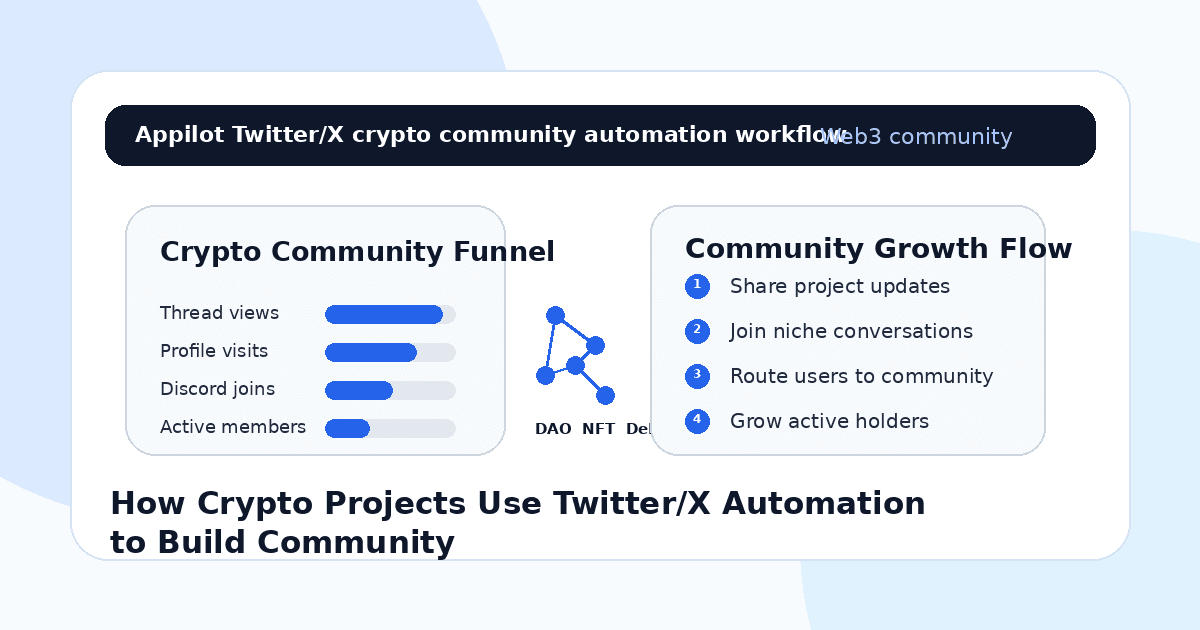
You launch a crypto project, publish the first announcement thread, share the roadmap, and invite people to join the community.
A few people like the post. Someone asks about the token utility. Another wants the Discord link. A few users reply with questions about the roadmap, mint, staking, governance, or waitlist.
Then the thread slows down.
That is the challenge for crypto projects on Twitter/X. The platform is one of the strongest places to build Web3 awareness, but attention moves quickly. A project needs consistent updates, fast replies, community routing, founder visibility, and trust-building conversations to turn casual interest into an active community.
Twitter/X automation helps crypto teams manage the repetitive parts of that process. It can support discovery, replies, community links, campaign tracking, and warm engagement without forcing the team to manually watch every mention all day.
The goal is not to create fake hype. The goal is to help real interested users, builders, holders, and partners find the project and join the conversation.
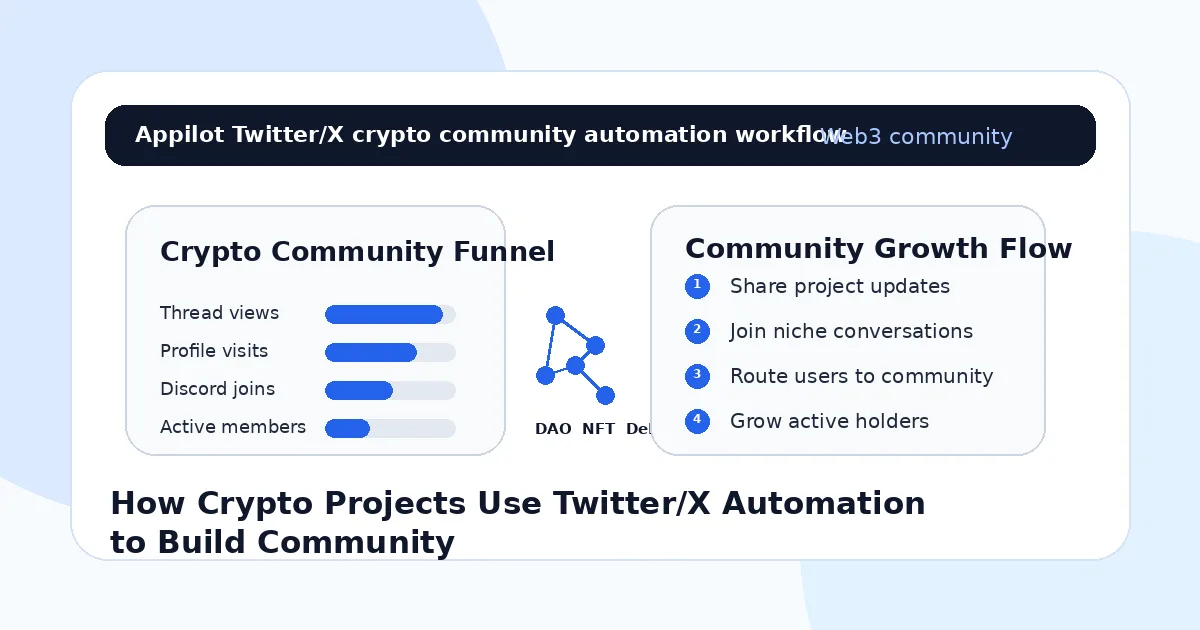
Why Twitter/X Matters for Crypto Communities
Twitter/X is where many crypto conversations start.
Projects announce updates, founders share opinions, traders discuss narratives, builders talk about infrastructure, NFT communities organize launches, DeFi users compare protocols, and DAO members debate governance. For many crypto projects, Twitter/X is the front door before users join Discord, Telegram, Farcaster, a waitlist, a mint page, a testnet, or a token community.
But the platform is noisy.
A single announcement is not enough. People need repeated exposure before they trust a project. They want to understand what the project does, who is building it, why it matters, what the roadmap looks like, and whether the community is real.
Most crypto teams lose momentum because they post updates but do not manage replies, questions, mentions, and community routing consistently.
Automation helps keep that engagement layer active.
What Twitter/X Automation Means for Crypto Projects
Twitter/X automation means using software to support repeatable actions like keyword monitoring, profile discovery, reply routing, thread tracking, DM flows, community link delivery, and campaign engagement.
For crypto projects, the best use is not mass shilling or generic replies. It is controlled automation around real interest, such as users asking for a Discord link, replying to launch posts, requesting documentation, asking about utility, or engaging with founder threads.
Real-device automation is useful because it runs workflows through Android devices or emulators instead of relying only on fragile browser scripts or risky shortcuts. This makes social workflows easier to manage across campaigns while keeping activity more controlled.
A platform like Appilot is built around this kind of workflow. It lets crypto teams run Twitter/X automation on Android devices or emulators from a browser dashboard, without coding, ADB setup, or keeping a laptop connected all day. That means community activity can stay consistent while the team focuses on product, partnerships, token design, moderation, and user support.
Automation should support trust. It should never replace real community building.
Step 1: Define the Community You Want to Build
Before using automation, a crypto project needs to define who the community is for.
A vague audience like “crypto users” is too broad. A stronger target is “DeFi users looking for better yield tools,” “NFT collectors interested in utility-based communities,” “developers building on a new chain,” “DAO operators managing governance,” or “early users testing a Web3 gaming product.”
This matters because automation magnifies targeting.
If the project tries to reach everyone, the community becomes noisy and unfocused. If the project targets clearly, automation helps attract people who are more likely to participate, test, share, build, or hold long term.
Your audience should shape the content, replies, hashtags, Spaces, community links, and onboarding flow.
A strong crypto community starts with a clear reason to gather.
Step 2: Use Threads to Educate Before Promoting
Crypto audiences are skeptical, and usually for good reason.
They have seen too many vague roadmaps, empty communities, copied narratives, and short-term hype cycles. That means a project needs to educate before asking for trust.
Twitter/X threads can explain what the project solves, how the protocol works, why the token or NFT exists, what users can do today, and what the roadmap means in practical terms.
Automation can support the thread after it is posted by helping route replies, surface questions, and send users toward documentation, Discord, Telegram, waitlists, or product pages when they ask.
This is where Appilot fits naturally. Crypto teams can run Twitter/X workflows through Android devices or emulators while managing campaign replies and community routing from one dashboard.
The thread creates understanding. Automation helps interested users take the next step.
Step 3: Reply Fast to Community Questions
Crypto users ask fast, specific questions.
They ask about token utility, chain support, mint timing, roadmap, docs, contracts, staking, airdrops, partnerships, testnet access, Discord roles, wallet support, governance, and launch details.
These questions are high-intent signals.
If someone asks for the Discord link or testnet guide and the team replies late, the interest may disappear. If the project answers quickly, the user is more likely to join the community and continue engaging.
Automation can help deliver basic links, route FAQs, and notify the team when a question needs a human answer.
Keep replies clear and accurate. Crypto communities punish vague answers quickly.
Step 4: Route Users Into Discord, Telegram, or Product Onboarding
Twitter/X is usually the discovery layer. Community depth often happens elsewhere.
A user may first see a launch thread on Twitter/X, then join Discord for updates, enter Telegram for support, sign up for a waitlist, test the product, mint an NFT, or read the docs.
Automation can help move interested users to the right place.
If someone replies “Discord,” the workflow can send the invite. If someone asks for docs, it can share the documentation link. If someone asks about testnet, it can send the onboarding guide. If someone asks about partnerships, it can route them toward the right contact.
Do not send every user the same link automatically. Match the response to the intent.
The best community routing feels helpful, not forced.
Step 5: Support Launches Without Creating Fake Hype
Launch periods are intense for crypto projects.
A mint, token launch, testnet, staking feature, partnership, airdrop, product release, or governance vote can create a flood of replies and DMs. Automation can help answer repeated questions and keep users moving toward official resources.
But teams need to be careful.
Fake hype, repetitive shilling, bot-like replies, and artificial engagement can damage trust. Crypto users are often quick to call out suspicious behavior.
Use automation for operational support, not manipulation. Answer questions. Send official links. Route users. Monitor mentions. Surface urgent issues. Support moderators.
The community should feel active because real people care, not because bots are pretending.
Step 6: Monitor Narratives and Buyer Language
Crypto moves through narratives.
A project may need to track conversations around DeFi, NFTs, gaming, L2s, infrastructure, AI agents, DAOs, wallets, security, staking, restaking, real-world assets, privacy, or developer tooling.
Twitter/X automation can help monitor relevant keywords, competitor discussions, ecosystem updates, and user pain points.
This does not mean jumping into every thread with a pitch. It means understanding where the market is paying attention and joining when the project can add value.
For example, a wallet project can monitor complaints about onboarding friction. A DeFi protocol can track discussions about risk and yield. A developer tool can watch builders asking about infrastructure problems.
Good automation helps the team listen before speaking.
Step 7: Keep Founder and Team Voice Human
Crypto communities often trust people before brands.
Founder posts, builder updates, technical explainers, transparent lessons, and honest roadmap notes usually feel stronger than polished corporate announcements.
Automation can support distribution and reply routing, but the voice should stay human.
If the founder is explaining a difficult trade-off, answering a hard question, or sharing why a decision was made, that should not sound like a bot. The same applies to community managers, developers, moderators, and partnership leads.
Appilot-style workflows can help with repeated social actions, but the project still needs real people visible in the conversation.
Trust compounds when the community can see who is behind the project.
Step 8: Track Community Quality, Not Just Follower Count
A large follower count does not always mean a strong crypto community.
Better metrics include quality replies, Discord joins, Telegram activity, waitlist signups, testnet users, docs visits, developer interest, active contributors, governance participation, retention, product usage, and community support quality.
You should also track which content creates real members. Technical explainers may attract builders. Roadmap posts may attract long-term holders. Meme content may create reach but not always depth. Product demos may attract users.
Automation gives you more signals. Tracking tells you which signals represent real community growth.
Common Mistakes Crypto Projects Should Avoid
Automating Generic Shill Replies
Replies like “big things coming” or “join now” do not build trust. They make the project look weak and spammy.
Sending Unverified Links
Crypto users are highly sensitive to scams. Always route users only to official, verified links and keep security messaging clear.
Chasing Follower Count Only
Followers do not equal community. Track active members, product users, developers, contributors, and meaningful engagement.
Over-Automating Founder Voice
The founder and team should sound human. Automation should support operations, not replace authentic communication.
Ignoring Hard Questions
Crypto communities respect transparency. Avoiding questions about roadmap, utility, security, or delays can damage trust.
Is Twitter/X Automation Right for Crypto Projects?
Twitter/X automation is a good fit if your project already uses Twitter/X for announcements, education, community routing, launch updates, founder content, or ecosystem engagement. It works especially well for DeFi projects, NFT communities, gaming projects, wallets, infrastructure tools, DAOs, exchanges, creator communities, and Web3 startups.
It may not be right if the project only wants fake engagement or short-term hype. Automation can support real community activity, but it cannot create product trust by itself.
Think of automation as a community operations assistant. It helps route interest, but real builders and real users create the community.
Final Thoughts
Crypto projects use Twitter/X automation to build community by making discovery, replies, education, and routing more consistent.
The strongest workflow starts with clear audience positioning, educational threads, fast replies, official community links, careful launch support, narrative monitoring, human founder voice, and quality tracking. Automation handles the repeatable work while the team keeps trust and transparency human.
If you want to run Twitter/X automation without coding, ADB setup, or manual device management, Appilot gives crypto teams a browser-based way to control Android devices, emulators, and ready-to-use bots for Twitter/X, Discord, Telegram, Reddit, and other platforms. You can check it out at appilot.app.
FAQs
Q1: Can crypto projects use Twitter/X automation to build community?
Yes, automation can help route replies, answer common questions, share official links, monitor narratives, and guide users into community channels.
Q2: What should crypto teams automate first?
Start with mention monitoring, keyword tracking, Discord or Telegram link replies, docs routing, launch FAQs, and community support alerts.
Q3: Is Twitter/X automation safe for crypto projects?
It is safer when activity is gradual, transparent, and useful. Generic shilling, fake hype, or suspicious link behavior can damage trust.
Q4: Can Appilot help crypto projects automate Twitter/X?
Yes, Appilot can run Twitter/X workflows on Android devices or emulators from a browser dashboard without coding or ADB setup.
Q5: Do bots replace community managers?
No. Bots help with repeated routing and replies, but community managers still handle trust, moderation, hard questions, and real relationships.