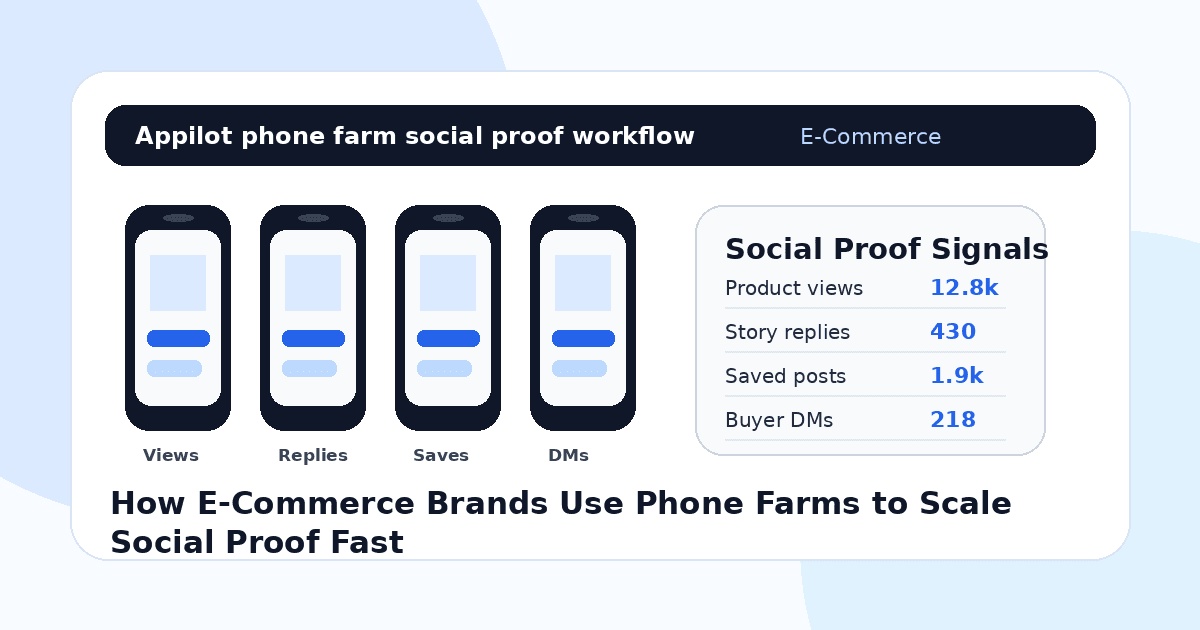
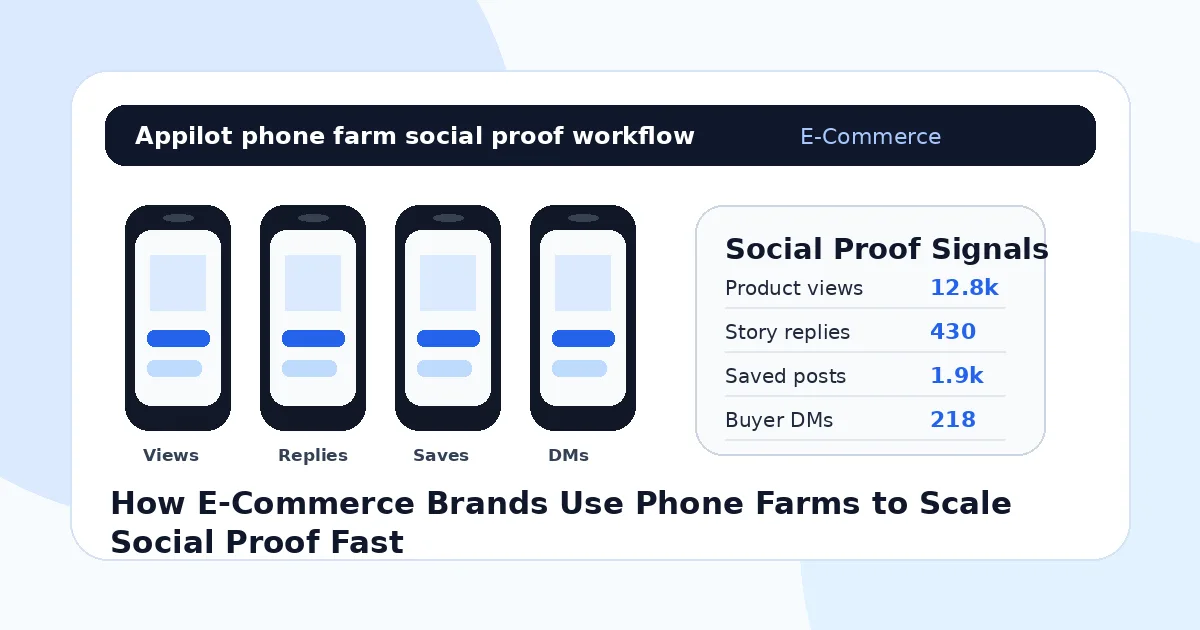
How E-Commerce Brands Use Phone Farms to Scale Social Proof Fast
You launch a new product, post the first reel, send the email, and wait for people to react.
The product looks good. The offer is clear. The page is live. But the post sits there with low views, two comments, and barely any visible traction. For a new visitor, that creates doubt before they even click.
That is the quiet problem with social proof. People do not just judge your product. They judge how other people seem to be responding to it.
If a product video has comments, saves, replies, story activity, and visible engagement, buyers feel safer paying attention. If the account looks empty, even a good product can feel risky.
Phone farms help e-commerce brands scale the activity layer around their products. Not by replacing real customers or faking a brand. But by creating a controlled mobile infrastructure for testing, engagement, visibility, and repeatable social workflows across real devices.
Why Social Proof Matters So Much for E-Commerce Brands
Online shoppers are cautious. They cannot touch the product, try it on, test the texture, or speak to a salesperson in person. So they look for signals.
They look at comments, reviews, tagged posts, story replies, creator videos, follower activity, and whether the brand feels alive. Even small details affect trust. A product with active comments feels safer than the same product sitting on a silent page.
This is especially true for newer e-commerce brands. If your store is still building reviews, your social presence carries more weight. Instagram, TikTok, YouTube Shorts, Reddit, Threads, and even Telegram communities can become trust signals before the buyer reaches checkout.
The hard part is consistency.
A small brand might post three times one week and disappear the next. It might reply to comments quickly during launch day but miss DMs later. It might test content on one account but never scale the process.
Most brands get this wrong because they think social proof is only about numbers. It is not. Real social proof is about visible activity, useful engagement, repeated exposure, and buyer confidence.
What a Phone Farm Means for E-Commerce Automation
A phone farm is a setup where multiple Android phones or emulators are used to run mobile apps, accounts, and automation workflows at scale.
For e-commerce brands, this can support social media activity across Instagram, TikTok, Reddit, Snapchat, Threads, Telegram, YouTube, and other platforms. Each device can run separate sessions, accounts, proxies, and workflows depending on the campaign.
The reason phone farms matter is simple: social platforms are mobile-first. Running actions through real Android environments often behaves more naturally than relying only on desktop tools, browser scripts, or API-based shortcuts.
A platform like Appilot is built for this type of phone farm workflow. It lets brands control Android devices and emulators from a web dashboard, run ready-to-use bots, and manage automation without ADB setup, coding, or keeping phones physically connected to a laptop. For e-commerce teams, that means the device layer becomes easier to operate instead of turning into a technical headache.
A phone farm does not make a bad product popular. But it gives a serious brand the infrastructure to run social proof workflows more consistently.
How E-Commerce Brands Use Phone Farms in Practice
The first use case is content testing. A brand can test different product angles across multiple social accounts or audience segments. One video might focus on a problem. Another might focus on a before-and-after result. Another might show unboxing, gifting, or real use.
A phone farm helps the brand manage these tests without logging in and out of accounts manually all day.
The second use case is engagement support. When a product post goes live, the brand needs comments answered, story replies handled, DMs checked, and product questions routed quickly. Phone farm automation can help keep that activity moving across devices while the team focuses on fulfillment, creative, and customer support.
The third use case is multi-account growth. Some e-commerce brands run separate accounts for different product lines, regions, niches, or campaign types. A beauty brand might run one main account, one UGC-style account, one skincare tips account, and one flash sale account. A phone farm makes that structure easier to manage.
Appilot fits naturally here because it gives teams a dashboard for controlling Android devices, emulators, and automation tasks across platforms. Instead of manually managing each phone, account, or workflow, the brand can operate the system from one place while still using mobile environments.
The fourth use case is social proof amplification around launches. During a product drop, timing matters. The first few hours can shape how the content performs and how buyers perceive demand. Phone farm workflows can support early story activity, comment replies, product link delivery, and engagement routines so the launch does not look dead on arrival.
What Kind of Social Proof Can Phone Farms Support?
Phone farms can support visibility, but they should not be used carelessly.
The most useful social proof is not fake hype. It is structured activity around real campaigns. That includes faster replies to product comments, consistent story views, controlled account engagement, product research, DM routing, influencer monitoring, and multi-account content workflows.
For example, if a store posts a product reel and people ask “link?” or “available in black?” automation can help reply quickly. If a flash sale is live, phone farm devices can help manage story flows and buyer messages. If a brand runs several niche accounts, the phone farm can keep each account active in its own lane.
The point is to make the brand feel responsive and present.
Bad social proof looks obvious. Generic comments, irrelevant engagement, repeated messages, and unnatural account behavior can damage trust quickly. Buyers are sharper than many brands think.
A good phone farm strategy supports real product interest. A bad one tries to manufacture attention with no substance behind it.
Setting Up a Phone Farm for E-Commerce Growth
Start with the campaign goal. Do not build a phone farm just because it sounds scalable.
Your goal might be product launch visibility, Instagram growth, TikTok product testing, DM response speed, comment automation, flash sale support, or multi-account management. Each goal needs a different setup.
Next, decide whether you need physical Android phones, emulators, or a mix of both. Physical devices are often useful for long-term account stability. Emulators can be useful for testing, managing controlled workflows, and scaling certain tasks.
Then think about account separation. Each account should have its own session behavior, device environment, and network setup when needed. If you manage multiple accounts, proxies matter. Mobile and residential proxies are usually more suitable for social workflows than cheap datacenter proxies.
This is where Appilot becomes helpful for e-commerce operators. Its web dashboard gives you a way to manage Android devices and automation workflows without dealing with USB cables, command lines, drivers, or manual ADB work. For a brand owner or growth team, that removes a major setup barrier.
Once the system is live, start slowly. Test one workflow, one platform, and one campaign before scaling.
Where Phone Farms Fit in the E-Commerce Funnel
Phone farms are most useful at the top and middle of the funnel.
At the top, they help with discovery. This includes product research, audience monitoring, competitor tracking, content testing, and profile engagement. For example, a TikTok workflow can help a brand monitor which product demos are gaining traction in its niche.
In the middle, they help with buyer interaction. This includes comment replies, story automation, DM routing, link delivery, and repeated questions around size, price, shipping, availability, or product fit.
At the bottom, the impact is indirect. A phone farm does not process the checkout or convince a buyer by itself. But it can help move people toward the product page faster by keeping conversations active.
The checkout still depends on the product, offer, page quality, reviews, pricing, shipping, and trust.
That is the honest caveat. Phone farms can increase visibility and response speed, but they cannot fix a weak store.
Common Mistakes E-Commerce Brands Should Avoid
Scaling Too Many Accounts Too Quickly
A new brand does not need twenty accounts on day one. Start with the main account and one or two supporting workflows before expanding.
Using Generic Engagement
Comments like “great post” or “nice product” do not build trust. They make the brand look automated. Keep activity relevant to the product and audience.
Ignoring Device and Proxy Separation
Running too many accounts from the same environment can create risk. Multi-account workflows need clean separation and sensible limits.
Automating Without Real Content
A phone farm cannot save boring content. You still need strong product demos, customer proof, offer clarity, and useful captions.
Treating Social Proof as Fake Popularity
The best social proof comes from real buyer interest supported by fast, consistent activity. Fake-looking hype can backfire.
Is a Phone Farm Right for Your E-Commerce Brand?
A phone farm is a good fit if your brand already has products, content, and a clear audience but needs more consistent social execution. It works especially well for stores running multiple accounts, frequent product drops, flash sales, creator campaigns, or social-first product testing.
It may not be right if your store has no clear offer, weak content, or no plan for customer conversations. Infrastructure does not replace strategy.
Think of a phone farm as a growth operations layer. It helps you run more social activity, but your brand still needs a reason for buyers to care.
Final Thoughts
E-commerce social proof is built through repeated visibility, fast responses, useful engagement, and trust signals that buyers can see before they purchase.
Phone farms help brands scale that process by giving them mobile infrastructure for social workflows across real devices and emulators. When used carefully, they can support launches, product testing, comment replies, story activity, DMs, and multi-account growth.
If you want to manage phone farm automation without coding, ADB setup, or manual device handling, Appilot gives e-commerce brands a browser-based way to control Android devices, emulators, and ready-to-use bots across Instagram, TikTok, LinkedIn, Reddit, and more. You can check it out at appilot.app.
FAQs
Q1: What is a phone farm for e-commerce brands?
A phone farm is a setup of multiple Android phones or emulators used to run social media accounts, automation workflows, and mobile app actions at scale.
Q2: Can phone farms help build social proof?
Yes, they can support faster replies, engagement workflows, content testing, story activity, and multi-account visibility around real campaigns.
Q3: Are phone farms safe for social media automation?
They can be safer when devices, accounts, proxies, and limits are managed carefully. Aggressive or fake-looking activity can still create risk.
Q4: Can Appilot help manage phone farms?
Yes, Appilot helps control Android devices and emulators from a web dashboard, making phone farm automation easier without coding or ADB setup.
Q5: Do phone farms replace real customers or reviews?
No. Phone farms support visibility and workflows, but real trust still comes from product quality, customer experience, reviews, and honest engagement.