How Gyms and Studios Use Instagram Bots to Fill Class Schedules
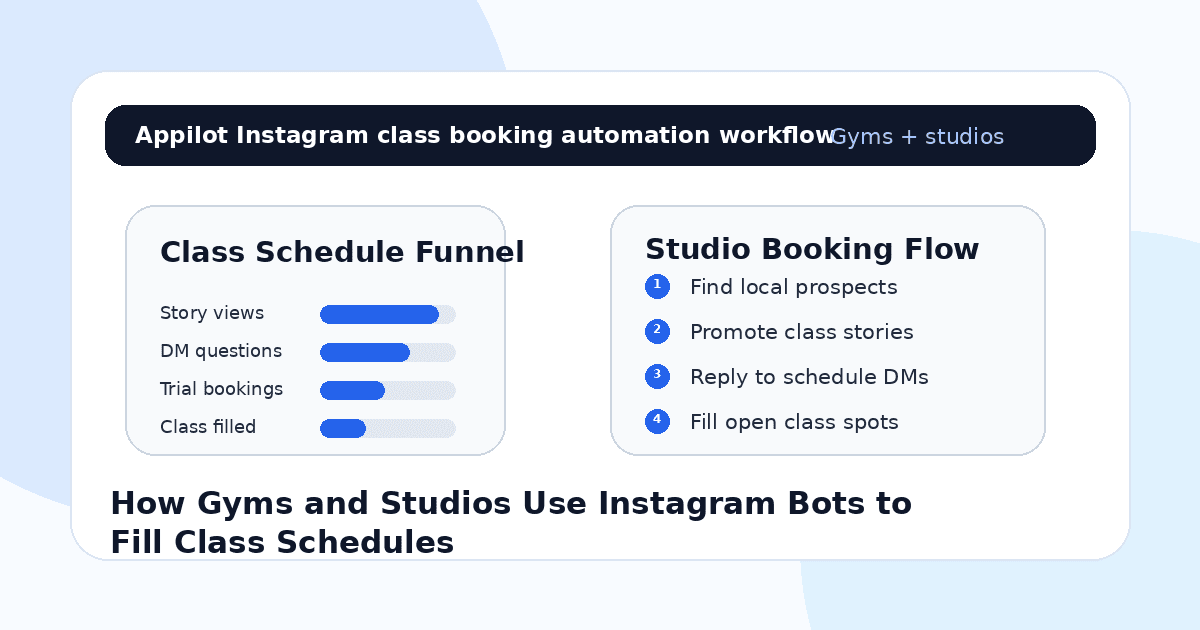
You post the weekly class schedule on Instagram. The design looks clean, the times are clear, and the classes are ready to book.
A few members like it. Someone asks if beginners can join. Another person wants to know the price. A few people watch the story but never tap the booking link.
Then the day moves on, and the open class spots stay open.
That is the challenge for gyms, yoga studios, Pilates studios, boxing gyms, dance studios, spin studios, and boutique fitness businesses. Instagram can create local demand, but people often need reminders, answers, and simple booking steps before they actually show up.
Instagram bots help gyms and studios keep that process moving. They can support local visibility, class reminders, DM replies, booking links, waitlist messages, and trial-class follow-ups without forcing the team to manually answer the same questions all day.
The goal is not to spam people. The goal is to make it easier for interested local prospects to find the right class and book before the spot is gone.
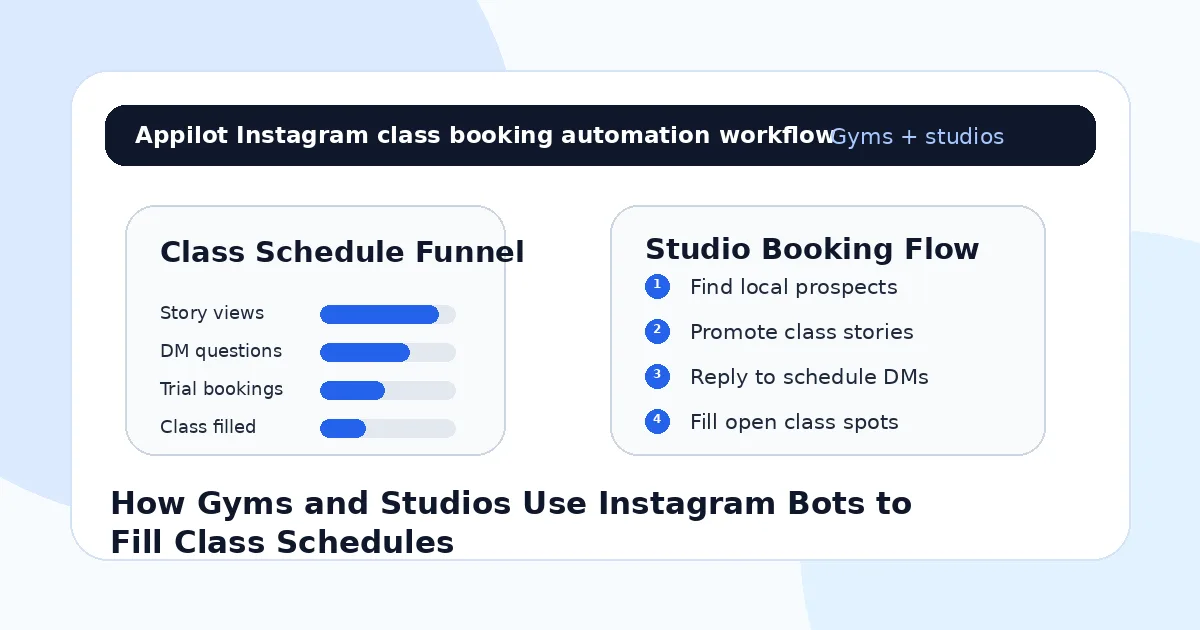
Why Gyms and Studios Struggle to Fill Classes From Instagram
Most gyms and studios already post on Instagram, but posting alone is not enough.
A schedule post may get seen by members who already know the brand, but new prospects often need more context. They want to know whether the class is beginner-friendly, how intense it is, what time it starts, how much it costs, whether they need equipment, and whether they can try one session before joining.
If those questions sit unanswered, the prospect may not book.
Manual replies also become repetitive. Staff may answer “What time is the class?” “Is there a trial?” “How do I book?” “Is this for beginners?” and “Do you have evening classes?” again and again.
The bigger issue is timing. A person might feel motivated after seeing a story, but that motivation can fade quickly. If the studio replies hours later, the booking chance may already be gone.
Instagram bots help by making replies faster and class promotion more consistent.
What Instagram Bots Do for Gyms and Studios
Instagram bots can automate repeated actions such as story views, profile visits, comment replies, DM responses, booking-link delivery, trial-class information, and class reminders.
For gyms and studios, the safest use is not mass messaging random people. It is controlled, real-device automation that supports local discovery and fast response to people who show interest. Real-device automation runs through the actual Instagram app on Android devices or emulators, which behaves more like normal mobile usage than basic desktop scripts or fragile API shortcuts.
A platform like Appilot is built for this kind of workflow. It lets gyms and studios run Instagram automation on Android devices or emulators from a browser dashboard, without coding, ADB setup, or keeping a laptop connected all day. That makes it easier to keep class-promotion workflows active while the team focuses on coaching, member experience, front-desk support, and operations.
Automation should support the studio experience. It should not make the brand feel robotic.
Step 1: Target Local Prospects First
Fitness classes are usually local, so targeting matters.
A yoga studio in Karachi, a boxing gym in London, a Pilates studio in Dubai, or a spin studio in New York should not chase random global fitness followers. They need people who can actually attend.
Start with local signals. These can include nearby gyms, wellness cafés, running clubs, dance studios, university communities, local influencers, neighborhood pages, fitness hashtags, and people interacting with local health or lifestyle content.
Instagram automation can help with story views, profile visits, and light engagement around these local audiences. That keeps the studio visible to people who may already be thinking about fitness but have not chosen a class yet.
This is where Appilot’s Instagram automation can fit naturally. It lets fitness businesses run targeted Instagram workflows through Android devices or emulators while managing everything from one dashboard. The studio still controls the audience, offer, and brand voice, while automation handles repeated visibility actions.
The goal is not more followers from anywhere. The goal is more local prospects who might book.
Step 2: Promote Classes With Stories, Not Just Schedule Posts
A static weekly schedule is useful, but stories usually sell the class better.
Stories can show the energy of the class, the coach’s personality, member reactions, the studio space, beginner-friendly explanations, countdowns, and last-minute availability.
For example, a Pilates studio can post a short clip of a reformer class and add “2 spots left at 6 PM.” A boxing gym can show a coach explaining what beginners should expect. A yoga studio can share a calming class preview and invite people to reply with “trial” for details.
Bots can support these stories by replying quickly when someone asks for the booking link, trial price, class time, or beginner options.
A class schedule tells people what is available. A story helps them imagine attending.
Step 3: Automate Replies to Common Class Questions
Gym and studio prospects usually ask the same questions.
They ask about price, schedule, location, difficulty, trial passes, membership options, equipment, parking, coach details, and whether beginners are welcome.
These are perfect for automation because they repeat and directly affect bookings.
If someone replies “price,” the bot can send membership or drop-in details. If someone replies “trial,” it can send the trial-class link. If someone comments “what time?” it can send the current schedule or ask which class they mean. If someone asks “beginner friendly?” it can answer clearly and direct them to the best class.
Keep replies short and useful. A person asking about a class does not need a long sales pitch. They need the next step.
One reason studios use Appilot-style workflows is that the dashboard helps manage repeated Instagram replies and DMs without scripts, command-line setup, or manual device handling.
Step 4: Use DM Automation Around Real Interest
DM automation works best when the prospect has already shown interest.
A cold message asking someone to join your gym may feel intrusive. A DM sent after someone replies “trial” to a story feels helpful.
Use automation around warm triggers. These can include comments like “price,” “trial,” “schedule,” “book,” “evening class,” “beginner,” “Pilates,” “yoga,” “boxing,” or “membership.” You can also use story polls and question stickers to create simple response flows.
For example, a studio might post “Want our beginner class schedule? Reply BEGINNER.” The bot can send the schedule and booking link, then ask whether the person prefers morning or evening sessions.
That kind of automation feels like fast front-desk support, not spam.
The best DM flows help people choose the right class quickly.
Step 5: Fill Last-Minute Open Spots
Open class spots are time-sensitive.
If a 6 PM class has five empty spots at noon, the studio needs fast reminders. If a Saturday morning class is almost full, urgency can help. If someone cancels, a waitlist message can fill the gap.
Instagram bots can help with last-minute class promotion when used carefully.
Stories can announce available spots. DMs can respond to people who ask. Comment replies can send booking links. Waitlist-style flows can notify interested users when a class opens up.
Do not fake scarcity. If a class is not almost full, do not say it is. Trust matters in local fitness communities.
Real urgency works best when it is honest.
Step 6: Turn Trial Bookings Into Members
Filling a class is good, but the real business goal is repeat attendance and membership.
Automation can help after the first interaction too. If someone asks about a trial class, the workflow can send the booking link, explain what to bring, and point them toward the right beginner class. After they attend, the team can follow up manually or through a structured process to invite them into a package or membership.
This is where gyms and studios should connect Instagram automation to their real sales flow.
A trial-class lead should not disappear inside DMs. It should move into a booking system, front-desk follow-up, coach note, CRM, or member onboarding flow.
Automation gets the conversation started. The team turns the visitor into a member.
Step 7: Track Which Content Fills Classes
Do not measure Instagram automation only by followers or views.
For gyms and studios, better metrics include story replies, booking-link clicks, trial requests, class inquiries, filled spots, no-show rate, first-time attendance, membership conversions, and repeat bookings.
You should also track which content creates the best leads. A coach introduction may bring more beginners. A transformation story may bring serious prospects. A class preview may fill same-day spots. A schedule story may help existing members but attract fewer new visitors.
This helps the studio improve over time.
Automation gives you more touchpoints. Tracking tells you which touchpoints actually fill classes.
Common Mistakes Gyms and Studios Should Avoid
Targeting People Who Cannot Attend
Local relevance matters. A class-based fitness business needs prospects who live, work, or spend time near the studio.
Posting Only the Schedule
Schedules are useful, but class previews, coach clips, member stories, beginner explanations, and live energy sell better.
Sending Cold DMs Too Aggressively
Cold fitness messages can feel intrusive. Use DMs when someone replies, comments, taps a poll, or asks for class details.
Ignoring Beginner Questions
Many prospects hesitate because they worry the class is too hard. Answer beginner questions clearly and make the first step feel easy.
Measuring Only Instagram Engagement
Likes do not fill classes by themselves. Track trial bookings, class attendance, membership conversions, and repeat visits.
Is Instagram Automation Right for Gyms and Studios?
Instagram automation is a good fit if your gym or studio already gets story views, class questions, local engagement, or trial inquiries. It works especially well for yoga studios, Pilates studios, boxing gyms, dance studios, HIIT gyms, spin studios, martial arts schools, and boutique fitness brands.
It may not be right if your profile has no class information, no booking link, no local targeting, or no clear trial offer. Automation can bring more attention, but the booking path still needs to be easy.
Think of Instagram bots as a class-filling assistant. They help with visibility and replies, but the real experience still happens inside the studio.
Final Thoughts
Gyms and studios fill more class spots from Instagram when local prospects see the right content, get fast answers, and have a simple way to book.
Instagram bots help by supporting targeted visibility, story replies, class reminders, booking-link delivery, and repeated questions. Used carefully, they make the studio feel more responsive without replacing real staff or coach relationships.
If you want to run Instagram automation without coding, ADB setup, or manual device management, Appilot gives gyms and studios a browser-based way to control Android devices, emulators, and ready-to-use bots for Instagram and other platforms. You can check it out at appilot.app.
FAQs
Q1: Can gyms use Instagram bots to fill classes?
Yes, gyms and studios can use Instagram bots to answer class questions, send booking links, promote trials, and fill open spots faster.
Q2: What should fitness studios automate first?
Start with replies for “price,” “trial,” “schedule,” “beginner,” “location,” and “book,” because these directly affect class bookings.
Q3: Is Instagram automation safe for gyms?
It is safer when activity is gradual, local, and based on real interest. Aggressive cold DMs or spammy comments can create account risk.
Q4: Can Appilot help studios automate Instagram?
Yes, Appilot can run Instagram workflows on Android devices or emulators from a browser dashboard without coding or ADB setup.
Q5: Do Instagram bots replace front-desk staff?
No. Bots handle repeated questions and booking links, but staff still manage member experience, complex questions, and in-studio relationships.