How Health Coaches Automate Their LinkedIn Outreach for Corporate Clients
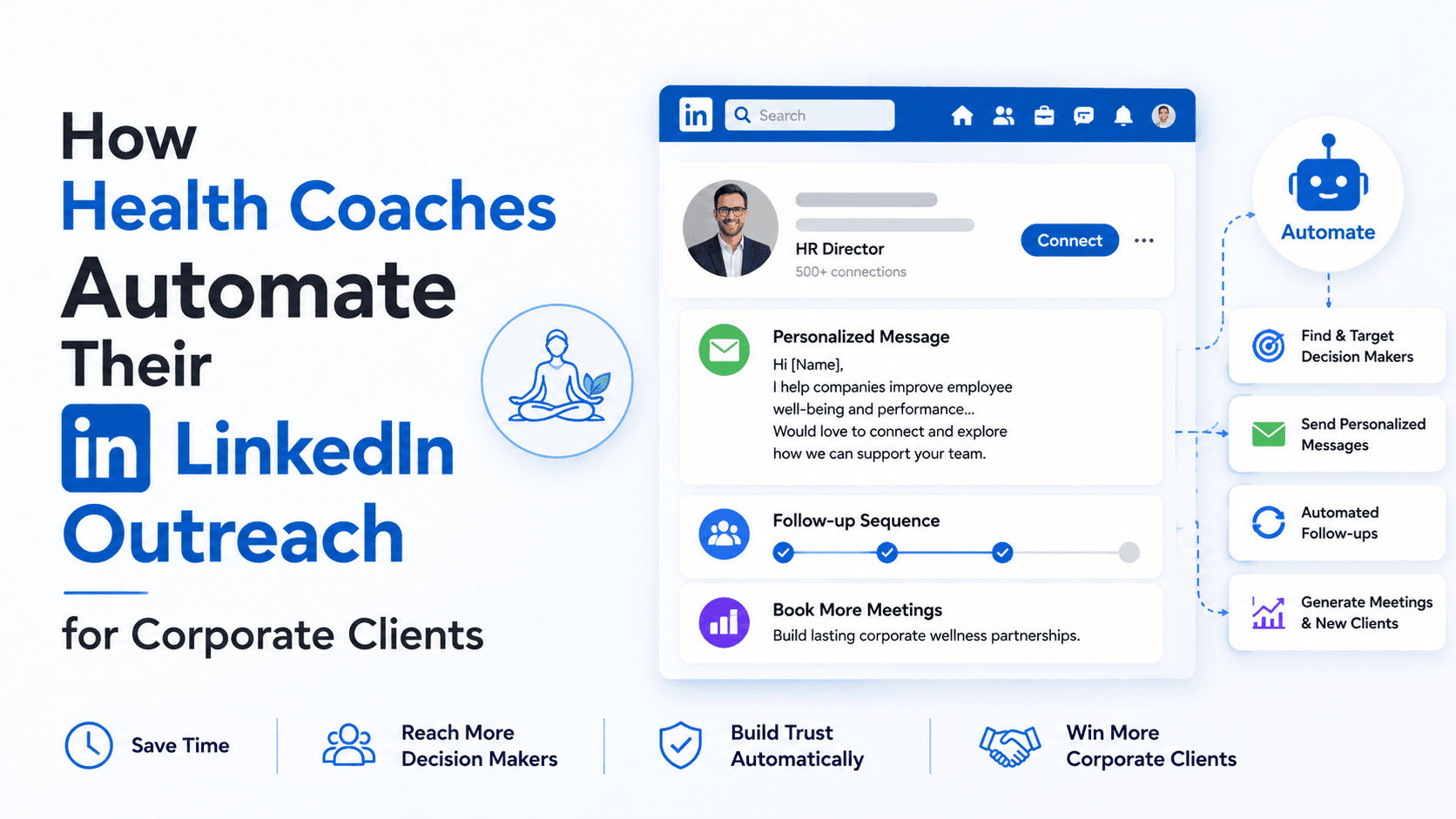
You know your health coaching program could help companies. Better energy, lower burnout, improved habits, healthier teams, fewer employees running on caffeine and stress all day.
But then you open LinkedIn and reality hits.
You search for HR managers, benefits leaders, people operations directors, founders, and wellness coordinators. You visit profiles, send a few connection requests, write a couple of thoughtful messages, and then stop because client calls, program delivery, content creation, and admin work take over again.
That is the problem most health coaches face when they try to sell corporate wellness services. The opportunity is there, but the outreach process is slow, repetitive, and easy to abandon.
LinkedIn automation can help, but only when it is used like a structured outreach assistant, not a spam machine. The goal is not to blast hundreds of generic pitches. The goal is to consistently reach the right decision-makers, start relevant conversations, and give yourself more chances to book qualified corporate calls.
Why Health Coaches Struggle With Corporate LinkedIn Outreach
Selling health coaching to individuals is already personal. Selling it to companies adds another layer. You are not just convincing one person to improve their habits; you are convincing a business buyer that your program can support employee wellbeing, retention, productivity, morale, or culture.
That means your outreach needs to feel credible.
Most health coaches struggle because they are not trained sales development reps. They may be excellent at habit coaching, nutrition support, stress management, sleep education, movement routines, or lifestyle change, but corporate prospecting is a different skill.
Manual LinkedIn outreach also takes real time. Finding the right companies, checking whether they have HR leadership, reading profiles, sending connection requests, writing follow-ups, and tracking replies can easily take 60 to 90 minutes a day if done properly.
What many health coaches get wrong is aiming too broadly. “Corporate clients” is not a target market. A 20-person startup, a 300-person remote SaaS company, and a 5,000-person healthcare organization all buy wellness differently.
If your targeting is vague, automation just helps you reach the wrong people faster. The first job is clarity. The second job is consistency.
What LinkedIn Automation Actually Means for Health Coaches
LinkedIn automation is the process of using software to handle repetitive outreach actions that you would otherwise do manually. That can include visiting profiles, sending connection requests, organizing follow-ups, tracking replies, or helping you manage a pipeline of potential corporate buyers.
The better version of LinkedIn automation is controlled and targeted. It does not send the same hard pitch to everyone. It supports a workflow where the coach still chooses the audience, writes relevant messaging, and personally handles serious replies.
For health coaches, this matters because trust is everything. HR leaders and founders are not looking for random wellness pitches. They are looking for practical help with employee stress, burnout, engagement, absenteeism, team energy, or culture.
A platform like Appilot fits this workflow because it can run automation through real Android devices or emulators and manage activity from a simple web dashboard. Instead of relying on fragile browser scripts or keeping a laptop active all day, Appilot lets you set up mobile-first workflows with controlled actions and safer session behavior.
That does not mean you should automate everything. The best approach is to automate the repetitive discovery layer, then keep the human parts human. Profile research, offer positioning, and serious sales conversations still need your judgment.
How Health Coaches Use LinkedIn Automation in Practice
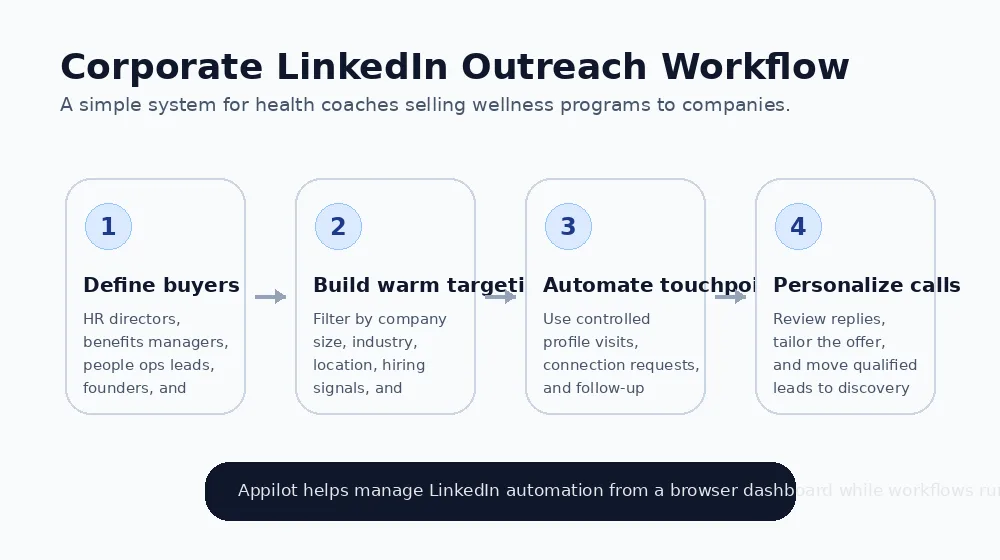
The first practical use case is finding better corporate buyers. A health coach should not just target anyone with “HR” in their title. Better targets might include HR directors at remote companies, benefits managers at mid-sized firms, people operations leads at high-growth startups, founders of small teams, or wellness coordinators in industries where burnout is common.
Manually, you would search LinkedIn, filter by company type, open profiles, check job titles, and decide whether each person is worth contacting. Automation can help make that process more consistent by handling profile visits, connection activity, and outreach sequencing within controlled daily limits.
The second use case is connection request consistency. Most health coaches send outreach in bursts. They do 30 minutes one day, forget for a week, then send another batch when leads dry up. That creates an unstable pipeline.
With Appilot’s LinkedIn automation workflows, a health coach can run controlled connection activity from a dashboard while focusing on coaching sessions and program delivery. The key is to target specific buyer groups, such as HR leaders at companies with 50 to 500 employees, rather than sending broad requests to random professionals.
The third use case is soft positioning before the pitch. Instead of immediately selling a corporate wellness program, your first message can connect around a real workplace problem. For example, employee burnout, hybrid work fatigue, stress management, nutrition challenges, or low team energy.
A better first message might sound like a human note, not a campaign. You could mention that you help teams build healthier routines around energy, stress, and sustainable performance, then ask whether employee wellbeing is currently a priority for their company.
The fourth use case is follow-up tracking. Most corporate leads do not reply to the first message. Some accept the connection and stay quiet. Others reply weeks later. Automation can help organize follow-ups so you are not relying on memory.
Still, the replies should be handled personally. Once someone shows interest, read their profile, look at the company, understand the likely pain point, and respond like a real consultant. That is where deals are made.
What Results Should You Realistically Expect?
LinkedIn outreach is not instant. A health coach should not expect to send 50 messages and immediately close a corporate wellness contract.
A more realistic goal is to build a steady flow of conversations. For example, if you connect with targeted HR and people leaders every week, a percentage will accept, a smaller percentage will reply, and a few may turn into discovery calls. The numbers depend heavily on your niche, offer, credibility, profile quality, and messaging.
The first two to four weeks are usually about testing. You are learning which titles respond, which industries care, which message angles feel natural, and which offer gets curiosity instead of silence.
Your LinkedIn profile matters too. If an HR director clicks your profile and sees a vague bio, unclear offer, or no corporate wellness positioning, the outreach will underperform. Automation can create visibility, but your profile has to create trust.
The strongest health coaches usually position themselves around a specific workplace problem. “I help companies improve employee health” is too broad. “I help remote teams reduce burnout through simple nutrition, movement, and stress habits” is much easier to understand.
Setting Up LinkedIn Outreach Automation
Before you automate anything, fix your LinkedIn profile. Your headline should explain who you help and what outcome you support. Your about section should speak to corporate buyers, not only individual coaching clients. Your featured section should include a case study, workshop overview, program page, or simple PDF explaining your corporate wellness offer.
Then define your target buyer. This might be HR directors at remote-first companies, benefits managers at healthcare organizations, founders of startups with growing teams, or people operations leaders at companies actively hiring.
Next, build a message sequence. Keep it short. The first message should not be a full sales pitch. It should create relevance. The follow-up can add context, such as a specific wellness workshop, employee stress audit, or short team session.
One reason health coaches may prefer Appilot for this workflow is the setup. The dashboard is browser-based, and the automation can run through mobile device sessions without forcing you into developer tools, ADB setup, or custom scripts. For a coach who wants predictable outreach without becoming technical, that simplicity matters.
Set daily limits conservatively. Corporate outreach should feel professional, not aggressive. Sending fewer, better-targeted messages usually beats blasting a huge list.
Finally, review replies every day. Automation can help you open doors, but it cannot replace the quality of your conversation. When a buyer responds, slow down and personalize.
Common Mistakes Health Coaches Should Avoid
Pitching Too Early
Corporate buyers usually need context before they care about your offer. If your first message is a full pitch for a wellness program, it can feel like spam.
Start with relevance, not pressure. Ask about priorities, share a simple observation, or connect around a workplace health problem.
Targeting the Wrong Company Size
A 10-person startup may not have budget for a formal wellness program, while a large enterprise may have a long procurement process. Mid-sized companies are often a better starting point for independent health coaches.
Choose your target based on budget, decision speed, and the type of program you sell.
Sounding Like a Generic Wellness Brand
HR leaders see plenty of vague wellness language. Words like balance, vitality, and transformation are not enough.
Be specific about the problem you solve, such as burnout, energy crashes, stress habits, sleep routines, or employee nutrition.
Ignoring Your LinkedIn Profile
Your outreach message gets attention, but your profile closes the credibility gap. If your page is still written for individual clients only, corporate buyers may not understand why they should talk to you.
Update your headline, about section, featured content, and recent posts before scaling outreach.
Automating Without Tracking Replies
Automation without tracking becomes noise. You need to know who accepted, who replied, who asked for details, and who should be followed up with later.
Treat LinkedIn like a pipeline, not just a posting platform.
Is LinkedIn Automation Right for Your Health Coaching Business?
LinkedIn automation can be a good fit if you already have a clear corporate wellness offer, know what type of company you want to reach, and can handle sales conversations when people respond.
It is especially useful for health coaches selling workshops, team programs, executive wellness coaching, burnout prevention sessions, nutrition education, stress management training, or employee habit-building programs.
It may not be right if your offer is still vague, your profile is not ready, or you are uncomfortable with direct outreach. It also may not fit if you expect automation to close deals for you without personal follow-up.
The best use of automation is simple: create consistent, targeted opportunities so you can spend more time in real conversations.
Final Thoughts
Corporate wellness clients rarely appear by accident. You need a clear offer, a credible LinkedIn presence, and a repeatable way to reach the right people.
LinkedIn automation can help health coaches build that repeatable system. It saves time on repetitive outreach, keeps the pipeline active, and helps you reach HR leaders and company decision-makers more consistently.
If you are ready to stop doing outreach in random bursts, Appilot is worth exploring. It offers ready-to-use bots for LinkedIn, Instagram, TikTok, and other platforms through a web dashboard, with no coding required. You can check it out at appilot.app.
FAQs
Q1: Can health coaches use LinkedIn automation safely?
Yes, if it is slow, targeted, and professional. Avoid aggressive limits, generic mass messages, and repeated pitches to the wrong audience.
Q2: Who should health coaches target on LinkedIn?
Good targets include HR directors, benefits managers, people operations leads, founders, and wellness coordinators at companies that fit your offer.
Q3: Do I need a corporate wellness offer before automating?
Yes. Your outreach works better when you have a clear workshop, program, audit, or coaching package designed for companies.
Q4: Can Appilot help automate LinkedIn outreach?
Yes. Appilot can manage LinkedIn automation through a browser dashboard while workflows run on mobile device sessions.
Q5: What should my first LinkedIn message say?
Keep it short and relevant. Mention the workplace health problem you help with, then ask whether it is currently a priority.