How Life Coaches Use Instagram DM Bots to Book Discovery Calls
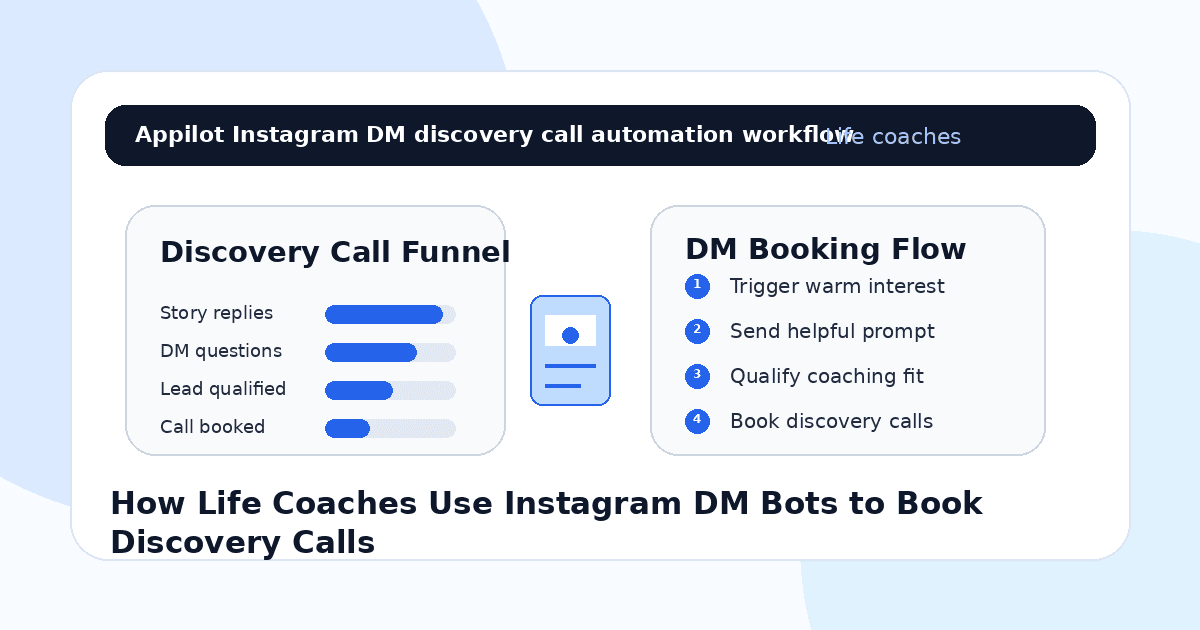
You post a story about confidence, mindset, relationships, career clarity, purpose, habits, or personal growth.
A few people reply with “I needed this.” Someone asks how your coaching works. Another person votes in a poll but never sends a full message. A few warm prospects watch every story but never take the next step.
Then the conversation fades.
That is the challenge for life coaches on Instagram. People may connect deeply with your content, but coaching is personal. They need trust, safety, clarity, and a simple way to start a conversation before they book a discovery call.
Instagram DM bots help life coaches respond faster, deliver resources, ask simple qualifying questions, and guide warm followers toward discovery calls without manually checking every message all day.
The goal is not to automate the coaching relationship. The goal is to make it easier for interested people to take the first step.
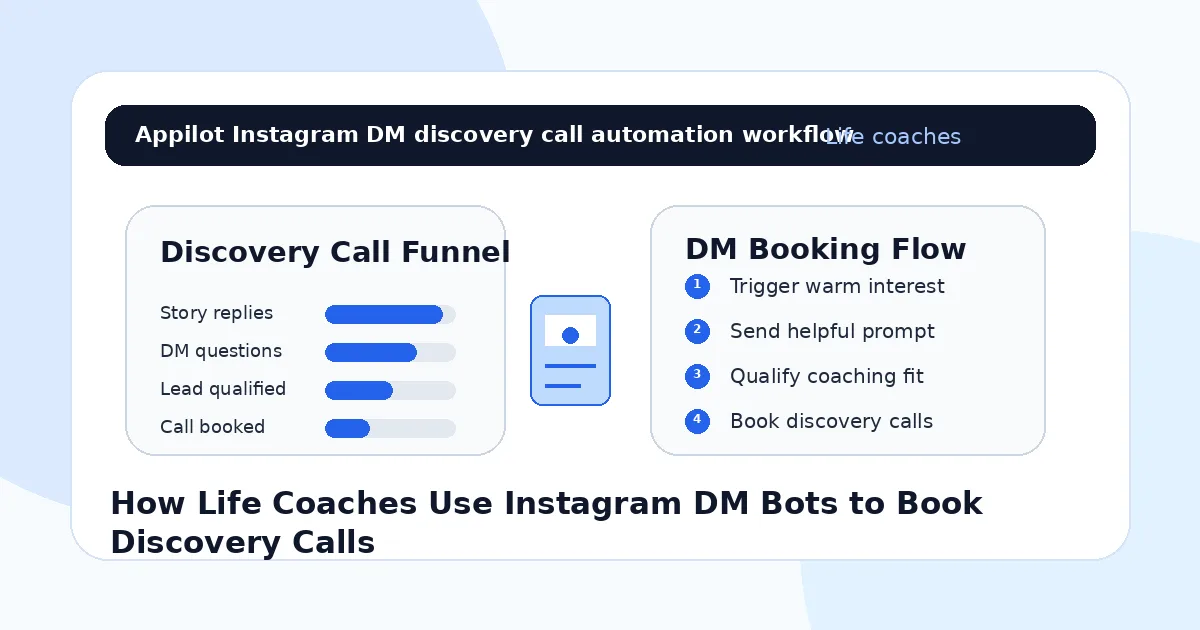
Why Instagram DMs Matter for Life Coaches
Life coaching usually starts with a private conversation.
A follower may not want to comment publicly about feeling stuck, overwhelmed, unfulfilled, uncertain, or ready for change. They may prefer to reply to a story, ask a quiet question in DMs, or request a resource before booking a call.
That makes Instagram DMs one of the most important lead channels for coaches.
The problem is that DMs can become inconsistent. A coach may be delivering sessions, creating content, writing client notes, or managing programs while warm leads sit unanswered. If someone is emotionally ready to ask for help and the response comes too late, the moment may pass.
Most coaches lose calls because they do not have a repeatable DM path. They rely on manual replies, scattered follow-ups, and vague calls-to-action.
DM automation helps organize that first step.
What Instagram DM Bots Actually Do
Instagram DM bots use triggers and workflows to respond when someone takes a specific action. That action might be replying to a story, commenting a keyword, answering a poll, requesting a free guide, or sending a message like “coaching,” “help,” “clarity,” “call,” or “details.”
For life coaches, a DM bot can send a resource, ask a simple question, explain the discovery call process, share a booking link, or route the person to a human reply when the conversation becomes personal.
Real-device automation is useful because it runs through the actual Instagram app on Android devices or emulators. That behaves more like normal mobile app usage than fragile desktop scripts or risky shortcuts.
A platform like Appilot is built for this workflow. It lets life coaches run Instagram DM automation on Android devices or emulators from a browser dashboard, without coding, ADB setup, or keeping a laptop connected all day. That means warm conversations can move faster while the coach focuses on content, client sessions, and real coaching work.
Automation should support trust. It should not pretend to be the coach.
Step 1: Build DM Bots Around Warm Interest
The best DM automation starts when someone shows interest.
A warm trigger might be a story reply, a poll response, a comment saying “guide,” a message asking about coaching, or a keyword response to a free resource.
For example, a life coach might post a story saying, “Want my clarity journal prompt? Reply CLARITY.” When someone replies, the bot can send the prompt and ask a simple follow-up question like, “Are you working through career clarity, confidence, relationships, or habits right now?”
This feels natural because the person started the interaction.
Cold DMs usually feel uncomfortable in coaching because the topic can be personal. Warm-trigger automation feels more respectful.
Step 2: Use Lead Magnets That Start Safe Conversations
Life coaching leads often need a low-pressure first step.
A lead magnet can help. It might be a clarity worksheet, confidence checklist, goal-setting guide, self-reflection prompt, boundary-setting exercise, morning routine template, decision-making framework, or values audit.
The lead magnet should connect directly to your coaching offer.
If you help professionals with career clarity, offer a career clarity worksheet. If you coach people around confidence, offer a confidence reflection prompt. If you help clients build habits, offer a simple habit reset guide.
Automation can deliver the resource instantly, then ask one gentle question. That creates a conversation without forcing the person to book before they are ready.
This is where Appilot fits naturally. It helps run Instagram DM workflows through Android devices or emulators while the coach manages the message, audience, and call-booking path from one dashboard.
Step 3: Qualify Leads Without Making It Feel Like an Interrogation
A discovery call should be for people who are a real fit.
Not every follower who wants a free guide is ready for coaching. Some are curious. Some need free content. Some need therapy or professional support outside your scope. Some are ready for coaching now.
A simple qualification flow can help.
Ask what they are working on, what kind of support they want, whether they are looking for coaching now or later, and whether they prefer private coaching, group coaching, or a self-paced resource.
Keep the questions light and respectful.
A good question might be, “What are you hoping to get support with right now?” Another might be, “Are you looking for guidance now, or just exploring options?”
Automation can collect basic intent, but personal answers should be handled by a real coach.
Step 4: Explain the Discovery Call Clearly
Many people hesitate because they do not know what happens on a discovery call.
They may worry it will be a hard sales pitch. They may not know whether they need to prepare. They may wonder if the call is free, how long it takes, or what will be discussed.
A DM bot can answer these basic questions.
For example, the automation can say, “The discovery call is a short conversation to understand what you want support with, see if coaching is a fit, and explain the next step. No pressure to decide on the call.”
That kind of clarity reduces hesitation.
A clear discovery call explanation can make the booking link feel safer and more professional.
Step 5: Send Booking Links Only When the Timing Feels Right
Do not send a discovery call link too early.
If someone only replied to a story with “love this,” they may not be ready for a call. If someone says they want support, asks how coaching works, or shares a clear goal, then a booking link makes more sense.
The best flow asks a question first, then sends the call link when the person shows readiness.
For example, after someone says they are struggling with confidence at work, the coach or workflow can respond with, “That’s something I help clients work through. Would you like to book a short discovery call to see if coaching fits?”
This feels more human than instantly sending a calendar link to every reply.
Appilot-style workflows can help manage these steps consistently, but the timing and tone still need to match the coach’s brand.
Step 6: Follow Up Gently
Follow-up matters, but coaching prospects may need time.
A person might be considering a major decision, feeling nervous about investing, or unsure whether coaching is right for them. A pushy follow-up can damage trust.
Use gentle follow-ups.
A good follow-up might say, “Just checking if you still wanted the discovery call details. No pressure either way.” Another might say, “Happy to answer any questions if you’re still exploring coaching.”
One or two follow-ups are usually enough.
Automation helps ensure warm prospects do not get forgotten, but the tone should always feel supportive, not urgent or manipulative.
Step 7: Know When a Human Should Take Over
Life coaching conversations can become personal quickly.
If someone shares a serious emotional struggle, sensitive life situation, mental health concern, crisis language, relationship distress, or anything outside the scope of coaching, a human should take over carefully and ethically.
Bots should not provide therapy, diagnosis, crisis support, or personalized deep advice.
Automation should handle simple steps like resource delivery, call explanation, basic qualification, and booking. Personal support should come from a human coach, and in some cases, the person may need to be directed toward a licensed professional or urgent support.
Responsible automation protects both the client and the coach.
Step 8: Track Discovery Call Quality
Do not measure DM automation only by how many messages are sent.
For life coaches, better metrics include story replies, guide requests, qualified DMs, discovery calls booked, show-up rate, consultation quality, coaching clients enrolled, and revenue from Instagram leads.
You should also track which content creates the best leads. A story about boundaries may bring different prospects than a post about career clarity. A confidence reel may bring more DMs, while a testimonial may create stronger buying intent.
Automation gives you more conversations. Tracking tells you which conversations lead to real clients.
Common Mistakes Life Coaches Should Avoid
Sending Cold Coaching Pitches
Cold messages about someone’s life, mindset, or personal struggles can feel uncomfortable. Use warm triggers and consent-based replies.
Booking Calls Too Early
Do not send a calendar link before the person understands what coaching is and shows real interest.
Making the DM Flow Too Long
People do not want a long sales script in their inbox. Keep messages short, gentle, and easy to answer.
Letting Bots Handle Sensitive Conversations
Bots should not handle crisis language, mental health concerns, or deeply personal situations. A human should step in.
Measuring Only DM Volume
More messages do not always mean better leads. Track qualified calls, show-up rate, client fit, and conversions.
Is Instagram DM Automation Right for Life Coaches?
Instagram DM automation is a good fit if you already post content that creates story replies, questions, guide requests, or coaching inquiries. It works especially well for life coaches, mindset coaches, career coaches, confidence coaches, relationship coaches, leadership coaches, and personal development mentors.
It may not be right if your offer is unclear, your profile lacks trust, or you do not have a safe process for handling personal conversations. Automation can organize warm interest, but it cannot replace coaching skill, ethics, or trust.
Think of DM bots as a booking assistant. They help interested people take the first step, but the coach still builds the relationship.
Final Thoughts
Life coaches use Instagram DM bots to book discovery calls by turning warm interest into simple, supportive conversations.
The strongest workflow starts with story triggers, helpful lead magnets, gentle qualification, clear call explanations, careful booking links, and human handoff for personal topics. Automation handles the repetitive steps while the coach protects trust and connection.
If you want to run Instagram DM automation without coding, ADB setup, or manual device management, Appilot gives life coaches a browser-based way to control Android devices, emulators, and ready-to-use bots for Instagram and other platforms. You can check it out at appilot.app.
FAQs
Q1: Can life coaches use Instagram DM bots to book calls?
Yes, DM bots can deliver resources, answer basic questions, qualify warm leads, and guide interested followers toward discovery calls.
Q2: What should life coaches automate first?
Start with story replies, keyword comments, free guide delivery, basic qualification, discovery call explanations, and booking link requests.
Q3: Is Instagram DM automation safe for life coaches?
It is safer when replies are triggered by real interest and sensitive conversations are handed to a human coach quickly.
Q4: Can Appilot help life coaches automate Instagram DMs?
Yes, Appilot can run Instagram DM workflows on Android devices or emulators from a browser dashboard without coding or ADB setup.
Q5: Should bots handle personal coaching conversations?
No. Bots should handle simple routing and booking, while personal, emotional, or sensitive conversations should be handled by humans.