How Micro-Influencers Use Automation to Grow to 100K Faster
You post consistently, reply to comments, share stories, test reels, and try to stay active across Instagram, TikTok, Twitter/X, YouTube Shorts, Discord, and maybe even LinkedIn.
A few posts perform well. Some followers reply. A brand asks for your media kit. A fan sends a DM. But growth still feels slow because every platform needs attention, and you only have so much time.
That is where automation helps micro-influencers.
Automation can support the repetitive parts of audience growth, like finding niche followers, replying to warm messages, sending links, managing story triggers, tracking content responses, and keeping engagement active. Used correctly, it helps creators grow faster without turning the account into a spam machine.
The goal is not to fake influence. The goal is to make your real content easier for the right people to discover.
Why Micro-Influencers Need Systems to Reach 100K
A micro-influencer usually has stronger trust than a large generic account, but less reach.
That means the growth challenge is not only posting more. It is building a system that turns every post, story, comment, collaboration, and DM into a repeatable growth loop.
To reach 100K, a creator needs consistent content, clear positioning, strong engagement, collaboration opportunities, audience retention, and a simple way for followers to take the next step.
Many creators stay stuck because they do everything manually. They reply when they remember. They promote links only once. They miss brand DMs. They forget to follow up with warm followers. They post content but do not build a workflow around it.
Automation helps reduce that friction.
What Automation Means for Micro-Influencers
Automation for micro-influencers means using tools to handle repeatable social actions across platforms.
That can include story replies, comment triggers, DM flows, profile visits, audience discovery, link delivery, lead magnet delivery, collaboration routing, content reminders, and simple fan follow-ups.
Real-device automation is especially useful because most social platforms are mobile-first. Instead of relying only on browser scripts or fragile desktop tools, real-device workflows run through Android devices or emulators and behave more like normal app usage.
A platform like Appilot is built for this kind of workflow. It lets micro-influencers run social automation on Android devices or emulators from a browser dashboard, without coding, ADB setup, or keeping a phone connected all day. That makes it easier to manage repeated engagement while the creator focuses on content, partnerships, filming, editing, and community.
Automation should support your creator brand. It should not replace your personality.
Step 1: Build Around a Clear Niche
Automation only works well when the audience is clear.
A vague creator brand like “lifestyle content” is hard to scale. A stronger niche might be “minimalist fashion for students,” “fitness routines for busy moms,” “budget travel in Asia,” “skincare for sensitive skin,” “AI tools for freelancers,” or “home cooking for beginners.”
This matters because automation magnifies targeting.
If your niche is unclear, your engagement may attract random followers who never become fans. If your niche is specific, automation helps more of the right people discover your content.
Your niche should guide your content pillars, hashtags, collaboration targets, story topics, DM triggers, and brand partnerships.
A 100K audience starts with a clear reason to follow.
Step 2: Use Automation for Audience Discovery
Micro-influencers grow faster when they show up near the right people.
Automation can help with audience discovery by supporting profile visits, targeted engagement, content monitoring, and interaction with people already engaging in your niche.
For example, a fitness creator can focus on users interacting with workout pages, wellness communities, gym content, and transformation posts. A beauty creator can focus on skincare discussions, product reviews, routine videos, and niche beauty hashtags. A finance creator can focus on beginner investing, budgeting, or career-money conversations.
This is where Appilot fits naturally. Creators can use Appilot to run social workflows through Android devices or emulators while managing target audiences from one dashboard.
The goal is not random reach. The goal is relevant discovery.
Step 3: Turn Comments Into Conversations
Comments are growth opportunities.
If someone comments “link,” “where did you get this,” “routine,” “guide,” “price,” “tutorial,” or “part two,” they are showing interest. Automation can help respond faster and guide them to the right next step.
A fashion creator can send outfit details. A fitness creator can send a workout guide. A creator selling digital products can send the store link. A travel creator can send an itinerary. A beauty creator can send a product list.
The key is to use triggers around real interest.
Do not send random links to everyone. Respond when the follower asks, comments a keyword, replies to a story, or shows clear intent.
That kind of automation feels helpful instead of spammy.
Step 4: Use Story Replies to Build Warm DMs
Stories are one of the easiest places to start conversations.
A micro-influencer can use stories to ask questions, run polls, share behind-the-scenes moments, announce new posts, promote affiliate links, collect feedback, or invite followers to request a resource.
Automation can respond when someone replies with a keyword.
For example, a creator can post “Reply GUIDE for my free checklist,” “Reply OUTFIT for today’s links,” or “Reply COLLAB if you want my media kit.” The bot can send the relevant link or ask a quick follow-up question.
Appilot-style workflows make this easier because creators can manage repeated story and DM actions without coding or manual device work.
The best story automation feels like fast creator support, not a robotic blast.
Step 5: Protect Your Voice
The biggest risk with automation is sounding generic.
Micro-influencers grow because people feel connected to them. If every reply sounds like a bot, followers may lose trust.
Your automated messages should match your natural tone. They should be short, friendly, useful, and easy to answer. They should not overuse sales language or push people too quickly.
A good rule is simple: automate the first step, personalize the relationship.
For example, a bot can send the guide, link, or basic answer. But when a follower shares a personal story, asks a specific question, or becomes a serious fan or buyer, you should step in personally.
Automation opens the door. Your voice keeps people connected.
Step 6: Use Automation for Brand Deals and Collabs
As micro-influencers grow, collaboration messages become harder to manage.
Brands may ask for rates. Creators may request collaborations. Fans may ask about affiliate links. Agencies may request a media kit.
Automation can help route these messages.
If someone DMs “collab,” the workflow can ask whether they are a brand, creator, or agency. If a brand asks for rates, the bot can send a media kit or booking form. If a follower asks for a product link, the bot can send the affiliate page.
This keeps opportunities from getting lost.
A creator trying to grow to 100K needs both audience growth and business systems. Automation helps with both.
Step 7: Track What Actually Drives Growth
Do not measure automation only by how many messages it sends.
For micro-influencers, better metrics include profile visits, follower growth from target audiences, story replies, comment triggers, saves, shares, DMs, link clicks, affiliate clicks, collaboration requests, email signups, and repeat engagement.
You should also track which content creates the right followers. A viral funny post may bring attention, but a useful niche tutorial may bring better fans. A personal story may build trust. A product breakdown may bring affiliate revenue. A behind-the-scenes post may attract brand interest.
Automation gives you more engagement signals. Tracking tells you which signals matter.
Step 8: Scale Without Looking Automated
Growing to 100K does not mean acting like a large faceless account.
The best micro-influencers scale while still feeling personal. They use automation to handle repetition, but they keep content, voice, stories, and real replies human.
That balance matters.
Use automation for discovery, routing, reminders, basic FAQs, link delivery, and warm triggers. Use yourself for storytelling, opinions, community moments, collaboration decisions, and real conversations.
This is how creators grow faster without losing the trust that made them valuable in the first place.
Common Mistakes Micro-Influencers Should Avoid
Automating Too Early Without a Clear Niche
Automation will not fix unclear content. Define your audience and content pillars first.
Sending Cold DMs to Random People
Cold automated messages can feel spammy. Use automation around warm triggers and relevant audience discovery.
Using Generic Replies
Your followers follow you for your voice. Make automated messages sound natural and aligned with your brand.
Chasing Follower Count Only
A 100K audience is valuable only if the followers care. Track engagement, saves, DMs, link clicks, and brand-fit quality.
Ignoring Real Conversations
Bots can handle basic replies, but personal questions, loyal fans, and brand deals need human attention.
Is Automation Right for Micro-Influencers?
Automation is a good fit if you already post consistently, receive comments or DMs, use story prompts, share links, work with brands, or sell digital products, services, or affiliate offers. It works especially well for creators on Instagram, TikTok, YouTube Shorts, Twitter/X, LinkedIn, Discord, Reddit, and other social platforms.
It may not be right if your content is still unclear, your profile does not explain why people should follow, or your messages sound too generic. Automation can increase activity, but it cannot replace a strong creator identity.
Think of automation as a creator growth assistant. It helps you stay visible and responsive while your content earns the audience.
Final Thoughts
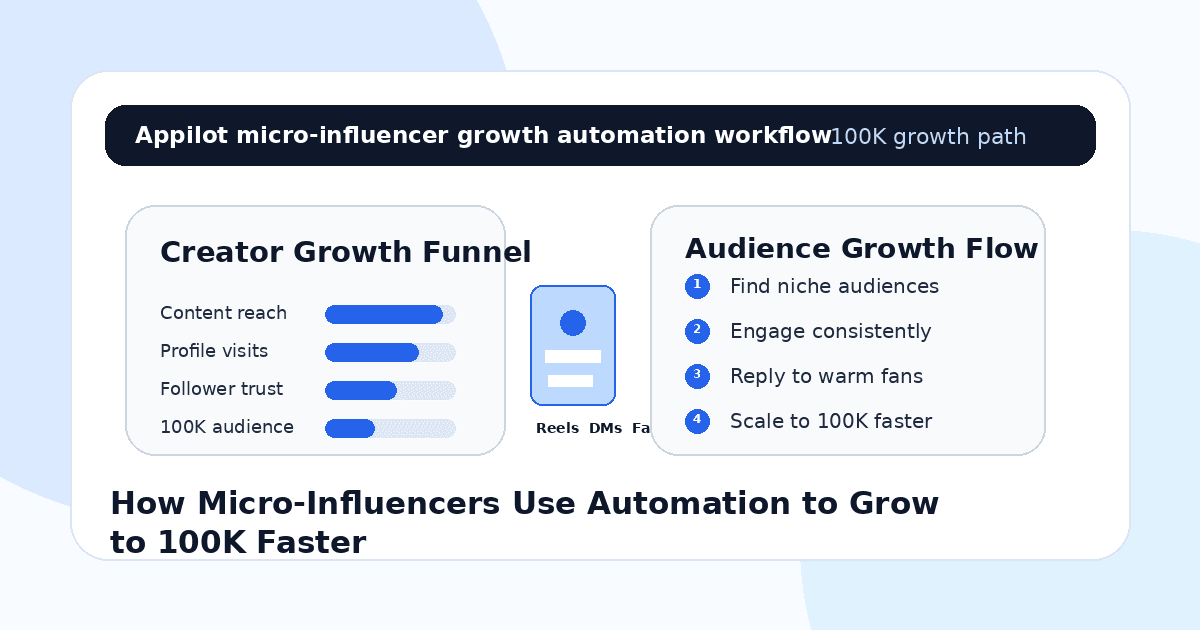
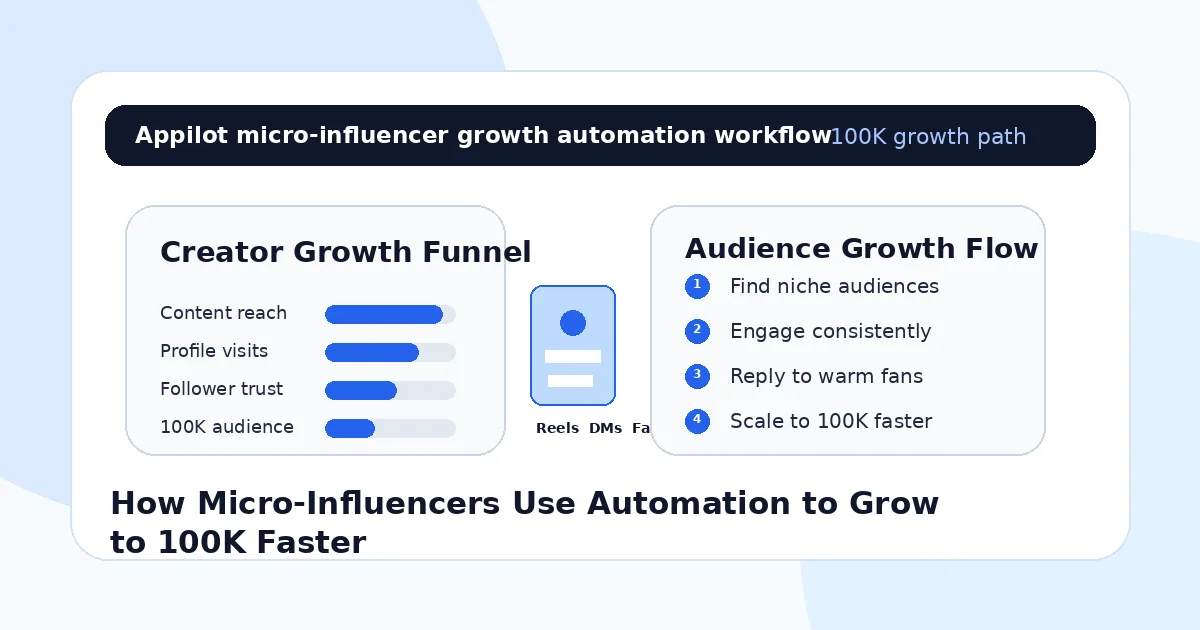
Micro-influencers use automation to grow to 100K faster by turning content, comments, stories, DMs, and collaborations into a repeatable growth system.
The strongest workflow starts with a clear niche, targeted discovery, comment triggers, story replies, warm DMs, brand-deal routing, and performance tracking. Automation handles repetitive actions while the creator keeps the content and connection human.
If you want to run social automation without coding, ADB setup, or manual device management, Appilot gives micro-influencers a browser-based way to control Android devices, emulators, and ready-to-use bots for Instagram, TikTok, Twitter/X, YouTube, Discord, Reddit, LinkedIn, and more. You can check it out at appilot.app.
FAQs
Q1: Can micro-influencers use automation to grow faster?
Yes, automation can help with audience discovery, comment replies, story triggers, DM routing, and collaboration management.
Q2: What should micro-influencers automate first?
Start with comment keywords, story replies, link delivery, media kit requests, audience discovery, and repeated FAQ responses.
Q3: Is automation safe for micro-influencers?
It is safer when activity is gradual, relevant, and based on real interest. Spammy cold DMs can hurt trust and account health.
Q4: Can Appilot help micro-influencers automate growth?
Yes, Appilot can run social workflows on Android devices or emulators from a browser dashboard without coding or ADB setup.
Q5: Does automation replace creator personality?
No. Automation handles repetitive actions, but your content, voice, opinions, stories, and real replies build the audience.