How Nutritionists and Dietitians Use Social Bots to Grow Their Practice
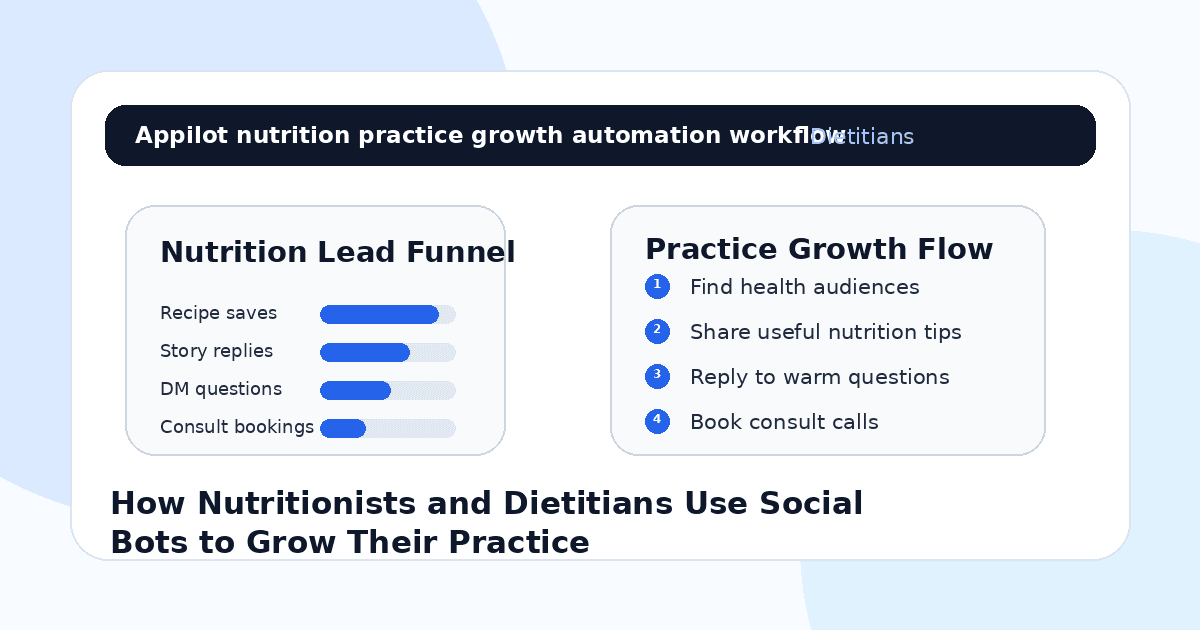
You post a nutrition tip, share a healthy meal idea, explain a common food myth, or answer a question about weight loss, gut health, meal planning, sports nutrition, or blood sugar balance.
A few people save the post. Someone replies to your story asking if the advice applies to them. Another person comments that they need help building a meal plan.
Then the conversation slows down.
That is the challenge for nutritionists and dietitians on social media. People are interested in food and health, but they often need trust, education, and a safe way to ask questions before they book a consultation.
Social bots can help practitioners stay visible, answer repeated questions faster, deliver resources, and guide warm followers toward consultations or programs. Used carefully, automation supports the practice without making health advice feel generic or careless.
The goal is not to spam people with diet offers. The goal is to help more of the right people find your expertise and start a meaningful conversation.
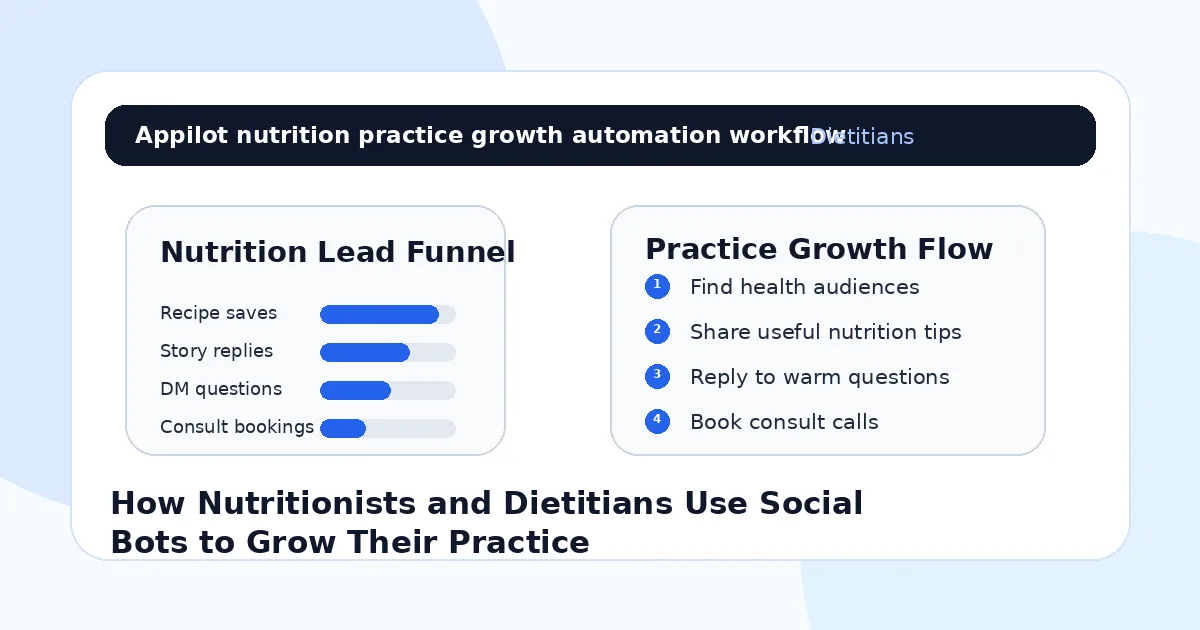
Why Nutritionists and Dietitians Struggle to Grow Online
Nutrition content gets attention because almost everyone has questions about food. People want to know what to eat, what to avoid, how to lose weight, how to manage cravings, how to meal prep, how to support digestion, and how to build healthier habits.
But attention does not automatically become clients.
A follower may save ten posts before ever sending a message. They may watch your stories for weeks before asking about your service. They may need to trust your approach before discussing personal goals, eating habits, health concerns, or lifestyle struggles.
Manual engagement is also time-consuming. Nutrition professionals may spend the day seeing clients, writing plans, reviewing food diaries, preparing resources, and keeping up with continuing education. Social media replies often happen late, and warm leads can go cold.
Most practitioners get this wrong by treating social platforms like content libraries only. They post useful advice but do not create a system for turning interest into conversations.
Automation helps build that system.
What Social Bots Mean for Nutrition Practices
Social bots can automate repeatable actions across platforms like Instagram, TikTok, LinkedIn, Twitter/X, Reddit, Discord, and Facebook-style communities. For nutritionists and dietitians, that can include profile visits, story views, comment replies, DM flows, resource delivery, lead qualification, and appointment routing.
The safest use is not aggressive cold outreach. It is controlled automation around warm signals, such as someone replying to a story, commenting “meal plan,” asking for a guide, or sending a question about services.
Real-device automation is useful because many social platforms are mobile-first. Instead of relying only on desktop scripts or fragile API shortcuts, real-device workflows run through Android devices or emulators and behave more like normal mobile app usage.
A platform like Appilot is built for this kind of workflow. It lets nutritionists, dietitians, and wellness teams run social automation on Android devices or emulators from a browser dashboard, without coding, ADB setup, or keeping a laptop connected all day. That makes it easier to keep engagement active while the practitioner focuses on client care.
Automation should support education and access. It should not replace professional judgment.
Step 1: Choose a Clear Nutrition Niche
Before using automation, define who your practice serves.
A vague audience like “people who want to eat better” is too broad. A stronger niche might be “busy professionals who need meal planning,” “women with PCOS looking for nutrition support,” “athletes improving performance,” “parents managing family meals,” “people struggling with emotional eating,” or “clients who need sustainable weight-loss coaching.”
This matters because automation magnifies your targeting.
If you target broadly, you attract random followers who may never book. If you target clearly, automation helps more relevant people discover your content and services.
Your niche should guide the content you post, the audiences you engage with, the keywords you monitor, and the resources you offer. A dietitian focused on gut health should not run the same social workflow as a sports nutritionist or a weight-management coach.
The clearer the niche, the easier it becomes to turn attention into qualified consultations.
Step 2: Make Your Profile Trustworthy Before Scaling
Nutrition is a trust-heavy field.
Before sending more people to your profile, make sure the profile shows credibility, clarity, and a simple next step. Your bio should explain who you help and what kind of support you provide. Your pinned posts should show your philosophy, services, client outcomes where appropriate, and common questions. Your highlights should explain consultations, pricing guidance, FAQs, testimonials, and how to book.
People need to know whether you offer one-on-one consultations, meal plans, online programs, group coaching, corporate wellness, sports nutrition, or condition-specific support.
If your profile looks unclear, automation will only send more people into confusion.
A strong social profile should make the visitor feel safe. They should understand your approach within seconds and know what to do next if they want help.
Step 3: Use Bots for Education-Based Visibility
Nutrition professionals should lead with education.
Social bots can support visibility by helping your account show up near the right audience. That might include profile visits, story views, targeted engagement, comment monitoring, and content interaction around relevant communities.
For example, a dietitian focused on family nutrition might engage with parenting pages, school lunch content, family meal planning posts, and local wellness communities. A sports nutritionist might focus on gym accounts, athlete communities, running clubs, performance coaches, and fitness creators. A gut-health specialist might monitor questions around bloating, digestion, fiber, and meal routines.
This is where Appilot can fit naturally. It helps run repeated social workflows through Android devices or emulators while the practitioner controls the audience, message, and professional boundaries from one dashboard.
The goal is to make your expertise easier to discover, not to chase random follower growth.
Step 4: Automate Resource Delivery
Lead magnets work well for nutrition practices because they give people a low-pressure reason to start a conversation.
A resource might be a meal planning checklist, balanced plate guide, grocery list, protein guide, snack ideas, gut-health habit tracker, hydration checklist, or beginner nutrition audit.
Automation can deliver these resources when someone comments a keyword, replies to a story, or asks for help. For example, you can post a story saying, “Reply MEAL to get my simple meal planning guide.” When someone replies, the bot sends the guide and asks a gentle qualifying question.
This creates a natural conversation.
The resource should connect to your paid service. If you offer meal planning consultations, the resource should reveal why personalized support is useful. If you offer sports nutrition coaching, the resource should help athletes see where they may need a plan.
Automation delivers the first step. Your expertise builds trust after that.
Step 5: Use DMs Carefully and Professionally
DM automation can help, but nutrition is personal and sometimes sensitive.
People may ask about weight, digestion, medical conditions, disordered eating, supplements, pregnancy, diabetes, allergies, or medication interactions. These topics require care. Automation should not provide diagnosis, personalized medical advice, or risky recommendations.
A good DM flow should stay general, helpful, and safe. It can ask what kind of support the person is looking for, offer a resource, explain consultation options, or suggest booking a professional session.
For example, if someone replies “meal plan,” the automation can say, “I can send a general meal planning guide. For a personalized plan, it’s best to book a consultation so we can review your goals and routine properly.”
That keeps the conversation responsible.
One reason practitioners use Appilot-style workflows is that Appilot makes the repetitive reply layer easier to manage without coding or ADB setup. But the professional boundaries still need to come from the practitioner.
Step 6: Qualify Leads Before Booking Consultations
Not every social media question is a qualified lead.
Some people want free advice. Some need a referral to a medical professional. Some are looking for general education. Some are ready to book a consultation. Some are not a fit for your scope of practice.
A simple qualification flow can help.
Ask what they want support with, whether they are looking for general guidance or personalized help, whether they prefer online or in-person sessions, and whether they are ready to start now. Keep the questions respectful and non-invasive.
A good flow might ask, “Are you looking for meal planning help, habit coaching, weight management support, or sports nutrition guidance?” That helps route the conversation without asking for sensitive details too early.
Automation can collect basic intent, but a human should take over once the question becomes specific or health-related.
Step 7: Turn Social Interest Into a Clear Booking Path
A warm conversation should not end with confusion.
If someone is interested, the next step should be simple. Send them to a consultation booking page, application form, service page, discovery call, or intake process. Explain what happens next and what they should expect.
For example, “The next step is a short consultation request form. Once you submit it, I’ll review your goals and send booking options.”
This feels professional and organized.
If your booking path is messy, leads will drop. Make sure your link works, your service options are clear, and your intake process is easy to understand.
Automation can bring more warm prospects into the path, but the path itself needs to be smooth.
Step 8: Track What Brings Real Clients
Do not measure social bots only by followers or likes.
For nutritionists and dietitians, better metrics include profile visits, resource requests, story replies, qualified DMs, consultation bookings, discovery calls, program signups, client conversions, and retention.
You should also track which content creates the best leads. Recipe posts may get saves, but myth-busting posts may create better questions. Transformation content may bring interest, but educational posts may bring more qualified consultation requests. Stories may produce more DMs than feed posts.
This helps you improve your content and automation workflow over time.
The goal is not more social activity. The goal is more qualified people getting the right support.
Common Mistakes Nutritionists and Dietitians Should Avoid
Giving Personalized Advice Through Automation
Bots should not diagnose, prescribe, or give sensitive nutrition advice. Use automation for general education and booking support.
Targeting Too Broadly
“Healthy eating” is too broad. Focus on a clear client type, health goal, lifestyle, or service area.
Sending Pushy Weight-Loss Messages
Cold messages about weight, body shape, or dieting can feel invasive. Use warm triggers and respectful language.
Automating Without a Booking Path
If your consultation page, intake form, or service explanation is unclear, warm leads may never become clients.
Measuring Only Engagement
Saves and likes are useful, but consultation requests, booked calls, and client conversions matter more for practice growth.
Is Social Bot Automation Right for Nutrition Practices?
Social bot automation is a good fit if your ideal clients are active on social platforms and your content already creates questions, saves, replies, or resource requests. It works especially well for private-practice dietitians, nutrition coaches, sports nutritionists, wellness clinics, online nutrition programs, and specialists with clear audiences.
It may not be right if your practice has no content, no clear service, or no safe process for handling health-related questions. Automation can support communication, but it cannot replace professional care.
Think of bots as a visibility and intake assistant. They help organize interest, but your expertise and ethics guide the relationship.
Final Thoughts
Nutritionists and dietitians can use social bots to grow their practice when automation is built around education, trust, and safe boundaries.
The best workflow starts with a clear niche, helpful content, resource delivery, warm DM replies, lead qualification, and a simple booking path. Automation handles repetitive actions, while the practitioner handles professional judgment and client care.
If you want to run social automation without coding, ADB setup, or manual device management, Appilot gives nutritionists and wellness teams a browser-based way to control Android devices, emulators, and ready-to-use bots for Instagram, TikTok, LinkedIn, Reddit, Discord, and other platforms. You can check it out at appilot.app.
FAQs
Q1: Can nutritionists use social bots to grow their practice?
Yes, social bots can help increase visibility, deliver resources, answer common questions, and guide warm leads toward consultations.
Q2: What should dietitians automate first?
Start with resource delivery, story replies, comment keywords, basic lead qualification, and routing interested people to a booking page.
Q3: Is social bot automation safe for nutrition professionals?
It is safer when bots provide general information only and route personal health questions to a qualified professional.
Q4: Can Appilot help nutritionists and dietitians automate social media?
Yes, Appilot can run social workflows on Android devices or emulators from a browser dashboard without coding or ADB setup.
Q5: Should bots give personalized nutrition advice?
No. Bots should not diagnose or prescribe. They should share general resources and help people book proper professional support.