How Personal Trainers Use Instagram Automation to Get More Clients
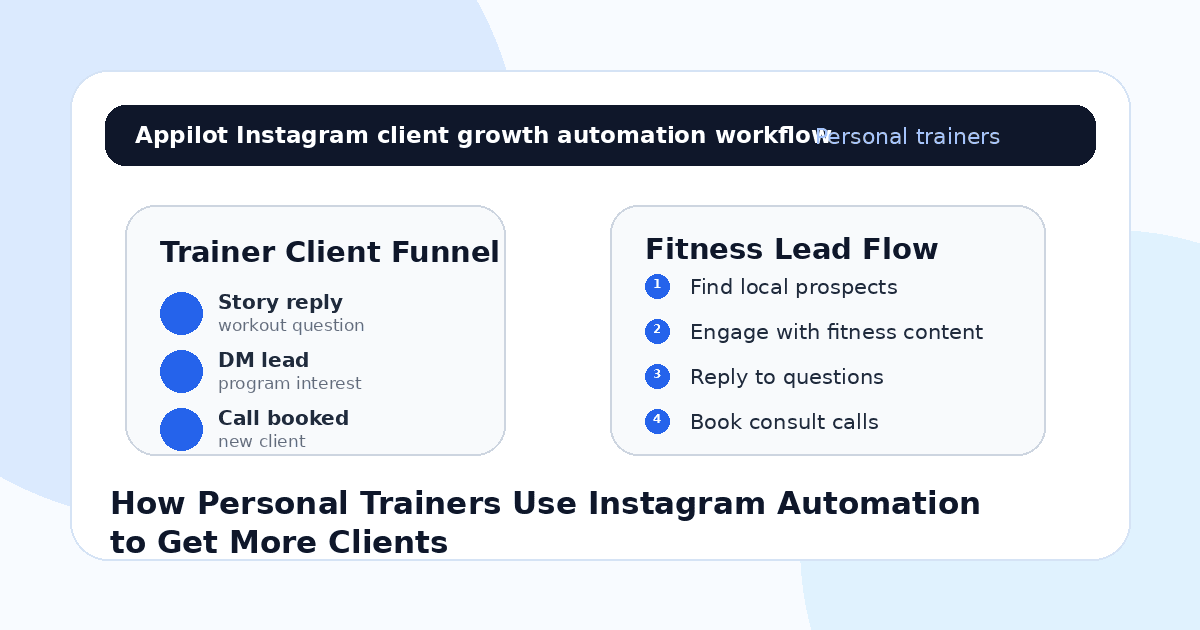
You post a workout reel, share a client transformation, add a story about your coaching offer, and wait for people to message you.
A few followers like the post. One person replies with “I need this.” Another asks about pricing. Someone else watches every story but never sends a DM.
Then the momentum fades.
That is the challenge for personal trainers on Instagram. Your ideal clients are there, but they need repeated exposure, trust, and simple ways to start a conversation before they book coaching.
Instagram automation helps trainers stay visible, reply faster, and turn fitness content into warm leads without spending hours manually tapping through profiles every day.
The goal is not to spam people with generic fitness offers. The goal is to make sure the right prospects see your coaching, understand your value, and have an easy path to ask for help.
Why Personal Trainers Struggle to Get Clients From Instagram
Most personal trainers are already doing a lot. They are training clients, writing programs, filming workouts, replying to DMs, managing check-ins, posting stories, and trying to sell coaching at the same time.
Instagram becomes inconsistent because client work always comes first.
The problem is that fitness leads usually need several touchpoints before they buy. Someone may see your reel today, watch your story tomorrow, read a transformation post next week, and only then ask about coaching.
If you disappear between those touchpoints, the lead cools down.
Many trainers also make the mistake of treating Instagram like a gallery. They post workouts, meals, progress photos, and motivational captions, but they do not create a repeatable system for turning viewers into conversations.
Automation helps build that system.
What Instagram Automation Means for Personal Trainers
Instagram automation means using software to handle repeatable actions like story views, profile visits, targeted engagement, comment replies, DM flows, and lead routing.
For personal trainers, the safest use is not mass cold messaging. It is controlled, real-device automation that supports visibility and response speed. Real-device automation runs through the Instagram mobile app on Android devices or emulators, which behaves more like normal mobile usage than basic desktop scripts or API shortcuts.
A platform like Appilot is built around this kind of workflow. It lets trainers run Instagram automation on Android devices or emulators from a browser dashboard, without coding, ADB setup, or keeping a laptop connected all day. That makes it easier to keep prospecting active while the trainer focuses on coaching, check-ins, programming, and client results.
Automation should support your coaching business. It should not replace real coaching conversations.
Step 1: Define the Type of Client You Want
Before automating anything, get clear on who you want to attract.
A vague audience like “people who want to get fit” is too broad. A stronger target is “busy professionals who want fat loss,” “new moms rebuilding strength,” “men over 35 trying to lose weight,” “beginners who feel intimidated by gyms,” or “local clients looking for personal training in your city.”
This matters because automation magnifies your targeting.
If you target broadly, you attract random followers. If you target clearly, automation helps more likely clients discover your content.
Your targeting should include location, fitness goal, lifestyle, pain point, current behavior, and the accounts your ideal clients already follow. A local trainer may target people interacting with local gyms, wellness studios, running clubs, yoga pages, healthy restaurants, or city-based fitness hashtags.
The clearer the client profile, the better the automation performs.
Step 2: Make Your Profile Ready to Convert
Automation can bring more people to your profile, but your profile needs to turn attention into trust.
Your bio should clearly say who you help and what result you deliver. Your pinned posts should show transformations, coaching style, client results, your offer, and how to start. Your highlights should answer common questions about pricing, programs, testimonials, training style, nutrition, and availability.
If someone lands on your profile and cannot tell what you offer within a few seconds, you may lose them.
A strong trainer profile does not just show workouts. It shows proof, personality, and a clear next step.
Before scaling automation, make sure your call-to-action is simple. It might be “DM ‘COACHING’ for details,” “Apply for online coaching,” “Book a free consult,” or “Message me your goal.”
Step 3: Use Automation for Targeted Visibility
The first layer of Instagram automation for trainers is visibility.
You can use automation to view stories, visit profiles, follow relevant users, and engage with content from people who match your ideal client profile. This helps your account appear more often around people who may need coaching.
For example, a local personal trainer can focus on users engaging with nearby gyms, fitness classes, sports clubs, wellness events, and local lifestyle pages. An online fat-loss coach can target people following nutrition pages, home workout creators, transformation accounts, and fitness challenges.
This is where Appilot’s Instagram automation can fit naturally. You can run targeted Instagram workflows through Android devices or emulators while managing everything from one dashboard. The trainer still controls the audience and coaching offer, while automation handles repeated visibility work.
The goal is not vanity followers. The goal is more qualified prospects noticing your profile.
Step 4: Turn Story Replies Into Warm Leads
Stories are one of the best lead sources for personal trainers.
A story about client progress, a common fat-loss mistake, a meal idea, a workout tip, or a quick poll can get people to reply. Those replies are warmer than likes because the prospect is already starting a conversation.
Automation can help handle simple reply flows.
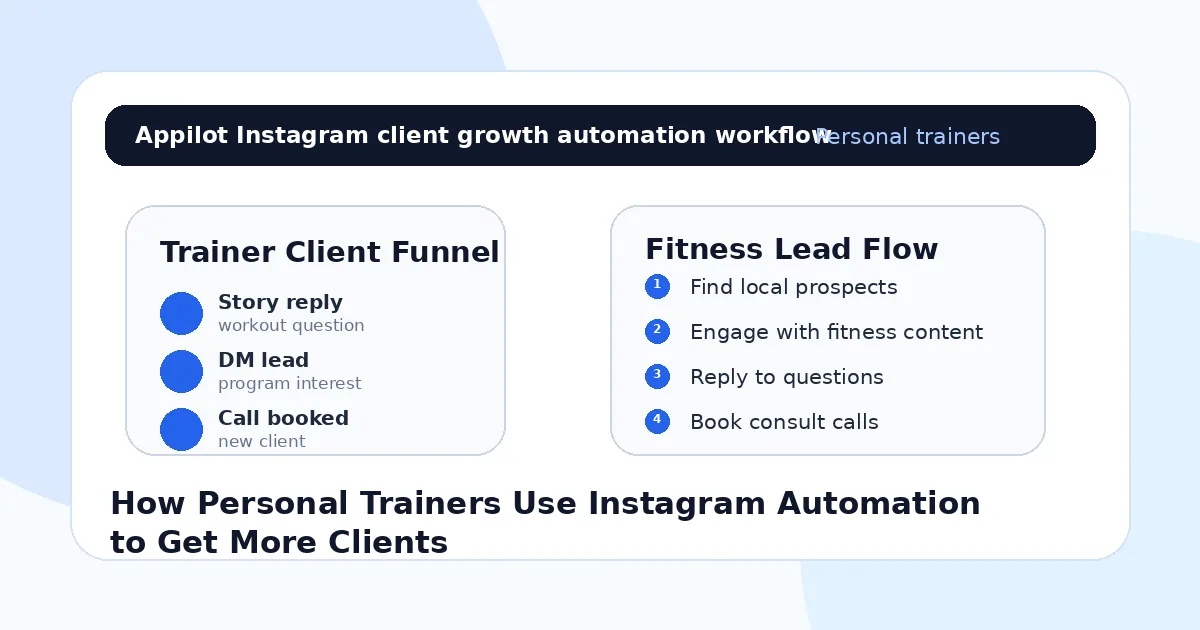
If someone replies “plan,” “price,” “coaching,” “fat loss,” or “training,” the workflow can send a short response, ask a basic qualifying question, or point them toward your application form.
For example, if someone replies “coaching,” a simple message could ask, “Are you looking for online coaching or in-person training?” That starts the conversation without feeling pushy.
The key is to keep the tone human. Fitness coaching is personal. People are sharing goals, struggles, and sometimes insecurities. Automation should make replies faster, not colder.
Step 5: Use DMs Carefully
DM automation can help trainers, but only when it follows real interest.
A cold message saying “Do you want to lose weight?” can feel intrusive. A reply to someone who asked about coaching feels helpful.
Use DM automation around warm triggers. These can include story replies, comment keywords, poll responses, quiz answers, resource requests, and repeated engagement with coaching content.
For example, if you post a story offering a free meal guide and someone replies “send,” automation can deliver the guide and ask what goal they are working on. If someone comments “interested” under a transformation post, automation can send the next step.
One reason trainers use Appilot-style workflows is setup simplicity. Appilot lets you manage Instagram automation through Android devices or emulators without scripts, command-line setup, or ADB tools. That makes it easier to support lead generation without turning the trainer into a technical operator.
The message still needs to sound like you. People hire trainers they trust.
Step 6: Qualify Leads Before Offering Coaching
Not every interested person is ready to become a client.
Some people are curious. Some want free advice. Some cannot afford coaching. Some are not serious yet. Some are perfect-fit clients who need a call quickly.
Qualify leads before pitching the offer.
Ask about their goal, timeline, current routine, biggest struggle, and whether they want online or in-person coaching. A simple question like “What are you mainly trying to change right now: fat loss, muscle gain, strength, or consistency?” can reveal a lot.
Once the prospect gives enough context, you can suggest the next step. That might be a consult call, application form, program details, or a voice-note reply.
Automation can start the conversation, but real qualification should stay human.
Step 7: Track What Actually Brings Clients
Do not measure Instagram automation only by follower growth.
For personal trainers, better metrics include profile visits from local prospects, story replies, coaching keyword responses, qualified DMs, consult calls booked, applications submitted, clients closed, and revenue from Instagram leads.
You should also track which content creates the best leads. A transformation post may bring more serious prospects than a workout reel. A story poll may create more DMs than a feed post. A client result may lead to more calls than a motivational quote.
This helps you improve the whole system.
Automation gives you more touchpoints. Tracking tells you which touchpoints produce paying clients.
Common Mistakes Personal Trainers Should Avoid
Targeting Too Broadly
Not everyone who likes fitness content is a coaching prospect. Focus on people who match your location, goals, lifestyle, and offer.
Sending Cold Body-Based Messages
Messages that comment on someone’s body, weight, or fitness level can feel invasive. Use warm triggers and respectful language instead.
Automating Before the Profile Has Proof
If your page has no testimonials, results, offer clarity, or strong pinned posts, more traffic will not convert well.
Pitching Coaching Too Early
Ask about the person’s goal and situation before pushing a program. Trust matters in fitness sales.
Measuring Only Followers
Followers do not pay your bills. Qualified DMs, booked calls, and new clients matter more.
Is Instagram Automation Right for Personal Trainers?
Instagram automation is a good fit if your ideal clients are active on Instagram and your profile already shows proof, personality, and a clear offer. It works especially well for local trainers, online coaches, transformation coaches, strength coaches, fat-loss coaches, fitness studios, and hybrid coaching businesses.
It may not be right if you have no content, no offer, or no clear client type. Automation can increase visibility, but it cannot replace coaching quality, client results, or trust.
Think of automation as a visibility and lead-support system. It helps more prospects notice you, but your expertise and communication turn them into clients.
Final Thoughts
Personal trainers get more clients from Instagram when the right people repeatedly see useful content, proof, and a clear way to start a conversation.
Automation helps by supporting targeted visibility, story replies, comment triggers, DM flows, and lead routing. But the best results still come from real coaching value, strong client proof, respectful conversations, and fast human follow-up.
If you want to run Instagram automation without coding, ADB setup, or manual device management, Appilot gives personal trainers a browser-based way to control Android devices, emulators, and ready-to-use bots for Instagram and other platforms. You can check it out at appilot.app.
FAQs
Q1: Can personal trainers use Instagram automation to get clients?
Yes, trainers can use automation to increase visibility, reply faster, send resources, qualify leads, and book more consult calls.
Q2: What should personal trainers automate first?
Start with story views, targeted profile engagement, comment replies, resource delivery, and simple DM flows around warm interest.
Q3: Is Instagram automation safe for fitness coaches?
It is safer when activity is gradual, targeted, and based on real interest. Aggressive cold DMs or spam behavior can create account risk.
Q4: Can Appilot help personal trainers automate Instagram?
Yes, Appilot can run Instagram workflows on Android devices or emulators from a browser dashboard without coding or ADB setup.
Q5: Does automation replace personal trainer sales conversations?
No. Automation can start and organize conversations, but trainers still need to qualify leads, build trust, and close clients personally.