How Podcasters Useappilot LinkedIn and Twitter Automation to Grow Listeners
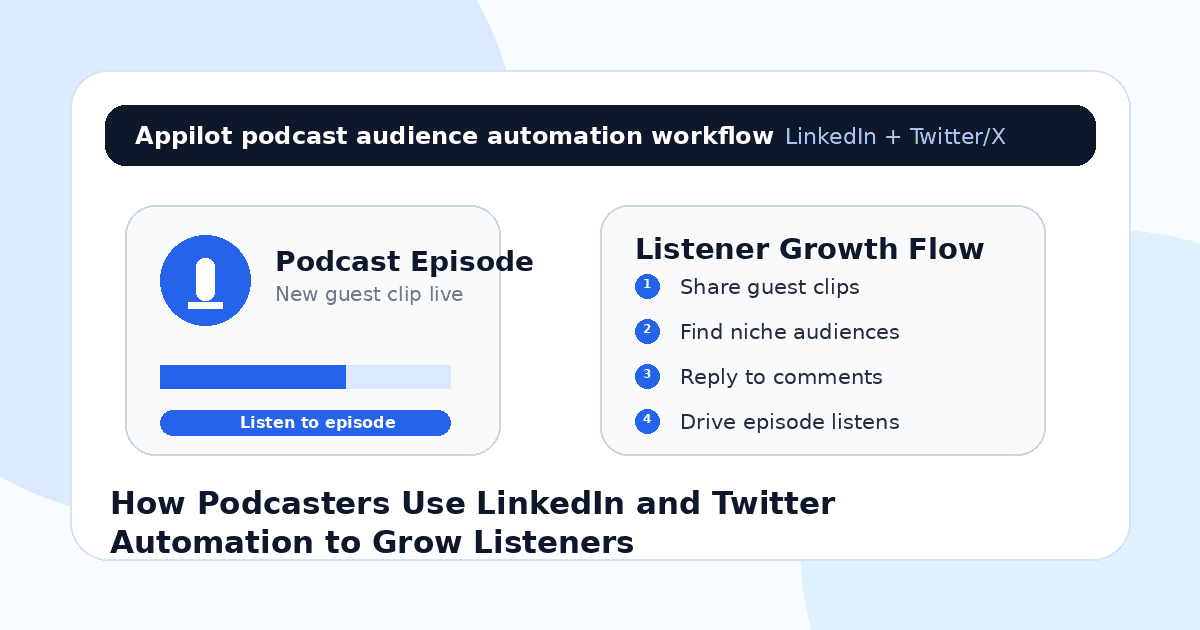
You publish a new podcast episode, create a few clips, tag the guest, and share the link on LinkedIn and Twitter/X.
For a few hours, things look active. The guest reposts it. A few people like the clip. Someone comments that the topic sounds interesting. Then the post slows down, the episode link gets buried, and the audience growth feels smaller than the effort deserved.
That is the problem most podcasters face. Recording the episode is only part of the work. The real challenge is getting the right people to notice it, click it, listen long enough, and come back for the next one.
LinkedIn and Twitter/X automation can help with that when it is used carefully. Not as a spam tool. Not as a way to blast episode links to strangers. But as a system for repeated discovery, thoughtful engagement, faster replies, and better distribution around every episode.
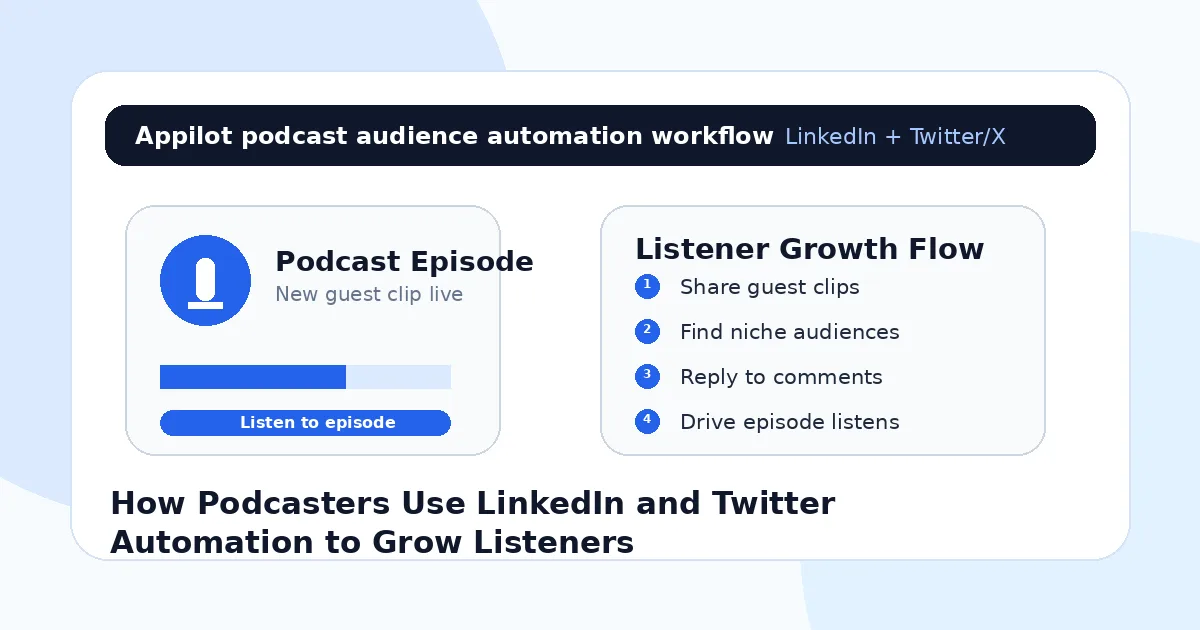
Why Podcasters Struggle to Grow Listeners
Most podcasters are already stretched thin. They plan topics, book guests, record, edit, write show notes, cut clips, publish episodes, manage newsletters, and then try to promote everything on social media.
Promotion often becomes rushed.
A host might share one LinkedIn post, one Twitter/X thread, and a short clip, then move on to the next episode. That is understandable, but it is not enough. A podcast episode needs repeated touchpoints before someone decides to listen.
The bigger issue is that podcast listeners are rarely created from cold links. People usually listen because a clip catches their attention, a guest gives them credibility, a topic solves a problem, or a conversation makes them curious.
Most podcasters get this wrong because they promote the episode instead of promoting the reason to listen. The episode link matters, but the hook matters first.
Automation helps keep that hook in front of more relevant people without forcing the host to manually search, reply, follow up, and engage every day.
What LinkedIn and Twitter Automation Means for Podcasters
LinkedIn and Twitter/X automation means using software to handle repeated social actions around podcast growth. That can include finding relevant audiences, engaging with niche conversations, replying to comments, sending episode links when people ask, following up with guests, and keeping clips active after launch day.
The best version is not aggressive mass messaging. It is targeted, slow, and tied to real interest.
Real-device automation is especially useful because it runs social workflows through mobile environments like Android phones or emulators. That is different from brittle desktop scripts or risky API-only shortcuts because the actions happen inside real app-style sessions.
A platform like Appilot is built for this kind of workflow. It lets podcasters and teams run LinkedIn, Twitter/X, and other social automation on Android devices or emulators from a web dashboard, without coding, ADB setup, or keeping a laptop connected all day. For podcast promotion, that means repeated distribution work becomes easier to manage while the host keeps the voice and relationship-building human.
Automation should support the conversation. It should not replace it.
Step 1: Turn Each Episode Into Multiple Social Angles
A podcast episode is not one piece of content. It is a content source.
Before using automation, break the episode into several angles. One clip might highlight the strongest guest insight. Another might focus on a controversial opinion. Another might answer a common industry question. Another might work as a personal story from the host or guest.
This matters because different people care about different entry points.
A founder podcast might pull clips about hiring, fundraising, product decisions, or founder mistakes. A marketing podcast might use clips about paid ads, SEO, creator strategy, or automation. A health podcast might turn one episode into clips about sleep, training, nutrition, or recovery.
Automation performs better when it has useful content to distribute. If you only push the full episode link repeatedly, people tune it out.
The best question is simple: what would make a busy person stop scrolling and think, “I need to hear the rest of that”?
Step 2: Use LinkedIn Automation for Professional Audiences
LinkedIn is strong for podcasts aimed at founders, operators, marketers, sales teams, recruiters, coaches, consultants, investors, creators, agencies, B2B buyers, and industry professionals.
The platform works well when the content feels useful, credible, or discussion-worthy. A short guest clip with a strong business insight can lead to comments, profile visits, connection requests, and episode clicks.
Automation can support this by helping you engage with people in the right niche. You can target professionals who follow similar creators, comment on industry posts, work at relevant companies, or engage with topics connected to the episode.
This is where Appilot’s LinkedIn automation can fit naturally. It helps run repeated LinkedIn actions through Android devices or emulators while you manage the workflow from one dashboard. The podcast team still chooses the audience, message, and clips, but automation helps keep outreach and engagement consistent.
LinkedIn works best when the conversation feels thoughtful. Do not treat it like a link dump.
Step 3: Use Twitter/X Automation for Conversation and Momentum
Twitter/X is faster, looser, and more conversation-driven than LinkedIn.
It can work well for podcasts around tech, startups, culture, media, investing, AI, politics, music, sports, crypto, creator economy, and niche communities where people already discuss ideas in public.
For podcasters, Twitter/X is useful because a good quote, short clip, thread, or reply can travel quickly. You can share the best moment from the episode, tag the guest, turn a strong idea into a short thread, or reply to conversations where the episode adds context.
Automation can help find those conversations and keep engagement moving. It can support repeated replies, profile discovery, follow-up actions, and audience monitoring around topics your episode covers.
But tone matters. Twitter/X users can spot robotic promotion quickly. Your replies should sound like the host, not a campaign template.
One useful approach is to automate discovery and reminders, but keep opinionated replies human.
Step 4: Send Episode Links Only When There Is Interest
This is where many podcasters go wrong.
Sending a podcast link to someone who did not ask for it often feels like homework. Sending it to someone who commented “where can I hear the full episode?” feels helpful.
That difference matters.
Use automation around intent signals. On LinkedIn, that might be someone commenting on a clip, asking about the guest, or requesting the full conversation. On Twitter/X, it might be someone replying to a thread, asking for the episode link, or engaging with the topic repeatedly.
A good reply is short and direct. “Here’s the full episode if you want to go deeper: [link]” feels natural. A long promotional message about why the show is valuable usually does not.
One reason podcasters use Appilot-style workflows is setup simplicity. The dashboard makes it easier to manage repeated actions across LinkedIn and Twitter/X without scripts, command lines, or manual device switching. But the rule still stands: links should follow curiosity, not replace it.
Step 5: Use Guest Audiences Without Being Pushy
Guests are one of the biggest growth advantages podcasts have.
A strong guest already has an audience, and that audience is more likely to trust the episode because the guest appears in it. But guest promotion often gets wasted because the host only tags the guest once.
A better workflow gives the guest several easy ways to share. Send them short clips, quote posts, episode snippets, and ready-to-share captions. Then use LinkedIn and Twitter/X to engage with the comments and conversations that happen around those posts.
Automation can help monitor the guest’s post, reply to comments, follow relevant people, and keep the conversation active. But the host should still personally engage with high-quality replies.
If a guest’s audience starts discussing the episode, do not disappear. That is where new listeners come from.
Step 6: Turn Comments Into Future Episode Ideas
Comments and replies are not just promotion signals. They are research.
If several people disagree with a clip, that might become a follow-up episode. If people ask the same question, it might deserve its own segment. If a guest quote gets shared repeatedly, that tells you what the audience found valuable.
Automation can help you collect and respond to more of those signals, but you still need to read them.
This is how podcast growth improves over time. You stop guessing what people want and start building future episodes around real audience reactions.
The best podcasters do not just promote episodes. They listen to the conversations their episodes create.
Step 7: Track Listener Growth Beyond Likes
Likes are easy to see, but they do not always mean listeners.
Track the signals that actually matter. Look at episode clicks, average listen time, follower growth, newsletter signups, comments asking for the full episode, guest post engagement, profile visits, and repeat listeners.
A LinkedIn post with fewer likes but more episode clicks may be more valuable than a viral post that creates no listening behavior. A Twitter/X thread with strong replies may matter more than a clip with passive views.
Automation helps create more chances for discovery, but analytics tell you what kind of discovery is worth repeating.
The goal is not social activity for its own sake. The goal is more listeners who come back.
Common Mistakes Podcasters Should Avoid
Posting Only the Episode Link
A bare episode link rarely works well. Use clips, quotes, guest insights, stories, and questions to create curiosity before asking people to listen.
Automating Cold DMs
Cold podcast links usually feel intrusive. Send links when someone asks, comments with interest, or engages clearly with the topic.
Treating LinkedIn and Twitter/X the Same
LinkedIn rewards professional insight and credibility. Twitter/X rewards conversation, timing, and personality. Each platform needs its own tone.
Ignoring the Guest’s Audience
A guest’s followers are often the easiest new listeners to reach. Give the guest shareable assets and engage with their audience when they post.
Measuring Only Likes
Likes can be misleading. Track listens, clicks, saves, replies, subscriber growth, and repeat audience behavior.
Is LinkedIn and Twitter Automation Right for Podcasters?
Automation is a good fit if your podcast has clear topics, strong clips, and a defined audience. It works especially well for business, tech, creator, marketing, music, finance, health, education, and niche expert shows where listeners can be found through social conversations.
It may not be right if you have no clips, no clear positioning, or only want to blast links. Automation can help distribute strong ideas, but it cannot make a weak episode hook interesting.
Think of it as a distribution assistant. It helps you show up more consistently, but your insight and voice make people listen.
Final Thoughts
Podcast growth does not happen from publishing alone. It happens when the right people repeatedly see a reason to listen.
LinkedIn and Twitter/X automation can help podcasters distribute clips, engage niche audiences, reply faster, support guest promotion, and turn social conversations into episode traffic. Used carefully, it makes podcast promotion more consistent without making the host sound robotic.
If you want to run LinkedIn and Twitter/X automation without coding, ADB setup, or manual device management, Appilot gives podcasters a browser-based way to control Android devices, emulators, and ready-to-use bots for LinkedIn, Twitter/X, Instagram, TikTok, and more. You can check it out at appilot.app.
FAQs
Q1: Can automation help podcasters grow listeners?
Yes, automation can help podcasters promote clips, engage niche audiences, reply faster, and drive interested people toward full episodes.
Q2: Should podcasters automate cold DMs?
Usually no. Cold podcast links often feel spammy. It is better to send links when someone comments, asks, or shows clear interest.
Q3: Is LinkedIn or Twitter/X better for podcast growth?
LinkedIn works well for professional and B2B shows, while Twitter/X works better for fast conversations, communities, opinions, and niche topics.
Q4: Can Appilot help with podcast promotion automation?
Yes, Appilot can run LinkedIn and Twitter/X workflows on Android devices or emulators from a web dashboard without coding or ADB setup.
Q5: What should podcasters track besides likes?
Track episode clicks, listen time, subscribers, replies asking for the full episode, guest audience engagement, and repeat listener growth.