How Real Estate Agencies Use TikTok Automation to Reach First-Time Buyers
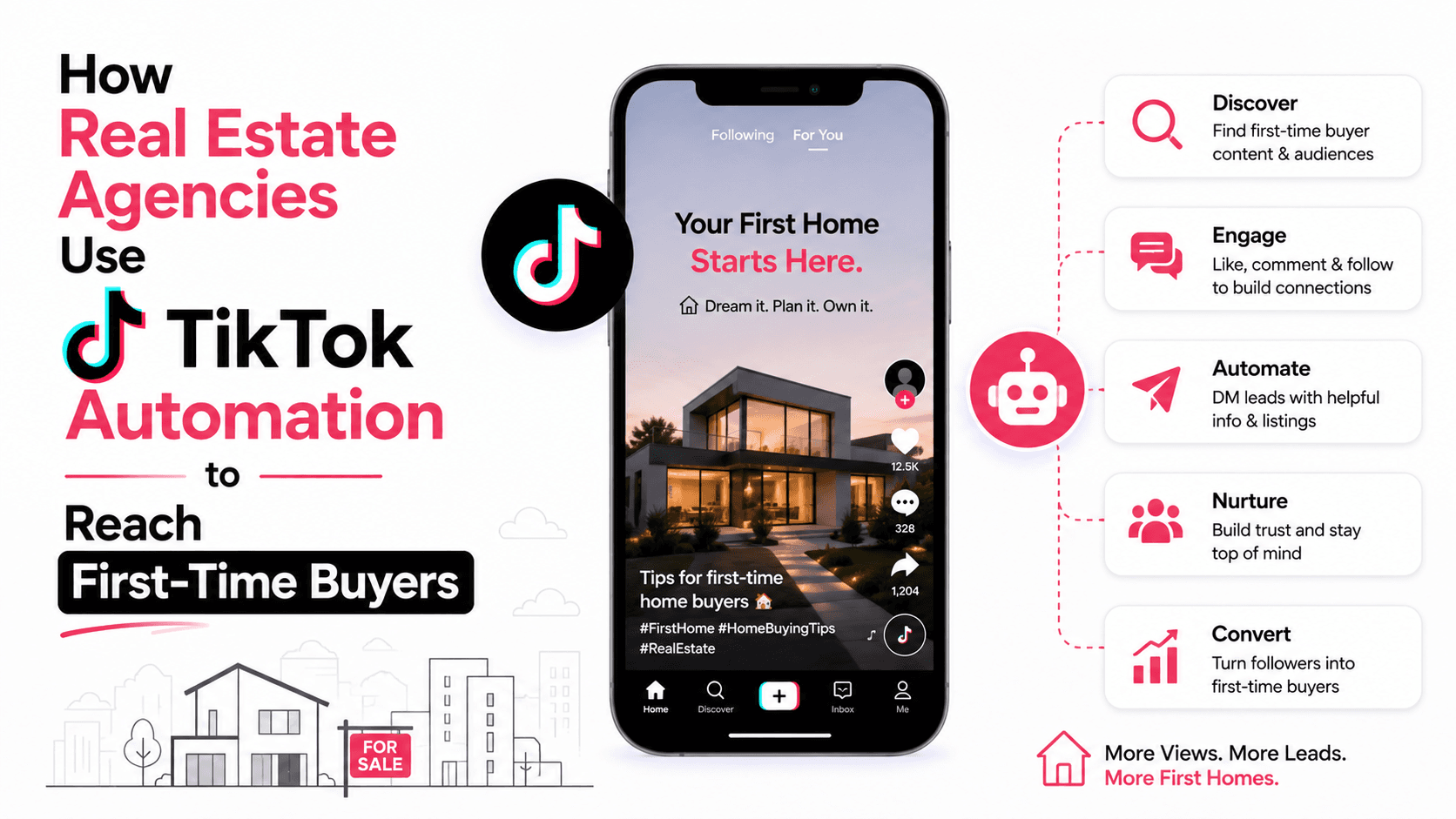
A first-time buyer does not usually wake up ready to call an agent.
They scroll TikTok at night, half-curious and half-overwhelmed, watching videos about mortgage rates, down payments, inspection mistakes, hidden closing costs, and whether renting is still smarter than buying. They save a few posts, follow one or two local agents, and keep learning quietly before they ever send a message.
That is where real estate agencies have an opportunity.
TikTok is no longer just a place for viral home tours. It is where younger buyers learn the language of real estate before they enter the market. They want simple answers, local context, and someone who can explain the process without making them feel behind.
The problem is that most agencies post inconsistently, engage manually for a few days, then stop. TikTok automation can help agencies stay visible to first-time buyers more consistently, but only when it supports real education, local targeting, and human follow-up.
Why Real Estate Agencies Struggle to Reach First-Time Buyers
First-time buyers are not like repeat investors or luxury clients. They usually need more education, more reassurance, and more trust before they contact an agent.
They are asking basic but important questions. How much money do I really need? What credit score matters? Should I buy now or wait? What happens after an offer is accepted? Which neighborhoods are still affordable? What mistakes do new buyers make?
A good agent can answer all of that. But the challenge is getting in front of buyers before they choose someone else.
Manual TikTok growth is difficult for real estate teams because agents already have unpredictable schedules. Showings, calls, listing appointments, inspections, open houses, paperwork, and client follow-ups fill the day quickly. By the time someone sits down to engage on TikTok, the energy is usually gone.
What many agencies get wrong is treating TikTok like a listing board. They post homes, prices, kitchens, and drone shots, but first-time buyers often need education before they need inventory. A buyer who is six months away from purchasing may not care about today’s listing, but they will care about a video explaining down payment assistance or how pre-approval works.
That is where consistent visibility matters.
What TikTok Automation Means for Real Estate Agencies
TikTok automation means using software to handle repetitive discovery and engagement actions that an agency would otherwise do manually. This can include profile visits, content engagement, follower discovery, audience research, and structured interaction around local hashtags or buyer-intent content.
For real estate agencies, the goal is not to spam buyers. That is the wrong approach and it usually damages trust. The better goal is to make the agency more visible to people already showing interest in home buying, local neighborhoods, mortgage education, moving, renting, or property tours.
The safest automation approach is mobile-first. Instead of relying on desktop scripts or unofficial shortcuts, real-device automation runs through actual Android phones or emulators and interacts with the TikTok app in a more natural mobile environment.
A platform like Appilot is built for this kind of workflow. Appilot runs automation on real Android devices or emulators through a browser dashboard, so agencies can manage TikTok activity without API scraping, desktop bots, or keeping a laptop active all day. You configure the targeting, set controlled limits, and let the workflow run through mobile sessions.
That does not remove all risk. No automation tool can honestly promise that. But for mobile-first platforms like TikTok, real-device workflows are a more realistic starting point than aggressive scripts or generic engagement tools.
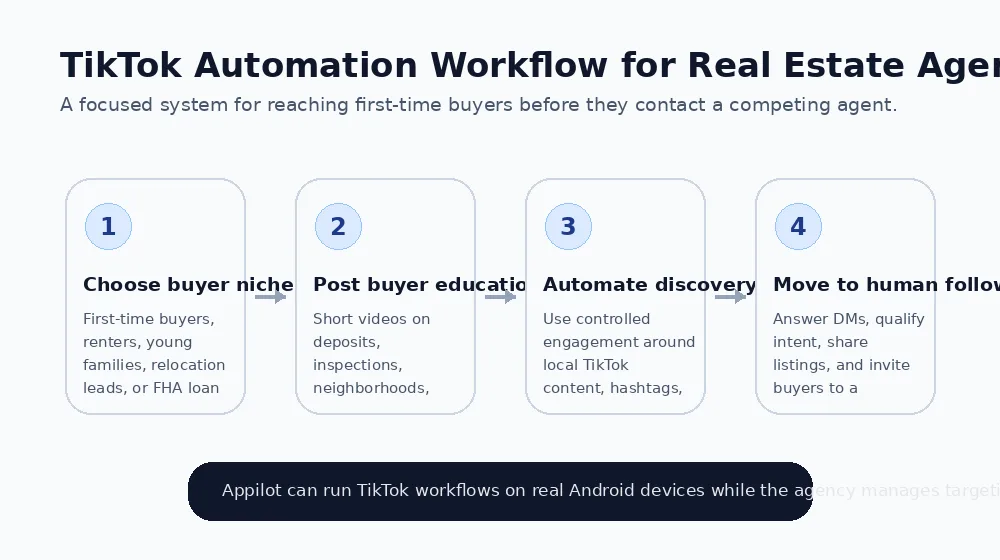
How Agencies Use TikTok Automation to Reach First-Time Buyers
The first practical use case is local buyer discovery. A real estate agency should not target everyone who watches home tour videos. It should focus on people in the right city, region, or relocation market.
Manually, an agent might search TikTok for city hashtags, neighborhood content, apartment rental videos, moving tips, mortgage advice, and local lifestyle creators. They would watch videos, check comments, visit profiles, and look for people who appear to be renters, young families, new professionals, or buyers asking beginner questions.
Automation can support that process by handling controlled profile visits and engagement around local signals. Instead of spending an hour each evening searching manually, the agency can build workflows around specific neighborhoods, buyer hashtags, and related creators.
Appilot’s TikTok automation can be used here because it runs through mobile device sessions and lets teams manage targeting from a web dashboard. A real estate agency can focus its activity around first-time buyer topics, local creators, competitor audiences, or neighborhood content while agents spend more time on conversations and appointments.
The second use case is education-based visibility. First-time buyers often respond better to helpful content than direct sales. Videos like “three costs buyers forget,” “what pre-approval actually means,” “why your first offer may not win,” or “how to compare two neighborhoods” can build trust before the buyer ever reaches out.
Automation helps more relevant people notice that content. The content still has to be useful, but automation can increase the number of local users who encounter the agency’s profile.
The third use case is lead warming before a consultation. If someone watches, follows, comments, or asks a question, the agency should not immediately push a hard sales pitch. A better flow is to answer the question, offer a simple resource, and invite them to talk when they are ready.
The fourth use case is supporting multi-agent teams. A small agency may have several agents posting content, but no consistent system for visibility. Automation can create a shared growth engine where each agent still handles their personal conversations, while the agency maintains steady audience discovery in the background.
That balance matters. Real estate is still relationship-driven. Automation can create more openings, but people choose agents they trust.
What Results Should Agencies Realistically Expect?
TikTok automation will not instantly flood an agency with qualified buyers. First-time buyers move slowly, and many are still learning months before they make a decision.
A realistic early result is more local profile visits, more relevant followers, more content engagement, and more DMs from people asking beginner questions. Those questions may not close immediately, but they build the agency’s pipeline.
The first two to four weeks should be treated as a testing phase. You are learning which topics attract serious buyers, which neighborhoods get attention, which hashtags bring local viewers, and which content turns watchers into conversations.
Content quality still matters. If your TikTok profile is just random listing clips, automation will have limited impact. First-time buyers need education, clarity, and reassurance. They want to feel like your agency can guide them without making them feel embarrassed for asking basic questions.
The best-performing agencies usually combine simple educational videos with local proof. They explain the buying process, talk about real neighborhoods, show realistic price ranges, and answer the questions buyers are already thinking about.
Automation helps distribution. Trust still comes from the message.
Setting Up TikTok Automation for a Real Estate Agency
Before running automation, clean up the agency’s TikTok profile. The bio should clearly say who you help and where you operate. A simple line like “Helping first-time buyers in Phoenix understand the market and buy with confidence” is stronger than a generic “Your trusted real estate team.”
Next, post enough content to make the page worth visiting. A buyer who lands on your profile should quickly find videos about financing basics, neighborhood comparisons, inspection tips, common mistakes, and the buying timeline.
Then define the audience. First-time buyers may include renters, young professionals, newly married couples, relocating employees, growing families, or people searching for starter homes. Your automation should match that audience instead of chasing broad real estate content.
Device setup matters too. Real-device automation is often a better fit for TikTok because the platform is built around mobile app behavior. If an agency is managing multiple accounts, each account should have a clean session setup, consistent device environment, and proper proxy planning.
One reason agencies may choose Appilot is simplicity. The dashboard is browser-based, and automation can run on real Android devices or emulators without needing ADB setup, command lines, or custom scripts. For a real estate team that wants lead flow without becoming a technical automation shop, that makes the process easier to manage.
Start with conservative limits. Avoid aggressive follows, repeated comments, or spammy messages. The goal is steady visibility with relevant buyers, not suspicious activity that burns the account.
Common Mistakes Real Estate Agencies Should Avoid
Treating TikTok Like a Listing Feed
Listings matter, but first-time buyers need education first. If every post is just another home tour, your account may attract casual viewers but miss people who need guidance.
Mix listings with explainers, process breakdowns, local tips, and buyer mistake videos.
Targeting Too Broadly
“People interested in real estate” is not a useful audience. Investors, agents, renters, luxury buyers, and first-time buyers all behave differently.
Focus on local buyers, renters nearing purchase, relocation audiences, or specific neighborhoods.
Sending Sales Messages Too Quickly
A first-time buyer may not be ready for a consultation after one interaction. A hard pitch can feel pushy.
Answer questions first, offer helpful resources, and let the conversation move naturally toward a call.
Ignoring Compliance and Fair Housing Rules
Real estate marketing has legal boundaries. Automation should never be used to make misleading claims, exclude protected groups, or send careless messages.
Keep scripts professional, review content carefully, and make sure your outreach follows local regulations.
Forgetting Human Follow-Up
Automation can create visibility, but an agent still needs to reply quickly and thoughtfully. If someone asks about financing, neighborhoods, or timing, that is a real opportunity.
The bot can help open the door. The agent has to walk through it.
Is TikTok Automation Right for Your Agency?
TikTok automation can be a good fit if your agency already posts content, has a clear local market, and wants to reach first-time buyers more consistently.
It is especially useful for agencies that educate buyers, work with renters transitioning into ownership, promote starter homes, or serve relocation markets. It can also help multi-agent teams create more consistent top-of-funnel visibility.
It may not be right if your TikTok profile has no useful content, your team does not respond to DMs, or you expect automation to replace real agent relationships. It also requires care because real estate marketing must stay compliant.
The best use is simple: let automation support discovery, then let agents handle trust.
Final Thoughts
First-time buyers are already learning on TikTok. They are watching videos about money, neighborhoods, mistakes, mortgage fears, and what buying a home actually feels like.
Real estate agencies that show up early with helpful content have a real advantage. TikTok automation can make that visibility more consistent, especially when it runs through real-device workflows and careful targeting.
If your agency is tired of posting content and hoping the right buyers find it, Appilot is worth exploring. It offers ready-to-use bots for TikTok, Instagram, LinkedIn, and other platforms through a web dashboard, with no coding required. You can check it out at appilot.app.
FAQs
Q1: Can real estate agencies use TikTok automation safely?
Yes, if they use conservative limits, real-device workflows, and avoid spammy messages. Agencies should also follow local advertising and fair housing rules.
Q2: What type of TikTok content works best for first-time buyers?
Simple educational videos work well, especially around down payments, pre-approval, inspections, closing costs, neighborhoods, and buyer mistakes.
Q3: Can TikTok automation generate real estate leads?
It can help create more visibility and conversations, but agents still need strong content, fast replies, and human follow-up to turn interest into leads.
Q4: Why should agencies use real-device automation?
Real-device automation interacts through mobile app sessions, which is more natural for TikTok than desktop scripts or unofficial API shortcuts.
Q5: Can Appilot help with TikTok automation for real estate teams?
Yes. Appilot lets agencies manage TikTok automation from a web dashboard while workflows run on real Android devices or emulators.