How Real Estate Agents Use Instagram Automation to Generate Leads
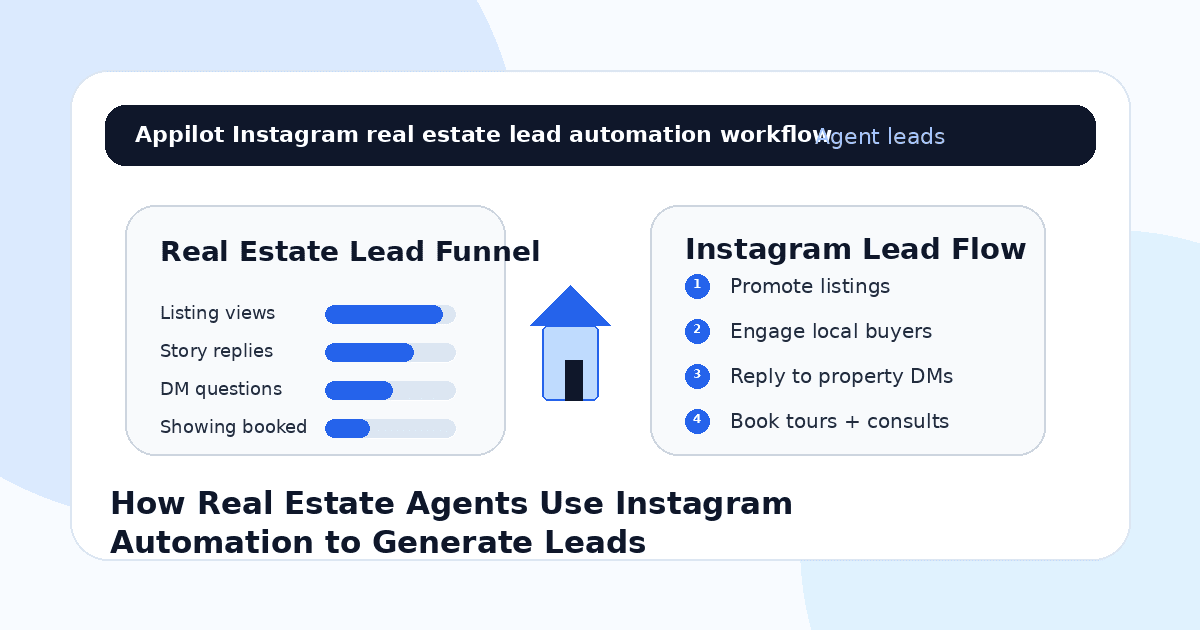
You post a new listing on Instagram. The photos look sharp, the caption explains the location, and the story has a clear “DM for details” call-to-action.
A few people like it. Someone replies asking for the price. Another wants to know the neighborhood. Someone else watches every story but never sends a message.
Then the post slows down, and those warm prospects disappear before they become real leads.
That is the challenge for real estate agents on Instagram. People are interested in homes, rentals, neighborhoods, investment properties, and market updates, but they often need fast answers and repeated touchpoints before they book a showing or consultation.
Instagram automation helps agents stay visible, reply faster, deliver property details, and move interested buyers or sellers into a real conversation without manually checking every notification all day.
The goal is not to spam people with listings. The goal is to help serious prospects get the right information quickly.
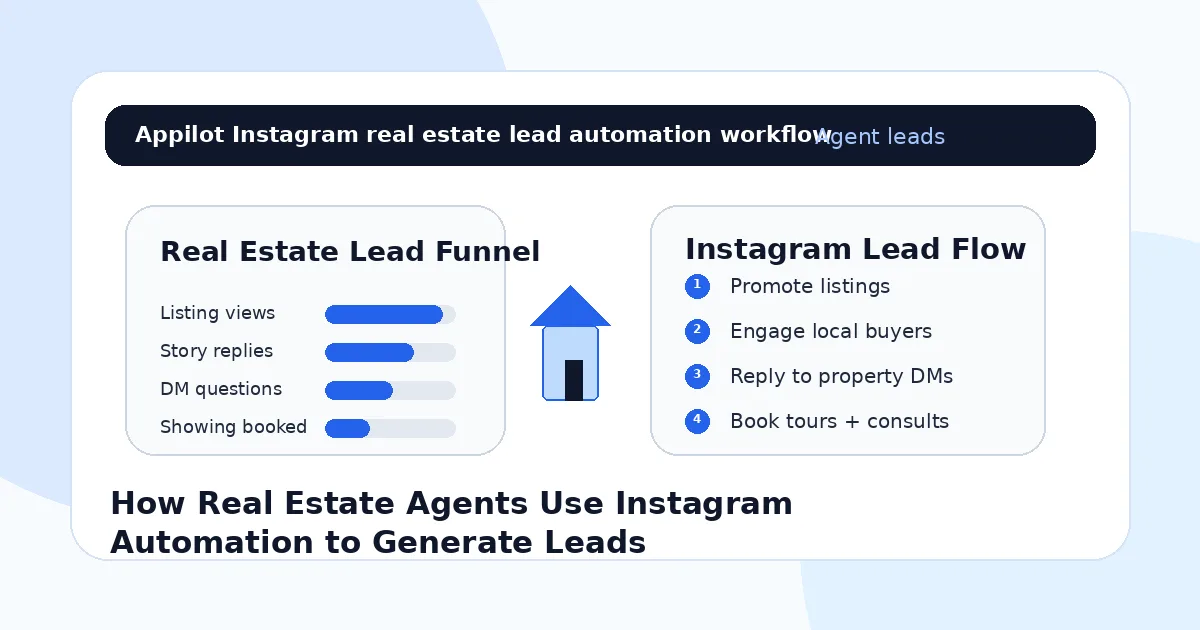
Why Instagram Works for Real Estate Lead Generation
Real estate is visual, local, and trust-driven.
Instagram gives agents a place to show properties, explain neighborhoods, share market updates, post client wins, answer buyer questions, and build authority in a specific area. A listing reel, neighborhood tour, open house story, or market update can attract people who are already thinking about buying, selling, renting, or investing.
But interest does not always turn into leads automatically.
A buyer may watch three listing stories before asking a question. A seller may follow your updates for weeks before requesting a valuation. An investor may save your post but never fill out a form unless the next step feels easy.
Most agents lose leads because they rely on manual replies and inconsistent follow-up. Instagram automation helps fix that gap.
What Instagram Automation Means for Real Estate Agents
Instagram automation means using software to handle repeated actions like story replies, comment replies, DM flows, property-link delivery, local engagement, lead routing, and follow-up reminders.
For real estate agents, the safest use is controlled automation around warm interest. That means replying when someone asks for a listing, comments “price,” replies to a story, requests a guide, or asks about a neighborhood.
Real-device automation is useful because it runs through the actual Instagram mobile app on Android devices or emulators. This behaves more like normal app usage than fragile desktop scripts or risky shortcuts.
A platform like Appilot is built for this kind of workflow. It lets agents run Instagram automation on Android devices or emulators from a browser dashboard, without coding, ADB setup, or keeping a laptop connected all day. That makes it easier to keep lead generation active while the agent focuses on showings, client calls, negotiations, and closings.
Automation should support trust. It should not replace real relationship-building.
Step 1: Use Listings as Lead Triggers
A listing post should not only show the property. It should start a conversation.
Instead of only writing the price and location in the caption, agents can use comment or DM triggers to identify interest. For example, a reel can say, “Comment TOUR for the full details,” or a story can say, “Reply PRICE for the listing sheet.”
When someone takes that action, automation can send the property details, booking link, or next question.
This works because the prospect initiates the interaction. The automation simply responds faster.
For buyers, the trigger might be “price,” “tour,” “location,” “floor plan,” or “open house.” For renters, it might be “rent,” “available,” or “move-in.” For sellers, it might be “valuation,” “market report,” or “sell.”
The clearer the trigger, the easier it becomes to separate casual viewers from real leads.
Step 2: Build Local Visibility Around Your Market
Real estate is local, so your automation should focus on people who care about your area.
An agent in Miami, Lahore, London, Dubai, Toronto, or New York does not need random global followers. They need buyers, sellers, renters, investors, landlords, and local homeowners in their market.
Instagram automation can support local visibility through profile visits, story views, and engagement around local hashtags, neighborhood pages, community accounts, restaurants, schools, gyms, events, and local business profiles.
This is where Appilot’s Instagram automation fits naturally. Agents can run targeted Instagram workflows through Android devices or emulators while managing the audience, timing, and campaigns from one dashboard.
The goal is not more followers from anywhere. The goal is more qualified local attention.
Step 3: Automate Replies to Common Property Questions
Real estate prospects often ask the same questions.
They ask about price, location, bedrooms, bathrooms, square footage, parking, schools, financing, availability, open house timing, HOA fees, rental terms, and nearby amenities.
These questions are perfect for automation because they repeat and directly affect lead conversion.
If someone comments “price?” the workflow can send the listing details. If someone replies “tour,” the automation can send the showing link. If someone asks “available?” the bot can send the current status or route them to the agent.
Keep replies short and useful. A prospect asking about a property does not need a long sales pitch. They need the next step.
A good automated reply feels like a fast assistant, not a marketing blast.
Step 4: Use DMs to Qualify Buyers and Sellers
A lead is not just someone who asks for a link.
Agents need to know whether the prospect is buying, selling, renting, investing, or just browsing. They also need to understand budget, location, timeline, financing status, and property preferences.
Instagram DM automation can ask simple qualifying questions before the agent steps in.
For a buyer, the flow might ask, “Are you looking to buy now, browsing for later, or interested in investment options?” For a seller, it might ask, “Are you planning to sell in the next 3 months, 6 months, or just checking your home value?”
These questions help route serious leads faster.
One reason agents use Appilot-style workflows is that the dashboard helps manage repeated DM actions without scripts, command-line setup, or ADB tools. But the agent should still handle serious leads personally once the prospect shows real intent.
Step 5: Promote Open Houses and Showings
Instagram automation is especially useful for open houses and showing schedules.
Open houses are time-sensitive. If someone asks for details, they need the address, time, booking link, or confirmation quickly. A delayed response can cost the agent a real visitor.
Automation can help send open house details when someone replies to a story, comments on a reel, or asks in DMs. It can also support reminder flows for people who requested information.
For example, a story can say, “Open house this Saturday. Reply TOUR for details.” The automation can send the date, time, location, and next step.
Do not overcomplicate the flow. For real estate, simple and fast usually wins.
Step 6: Use Market Reports as Seller Lead Magnets
Not every lead is a buyer.
Sellers often need a different path. They may not comment on listings, but they may respond to content about home values, market trends, neighborhood demand, interest rates, or recent sales.
A strong seller lead magnet might be a neighborhood market report, home valuation checklist, seller prep guide, or “what homes are selling for in your area” update.
Automation can deliver these resources when someone comments a keyword or replies to a story.
For example, “Want the latest market update for this neighborhood? Reply REPORT.” The automation sends the report or booking link, then asks whether the person owns a home in the area.
This is a smart way to turn educational content into seller conversations.
Step 7: Move Hot Leads Into a Real CRM or Calendar
Instagram is a good starting point, but serious real estate leads need to move into a proper system.
Once someone shows strong intent, send them to a showing booking link, buyer consultation, seller valuation call, intake form, or CRM workflow. This keeps the lead from getting lost inside Instagram DMs.
A hot lead might be someone asking to tour, requesting financing info, asking about selling timeline, or sharing budget and preferred location.
Automation can collect basic information, but the agent should take over quickly. Real estate decisions are high-value and trust-heavy. A human conversation matters.
The best workflow is simple: Instagram creates attention, automation captures interest, and the agent closes the relationship.
Step 8: Track Which Instagram Content Creates Leads
Do not measure Instagram automation only by likes or followers.
For real estate agents, better metrics include listing-detail requests, DM replies, showing bookings, seller valuation requests, buyer consultations, open house attendance, saved posts, profile visits from local prospects, and closed deals sourced from Instagram.
You should also track which content creates the best leads. Listing reels may bring buyers. Neighborhood tours may bring relocators. Market updates may bring sellers. First-time buyer tips may bring consult calls. Investment content may attract landlords or investors.
Automation gives you more lead signals. Tracking tells you which signals matter.
Common Mistakes Real Estate Agents Should Avoid
Targeting Too Broadly
Real estate is local. Focus on people who live, work, invest, or plan to move in your target market.
Sending Cold Listing DMs
Random property messages can feel spammy. Use DMs when someone replies, comments, requests details, or shows clear interest.
Ignoring Seller Leads
Listings attract buyers, but market reports, valuation content, and neighborhood updates can attract sellers.
Automating Without Qualification
A person asking for a price is not always ready to buy. Use simple questions to understand budget, timeline, and intent.
Letting Hot Leads Stay in Instagram
Move serious prospects into a calendar, CRM, phone call, or showing workflow before the conversation gets lost.
Is Instagram Automation Right for Real Estate Agents?
Instagram automation is a good fit if your market audience is active on Instagram and you already post listings, neighborhood content, market updates, or buyer education. It works especially well for residential agents, rental agents, luxury agents, investor-focused agents, relocation specialists, and local real estate teams.
It may not be right if your profile has no local content, no clear call-to-action, or no process for handling leads. Automation can bring more attention, but your follow-up and trust-building still decide the deal.
Think of automation as a lead-response assistant. It helps prospects get information faster, but the agent still builds the relationship.
Final Thoughts
Real estate agents generate more leads on Instagram when local prospects see useful content, ask questions, and get fast, clear next steps.
Automation helps with listing replies, property details, open house information, seller lead magnets, local visibility, and basic qualification. Used carefully, it makes the agent more responsive without making the brand feel robotic.
If you want to run Instagram automation without coding, ADB setup, or manual device management, Appilot gives real estate agents a browser-based way to control Android devices, emulators, and ready-to-use bots for Instagram and other platforms. You can check it out at appilot.app.
FAQs
Q1: Can real estate agents use Instagram automation for leads?
Yes, agents can use automation to reply to listing questions, send property details, qualify prospects, and book showings.
Q2: What should real estate agents automate first?
Start with replies for “price,” “tour,” “location,” “open house,” “available,” “valuation,” and “market report.”
Q3: Is Instagram automation safe for real estate agents?
It is safer when activity is gradual, local, and based on real interest. Spammy cold DMs can still damage trust and account health.
Q4: Can Appilot help real estate agents automate Instagram?
Yes, Appilot can run Instagram workflows on Android devices or emulators from a browser dashboard without coding or ADB setup.
Q5: Do Instagram bots replace real estate follow-up?
No. Bots can capture and qualify interest, but agents still need human follow-up for trust, showings, negotiations, and closing.