How Record Labels Use Phone Farms to Push New Artist Releases
A new artist release goes live at midnight. The track is on Spotify, the music video is scheduled, the short-form clips are ready, and the artist has posted the announcement.
For the first few hours, the team watches everything closely. A few fans comment. Some people ask for the link. The artist reposts early reactions. Maybe one clip starts getting traction.
Then the campaign slows down.
That is the hard part of music releases now. A good song does not automatically travel. It needs social momentum, repeated exposure, fast replies, fan discovery, and enough visible activity to make people curious.
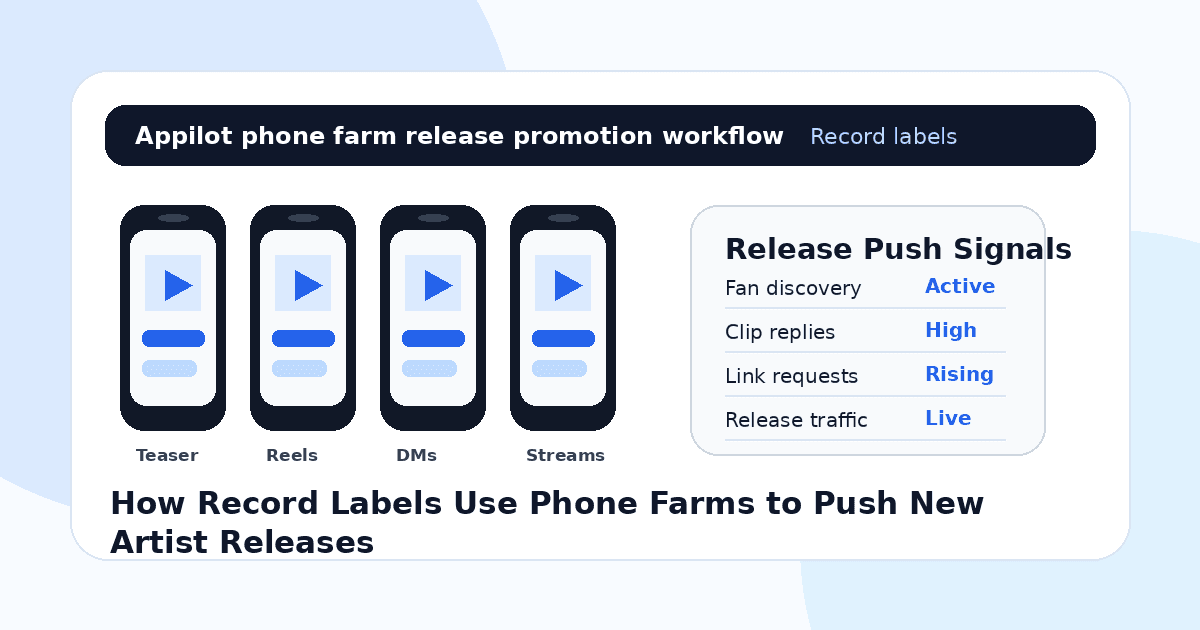
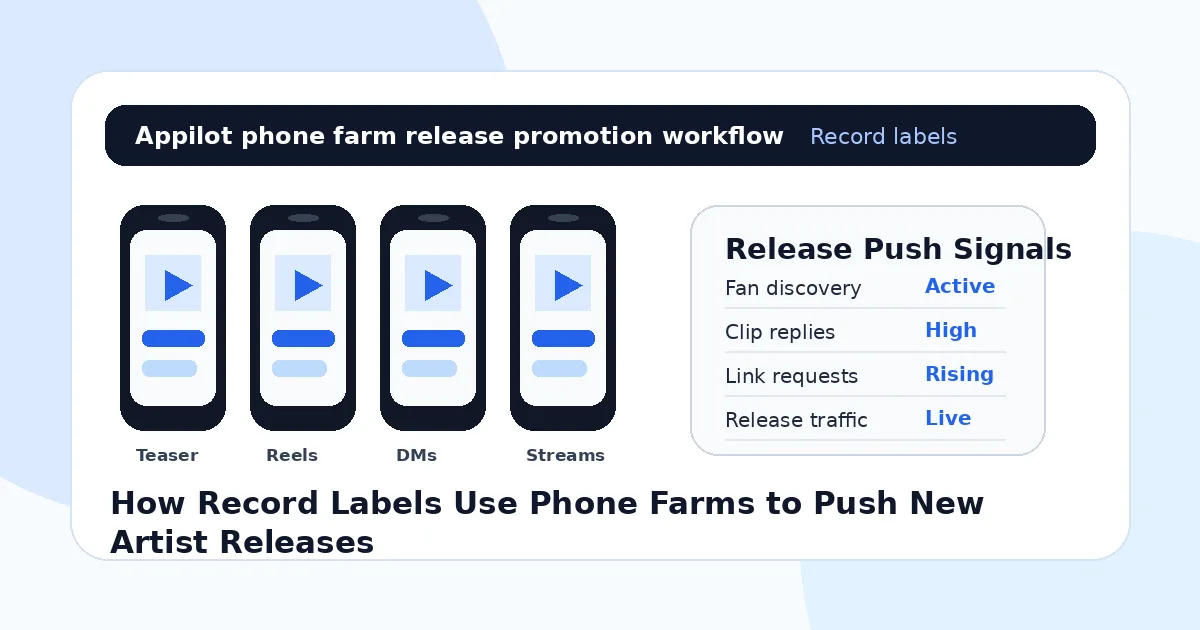
Record labels use phone farms to manage that activity at scale. Not to replace real fans or fake a career. But to run mobile-first promotion workflows across social platforms, accounts, devices, and release campaigns without manually operating every phone or account one by one.
Why New Artist Releases Need More Than a Launch Post
Most new artists do not have enough audience power for one announcement to carry a release.
Even if the song is strong, the first wave of attention usually comes from existing fans, friends, collaborators, playlist contacts, and social followers. After that, the label has to keep introducing the release to new listeners.
That means clips, reels, story replies, TikTok comments, Instagram DMs, Twitter/X conversations, YouTube Shorts, fan pages, and niche communities all matter.
The mistake many teams make is treating the release like a single moment. They post the cover, share the streaming link, and wait. But modern releases need repeated touchpoints. A listener may see a teaser on TikTok, then a lyric clip on Instagram, then a Twitter/X quote, then a behind-the-scenes story before finally streaming the song.
Phone farms help labels keep those touchpoints active across platforms and accounts.
What a Phone Farm Means for Record Labels
A phone farm is a setup of multiple Android phones or emulators used to run mobile apps, accounts, and automation workflows at scale.
For record labels, that can mean managing release promotion across Instagram, TikTok, Twitter/X, YouTube, Threads, Reddit, Telegram, and other platforms. Each device can support separate sessions, accounts, proxies, and workflows depending on the campaign.
The reason this matters is simple: music discovery is mobile-first. Fans discover new tracks through short clips, stories, reels, replies, comments, DMs, and creator-style content. Running promotion through real mobile environments often fits that behavior better than relying only on desktop tools or manual posting.
A platform like Appilot is built for this kind of phone farm workflow. It lets labels control Android devices and emulators from a web dashboard, run ready-to-use bots, and manage automation without ADB setup, coding, or keeping every phone connected to a laptop. For label teams, that makes release operations easier to scale without turning the campaign into a technical mess.
A phone farm does not make a bad song good. It helps a real release get more consistent promotion.
How Labels Use Phone Farms During Release Week
The first use case is fan discovery. Before and during release week, labels can use phone farm workflows to engage with fans of similar artists, genre pages, playlist accounts, local scenes, music blogs, and niche communities. That helps the new artist show up near people who are already likely to care.
The second use case is clip promotion. A release usually has several social assets: teaser videos, lyric clips, studio footage, performance snippets, behind-the-scenes edits, and fan reaction posts. A phone farm can help distribute and support these clips across accounts and platforms without relying on one person manually switching between devices all day.
The third use case is comment and DM response. When people ask “song name?”, “is this out?”, “Spotify?”, “full video?”, or “where can I listen?”, speed matters. Phone farm automation can help route those questions toward streaming links, YouTube videos, pre-save pages, or profile links while the interest is still fresh.
Appilot fits naturally here because it gives label teams one dashboard to manage Android devices, emulators, and automation workflows. The label still controls the artist positioning, creative direction, and release strategy, while automation handles repeated mobile actions that are easy to miss manually.
The fourth use case is multi-artist campaign management. A small label may be pushing several artists at once. Without a system, release operations get messy fast. Phone farms give the team a more organized way to separate accounts, campaigns, devices, and platform activity.
Building Momentum Before the Release Drops
A good release push starts before release day.
The warm-up phase should introduce the artist, the sound, the story, and the strongest part of the track. Labels can use short clips to test which hook gets comments, which lyric gets saves, and which visual style makes people stop scrolling.
Phone farm workflows can support this by monitoring fan reactions and helping distribute teaser content across relevant accounts. The goal is not to blast the same clip everywhere. The goal is to learn which angle people care about before the release goes live.
For example, one clip might focus on the chorus. Another might show the studio session. Another might explain the story behind the song. Another might show the artist performing the track live.
The strongest signal is not always view count. It is listener intent. Comments like “drop this,” “what’s the song called?”, “need the full version,” or “is this on Spotify?” tell the team that the release has demand.
Using Phone Farms for Fan Discovery
Fan discovery is one of the biggest reasons labels use phone farms.
New artists need to reach people who are already close to their sound. A drill artist should be promoted near drill communities, local rap pages, similar artists, producers, and playlist curators. An indie singer should be promoted near fans of similar acts, live session pages, lyric content, and niche music blogs.
The targeting should be specific. “Music fans” is too broad.
Phone farms can help run discovery actions across different audiences and platforms. One workflow might focus on Instagram fans of similar artists. Another might monitor TikTok comments under related sounds. Another might support Twitter/X conversations around the genre. Another might help with YouTube comment engagement around similar music videos.
One reason teams use Appilot for this is that the dashboard makes multi-device workflows easier to manage. Instead of handling every phone, app, and account separately, the team can run controlled automation from one place.
Good targeting makes the release feel like it is reaching the right scene, not random people.
Turning Social Engagement Into Streams
The release goal is usually streams, views, followers, saves, subscribers, or fan-list growth.
Phone farms support that goal indirectly by moving interested people from social moments toward listening actions. If someone asks for the song, send the link. If someone reacts to the clip, point them toward the full version. If someone asks about the artist, make the profile easy to find.
This is where clean conversion paths matter.
The artist bio should mention the release. The link-in-bio should go directly to the track, video, or smart link. Pinned posts should support the release. YouTube descriptions, Instagram highlights, TikTok captions, and Twitter/X pinned posts should all make the next step obvious.
Automation can increase the number of people reaching the path, but the path still has to convert.
A confusing link setup wastes attention.
Keeping Campaigns Human
This is the part labels need to be careful with.
Music is personal. Fans connect with artists because of voice, story, emotion, taste, style, and identity. If the promotion feels robotic, it can damage the artist’s brand.
Phone farms should support repeatable work, not replace the artist’s personality.
Automated replies should be short, useful, and natural. Discovery actions should be relevant. DMs should follow real interest. Comments should not look generic. A release campaign should feel active, not artificial.
The best label workflows use automation for the routine parts and keep high-value fan interactions human. If someone writes a meaningful comment about the song, the artist or team should reply personally. If a curator or creator shows interest, that deserves real follow-up.
Automation creates more opportunities. Humans build the relationship.
Common Mistakes Record Labels Should Avoid
Treating Phone Farms Like Fake Hype Machines
Phone farms should support release operations, not manufacture empty popularity. Fake-looking engagement can damage artist credibility quickly.
Targeting Too Broadly
A new artist does not need random global attention. They need listeners in the right genre, scene, location, and fan community.
Sending Links Too Aggressively
Cold streaming links often feel spammy. Links work best when someone asks, comments with interest, or engages clearly with the release.
Ignoring Artist Voice
Every artist has a different tone. Automated replies and campaign copy should match the artist, not sound like a generic label account.
Forgetting the Conversion Path
If the bio, smart link, pinned posts, and streaming pages are confusing, phone farm activity will not turn into meaningful listener growth.
Is a Phone Farm Right for Record Label Promotion?
A phone farm is a good fit if the label manages multiple artists, frequent releases, several social platforms, or campaigns that need repeated mobile activity. It works especially well when the team already has strong clips, clear targeting, and a defined release plan.
It may not be right if the artist has no content, no visual identity, no clear audience, or no release strategy. Automation can create activity, but it cannot create a compelling artist story from nothing.
Think of a phone farm as release infrastructure. It helps the team execute faster and more consistently, but the music, creative, and positioning still do the heavy lifting.
Final Thoughts
Record labels use phone farms because release campaigns now require more than one post, one platform, or one announcement.
New artist releases need teaser testing, fan discovery, clip distribution, comment replies, DM routing, link delivery, and repeated social touchpoints. Phone farms make that easier to manage across devices and accounts.
If you want to run phone farm workflows without coding, ADB setup, or manual device handling, Appilot gives labels a browser-based way to control Android devices, emulators, and ready-to-use bots across Instagram, TikTok, Twitter/X, YouTube, and more. You can check it out at appilot.app.
FAQs
Q1: How do record labels use phone farms for music releases?
They use phone farms to manage social workflows across devices, promote clips, respond to fan interest, and support release campaigns.
Q2: Can phone farms help new artists get more streams?
They can help drive more real listeners toward release links, but streams still depend on the song, targeting, content, and fan interest.
Q3: Are phone farms safe for music promotion?
They are safer when accounts, devices, proxies, and limits are managed carefully. Aggressive or fake-looking activity can still create risk.
Q4: Can Appilot help record labels manage phone farms?
Yes, Appilot helps manage Android devices, emulators, and social automation workflows from a web dashboard without coding or ADB setup.
Q5: Do phone farms replace real fan marketing?
No. They support promotion and discovery, but real fan growth still comes from strong music, artist identity, content, and human interaction.