How Supplement Brands Use Instagram Automation to Drive Sales
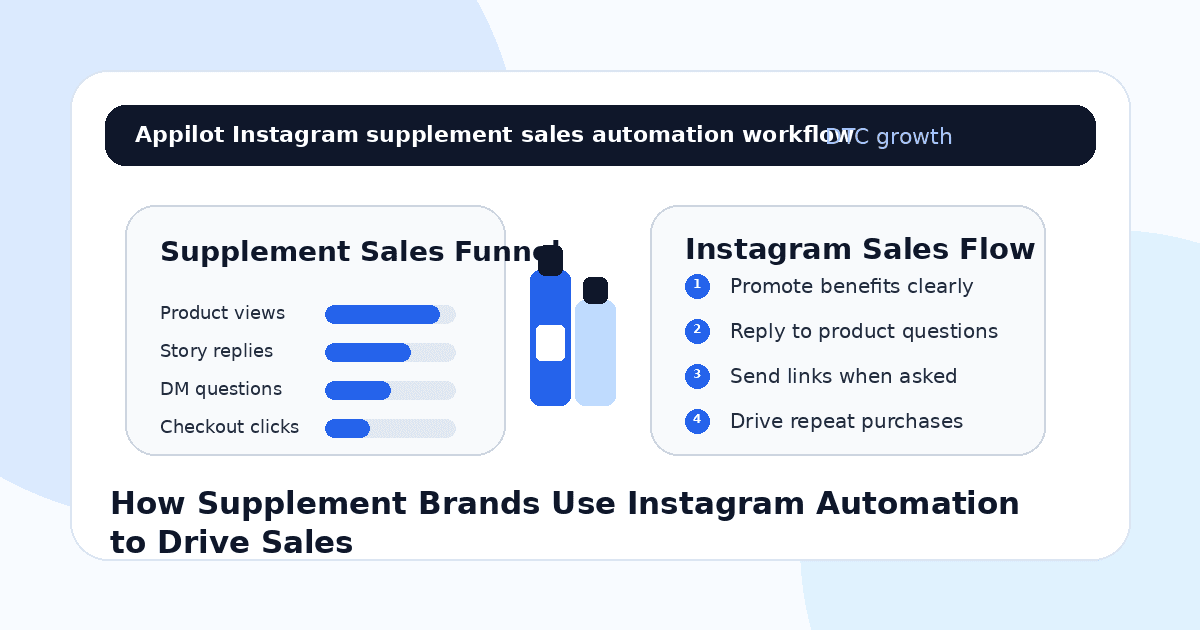
You post a reel showing your supplement, explain the benefits, add a clean product shot, and point people to the link in bio.
A few people like it. Someone comments “when should I take this?” Another asks if it is good for beginners. Someone else replies to your story asking about flavor, dosage, delivery, or subscription options.
Then the post slows down, and many of those warm buyers never reach checkout.
That is the challenge for supplement brands on Instagram. Customers often need education, trust, social proof, and quick answers before they buy. If a question sits unanswered for hours, the buyer may lose interest, compare another brand, or simply forget.
Instagram automation helps supplement brands respond faster, guide buyers to the right product, send links when there is clear interest, and support repeatable sales workflows without turning the account into a spam machine.
The goal is not to make medical claims or pressure people into buying. The goal is to help interested customers understand the product and reach checkout more easily.
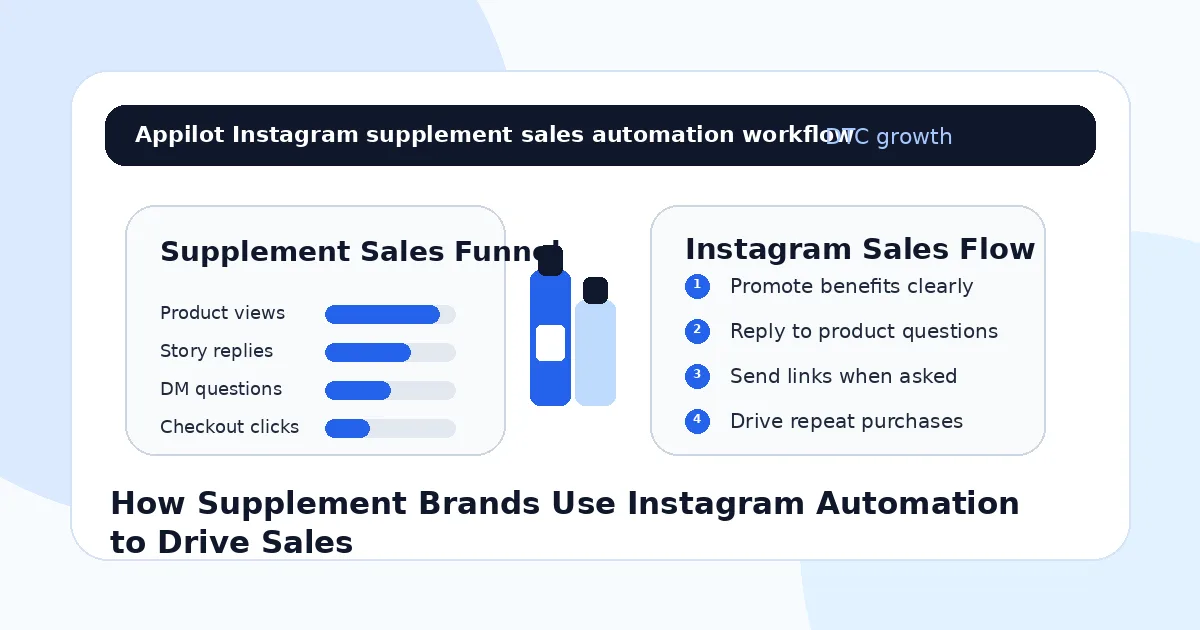
Why Instagram Matters for Supplement Sales
Supplements are visual, educational, and trust-driven.
People want to see the product, understand how it fits into their routine, read reviews, compare ingredients, ask questions, and feel confident before ordering. Instagram is one of the best places for that because it combines reels, stories, comments, DMs, creator content, testimonials, and product education.
A supplement buyer may not purchase from one post. They may watch a reel, save an ingredient explainer, reply to a story, read comments, check testimonials, and then ask a question in DMs before buying.
That means the sales journey is conversational.
Most brands lose sales because they treat Instagram like a display shelf. They post product images and wait for buyers to click. But customers often need interaction before they trust the product enough to buy.
Automation helps keep those interactions moving.
What Instagram Automation Means for Supplement Brands
Instagram automation means using software to handle repeated actions like comment replies, story replies, product-link delivery, DM routing, keyword responses, and customer question flows.
For supplement brands, automation should be used carefully. It should answer general product questions, send resources, guide users to product pages, and route sensitive health-related questions to a human or professional support process.
Real-device automation is useful because it runs through the actual Instagram app on Android devices or emulators. This behaves more like normal mobile usage than desktop scripts or fragile API shortcuts.
A platform like Appilot is built for this kind of workflow. It lets supplement brands run Instagram automation on Android devices or emulators from a browser dashboard, without coding, ADB setup, or keeping a laptop connected all day. That makes it easier to handle repetitive product questions, link requests, and campaign replies while the brand team focuses on content, compliance, fulfillment, and customer experience.
Automation should support responsible product education. It should not replace careful brand communication.
Step 1: Build Automation Around Buyer Questions
Supplement customers ask many of the same questions before buying.
They ask about taste, ingredients, timing, serving size, shipping, bundles, subscriptions, returns, certifications, discounts, and whether the product fits a certain goal. These are exactly the kinds of repeated questions automation can support.
For example, if someone comments “flavor?” under a product reel, the automation can reply with the available flavors or send a DM with the product page. If someone asks “link?” the workflow can send the checkout link. If someone asks about subscription savings, it can point them to the subscription option.
Keep the answers short and factual.
Do not use automation to make exaggerated health claims, diagnose conditions, or promise results. Supplement sales require trust, and careless claims can damage the brand quickly.
Step 2: Use Stories to Trigger Warm DMs
Stories are powerful for supplement brands because they create quick, low-pressure interactions.
You can post a story about a product use case, routine, flavor comparison, customer review, bundle, restock, or limited-time offer. Then ask users to reply with a keyword like “LINK,” “BUNDLE,” “FLAVOR,” “GUIDE,” or “SUBSCRIBE.”
When someone replies, automation can send the relevant product page, guide, or question.
This works because the customer starts the interaction. The DM feels helpful instead of random.
For example, a protein brand might post, “Want the high-protein breakfast guide? Reply GUIDE.” A hydration brand might post, “Need the electrolyte bundle link? Reply BUNDLE.” A wellness brand might post, “Want help choosing a product? Reply ROUTINE.”
This is where Appilot can fit naturally. It can run Instagram story and DM workflows through Android devices or emulators while the brand manages everything from one dashboard.
Step 3: Turn Comments Into Checkout Paths
Instagram comments often reveal buying intent.
Comments like “price?”, “where to buy?”, “is this back in stock?”, “does this come in vanilla?”, “do you ship to Canada?”, and “how do I subscribe?” are sales opportunities.
Automation can help respond before the buyer cools off.
A good workflow might reply publicly with a short answer and send a DM with the product link if the user asked for it. The public reply keeps the post active, while the DM gives the buyer a clean path to checkout.
Do not send product links to every casual commenter. Focus on high-intent comments where a link or product answer is genuinely useful.
The best Instagram automation feels like fast customer support, not aggressive selling.
Step 4: Use Product Education Instead of Hard Selling
Supplement buyers need context.
They want to know what the product is for, when to use it, how it fits into a routine, what ingredients are included, and how it differs from other products. Instead of pushing “buy now” constantly, use automation to deliver helpful education.
A brand can send ingredient guides, usage instructions, routine ideas, product comparison pages, flavor guides, or subscription explanations.
For example, if someone asks about creatine, the response should explain the general product details and direct them to the product page or a human support channel for personal questions. If someone asks about a bundle, the automation can explain which products are included and why customers commonly buy them together.
Education builds trust. Trust drives sales.
Step 5: Route Sensitive Questions to Humans
Some supplement questions should not be answered by a bot.
If someone asks whether a product is safe with medication, pregnancy, a health condition, allergies, or a medical diagnosis, automation should not give personalized advice. It should politely route them to a qualified professional, support team, or product label information.
This protects the customer and the brand.
A responsible automated reply might say, “For personal medical questions, please check with your healthcare professional and review the full ingredient label before using the product.”
Supplement brands need to be especially careful here because buyers may treat social DMs like health advice.
Automation should handle general information and logistics. Humans should handle complex or sensitive questions.
Step 6: Support Launches, Restocks, and Flash Sales
Instagram automation is especially useful during high-volume campaigns.
Product launches, restocks, influencer posts, flash sales, and bundle promotions can create many repeated comments and DMs quickly. If the team replies manually, warm buyers may wait too long.
Automation can help answer common launch questions, send restock links, share discount codes, explain bundle details, and direct users to the right product page.
For example, when a new supplement flavor launches, the brand can use story keywords and comment triggers to send the correct link. During a restock, automation can reply to “back in stock?” comments quickly. During a sale, it can share the offer details and deadline.
Appilot-style workflows are useful here because supplement teams can manage repeated Instagram actions through Android devices or emulators without scripts, command-line work, or ADB setup.
The faster the campaign moves, the more valuable automation becomes.
Step 7: Build Repeat Purchase and Subscription Flows
Supplement sales are often recurring.
A customer may buy once, then reorder monthly if the product works for their routine. Instagram automation can support repeat purchase behavior by answering subscription questions, promoting bundles, sharing restock reminders, and guiding existing customers toward loyalty offers.
This does not mean spamming buyers.
It means creating helpful touchpoints. A story might explain subscription savings. A DM flow might answer how subscriptions work. A comment reply might send a bundle page when someone asks about stacking products.
The best supplement brands use Instagram not just to sell once, but to build a habit around the product.
Automation can help make that habit easier to support.
Step 8: Track What Actually Drives Sales
Do not measure Instagram automation only by replies or followers.
For supplement brands, better metrics include product-link clicks, checkout starts, conversion rate, bundle sales, subscription signups, repeat purchase rate, discount-code usage, customer questions answered, and revenue from Instagram campaigns.
You should also track which content creates the best buyers. Ingredient explainers may bring high-intent questions. Transformation content may bring curiosity. Flavor videos may drive product-page clicks. Customer reviews may support final purchase decisions.
Automation gives you more conversations. Tracking tells you which conversations create revenue.
Common Mistakes Supplement Brands Should Avoid
Making Risky Health Claims
Do not use automation to promise medical outcomes, diagnose conditions, or make exaggerated claims. Keep product guidance factual and compliant.
Sending Links Too Aggressively
Only send product links when the user asks, comments with buying intent, or replies to a clear campaign trigger.
Ignoring Sensitive Questions
Medical, pregnancy, medication, allergy, or condition-specific questions need careful handling and should not be answered casually by bots.
Using Generic Replies
Supplement buyers ask specific questions. Repeating the same vague response can make the brand feel careless.
Measuring Only Engagement
Likes and comments matter, but sales, subscriptions, checkout clicks, and repeat purchases matter more.
Is Instagram Automation Right for Supplement Brands?
Instagram automation is a good fit if your brand gets repeated product questions, story replies, link requests, restock questions, subscription questions, or campaign DMs. It works especially well for DTC supplement brands, fitness supplements, wellness products, protein brands, hydration products, vitamins, and routine-based products.
It may not be right if your product claims are unclear, your compliance process is weak, or your product pages do not explain ingredients and usage properly. Automation can speed up conversations, but the information still needs to be accurate and responsible.
Think of automation as a sales support assistant. It helps buyers get answers faster, but the brand still needs trust, quality, and clear product education.
Final Thoughts
Supplement brands use Instagram automation to turn interest into sales by answering questions faster, sending product links when requested, supporting launches, and guiding buyers toward the right product.
The best workflows are careful, helpful, and trust-focused. They educate before selling, avoid risky claims, route sensitive questions to humans, and track real revenue instead of vanity engagement.
If you want to run Instagram automation without coding, ADB setup, or manual device management, Appilot gives supplement brands a browser-based way to control Android devices, emulators, and ready-to-use bots for Instagram and other platforms. You can check it out at appilot.app.
FAQs
Q1: Can supplement brands use Instagram automation to increase sales?
Yes, automation can help answer product questions, send requested links, support launches, and guide interested buyers toward checkout.
Q2: What should supplement brands automate first?
Start with replies for “link,” “price,” “flavor,” “shipping,” “bundle,” “subscription,” “restock,” and other high-intent product questions.
Q3: Is Instagram automation safe for supplement brands?
It is safer when messages are factual, compliant, and triggered by real interest. Avoid risky claims or aggressive unsolicited DMs.
Q4: Can Appilot help supplement brands automate Instagram?
Yes, Appilot can run Instagram workflows on Android devices or emulators from a browser dashboard without coding or ADB setup.
Q5: Should bots answer medical supplement questions?
No. Bots should not give medical advice. Sensitive questions should be routed to product labels, support, or qualified healthcare professionals.