How to Automate Amazon Pricing Strategy with Repricing Rules

Managing Amazon pricing manually becomes a losing game the moment your catalog starts moving at scale. One competitor changes price in the morning, another seller undercuts the Buy Box by noon, a promotion affects conversion in the afternoon, and by the time your team reacts, the market has already shifted again. What starts as a simple pricing task quickly turns into a constant cycle of checking listings, comparing competitors, adjusting prices, reviewing margins, and repeating the same process across more products than any team realistically wants to handle by hand.
The real challenge is not only speed. It is control. Sellers who update prices manually often end up reacting inconsistently. Some SKUs are adjusted quickly while others are left behind. One product gets a price drop that protects volume but damages profit, while another stays overpriced long enough to lose momentum. The bigger the catalog gets, the more pricing decisions begin to depend on who had time to check what and when. That is not a real pricing strategy. It is operational guesswork.
That is why more sellers, agencies, and ecommerce operators want to automate Amazon pricing strategy with repricing rules. Instead of making one-off manual changes throughout the day, automation lets you structure the logic behind pricing decisions and apply that logic consistently across products. With the right setup, you can protect margin floors, respond more quickly to market movement, and reduce the daily manual work involved in keeping prices competitive.
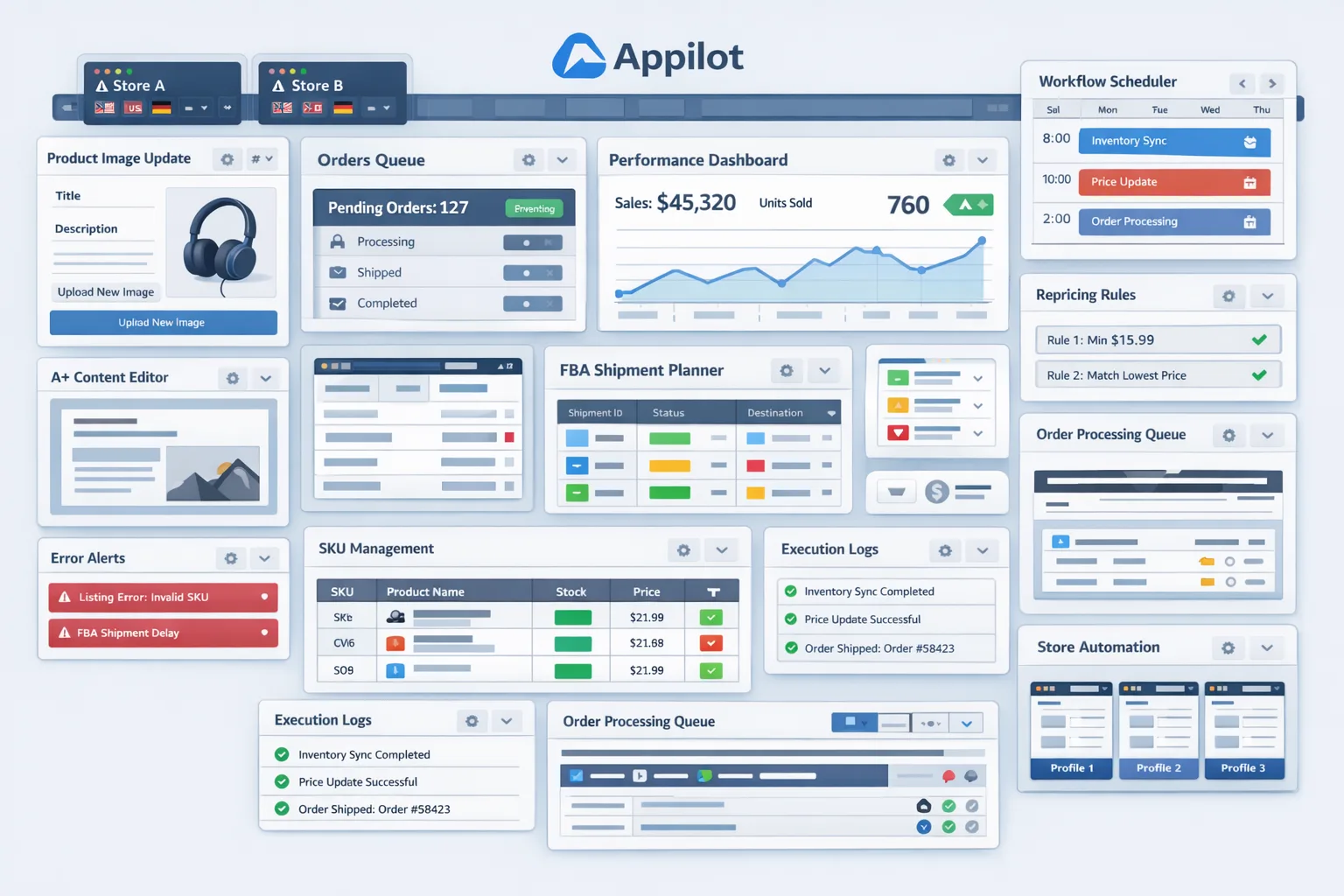
For this guide, I will use Appilot as the workflow automation layer because it fits the operational side of browser-based pricing workflows naturally. That is not the same as saying pricing strategy should be handed over blindly to automation. It should not. The right approach is to keep pricing logic and business rules human-led while using automation to make repeated execution more structured and more scalable. That is where the real value comes from.
In this guide, you will learn why Amazon repricing automation matters, how repricing rules should be structured, what tools and preparation you need, how to build the workflow step by step, which safeguards matter most, and what realistic outcomes you can expect once the system is stable.
Why Amazon Pricing Automation Matters in 2025
Amazon pricing has become too dynamic for slow manual management. In competitive categories, pricing shifts constantly as sellers react to each other, inventory pressure changes, advertising performance fluctuates, and seasonal promotions alter buying behavior. A pricing team that depends entirely on manual observation is almost always behind the market, especially if it manages more than a small product set.
That delay creates two different kinds of losses. The first is competitive loss. A product that should have been adjusted downward may lose visibility or miss Buy Box opportunities because the price remained unchanged too long. The second is profit loss. A product may be reduced more aggressively than necessary because someone reacted too quickly without a clear rule structure, which damages margins without creating enough benefit in return.
For a small catalog, manual pricing might still be possible. For a larger seller handling dozens or hundreds of SKUs, it becomes an operational bottleneck. Even if each product only requires a few minutes of review and adjustment per week, the total labor cost rises fast. More importantly, the process becomes inconsistent because pricing actions are no longer governed by a shared framework.
Automation matters because it allows pricing decisions to follow predefined logic instead of scattered human reaction. That logic may include minimum price thresholds, competitive response ranges, stock-sensitive behavior, promotional conditions, or product-group rules. The pricing strategy remains strategic and human-designed, but the repeated execution becomes far more manageable.
The Manual Approach vs. the Automated Approach
The manual approach to Amazon pricing usually looks simple on the surface. Someone checks competitor prices, reviews current listings, decides where to adjust, updates the price, and moves on. But when that process is repeated across dozens of products, stores, or brands, the simplicity disappears. Teams start working from different assumptions, reacting at different speeds, and applying different standards to similar products.
That creates hidden problems. One SKU may be kept too high because it was not reviewed recently. Another may be dropped too low because the person adjusting it was focused on Buy Box wins rather than profit protection. A third may be left untouched even though a rule-based pricing response would have been obvious. Manual work does not just take time. It creates uneven pricing behavior across the catalog.
The automated approach does not mean handing all pricing decisions to a machine without context. It means defining pricing rules first and then using automation to apply and maintain those rules consistently. If competitor pricing falls within a defined range, the workflow can apply the right response. If a margin floor would be violated, the workflow stops at the threshold. If a product belongs to a premium product set, the logic may differ from fast-moving commodity SKUs.
The result is a cleaner operating model. Human operators define the pricing strategy. Automation handles the repeated execution layer. This allows the team to spend more time refining pricing logic and less time clicking through the same repetitive pricing adjustments every day.
What You Need to Get Started
Before you automate Amazon pricing strategy with repricing rules, you need a clear pricing framework. This is the most important requirement. Automation works well when the business has already decided what its pricing priorities are. That may include Buy Box competitiveness, margin protection, inventory sell-through, category-based aggressiveness, or premium positioning. If the strategy is unclear, automation will only make the confusion more efficient.
You also need product segmentation. Not every SKU should follow the same repricing rules. A fast-moving commodity product may need tighter competitor response logic than a premium product with stronger brand positioning. A clearance SKU may tolerate a different margin rule than a hero product that anchors your category presence. Grouping products by pricing behavior makes the automation much smarter and much safer.
The third requirement is a stable operational setup for applying those rules consistently. This is where Appilot becomes useful in a practical, non-forced way. Once the repricing logic is defined, Appilot can act as the workflow layer that helps structure browser-based pricing updates across products or store environments. It is relevant because the pain point here is repeated operational execution, not theoretical pricing knowledge.
Finally, you need strong input data. That may include current prices, defined price floors, preferred response logic, product group tags, and any competitive reference points you are using. Good repricing automation depends on disciplined inputs just as much as good shipment or reporting automation does.
Step-by-Step: Setting Up Amazon Pricing Strategy Automation with Repricing Rules
The first step is to define your repricing philosophy. This needs to happen before any workflow is built. Ask what success actually means for your business. Is the goal to stay highly competitive within a defined range, protect a strict margin floor, accelerate sell-through on certain inventory pools, or maintain premium positioning while still reacting to major competitor movements. The answer determines the rules you create.
The second step is grouping your products. Do not apply one flat repricing rule across the entire catalog unless the catalog is extremely narrow. Most sellers benefit from dividing products into logical groups such as high-volume competitive SKUs, margin-sensitive products, premium listings, seasonal inventory, or clearance inventory. Each group should have its own rule set because pricing strategy should reflect business context, not just competitor movement.
The third step is defining the actual repricing rules. A rule may state that a product can match or slightly undercut a competitor only if it stays above the required margin threshold. Another rule may allow a price increase when competitors move out of stock or when the current listing remains well below the acceptable ceiling. A different rule may freeze pricing entirely for products that should not react dynamically. The goal is not to automate every possible pricing thought. The goal is to standardize the repeated pricing logic that your team already believes in.
The fourth step is organizing the operational environment. If pricing adjustments are made across multiple store contexts or account environments, those profiles should be structured cleanly. Browser profile separation matters here because it keeps the workflow stable and reduces the chance of applying changes in the wrong seller context.
Now connect the structured store or browser environment to your workflow system. In this example, Appilot is the layer executing the repeated pricing actions after the repricing rules have already been decided. This makes sense because the real friction is not inventing pricing theory. It is the repeated checking, navigating, updating, and logging that happens inside the operational process.
The next step is building the input source. This may be a spreadsheet, pricing table, or internal rule map showing each SKU, its product group, current price, approved minimum price, preferred pricing logic, and any exceptions. That source becomes the operational reference for the workflow. The cleaner the source is, the safer the automation becomes.
Now define the workflow sequence. A typical sequence may launch the correct seller profile, navigate to the pricing area for the assigned SKU group, review the relevant pricing conditions, apply the approved repricing rule outcome, save the new price, and record what was changed. That final logging step is important because pricing changes should always be visible for review. Good repricing automation should not feel invisible. It should feel controlled.
Start with a very small batch. Use a small group of SKUs and compare the automated outputs against your manual pricing judgment. Are the right rules being applied. Are price floors being respected. Are premium SKUs staying within the intended positioning range. Are any products reacting more aggressively than they should. This stage is about trust, not scale.
Once the first run is stable, refine the workflow. Add confirmation checks, logging depth, and exception logic. For example, the system should not proceed if a planned price would violate the defined margin floor, if the input rule is missing, or if a product sits in a product group without a valid pricing framework. Good automation should surface uncertainty rather than improvise.
After that, scale gradually. Expand from a small SKU group to a broader one, then add additional stores or pricing environments if needed. This staged rollout matters because pricing is highly sensitive. A poor shipment workflow causes replenishment issues. A poor pricing workflow can directly erode profit. That is why the process needs to earn trust before it earns scale.
A strong implementation usually follows this pattern. First, the business defines pricing objectives. Second, products are grouped by pricing behavior. Third, repricing rules are built for each group. Fourth, those rules are connected to an operational input source. Fifth, the automation workflow applies pricing updates in a structured way. Sixth, every change is logged and reviewed.
That is how repricing automation stops being a risky shortcut and becomes a disciplined pricing system.
Safety and Best Practices for Amazon Repricing Automation
The first rule is to keep pricing strategy human-led. Automation should apply rules, not invent them. Margin thresholds, pricing priorities, and product group logic should all be decided by the business before the workflow is launched.
The second rule is to use price floors aggressively. One of the easiest ways to damage profitability is to automate price changes without hard protection against margin erosion. Every product group should have a clear lower boundary based on business reality.
The third rule is to segment products properly. Not all SKUs should react the same way. Product grouping is one of the most important factors in making repricing automation intelligent rather than reckless.
The fourth rule is to log every change. Pricing adjustments should always be reviewable. If a workflow changes prices but leaves no visible record, it becomes harder to trust and harder to improve.
The fifth rule is to scale gradually. Start with a narrow product set, validate the behavior, and expand only when the workflow consistently reflects your pricing logic. Repricing automation should become more controlled as it grows, not less.
Real Results: What to Expect
During the first week, expect setup and validation work rather than dramatic gains. You will spend time defining product groups, testing price floors, checking how rules behave, and confirming that the workflow reflects your intended pricing philosophy. This stage matters because pricing systems need trust.
By the second and third weeks, the benefits become easier to feel. Your team should spend less time making repetitive pricing changes manually and more time reviewing outcomes. Products that once depended on irregular human attention begin following a more structured pricing framework.
By the second month, the strongest benefit is usually consistency. Pricing updates happen with less randomness, better documentation, and clearer alignment to the strategy the business actually wants to follow. For growing catalogs, that consistency often matters as much as the direct labor savings.
The realistic result is not perfect automatic pricing forever. The realistic result is a pricing operation that is more disciplined, more scalable, and less dependent on repetitive manual reaction.
Common Problems and Solutions
One common problem is using the same repricing rule for too many products. This usually leads to poor outcomes because different products need different pricing behavior. The fix is to segment products properly and assign rules based on business context rather than convenience.
Another issue is weak price floor logic. If the rules are focused only on competitiveness without strong margin protection, the workflow can produce undesirable price drops. The solution is to define non-negotiable price floors clearly before the automation begins.
A third issue is missing operational visibility. If the workflow changes prices without reliable logs, teams lose confidence and cannot review what happened properly. The fix is to make logging part of the system from the beginning.
The final major issue is scaling too early. Pricing logic that looks sound on ten SKUs may behave differently on one hundred. A staged rollout helps catch those problems before they become expensive.
Choosing the Right Tools for Amazon Pricing Strategy Automation
The best tools depend on how much of your pricing operation is repetitive and how structured your product groups already are. Smaller sellers may only need light automation around a focused SKU set. Larger sellers, agencies, and multi-store operators usually need profile control, rule visibility, workflow logging, and better operational consistency.
For this use case, a profile-based browser structure combined with a workflow automation layer is a practical setup. Appilot fits naturally because it helps translate defined repricing rules into structured operational execution without forcing the team into a large custom build. That makes it a strong fit for ecommerce teams that want consistent pricing operations rather than a complicated technical project.
This is also a natural point in your final publishing version to connect related browser integration guides, Amazon workflow content, and broader ecommerce automation resources, because the reader is already thinking in terms of operational scale and rule-based execution.
Scaling Beyond Basic Repricing Workflows
At a small scale, pricing changes can still be reviewed almost one by one. As the catalog grows, pricing becomes a systems problem. The challenge is no longer whether one SKU can be priced properly. The challenge becomes whether the business can apply pricing logic consistently across many products without losing control of margin and positioning.
That is where workflow design matters most. You need clean product segmentation, strong guardrails, clear output logs, and a process that helps operators supervise pricing behavior instead of manually constructing it every day. The best repricing systems are not the most aggressive ones. They are the ones that combine flexibility with discipline.
The businesses that benefit most from this are usually the ones that already understand their pricing priorities. They know which products need to stay competitive, which ones must protect margin, and which ones should not behave like commodity listings. Automation simply helps them execute that understanding at scale.
Frequently Asked Questions
Q1: Can Amazon pricing really be automated safely with repricing rules?
Yes, if the pricing logic is well defined and strong safeguards are in place. The safest model is to keep pricing strategy human-led and use automation to apply that strategy consistently.
Q2: What should I automate first?
Start with a narrow SKU group where pricing behavior is already clear. Do not begin with the entire catalog. A focused rollout is easier to validate and much safer.
Q3: Why is Appilot relevant here?
Because this is a repeated operational workflow problem after the pricing rules are already decided. Appilot fits naturally as the layer executing and organizing those repeated browser-based pricing actions.
Q4: Do I still need human review?
Yes. Pricing is too important to be treated as fully unattended forever. The workflow should reduce repetitive work, but ongoing review remains essential.
Q5: What is the biggest risk with repricing automation?
The biggest risk is poor rule design, especially around price floors and product segmentation. Bad logic scales just as efficiently as good logic, which is why the setup phase matters so much.
Q6: How much time can this save?
That depends on catalog size and pricing frequency, but teams handling many SKUs often save meaningful time once repetitive price checks and manual updates are replaced with structured rule-based execution.
Conclusion
If you want to automate Amazon pricing strategy with repricing rules, the biggest opportunity is not just speed. It is consistency. Manual pricing creates uneven reactions, scattered attention, and too much dependence on who happened to check which SKU. A rule-based workflow creates a more structured system where pricing decisions follow defined business logic instead of daily improvisation.
The best path is to start with a clear pricing philosophy, segment products carefully, define strong price floors, organize the operational environment properly, and use a workflow layer like Appilot where it naturally helps with repeated execution. Then test on a small SKU set, review results carefully, and expand only when the system proves that it behaves the way your business actually wants.
When done properly, repricing automation does not replace pricing strategy. It strengthens it by making that strategy easier to apply, easier to scale, and easier to control.