How to Build a Dropshipping Brand on TikTok Using Real Device Automation
You find a product that looks promising. The supplier cost is low, the demo is visual, and TikTok already has a few videos proving people care about the problem.
So you build a store, upload the product, post a few clips, and wait.
Then reality hits. One video gets 400 views. Another gets 1,200 views but no sales. A few people comment “link?” or “does this work?” but by the time you reply, the moment has cooled off.
That is where most dropshipping stores get stuck. They are not really building a brand. They are testing random products with random content and hoping TikTok does the hard part.
A real dropshipping brand on TikTok needs more than viral luck. It needs repeated product visibility, fast replies, consistent engagement, clear positioning, and a workflow that does not depend on you manually scrolling for three hours every day.
Real device automation helps with that.
Why Dropshippers Struggle to Build Brands on TikTok
Dropshipping is easy to start, but hard to make believable.
Customers are smarter now. They have seen generic product pages, copied ads, slow shipping, and stores that disappear after one trend dies. If your TikTok account looks like a temporary product test, people feel it immediately.
That is the real problem.
A dropshipping brand has to look alive. It needs product demos, comments, replies, story-style content, customer questions, creator-style posts, and some kind of consistent personality. Without that, your store feels like another quick cash-grab product page.
Manual TikTok work is also time-consuming. You need to research trends, post videos, reply to comments, engage with relevant accounts, answer DMs, monitor competitors, and check which angles are working. Doing that properly can take 60 to 120 minutes a day.
Most dropshippers get this wrong because they only focus on the product. The product matters, but the brand experience around the product is what makes people trust the store enough to buy.
What Real Device Automation Means for TikTok Dropshipping
Real device automation means running TikTok actions through an actual Android phone or emulator instead of relying on fragile browser scripts or unofficial API-based tools.
In plain terms, the automation opens the TikTok app, taps through the interface, watches videos, follows accounts, replies, sends messages, or performs other actions the way a mobile user would. It is closer to real app behavior than a desktop bot pretending to be a phone.
That matters because TikTok is a mobile-first platform. The app experience, device signals, timing, and behavior patterns all matter when you are running repeated actions.
A platform like Appilot is built around this kind of setup. Instead of forcing you to manage ADB, USB cables, developer tools, or scripts, Appilot lets you control Android devices and emulators from a web dashboard. For dropshippers, that means you can build repeatable TikTok workflows without turning your product research or engagement process into a technical project.
Real device automation does not make your brand automatically successful. But it gives you a more stable way to keep the TikTok side of the business active.
Step 1: Pick a Brand Angle Before You Automate Anything
Before you automate TikTok activity, decide what your brand is actually about.
A weak dropshipping store says, “We sell trending products.” A stronger brand says, “We help busy pet owners solve small daily problems,” or “We find smart home gadgets that make apartments easier to manage,” or “We sell beauty tools that simplify your routine.”
That angle matters because it guides your content, targeting, comments, replies, and product selection.
If you skip this step, automation will only make the mess louder. You will engage with random audiences, post inconsistent products, and attract people who do not understand what your store stands for.
Start with one clear niche. It could be pet care, home organization, fitness accessories, skincare tools, travel gadgets, car accessories, kitchen tools, or phone accessories. Then narrow it further by audience. A store for “home products” is broad. A store for renters who want small-space organization tools is much clearer.
Once your brand angle is clear, automation has something useful to support.
Step 2: Use TikTok Automation for Product and Audience Research
The first practical use of automation is research.
Instead of manually checking hashtags and competitor accounts every day, you can use TikTok automation to monitor niches more consistently. This helps you see which products keep appearing, which videos attract buyer-style comments, and which angles are gaining traction.
For example, a pet product dropshipper might monitor videos around dog grooming, cat enrichment, travel bowls, pet hair removal, or puppy training. A kitchen product store might track meal prep, small kitchens, cleaning hacks, and cooking gadgets.
The goal is not to copy every viral video. The goal is to spot repeated demand signals.
Appilot can fit into this workflow by running TikTok actions on Android devices or emulators while you manage everything through a dashboard. That gives dropshippers a practical way to keep research workflows running without coding or manually checking the same accounts every day.
You still make the final decision. The automation simply helps you collect signals faster.
Step 3: Build Content Around Problems, Not Products
TikTok does not reward product catalogs. It rewards attention.
That means your content should start with the problem, not the product. Instead of opening with “Buy this portable blender,” show the messy desk, the rushed morning, the gym bag, the travel moment, or the annoying problem the product solves.
A good dropshipping TikTok brand usually repeats a few content formats. Product demo videos show the item in use. Problem-solution videos make the need obvious. Comparison videos show before and after. Reply-to-comment videos answer real objections. Behind-the-scenes videos make the brand feel less faceless.
Real device automation supports this by keeping engagement active around the content. It can help view relevant videos, interact with niche audiences, and keep brand activity consistent while you focus on producing better clips.
This matters because a dropshipping brand cannot rely on one viral video. You need repeated visibility.
The best brands test multiple hooks for the same product. One hook might focus on convenience. Another might focus on saving time. Another might focus on surprise or curiosity. The product stays the same, but the angle changes.
Step 4: Automate Engagement Without Making the Brand Feel Fake
Engagement is where many dropshippers either do too little or go too far.
Doing too little means you post videos and ignore the audience. Going too far means you spam comments, send cold DMs, or follow random accounts aggressively. Neither builds trust.
A better approach is controlled automation.
You can use automation to engage with relevant niche accounts, view content from potential buyers, follow users who interact with similar products, or respond faster to common questions. The key is to make the activity support the brand instead of making it look desperate.
For example, if you sell compact travel accessories, you might target people engaging with travel packing videos, carry-on tips, digital nomad content, and airport hacks. That is much more relevant than targeting everyone under #travel.
With Appilot’s real-device workflow, this kind of TikTok automation can run through Android devices or emulators from a browser dashboard. That makes it easier to manage repeated engagement while avoiding the fragile setup of desktop scripts or constant phone handling.
Keep the tone human. Automation should help you show up more often, not turn your account into a noisy bot.
Step 5: Turn TikTok Attention Into Store Traffic
A TikTok brand only matters if attention eventually turns into action.
For dropshippers, that means your TikTok profile, link, product page, and checkout flow need to match the content. If a video shows a specific product, the buyer should not land on a confusing homepage. They should reach the exact product or collection.
Your bio should make the brand promise clear. Your pinned videos should explain your best products or strongest offers. Your product pages should answer the questions people ask in comments, like shipping time, size, materials, compatibility, returns, and how the product works.
This is where automation and conversion strategy meet.
If your TikTok automation brings more people to your profile, but the store looks generic, the traffic will leak. If the store is clear, trustworthy, and aligned with the content, more of that attention can become clicks, carts, and sales.
A good setup tracks which videos drive profile visits, which comments show buying intent, and which product links get clicks. Without that, you are only guessing.
Step 6: Use DMs and Comments as Sales Feedback
TikTok comments and DMs are not just engagement. They are market research.
When people ask, “Does this ship to Canada?” or “Is this safe for kids?” or “Does it fit iPhone 15?” they are telling you what your product page needs to answer. When several people ask the same thing, that is a signal.
Dropshippers should use these questions to improve product pages, video hooks, FAQs, and even product selection.
Automation can help catch and organize more of these signals, but the insight still comes from reading them. A bot can help you respond faster, but you should still review the conversations regularly.
This is what separates a real brand from a random store. Real brands learn from customer questions. Random stores just post more products.
Step 7: Scale Slowly Across Products and Accounts
Once one product starts working, it is tempting to scale everything at once.
That is usually a mistake.
TikTok accounts need consistency. If your brand is about travel accessories, suddenly posting kitchen tools can confuse the audience. If your account is still new, pushing too much automated activity too quickly can also look unnatural.
Scale by adding related products first. A store selling travel packing cubes can add luggage organizers, cable pouches, toiletry bags, portable scales, or compact travel bottles. The audience stays the same, and the brand becomes more believable.
If you manage multiple TikTok accounts for different niches, use proper device and proxy separation. Do not treat every account the same. Each one needs its own pace, content style, and engagement limits.
This is another reason dropshippers use Appilot-style workflows. Having a dashboard for Android devices, emulators, and automation tasks is much easier than managing each account manually from scattered phones.
Common Mistakes Dropshippers Should Avoid
Automating Before the Brand Looks Real
If your TikTok profile has three weak videos, no clear bio, and a generic store link, automation will not fix the trust problem. Build a basic brand presence first.
Chasing Too Many Niches at Once
A brand that sells pet brushes today, kitchen tools tomorrow, and posture correctors next week feels random. TikTok audiences respond better when the account has a clear theme.
Using Automation Like a Spam Tool
Aggressive follows, repetitive comments, and cold DMs can hurt the brand. Use automation for consistent, relevant activity, not noisy shortcuts.
Ignoring Customer Questions
The same questions appearing again and again are not annoying. They are conversion data. Use them to improve your content, product pages, and replies.
Scaling Without Tracking
If you do not track which videos, products, and audiences create clicks or sales, you cannot scale intelligently. More activity is not the same as better growth.
Is Real Device Automation Right for Your Dropshipping Brand?
Real device automation is a good fit if you already have a niche, a product direction, and a basic TikTok content plan. It helps when you want to research faster, engage more consistently, and keep your brand active without manually doing every repetitive task.
It may not be right if you are still jumping between random products or expecting automation to replace content. TikTok still needs strong hooks, clear demos, and products people actually want.
Think of automation as the operating system around your TikTok brand. It helps with consistency, but your positioning and content still drive trust.
Final Thoughts
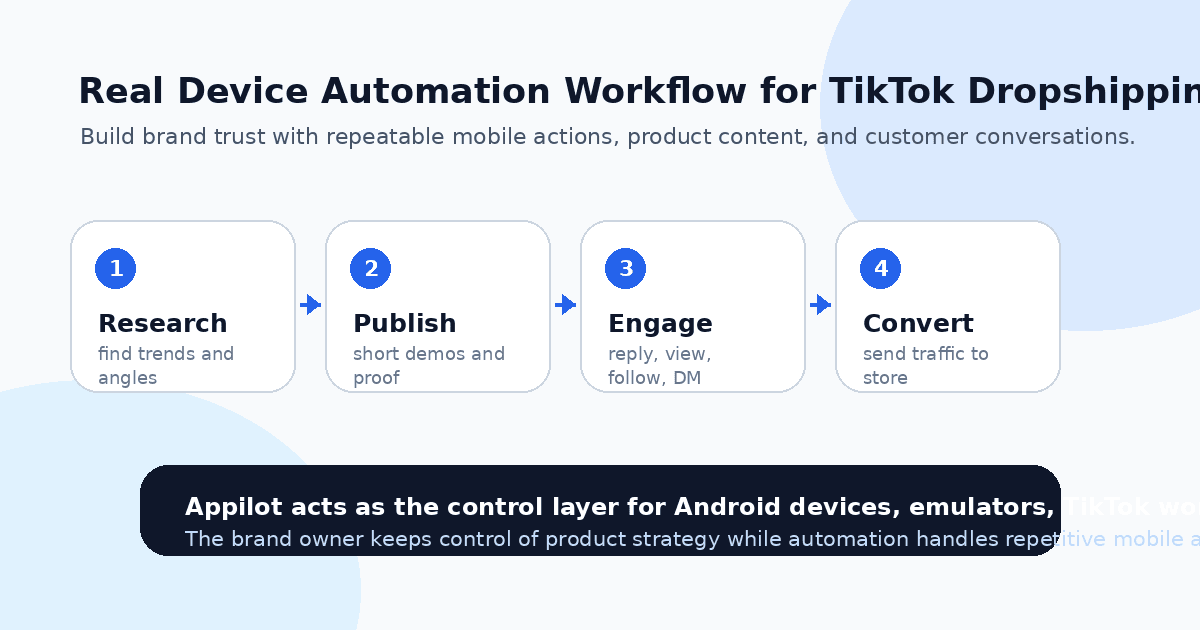
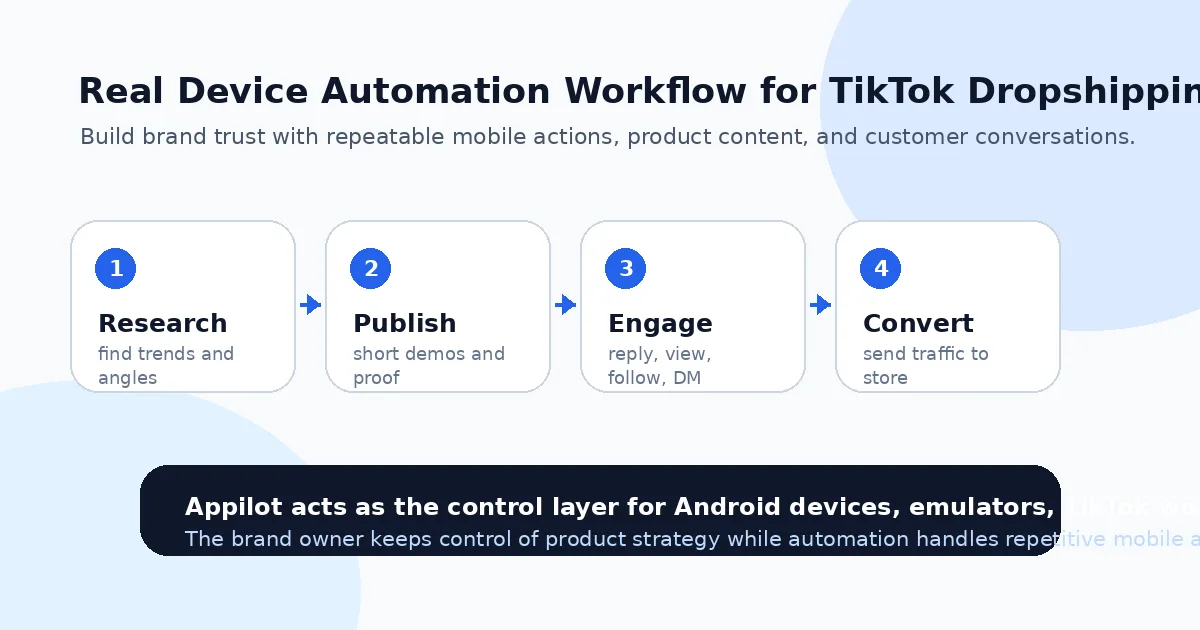
Building a dropshipping brand on TikTok is not about throwing random products at the feed and waiting for one to explode. It is about creating a repeatable system for research, content, engagement, feedback, and conversion.
Real device automation helps because it keeps the mobile side of that system active. It lets you monitor trends, engage with relevant audiences, respond faster, and support your TikTok growth without living inside the app all day.
If you want to run TikTok automation without coding, ADB setup, or constant manual device work, Appilot gives you a browser-based way to manage Android devices, emulators, and ready-to-use bots for TikTok and other platforms. You can check it out at appilot.app.
FAQs
Q1: Can dropshippers build a real brand on TikTok?
Yes, but they need a clear niche, consistent content, customer feedback, and a trustworthy store experience. Random product testing alone is not enough.
Q2: What is real device automation for TikTok?
Real device automation runs TikTok actions through an Android phone or emulator instead of browser scripts or API-only tools, making behavior more mobile-native.
Q3: Is TikTok automation safe for dropshipping brands?
It can be safer when activity is gradual, relevant, and run through realistic mobile workflows. Aggressive spam behavior can still create account risk.
Q4: How does Appilot help TikTok dropshippers?
Appilot lets dropshippers manage TikTok automation on Android devices or emulators from a web dashboard without coding or ADB setup.
Q5: Does automation replace TikTok content creation?
No. Automation supports research, engagement, and consistency, but strong product videos, hooks, and brand positioning still drive sales.