How to Coordinate Posting Across 12 Time Zones
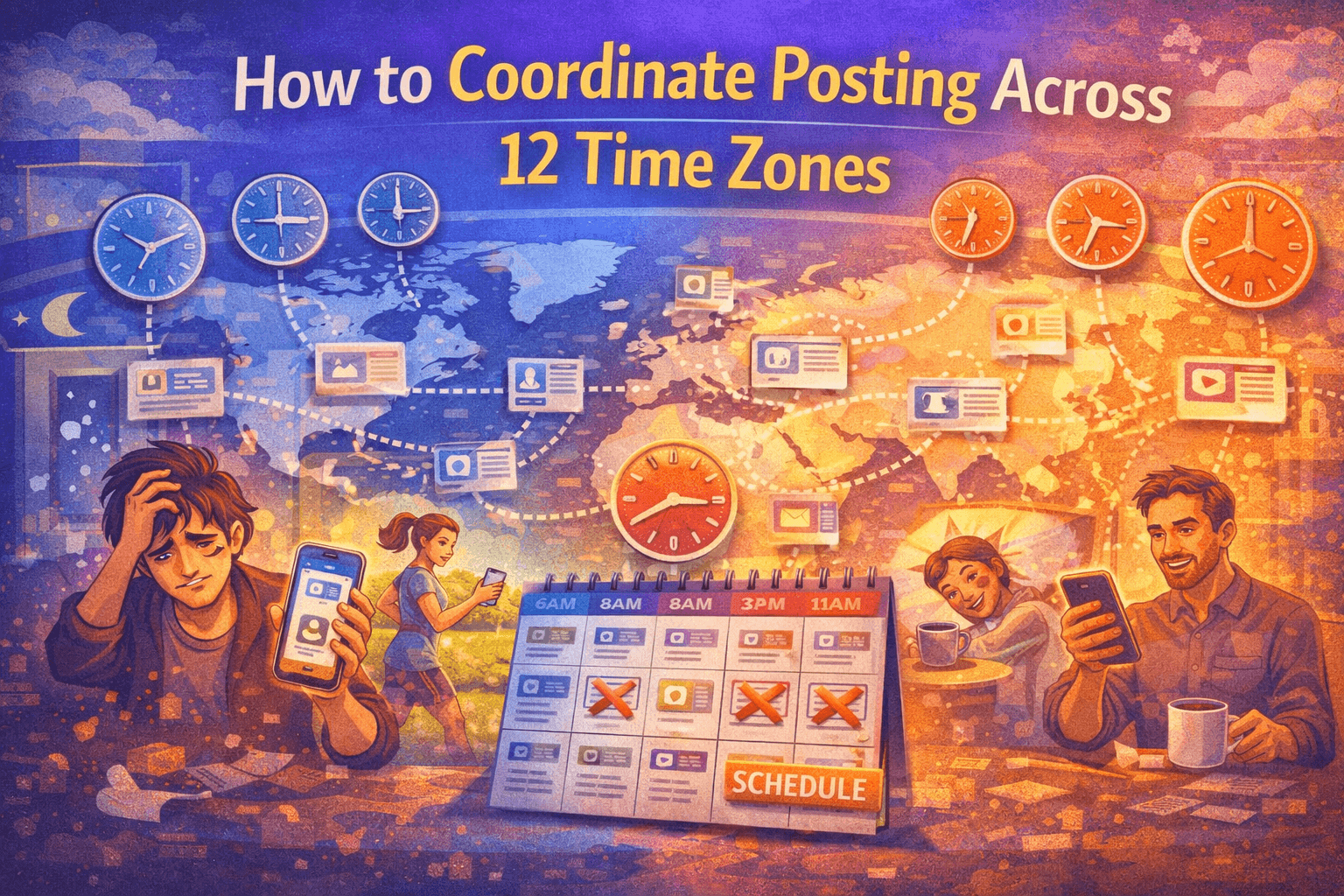
One Schedule Stops Working Once You Go Global
Managing one account in one country is simple because you can schedule content based on your own local time and not think much about it.
The problem starts when your audience becomes global.
Now you have one account targeting the United States, another targeting Europe, another targeting the Middle East, another targeting Asia, and another targeting Australia. Suddenly, the same schedule no longer works because every audience is active at a different time.
A post that performs well in one region may completely fail in another simply because it went live when the audience was asleep.
This is one of the biggest hidden problems in large-scale content management because once you start managing content across multiple countries, scheduling becomes much more complicated than simply choosing a time and clicking publish.
The more regions you target, the easier it becomes to make mistakes.
You accidentally publish to Europe during the middle of the night. You schedule a post for the United States but forget about daylight saving time. You reuse the same posting window for Asia and Australia even though their active hours are different.
Eventually, it becomes difficult to keep track of which account should post when.
Why Multi-Time Zone Scheduling Gets So Confusing
The biggest reason multi-time zone scheduling becomes difficult is because most people keep trying to manage everything manually.
They are constantly converting times in their head, checking world clocks, using timezone calculators, and trying to remember whether an account should publish at 8 AM local time, 8 AM their own time, or 8 AM in the target region.
That becomes impossible to manage at scale.
Another major issue is that most people organize content by account instead of by region.
They think about posting schedules one account at a time, which means they are repeating the same calculations over and over again.
A much better approach is grouping accounts by timezone clusters.
For example, you may have one group for North America, another for Europe, another for the Middle East, another for Southeast Asia, and another for Australia.
Once accounts are grouped together, scheduling becomes much easier because you are no longer making separate decisions for every single profile.
The Biggest Mistake: Scheduling Based On Your Own Clock
One of the most common mistakes is scheduling everything based on your own local timezone.
That seems easier because you only need to think about one clock.
The problem is that your audience may be in completely different regions.
If you are in Pakistan but most of your audience is in the United States, posting based on your local time can easily result in content going live in the middle of the night for your followers.
The same applies when you are managing accounts for clients in different countries.
A local business in California should not be posted at the same time as a crypto account targeting Singapore or an agency account targeting London.
The audience timezone matters more than your own timezone.
That means every account should have a posting window based on where the audience is actually located.
The System That Makes Multi-Time Zone Scheduling Easier
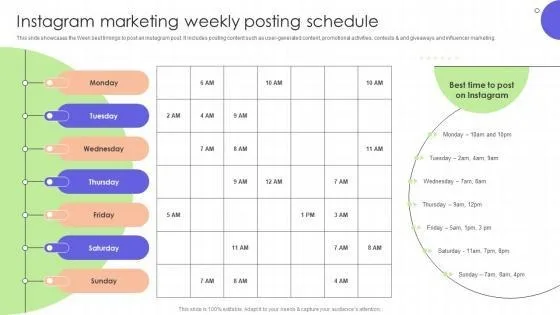
The easiest way to coordinate posting across multiple time zones is to create regional posting blocks.
For example, instead of thinking about exact times for every account, you can create standard posting windows for each region.
North America may have one morning window, one lunch window, and one evening window.
Europe may have its own morning, lunch, and evening windows.
Asia, Australia, and the Middle East may each have different standard posting blocks as well.
Once those posting windows are defined, you no longer need to calculate exact times every day.
You simply assign each account to a region and use the matching posting block.
Another important step is keeping all internal planning in one reference timezone.
For example, you may decide to manage everything internally in UTC or in your own local timezone, while still translating the final posting time into the target region.
That keeps the planning process much cleaner because you are not constantly switching between multiple clocks.
You should also maintain a separate calendar for daylight saving time changes because those shifts can break content schedules very quickly if they are ignored.
Why Centralization Makes This Much Easier
Time zone scheduling becomes much harder when content plans, posting schedules, browser profiles, and account notes are spread across different tools.
You may have one account scheduled in one platform, another in a spreadsheet, another in a browser extension, and another somewhere else entirely.
That makes it much harder to understand which accounts belong to which region and whether posts are being published at the correct time.
This is one of the reasons Appilot becomes useful when content operations start scaling.
Instead of keeping browser profiles, Android workflows, schedules, account assignments, and posting history spread across different systems, everything can stay visible from one dashboard. That makes it easier to group accounts by region, manage timezone-specific schedules, and avoid publishing mistakes.
Conclusion: Global Scheduling Only Works When You Stop Thinking In One Time Zone
If coordinating content across 12 time zones feels confusing, the issue is usually not the content itself.
The problem is that most scheduling systems are still built around one local clock, even when the audience is spread across multiple countries.
Once you group accounts by region, create standard posting windows, track daylight saving changes, and centralize everything into one system, global scheduling becomes much easier to manage.
That is what allows you to stay consistent across multiple countries without constantly worrying about posts going live at the wrong time.