How to Distribute Tasks Evenly Across Account Portfolios
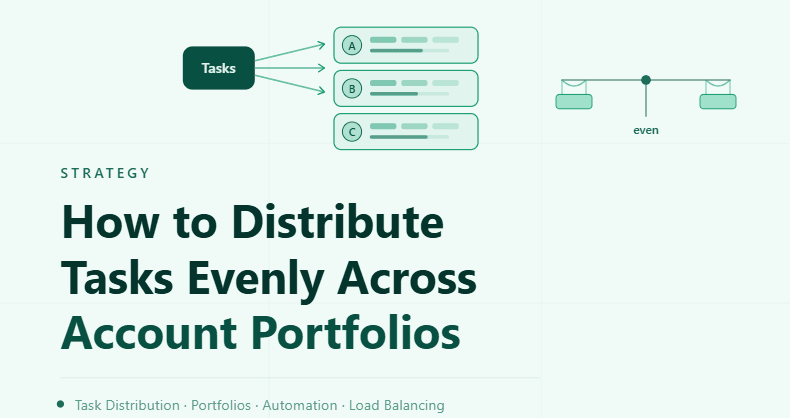
By the end of this tutorial, you will understand how to design a system that assigns tasks across multiple accounts in a balanced and controlled way. When tasks are not distributed properly, some accounts become overloaded while others remain underutilized, leading to increased risk and inefficiency.
To follow along, you only need a basic understanding of how accounts and workflows operate in automation. The focus here is on structuring task distribution logically rather than writing code.
This setup typically takes about an hour to design properly, but it has a major impact on performance and stability. If you manage large account portfolios, Appilot can help handle execution while your distribution system ensures balanced workload across all accounts.
You will build a system that assigns tasks intelligently, tracks usage, and maintains consistent performance across your portfolio.
Why Even Task Distribution Matters
When a small subset of accounts handles most of the tasks, those accounts become more active than others. This imbalance can lead to performance issues, increased detection risk, and faster degradation.
Even distribution ensures that all accounts operate within normal activity levels, improving overall system stability and longevity.
Understanding Workload Imbalance
Workload imbalance occurs when tasks are assigned without considering current usage or capacity. Some accounts may handle too many tasks in a short period, while others remain idle.
Recognizing this imbalance is the first step toward creating a better distribution system.
Defining Task Capacity for Each Account
Each account has a practical limit on how much activity it can handle safely. This limit may depend on the type of tasks, platform rules, and account condition.
Defining capacity helps ensure that no account is pushed beyond its safe operating range.
Building a Balanced Assignment Strategy
A balanced strategy ensures that tasks are spread across accounts instead of being assigned randomly or repeatedly to the same ones. This can be achieved by cycling through accounts or selecting them based on availability.
A structured approach prevents overuse and improves efficiency.
Tracking Usage Across the Portfolio
To distribute tasks effectively, you need visibility into how each account is being used. Tracking usage helps identify which accounts are heavily used and which are underutilized.
This information allows you to adjust distribution dynamically.
Introducing Rotation in Task Assignment
Rotation ensures that accounts take turns handling tasks rather than being used continuously. This approach keeps activity levels balanced and prevents burnout.
Combining rotation with usage tracking creates a more effective system.
Adjusting Distribution Based on Account Health
Not all accounts should handle the same workload at all times. Accounts that show signs of stress or restrictions should receive fewer tasks, while healthy accounts can handle more.
This dynamic adjustment improves reliability and reduces risk.
Avoiding Predictable Assignment Patterns
Repeating the same task distribution pattern can create detectable behavior. Introducing variation in how tasks are assigned helps maintain a more natural usage pattern.
This reduces the likelihood of patterns being identified.
Integrating Distribution with Workflow Systems
Task distribution should be built into your workflow system so that assignments happen automatically. This removes the need for manual selection and ensures consistency.
Automation ensures that distribution rules are applied uniformly across all tasks.
Monitoring Distribution Performance
After implementing a distribution system, it is important to monitor its effectiveness. This includes tracking task success rates, account health, and overall system performance.
Monitoring helps refine the system over time.
Scaling Task Distribution with Appilot
At this stage, your distribution system can manage tasks locally and balance workload effectively. As the number of accounts and workflows increases, managing distribution manually becomes more complex.
This is where Appilot becomes useful because it helps orchestrate workflows across multiple accounts while your system ensures balanced task allocation.
FAQ
Q1: What is task distribution in account portfolios?
It is the process of assigning tasks across multiple accounts in a balanced way.
Q2: Why is even distribution important?
Because it prevents overuse of certain accounts and improves system stability.
Q3: How do I track account usage?
By monitoring how frequently each account is used and how many tasks it handles.
Q3: Should all accounts handle the same workload?
Not always. Distribution should consider account health and capacity.
Q4: Do I need Appilot for distribution?
No, you can implement it locally. Appilot becomes useful when managing workflows at scale.
Conclusion
Distributing tasks evenly across account portfolios is essential for maintaining a stable and efficient automation system. By balancing workload, tracking usage, and adjusting based on account health, you can reduce risk and improve performance.
Start by defining task capacity, implement a rotation-based strategy, and monitor results over time. Once this system is in place, your automation becomes more scalable and reliable.