How to Fix "High Order Defect Rate" on Amazon
Your Orders Are Coming In But Amazon Says The Account Is At Risk
One of the most stressful things for Amazon sellers is seeing a high Order Defect Rate warning inside Seller Central. Orders may still be coming in, listings may still be active, and sales may still look normal, but Amazon starts treating the account like it is becoming risky.
That becomes a serious problem because Order Defect Rate is one of the most important metrics Amazon uses to decide whether an account is creating a poor buyer experience.
If the number stays too high for too long, it can lead to warnings, listing restrictions, account health issues, and even suspension risk.
The important thing to understand is that Amazon usually does not see Order Defect Rate as one isolated issue. It sees it as a signal that the account may be causing multiple customer experience problems at once.
What Causes A High Order Defect Rate
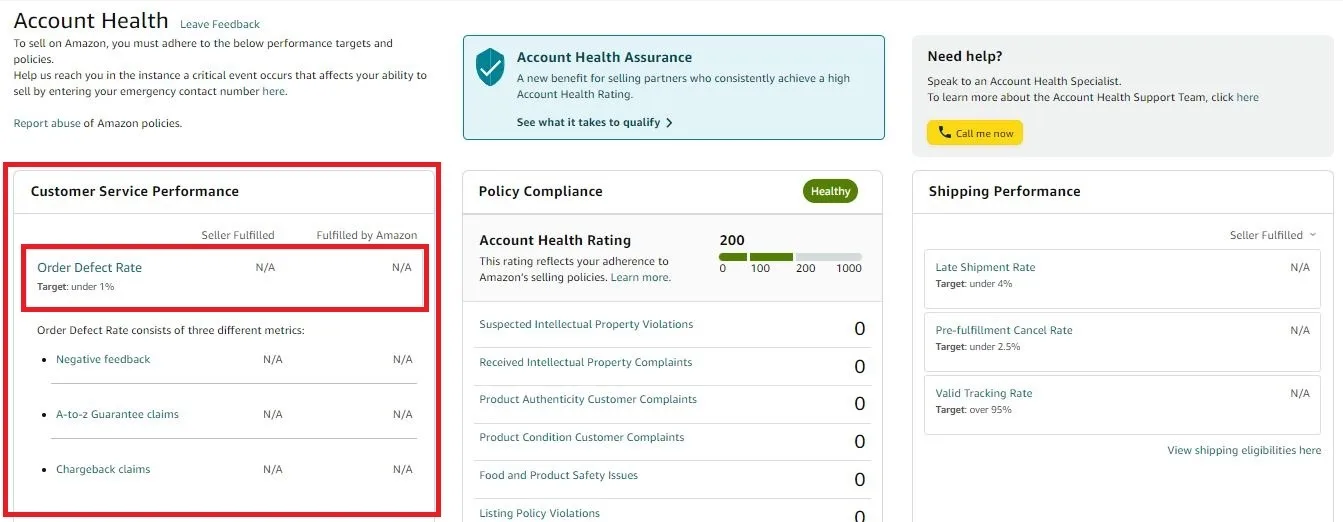
Amazon calculates Order Defect Rate based on three main factors.
The first is negative feedback.
If too many customers leave one-star or two-star reviews about the order experience, the Order Defect Rate increases.
The second is A-to-Z Guarantee claims.
If buyers ask Amazon to step in because they believe there was a problem with the order, the account risk increases quickly.
The third is chargebacks.
If customers contact their bank or payment provider instead of solving the issue directly with the seller, Amazon treats that as a major warning sign.
Even if only a small number of orders create these problems, the Order Defect Rate can rise very quickly because Amazon measures it as a percentage of total orders.
The Biggest Mistake: Focusing Only On Negative Feedback
One of the biggest mistakes sellers make is focusing only on negative reviews while ignoring the bigger causes behind them.
For example, if customers keep complaining about late deliveries, damaged products, inaccurate listings, missing items, poor packaging, or slow communication, simply removing negative feedback will not solve the real problem.
The stronger approach is looking for patterns.
If the same complaints appear repeatedly, there is usually an operational problem behind them.
That may be weak packaging, unreliable suppliers, inaccurate descriptions, delayed shipping, poor inventory control, or slow customer service.
Why Shipping Problems Create So Many Defects
Shipping issues are one of the biggest reasons Order Defect Rate increases.
Late deliveries, invalid tracking numbers, missing shipments, damaged products, and incorrect items can all lead to complaints, claims, and chargebacks.
This becomes especially common when sellers rely on weak fulfillment systems, outdated inventory tracking, or suppliers who are inconsistent.
Even if the product itself is good, a poor delivery experience can still damage the account quickly.
Why Product Quality And Listing Accuracy Matter
A lot of Order Defect Rate problems come from the listing itself.
If the product photos are misleading, the description is inaccurate, the size information is wrong, or the condition is unclear, buyers are much more likely to feel disappointed when the order arrives.
That often leads to negative feedback, returns, and complaints.
The stronger approach is making the listing feel as accurate as possible.
Clear images, realistic descriptions, correct sizing, honest condition notes, and better product details can all help reduce future defects.
Why Better Systems Reduce ODR Problems
Order Defect Rate problems become much harder to manage when shipping records, supplier notes, customer complaints, feedback history, and listing updates are spread across different systems. You may have one place for inventory, another for shipping, another for customer service, and another for account alerts. That makes it difficult to see which issues are creating the most defects.
This is one of the reasons Appilot becomes useful when Amazon operations start scaling. Instead of keeping browser workflows, Android automations, shipment notes, supplier records, customer complaints, account alerts, and task history spread across different systems, everything can stay visible from one dashboard. That makes it easier to monitor account health, review complaint patterns, organize fulfillment workflows, and reduce Order Defect Rate problems across multiple Amazon accounts.
Conclusion: Amazon Order Defect Rate Usually Rises When Customer Experience Problems Keep Repeating
If your Amazon Order Defect Rate is too high, the issue is usually not that Amazon randomly decided the account is risky. The problem is often that shipping delays, product quality issues, inaccurate listings, or poor customer service started creating too many complaints.
Once you identify the biggest patterns, improve fulfillment, strengthen listing accuracy, and organize account management more carefully, it becomes much easier to lower Order Defect Rate and protect the account from future problems.