How to Recover from Twitter Shadowban in 2025
Your tweets used to get engagement—likes, replies, impressions—but now it feels like you’re posting into a void. No visibility, no reach, no traction. You’re still active, still posting, but your content simply isn’t being seen.
This is one of the most frustrating situations on Twitter because there’s no clear notification telling you what went wrong. Everything looks normal on the surface, but under the hood, your account has likely been restricted. This is what most users refer to as a shadowban.
A shadowban isn’t an official term, but it describes a very real effect: your content becomes less visible in search results, replies are hidden, and your tweets stop reaching non-followers. In some cases, even your followers don’t see your posts consistently.
In 2025, Twitter’s detection systems have become more sophisticated. The platform analyzes behavior patterns, engagement quality, and account signals more deeply than ever before. That means recovering from a shadowban requires more than just waiting—it requires deliberate action.
In this guide, you’ll learn what causes shadowbans, how to confirm if your account is affected, and the exact steps to recover. You’ll also see how to use structured automation carefully so you can scale your activity without triggering future restrictions.
What a Twitter Shadowban Actually Is
A shadowban is a temporary restriction that limits your content visibility without notifying you directly. Unlike a suspension, your account remains active, and you can still post, like, and reply. However, your reach is significantly reduced.
There are several types of shadowbans that users typically experience. Sometimes your tweets won’t appear in search results. Other times your replies are hidden behind a “Show more replies” section. In more severe cases, your content stops appearing in hashtags entirely.
The key takeaway is that a shadowban affects distribution, not access. You can still use Twitter normally, but your content is effectively deprioritized by the algorithm.
Why Twitter Shadowbans Accounts in 2025
Twitter’s goal is to reduce spam, manipulation, and low-quality interactions. Shadowbans are one of the ways the platform enforces this without fully removing accounts.
One major trigger is behavior that looks automated. Posting too frequently, sending repetitive replies, or engaging in bulk actions can signal automation—even if you’re doing it manually.
Another factor is engagement quality. If your tweets receive low engagement or are frequently ignored, Twitter may interpret them as low-value content and reduce their visibility.
Reports from other users can also contribute. If your content is flagged repeatedly, even without a formal violation, your reach may be restricted temporarily.
Automation tools play a role here as well. Poorly configured tools that send identical messages or operate without delays can trigger detection systems. On the other hand, structured platforms like Appilot help reduce risk by introducing variability and human-like patterns into workflows.
Signs That You’re Shadowbanned
The first sign is a sudden drop in impressions. If your reach declines sharply without any change in content strategy, it’s worth investigating.
Another indicator is reduced engagement. Tweets that previously generated interactions may now receive little to no response.
You may also notice that your replies are not visible to others unless they click to expand hidden threads. This is a strong signal of a reply-based restriction.
Finally, hashtags may stop working for your content. If your tweets don’t appear under hashtags where they previously ranked, your visibility is likely limited.
How to Confirm a Shadowban
To verify whether your account is affected, start by searching for your tweets using hashtags from a different account or an incognito browser. If your content doesn’t appear, it may be restricted.
Check your replies on other accounts. If they are hidden behind “Show more replies,” this indicates limited visibility.
You can also monitor analytics. A consistent drop across all metrics—impressions, profile visits, and engagement—often confirms a shadowban.
Immediate Steps to Recover
The first step is to stop any behavior that may have triggered the restriction. This includes excessive posting, repetitive replies, or aggressive automation.
Take a short break from posting. Giving your account time to reset signals to Twitter that the suspicious activity has stopped.
Next, verify your account details. Ensure your email and phone number are confirmed. This builds trust signals with the platform.
After that, return gradually. Start with low-frequency, high-quality posts and engage naturally with other users. Avoid jumping back into high-volume activity immediately.
Resetting Your Activity Pattern
Recovery is not just about stopping bad behavior—it’s about replacing it with better patterns.
Focus on quality over quantity. Instead of posting frequently, create content that encourages meaningful engagement. Ask questions, share insights, and participate in conversations.
Engage manually for a period of time. Reply thoughtfully, like relevant content, and build interactions that signal authenticity.
Once your reach begins to recover, you can slowly reintroduce automation—but only if it is structured properly.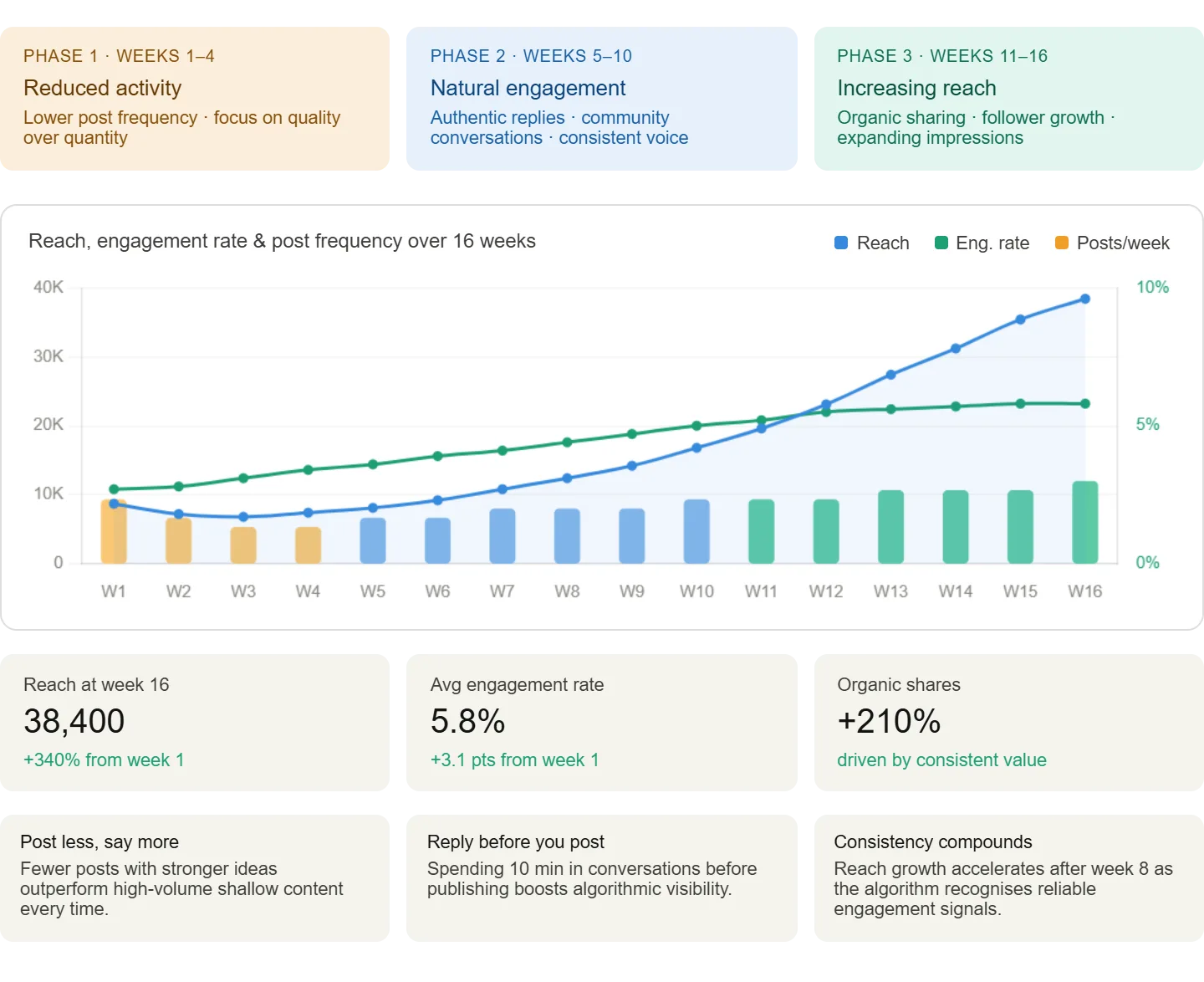
Using Automation Safely After Recovery
Automation itself is not the problem. The issue arises when it creates patterns that look unnatural.
Safe automation focuses on variability. Actions should not happen at fixed intervals or in identical sequences. Timing should vary, and activity should be spread throughout the day.
This is where tools like Appilot can help. Instead of running rigid scripts, you can design workflows that introduce delays, randomization, and limits. This ensures that your activity remains within safe thresholds while still saving time.
For example, instead of sending replies every 10 seconds, a safe workflow might vary delays between 30 and 120 seconds. Instead of performing the same number of actions daily, it introduces slight variations.
By aligning automation with human behavior, you reduce the risk of triggering future shadowbans.
Long-Term Strategies to Avoid Shadowbans
Maintaining account health is an ongoing process. Consistency is more important than intensity.
Avoid sudden spikes in activity. Gradual growth is safer and more sustainable.
Diversify your actions. Mix posting, replying, liking, and browsing instead of focusing heavily on one type of interaction.
Monitor your analytics regularly. Early signs of declining reach can help you adjust before a full shadowban occurs.
Most importantly, prioritize genuine engagement. Twitter rewards accounts that contribute meaningful interactions rather than those that attempt to game the system.
Real-World Recovery Example
A content creator experienced a severe drop in reach after using an aggressive automation script that posted and replied continuously throughout the day. Engagement dropped by over 80%, and replies were consistently hidden.
After pausing all automation, reducing posting frequency, and engaging manually for one week, the account began to recover.
They later reintroduced automation using Appilot with randomized delays and strict limits. Over the next two weeks, impressions returned to normal levels, and engagement improved beyond previous performance.
This highlights a key point: recovery is possible, but it requires disciplined changes in behavior.
Frequently Asked Questions
Q: How long does a shadowban last?
A: Most shadowbans last from a few days to two weeks, depending on the severity of the trigger and how quickly you adjust your behavior.
Q: Can I speed up recovery?
A: Yes, by stopping problematic activity, verifying your account, and engaging naturally, you can accelerate recovery.
Q: Will deleting tweets help?
A: Not necessarily. Focus on changing behavior rather than removing content unless it violates rules.
Q: Is automation always risky?
A: Automation is safe when used correctly. The key is to avoid repetitive patterns and stay within natural limits.
Conclusion
A Twitter shadowban can feel invisible, but its impact is very real. When your reach drops and engagement disappears, it’s a signal that your activity patterns need adjustment.
Recovery is not complicated, but it requires discipline. Pause risky behavior, rebuild trust through natural engagement, and gradually reintroduce structured workflows.
Automation can still play a role, but only when it mimics human behavior and respects platform limits. Tools like Appilot make this possible by allowing you to design flexible, controlled workflows that scale safely.
In 2025, success on Twitter is no longer about doing more—it’s about doing it smarter. Focus on authenticity, consistency, and intelligent systems, and your reach will not only recover but grow stronger over time.