How Travel Influencers Use Social Media Bots to Grow Across Platforms
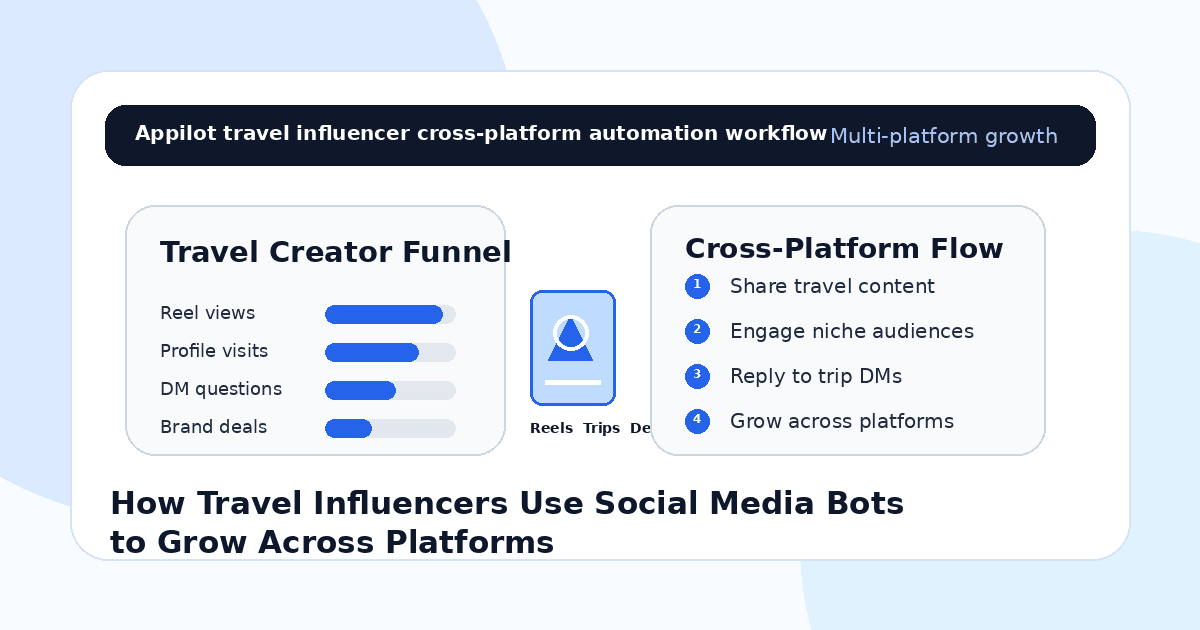
You post a travel reel from a beautiful destination. The opening shot gets attention, the caption shares a helpful tip, and the story invites people to ask for the full itinerary.
A few people save it. Someone asks where you stayed. Another wants the budget breakdown. A hotel brand asks for your media kit. A follower wants the Google Maps list, but the DM gets buried before you reply.
That is the challenge for travel influencers in 2025. Travel content can spread quickly, but growing across Instagram, TikTok, YouTube Shorts, Twitter/X, Reddit, Pinterest, and other platforms takes more than posting pretty videos. You need repeatable discovery, fast replies, clear links, audience trust, and organized brand-deal workflows.
Social media bots help travel influencers manage the repetitive parts of growth. They can support comment replies, story triggers, DM routing, itinerary delivery, link sharing, media kit requests, and audience discovery across platforms.
The goal is not to fake travel influence. The goal is to help real travel content reach more of the right people while keeping your audience experience smooth.
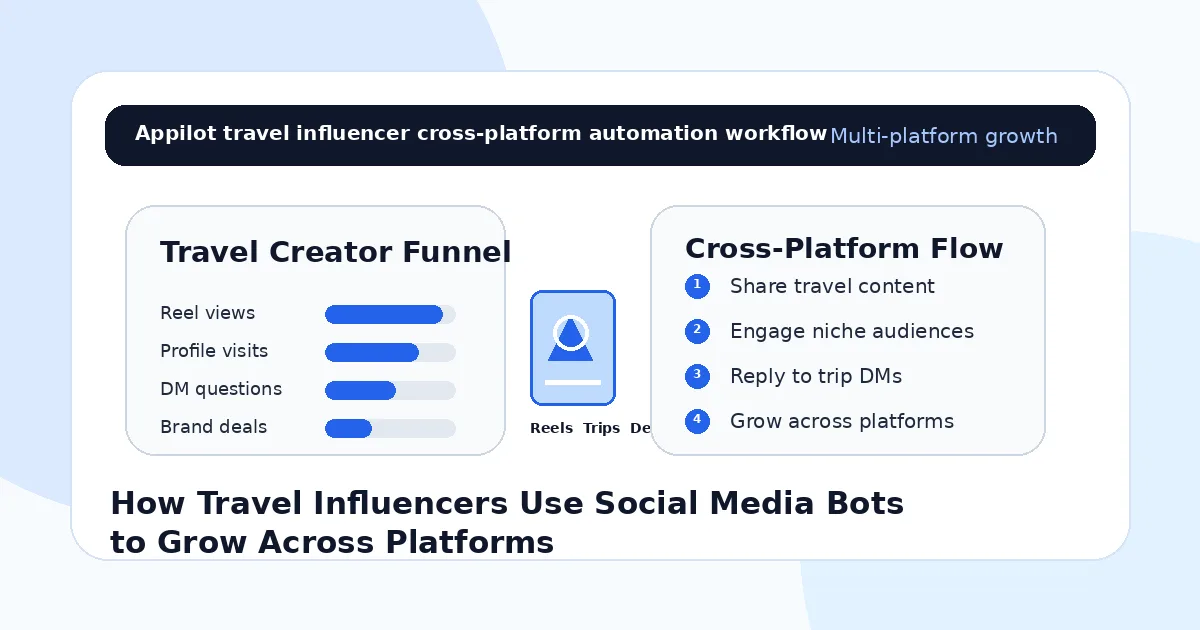
Why Travel Influencers Need Cross-Platform Growth
Travel audiences are spread across many platforms.
Instagram is strong for reels, stories, carousels, and visual inspiration. TikTok works well for destination discovery, budget tips, hotel reviews, and fast travel hacks. YouTube Shorts can support search and longer channel growth. Pinterest can drive planning traffic. Twitter/X can work for travel commentary, threads, and creator networking. Reddit can help with niche travel discussions when used carefully.
A travel influencer who only grows on one platform is vulnerable.
Algorithm changes, account issues, reach drops, and seasonal trends can affect visibility. Cross-platform growth gives creators more stability, more brand opportunities, and more ways to turn content into revenue.
The problem is that managing every platform manually is exhausting.
Automation helps creators stay responsive and organized without losing the human storytelling that makes travel content valuable.
What Social Media Bots Mean for Travel Influencers
Social media bots can automate repeated actions across platforms. For travel influencers, that can include replying to comments, sending itinerary links, handling “where is this?” questions, routing hotel collaboration DMs, delivering budget guides, tracking warm followers, and managing basic engagement.
Real-device automation is especially useful because most travel platforms are mobile-first. Instead of relying only on browser scripts or fragile shortcuts, real-device workflows run through Android devices or emulators and behave more like normal app usage.
A platform like Appilot is built for this kind of workflow. It lets travel creators run social automation on Android devices or emulators from a browser dashboard, without coding, ADB setup, or keeping a phone connected all day. That means creators can keep engagement and inquiry routing active while focusing on filming, editing, traveling, pitching brands, and creating better stories.
Automation should support your travel brand. It should not replace your personal voice or experience.
Step 1: Choose a Clear Travel Niche
Before using bots, define what kind of travel audience you want to grow.
A broad travel page can get views, but a focused travel niche is easier to monetize. A stronger angle might be budget travel in Europe, luxury hotels in Dubai, solo female travel, family travel, digital nomad life, food travel, hiking trips, hidden gems, travel photography, city guides, or weekend getaways.
This matters because automation magnifies your positioning.
If your niche is unclear, you may attract random viewers who never follow deeply or buy anything. If your niche is clear, automation helps more relevant people discover your content and understand why they should stay.
Your niche should guide your reels, captions, story prompts, hashtags, lead magnets, affiliate links, and brand outreach.
A strong travel brand starts with a clear reason to follow.
Step 2: Use Bots for Audience Discovery
Travel creators grow faster when their content reaches people already interested in their type of travel.
Automation can support audience discovery by helping with profile visits, targeted engagement, comment monitoring, and interaction around niche travel communities.
For example, a budget travel creator can focus on backpacking pages, cheap flight accounts, hostel content, and student travel communities. A luxury hotel influencer can focus on hotel brands, destination pages, concierge accounts, and premium travel audiences. A food travel creator can engage around restaurants, city food guides, and local tourism pages.
This is where Appilot fits naturally. Travel influencers can run social workflows across Android devices or emulators while managing niche audiences, campaign pacing, and platform activity from one dashboard.
The goal is not random reach. The goal is relevant discovery.
Step 3: Turn Comments Into Helpful Replies
Travel posts create repeated questions.
People ask where a place is, how much it costs, whether it is safe, when to visit, how to get there, where to stay, what camera you used, what app you used for editing, or whether you have an itinerary.
These questions are perfect for automation because they repeat often.
If someone comments “itinerary,” the bot can send the itinerary link. If someone comments “hotel,” the workflow can send the hotel guide. If someone comments “budget,” it can send a cost breakdown. If someone asks “location,” it can share the destination details.
Keep replies useful and specific.
A follower asking for a travel guide does not need a long pitch. They need the resource and a reason to trust your recommendations.
Step 4: Use Story Replies for Travel Guides and Links
Stories are one of the best places to start warm conversations.
A travel creator can post a hotel room tour, restaurant find, packing tip, budget breakdown, flight deal, destination mistake, or day-by-day itinerary. Then the story can ask viewers to reply with a keyword.
For example, “Reply GUIDE for the full itinerary,” “Reply HOTEL for where I stayed,” “Reply MAP for my saved spots,” or “Reply BUDGET for the cost breakdown.”
Automation can send the right link instantly.
Appilot-style workflows help manage these repeated story and DM actions without scripts, command-line tools, or manual device work.
Stories create demand. Automation helps deliver the next step before the viewer forgets.
Step 5: Route Brand and Hotel Inquiries
Travel influencers often miss monetization opportunities because brand DMs get buried.
Hotels, tourism boards, tour operators, restaurants, travel apps, luggage brands, credit card brands, and agencies may ask for rates, audience stats, availability, or a media kit.
Automation can help route those inquiries.
If someone DMs “collab,” “media kit,” “rates,” “partnership,” or “hotel,” the workflow can ask whether they are a brand, agency, hotel, or tourism board. It can then send the right media kit link, inquiry form, or booking email.
This makes the creator look more professional and prevents warm business opportunities from getting lost.
A travel influencer needs both creative content and business systems.
Step 6: Use Bots to Support Affiliate Revenue
Travel influencers can monetize through affiliate links for hotels, booking platforms, travel insurance, luggage, camera gear, editing presets, travel apps, tours, eSIMs, and digital guides.
Automation helps when followers ask for links.
If someone asks where you stayed, send the hotel link. If someone asks what backpack you use, send the gear list. If someone asks how you planned the trip, send the guide or itinerary.
Do not spam affiliate links randomly. Use them when people ask or when the story clearly invites them.
Affiliate monetization works best when the product genuinely fits the creator’s travel style.
Step 7: Repurpose Content Across Platforms
A single travel experience can become many pieces of content.
A hotel stay can become an Instagram reel, TikTok room tour, YouTube Short, Pinterest pin, blog post, Twitter/X thread, and story sequence. A city trip can become a guide, budget breakdown, food list, safety tips, and itinerary.
Automation can support the engagement and routing around this content across platforms.
For example, TikTok may create discovery, Instagram may create DMs, YouTube Shorts may build search visibility, and Pinterest may drive long-term guide traffic. The same audience question may appear in different places, and automation helps keep replies organized.
The content does not need to be identical everywhere. It should be adapted to each platform.
Automation supports the distribution layer while you focus on better travel storytelling.
Step 8: Track What Actually Grows the Brand
Do not measure social media bots only by follower count.
For travel influencers, better metrics include saves, shares, story replies, itinerary requests, guide downloads, affiliate clicks, media kit requests, brand inquiries, email signups, community joins, and repeat engagement.
You should also track which destinations and formats create the best audience. Budget tips may drive saves. Hotel tours may drive affiliate clicks. Hidden gems may drive shares. Personal travel stories may build loyalty. Practical itineraries may attract email subscribers.
Automation gives you more signals. Tracking tells you which signals create real growth.
Common Mistakes Travel Influencers Should Avoid
Chasing Random Followers
A broad audience may look impressive, but niche followers are usually more valuable for brand deals, guides, and affiliate sales.
Sending Generic Auto-Replies
Travel followers ask specific questions. Match replies to the destination, guide, hotel, or resource they requested.
Overusing Affiliate Links
Too many promotional links can weaken trust. Share links when they are useful, relevant, and requested.
Ignoring Brand DMs
Partnership messages can get buried quickly. Use automation to route media kit and rate inquiries faster.
Automating Without a Content System
Bots cannot fix weak content. Strong travel storytelling, useful guides, and platform-specific posts still drive growth.
Is Social Media Automation Right for Travel Influencers?
Social media automation is a good fit if you already post travel content, receive comments or DMs, share itineraries, use affiliate links, sell guides, or work with brands. It works especially well for travel influencers on Instagram, TikTok, YouTube Shorts, Pinterest, Twitter/X, Reddit, and community platforms.
It may not be right if your niche is unclear, your links are disorganized, or your content does not provide enough value. Automation can route attention, but the travel experience and storytelling still create demand.
Think of social media bots as travel growth assistants. They help organize replies, links, and opportunities while your content earns trust.
Final Thoughts
Travel influencers use social media bots to grow across platforms by turning content attention into organized audience growth, links, inquiries, and revenue opportunities.
The strongest workflow starts with a clear travel niche, audience discovery, comment triggers, story replies, brand inquiry routing, affiliate support, content repurposing, and performance tracking. Automation handles the repeated actions while the creator keeps the storytelling human.
If you want to run social automation without coding, ADB setup, or manual device management, Appilot gives travel influencers a browser-based way to control Android devices, emulators, and ready-to-use bots for Instagram, TikTok, YouTube, Twitter/X, Reddit, Discord, Telegram, and more. You can check it out at appilot.app.
FAQs
Q1: Can travel influencers use social media bots to grow?
Yes, bots can help travel creators reply to questions, send guides, route links, manage brand DMs, and grow across platforms.
Q2: What should travel influencers automate first?
Start with replies for “itinerary,” “hotel,” “budget,” “map,” “guide,” “link,” “media kit,” “rates,” and “collab.”
Q3: Is automation safe for travel influencers?
It is safer when activity is gradual, relevant, and triggered by real interest. Spammy cold DMs can damage trust and account health.
Q4: Can Appilot help travel influencers automate social media?
Yes, Appilot can run social workflows on Android devices or emulators from a browser dashboard without coding or ADB setup.
Q5: Does automation replace travel storytelling?
No. Automation handles repetitive replies and routing, but real trips, useful guides, and human storytelling build the audience.