What Is Human Behavior Simulation in Automation?
As bot detection systems become more advanced, relying only on static browser signals is no longer enough to avoid detection. Modern systems analyze how users behave, including how they move, click, type, and interact with a page. This has led to the rise of human behavior simulation in automation, a technique focused on mimicking real user interactions as closely as possible.
Understanding human behavior simulation is important because it represents a shift from identity-based evasion to behavior-based realism. This guide explains how it works and why it is used.
What Is Human Behavior Simulation in Automation?
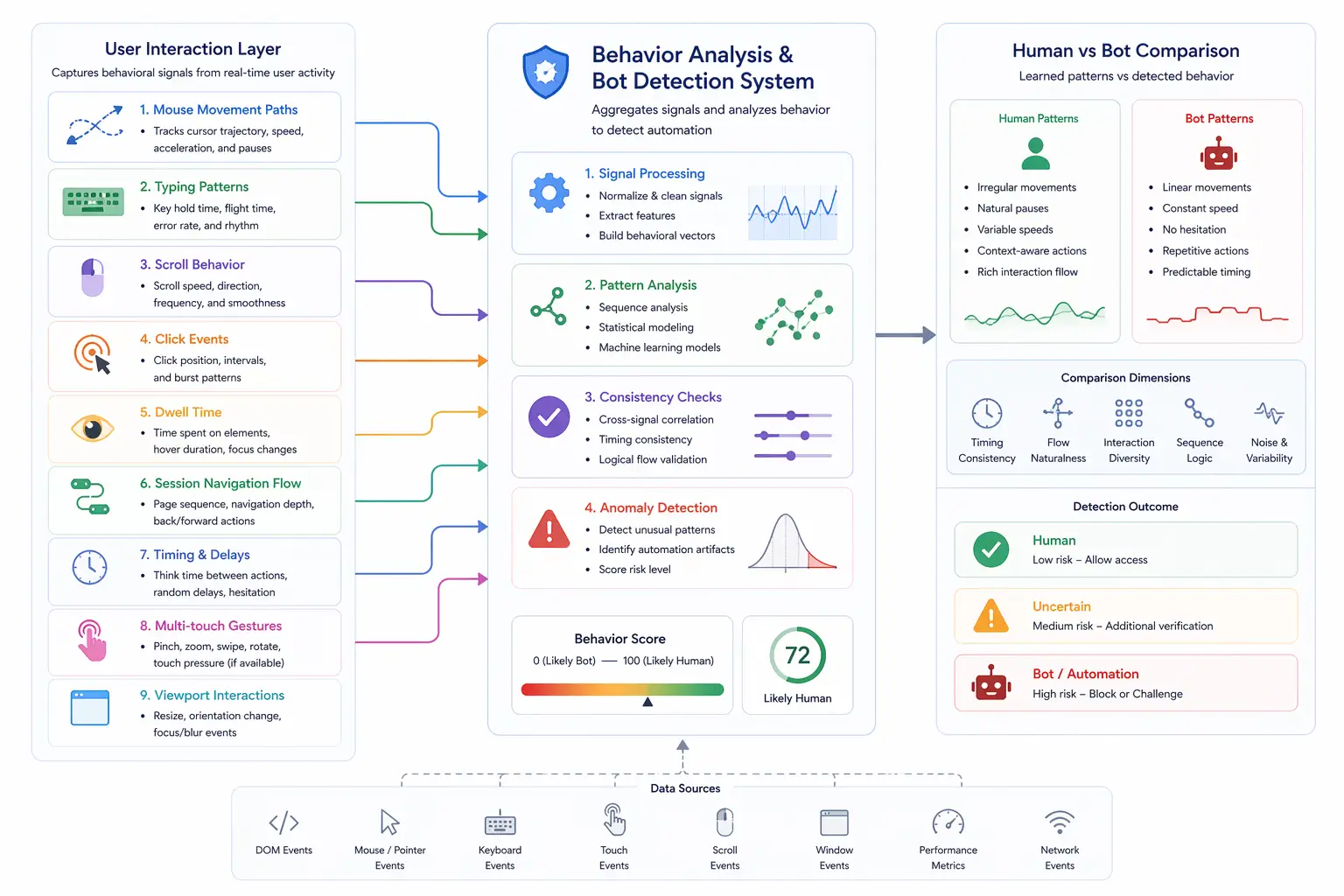
Human behavior simulation in automation refers to the process of replicating real user interactions within an automated environment, where instead of executing actions instantly or in fixed patterns, the system introduces variability and natural delays to mimic how humans interact with websites. This includes simulating mouse movements, typing patterns, scrolling behavior, and decision-making timing, all of which are designed to resemble genuine user activity.
The Core Idea Behind Behavior Simulation
The core idea behind behavior simulation is realism through variability, where real users do not interact with websites in perfectly consistent or predictable ways. Human actions include pauses, hesitations, irregular movements, and changing speeds, and detection systems use these characteristics to differentiate between humans and bots. By introducing these variations, automation attempts to blend in with normal user behavior.
How Human Behavior Simulation Works
Human behavior simulation works by modifying how actions are executed in an automated system, where instead of sending direct commands, the system generates interaction patterns that resemble human input. This includes adding delays between actions, randomizing movement paths, and simulating gradual interactions rather than instantaneous ones. The goal is to create interaction data that aligns with real user patterns.
Common Techniques Used in Behavior Simulation
Several techniques are used to simulate human behavior, where mouse movement simulation generates curved and variable paths instead of straight lines, typing simulation introduces delays and occasional irregularities between keystrokes, and scrolling behavior is adjusted to mimic natural reading patterns with pauses and direction changes. Click timing is also randomized, and interaction sequences are varied to avoid predictable patterns. These techniques work together to create a more realistic interaction profile.
Why Behavior Simulation Matters in Bot Detection
Behavior simulation matters because modern detection systems rely heavily on behavioral analysis, where they track how users interact with a page over time. Automated systems that perform actions too quickly, too consistently, or in unnatural sequences are easily identified. By simulating human behavior, automation attempts to reduce these detectable differences and appear more like genuine users.
Behavior Simulation vs Static Fingerprinting
Static fingerprinting focuses on identifying the environment based on properties such as browser configuration and device characteristics, while behavior simulation focuses on how the user interacts with the environment. Even if a fingerprint appears valid, unrealistic behavior can still trigger detection. This is why behavior simulation is often used alongside fingerprinting techniques.
Limitations of Human Behavior Simulation
Despite its usefulness, human behavior simulation has limitations because it is difficult to perfectly replicate the complexity of real human interactions, where subtle patterns such as micro-movements, reaction times, and context-based decisions are challenging to simulate accurately. Detection systems continue to evolve and can identify patterns that appear artificial even when variability is introduced. Additionally, maintaining consistency across sessions adds further complexity.
Behavior Simulation vs Advanced Detection Systems
Advanced detection systems analyze multiple layers of behavior, including timing, interaction sequences, and response patterns, where they look for deeper inconsistencies beyond simple randomness. While behavior simulation can reduce obvious signals, it may still fail under detailed analysis. This creates an ongoing cycle of improvement between detection systems and automation techniques.
Behavior Simulation vs Real-Device Environments
A key distinction in modern detection is the difference between simulated behavior and natural interaction, where behavior simulation attempts to recreate human patterns through algorithms, but real-device environments generate these patterns naturally through actual user interaction or hardware-level input. Real-device approaches operate on actual hardware where input signals, timing, and system responses align with real-world conditions, and tools like Appilot follow this approach by running automation on real Android devices, ensuring that interaction behavior reflects genuine usage patterns. This reduces the likelihood of detection.
When Human Behavior Simulation Is Most Relevant
Human behavior simulation is most relevant in scenarios where interaction patterns are closely monitored, such as login systems, form submissions, and high-security platforms, where detection systems analyze user behavior in detail. In these contexts, realistic interaction patterns are essential for avoiding detection.
Frequently Asked Questions
Q: What is human behavior simulation?
It is replicating human-like interactions in automation.
Q: Why is it used?
To avoid detection by mimicking real user behavior.
Q: What actions are simulated?
Mouse movement, typing, scrolling, and timing.
Q: Is it fully effective?
No, advanced detection can still identify patterns.
Q: Does it replace fingerprinting?
No, it complements other techniques.
Q: How do real-device solutions compare?
Real-device solutions like Appilot generate natural interaction patterns, reducing detection risk.
Key Takeaways
Human behavior simulation in automation focuses on replicating real user interactions by introducing variability in actions such as mouse movement, typing, and scrolling. It helps reduce detection by aligning automated behavior with human patterns, but it has limitations due to the complexity of real interactions. Understanding how behavior simulation works is essential for navigating modern bot detection systems.