Instagram Action Blocked: 7 Ways to Prevent and Fix It
You are trying to follow someone, like a post, send a DM, leave a comment, or post content, and suddenly Instagram stops you.
“Action Blocked.”
Sometimes the warning disappears after a few hours. Sometimes it lasts for days. In more serious cases, the account can become heavily restricted and difficult to use normally.
For many people, this keeps happening repeatedly. One week you can follow users normally. The next week Instagram starts blocking follows, comments, or DMs for no obvious reason.
The frustrating part is that Instagram rarely tells you exactly what triggered the block. You are left guessing whether it was too many follows, too many DMs, repeated comments, aggressive automation, bad proxies, or suspicious login activity.
The good news is that action blocks are usually temporary and preventable.
Once you understand why they happen, you can reduce the chances of getting blocked, recover accounts faster, and create safer activity patterns moving forward.
In this guide, you will learn the most common reasons for Instagram action blocked errors, how to recover safely, and seven effective ways to prevent them from happening again.
Time to recover: Usually between a few hours and 7 days depending on severity. Success rate: High if aggressive activity stops early. Cost: Usually free unless you need better account management tools or proxies.
Why Instagram Shows Action Blocked Errors
Instagram shows action blocked warnings when it believes an account is behaving too aggressively, too quickly, or too unnaturally.
The platform tracks much more than follows and likes. It also tracks typing speed, time between actions, session history, browser fingerprints, device behavior, login patterns, IP addresses, and account age.
If too many of these signals look suspicious, Instagram limits what the account can do.
This often happens when people follow too many users too quickly, leave repeated comments, send large numbers of identical DMs, or like too many posts in a short period of time.
It can also happen when multiple accounts are logged into the same browser, when accounts switch locations too often, or when cheap proxies and low-quality VPNs are being used.
Many people think the problem is automation itself, but that is not always true. The real problem is usually repetitive and robotic behavior.
This is exactly why I built Appilot. The goal was to make Instagram automation feel more natural and human instead of repeating the same action patterns that get accounts flagged quickly.
1. Stop Activity Immediately
The first thing you should do after an action block is stop all aggressive activity for at least 24 to 48 hours.
Do not keep following users, sending DMs, liking posts, or posting excessively during this period. Many people panic when they see the warning and continue trying to force actions through, but this usually makes the block last longer.
The goal is to give Instagram time to cool down and see that the account is no longer behaving aggressively.
2. Reduce Follow, Like, and DM Limits
Many action blocks happen because accounts are simply doing too much too quickly.
If you are following hundreds of users every day, sending large numbers of DMs, or liking too many posts in a short period of time, Instagram may see the account as spammy.
Even aged accounts should avoid massive spikes in activity.
Instead of sending 100 DMs in one session, spread activity throughout the day. Follow smaller numbers of people, take longer breaks between actions, and avoid repeating the same behavior every day.
The slower and more natural the activity looks, the safer the account becomes.
3. Separate Multiple Accounts Properly
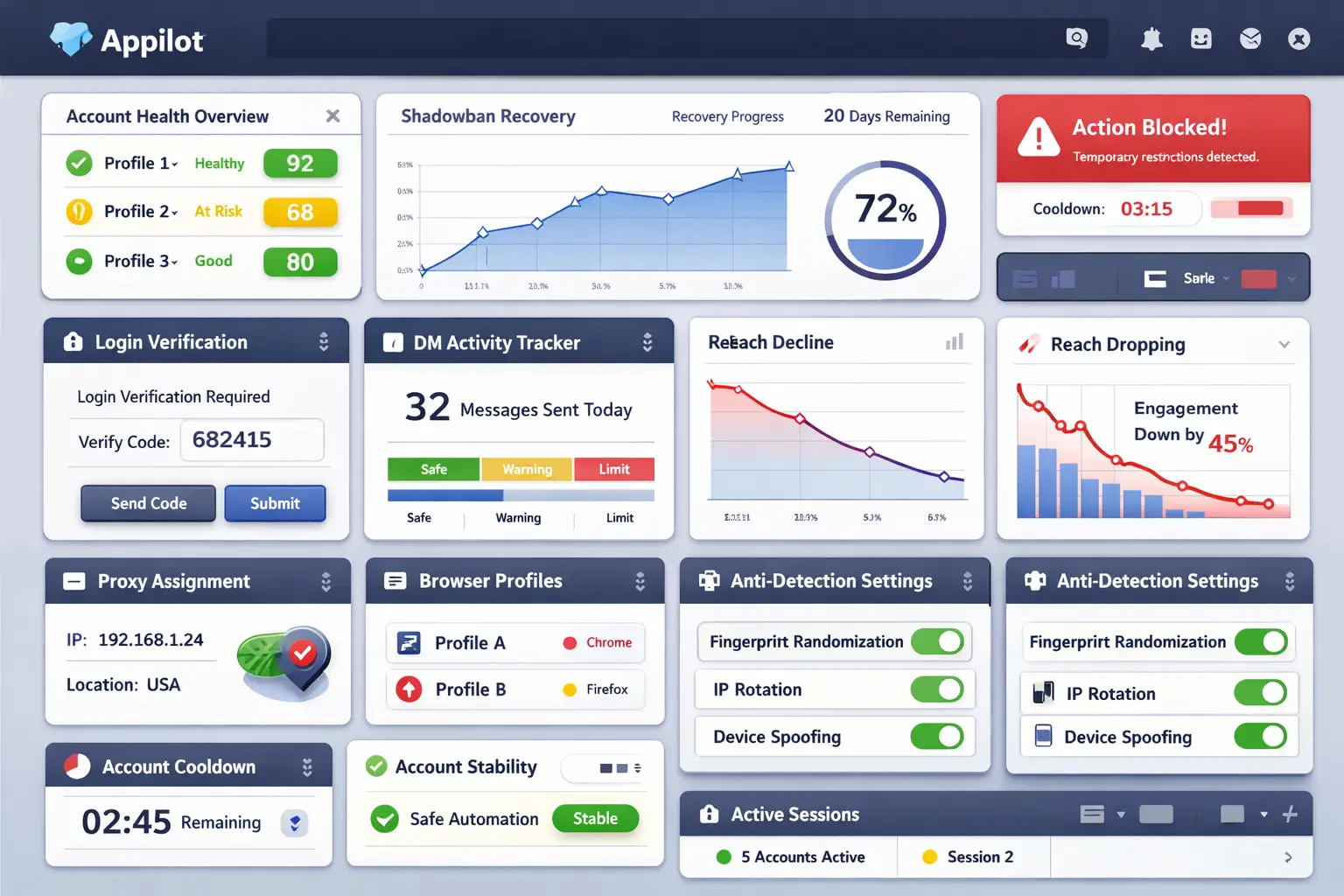
One of the most common causes of repeated action blocks is running multiple Instagram accounts from the same browser profile.
Instagram can connect accounts together through browser fingerprints, cookies, device settings, and IP addresses.
If one account gets flagged, the others may start getting restricted too.
The safest approach is isolating every account with its own browser profile, proxy, cookies, and device fingerprint.
This makes every account appear more independent and reduces the risk of cross-account restrictions.
4. Use Better Proxies and Stable Locations
Cheap proxies, free VPNs, and constantly changing IP addresses are common causes of action blocks.
If an account logs in from one country in the morning and another country a few hours later, Instagram may see that as suspicious.
Use residential or mobile proxies whenever possible and keep account locations stable over time.
The more consistent the account looks, the lower the chances of triggering action blocks.
5. Avoid Repetitive Messages and Comments
Instagram can easily detect repeated comments and DMs.
If you send the same message to hundreds of users or leave the exact same comment on dozens of posts, Instagram may flag the account.
Always vary your messages, comments, and engagement patterns.
Small changes in wording can make a big difference when it comes to avoiding detection.
6. Disconnect Low-Quality Automation Tools
Many cheap Instagram bots and browser tools use repetitive timing patterns, identical delays, and unnatural action sequences.
This makes them very easy for Instagram to detect.
If you are using low-quality automation software, disconnect it and switch to safer workflows.
The issue is not automation itself. The issue is automation that behaves too much like a machine.
Appilot is useful here because it helps create more natural action flows, varied delays, and more realistic engagement patterns.
7. Warm Accounts Slowly After the Block Ends
Once the block disappears, do not go straight back to full activity.
Many people recover from an action block and immediately start sending large batches of DMs or following hundreds of users again.
This usually causes another restriction.
Instead, warm the account slowly. Start with lighter activity, post occasionally, engage with content naturally, and gradually increase usage over time.
This helps rebuild trust with Instagram.
Common Mistakes That Make Action Blocks Worse
One major mistake is repeatedly logging in and out of the account. Frequent password changes, verification requests, and device switches can create even more suspicious signals.
Another mistake is using free VPNs or public proxies. These IP addresses are often heavily abused and may already be flagged by Instagram.
People also make the mistake of buying new accounts without fixing the original setup. If the underlying system is still broken, the new accounts will get blocked too.
Another common mistake is trying to recover reach by increasing activity. Sending more DMs, posting more often, or following more users usually makes the block worse instead of better.
Frequently Asked Questions
Q1: How long do Instagram action blocks last?
Most action blocks last between a few hours and 48 hours. More serious blocks can last up to a week.
Q2: Why does Instagram keep blocking my follows?
This usually happens because you are following too many people too quickly or because the account has a low trust score.
Q3: Can I still use Instagram while action blocked?
Yes, but you should reduce activity significantly until the restriction disappears.
Q4: Do proxies help prevent action blocks?
Yes. High-quality residential or mobile proxies can help keep accounts more stable if used correctly.
Q5: Is automation always the reason for action blocks?
No. Aggressive activity, poor account quality, repeated messages, bad proxies, and suspicious login behavior can all contribute.
Conclusion
Instagram action blocked warnings are frustrating, but they are usually temporary.
The key is slowing down, reducing aggressive behavior, separating accounts properly, using better proxies, and avoiding repetitive activity.
Once you create more natural usage patterns, action blocks become much less common.
The goal is not to push the account harder. The goal is to make the account look safer, calmer, and more trustworthy over time.