Instagram Automation for Mental Health Coaches and Therapists
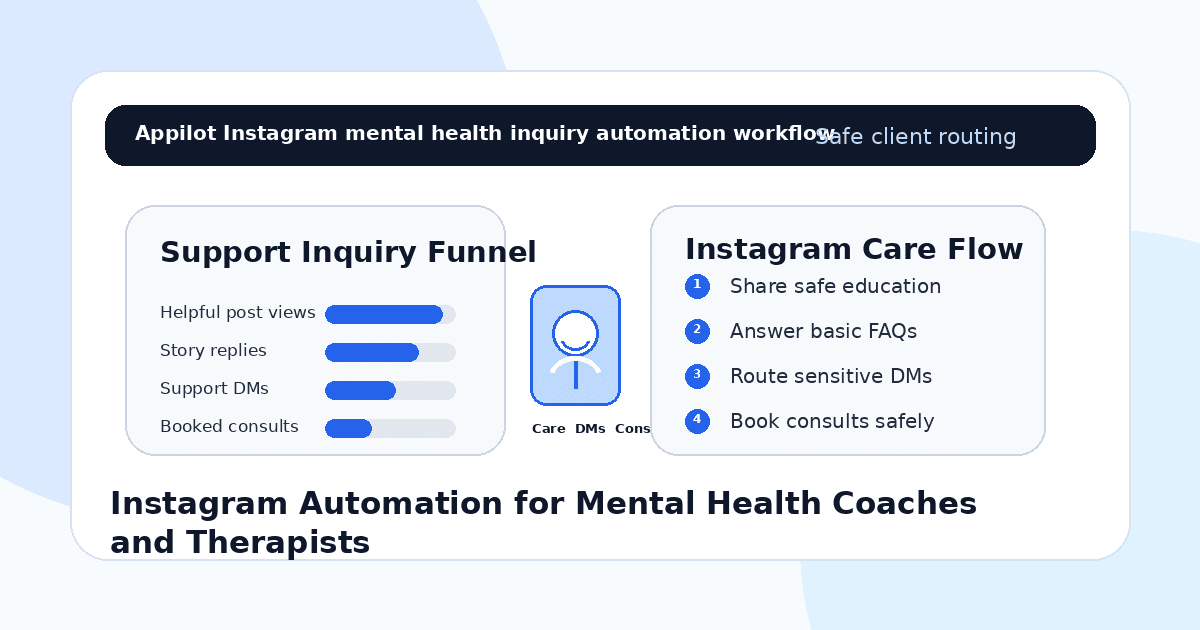
You post a thoughtful Instagram reel about anxiety, burnout, boundaries, self-worth, emotional regulation, relationships, grief, workplace stress, or therapy education.
A few people save it. Someone replies to your story saying the post helped them. Another person asks if you offer sessions. A potential client sends a DM asking how therapy or coaching works, but the message gets buried under reactions and notifications.
That is the challenge for mental health coaches and therapists on Instagram. People often engage quietly because the topic is personal. They may not comment publicly, but they may watch stories, save posts, reply to prompts, or ask private questions when they feel ready.
Instagram automation helps professionals manage repeated questions, send basic resources, route sensitive messages, explain the consultation process, and guide interested people toward booking without manually checking every DM all day.
The goal is not to automate care. The goal is to make the first step safer, clearer, and easier for people who are looking for support.
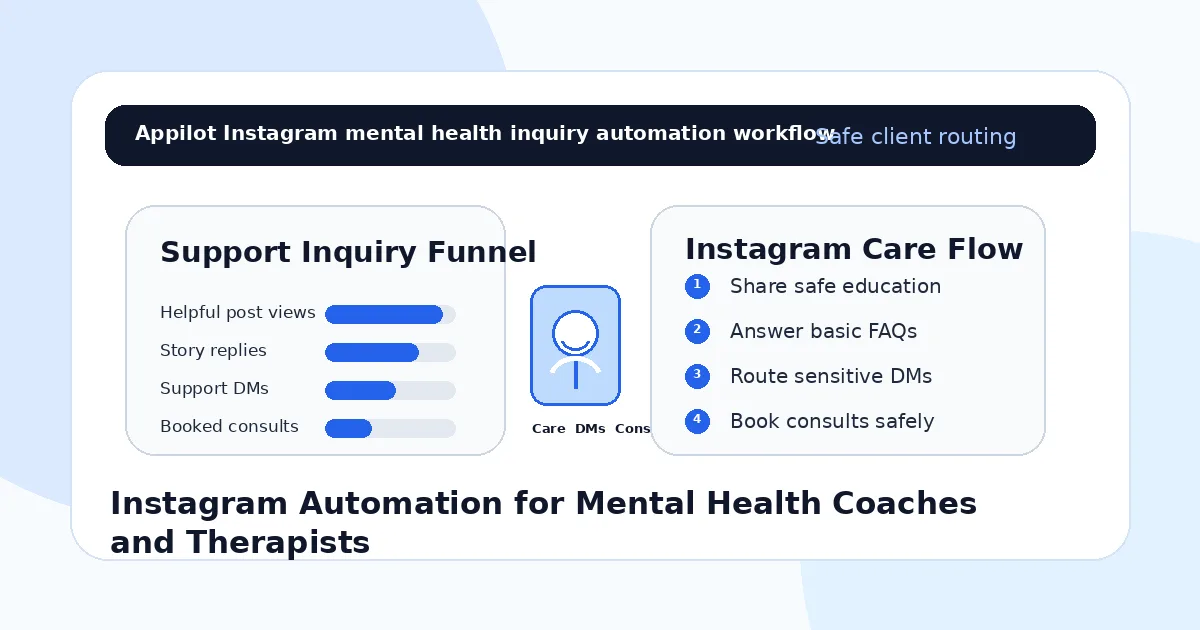
Why Instagram Works for Mental Health Professionals
Instagram is a strong platform for mental health coaches and therapists because people often discover support through education before they ever book a session.
A post about boundaries may help someone recognize a pattern. A reel about burnout may make someone feel less alone. A story prompt about stress may encourage a private reply. A carousel about therapy myths may reduce hesitation around asking for help.
This kind of content builds trust.
But mental health content also requires care. People may share sensitive details, ask for personal advice, or disclose situations that need urgent human support. That means automation must be used carefully, with clear boundaries and safe routing.
Instagram can create awareness and inquiries. The professional must still protect ethics, privacy, and human care.
What Instagram Automation Means in Mental Health
Instagram automation means using workflows that respond to comments, story replies, DMs, keywords, and booking requests.
For therapists and mental health coaches, automation can send general resources, explain services, share intake links, provide booking details, route people to consultation pages, answer basic FAQs, and identify when a human should step in.
Real-device automation is useful because it runs through the actual Instagram mobile app on Android devices or emulators. This behaves more like normal mobile usage than fragile desktop scripts or risky shortcuts.
A platform like Appilot is built for this type of workflow. It lets therapists and coaches run Instagram automation on Android devices or emulators from a browser dashboard, without coding, ADB setup, or keeping a phone connected all day. That means basic inquiry routing can continue while the professional focuses on sessions, client care, supervision, and content.
Automation should support safe access. It should not provide therapy, crisis support, diagnosis, or personalized mental health advice.
Step 1: Define Your Scope Clearly
Before using Instagram automation, mental health professionals need a clear scope.
A therapist may focus on anxiety, trauma-informed care, couples therapy, grief, burnout, family therapy, workplace stress, or teen support. A mental health coach may focus on confidence, habits, emotional wellness, stress management, self-care, or personal growth.
This matters because automation magnifies positioning.
If your scope is unclear, people may ask for help you do not provide. If your scope is clear, automation can route people toward the right service, resource, consultation, or referral path.
Your profile, highlights, captions, and automated replies should explain who you help, what you offer, what you do not offer, and how someone can take the next step.
Clarity protects both the professional and the person seeking support.
Step 2: Use Educational Content Responsibly
Mental health content should be helpful without becoming personal treatment.
A therapist or coach can post general education about stress, emotional patterns, communication, self-awareness, boundaries, nervous system basics, journaling, therapy expectations, or common myths about getting help.
The content should avoid diagnosing followers, promising outcomes, or making people feel like a short post can replace professional care.
Automation can support this education by sending general resources when someone asks. For example, if someone comments “journal,” the workflow can send a general reflection prompt. If someone replies “consult,” it can send the consultation booking page.
This is where Appilot fits naturally. Mental health professionals can run Instagram workflows through Android devices or emulators while keeping message boundaries and booking paths controlled from one dashboard.
Education builds trust. Boundaries keep it safe.
Step 3: Automate Basic FAQs, Not Personal Advice
Many Instagram inquiries are simple and repeated.
People ask whether you are accepting clients, what services you offer, whether sessions are online, what your rates are, what the first consultation includes, where you are licensed or available, and how to book.
These are appropriate for automation.
If someone asks “price,” the bot can share general pricing or point to the service page. If someone asks “online,” it can explain whether online sessions are available. If someone asks “book,” it can send the consultation link.
But if someone asks for advice about their symptoms, relationship, trauma, medication, diagnosis, or crisis situation, the bot should not answer. It should route the person to a human, intake process, or appropriate urgent support.
Automation should handle logistics. Humans handle care.
Step 4: Use Story Prompts Carefully
Stories can create warm conversations, but mental health prompts need care.
A story can ask gentle, low-risk questions like “Want the self-care checklist? Reply CARE,” “Want the consultation link? Reply CONSULT,” or “Want the journaling prompt? Reply JOURNAL.”
Avoid prompts that pressure people to disclose personal trauma, crisis details, or sensitive health information inside Instagram DMs.
When someone replies with a keyword, automation can send the requested resource and a short boundary statement if needed.
Appilot-style workflows help manage these repeated story and DM actions without scripts, command-line tools, or manual device work.
The best story automation feels supportive, clear, and low-pressure.
Step 5: Route Sensitive Messages to a Human
Some messages should immediately leave the bot path.
If someone mentions self-harm, suicide, abuse, panic, crisis, urgent danger, medication questions, diagnosis, or detailed personal symptoms, automation should not continue a normal sales or booking flow.
The safest approach is to route the person to urgent support, local emergency services, crisis hotlines where applicable, or direct human review depending on the professional’s policy and jurisdiction.
For non-urgent but personal messages, the automation can say that the topic needs proper consultation and invite the person to book or contact the practice directly.
A safe workflow should be designed before automation is turned on.
Mental health automation must prioritize safety over conversion.
Step 6: Make the Consultation Path Clear
A person seeking support may already feel overwhelmed.
The booking path should be simple and calming. Explain what happens next, how long the consultation takes, whether it is free or paid, what information is needed, and whether the first step is a call, intake form, or appointment request.
Automation can send the correct link when someone asks about sessions, availability, consultation, or services.
A helpful reply might say, “The first step is a consultation request so we can see whether this support is a fit. You can start here.”
Keep it short and reassuring.
The easier the first step feels, the more likely someone is to complete it.
Step 7: Protect Privacy and Professional Boundaries
Instagram is not a private clinical platform.
Therapists and coaches should avoid collecting sensitive details inside automated DMs. They should also avoid asking people to explain trauma, symptoms, diagnoses, or crisis details in a social inbox.
Automation should direct people to approved intake channels, secure forms, official websites, or proper booking systems.
Professionals should also be careful with testimonials, client stories, before-and-after emotional claims, and any content that could reveal private information.
Trust in mental health work depends on privacy, ethics, and clear boundaries.
Step 8: Track Consults, Not Just Engagement
Do not measure Instagram automation only by likes or follower growth.
For mental health professionals, better metrics include resource requests, consultation link clicks, intake form submissions, booked discovery calls, qualified inquiries, referral requests, and response time to sensitive messages.
You should also track which content creates the right inquiries. Boundary posts may bring coaching leads. Therapy education may reduce hesitation. Burnout content may bring workplace-related inquiries. Relationship posts may bring couples or individual support questions.
Automation gives you more signals. Tracking helps improve access without turning care into a numbers game.
Common Mistakes Mental Health Professionals Should Avoid
Letting Bots Give Therapy Advice
Bots should not diagnose, treat, assess symptoms, or provide personalized mental health guidance.
Asking for Sensitive Details in DMs
Instagram DMs are not the right place for detailed mental health intake. Route people to secure or approved channels.
Using Triggering Story Prompts
Avoid prompts that pressure followers to disclose trauma, crisis details, or deeply personal situations publicly or in casual DMs.
Sending Booking Links Too Aggressively
People seeking support need trust and clarity. Use gentle routing instead of pushy sales language.
Measuring Only Followers
Followers matter less than qualified inquiries, safe routing, consultation requests, and ethical client fit.
Is Instagram Automation Right for Mental Health Coaches and Therapists?
Instagram automation is a good fit if you already post educational content, receive DMs, use story prompts, offer consultations, or need a cleaner way to route inquiries. It works especially well for therapists, mental health coaches, wellness professionals, relationship coaches, burnout coaches, and private practices with clear boundaries.
It may not be right if you do not have a safe intake process, crisis policy, or approved message boundaries. Automation can improve response speed, but it cannot replace ethics, clinical judgment, or human care.
Think of Instagram automation as an inquiry and routing assistant. It helps people take the first step, but the professional still protects the relationship.
Final Thoughts
Instagram automation can help mental health coaches and therapists manage inquiries safely when it is designed around education, boundaries, and human handoff.
The strongest workflow starts with clear scope, responsible content, basic FAQ replies, gentle story prompts, sensitive-message routing, simple consultation links, privacy protection, and quality tracking. Automation handles repetitive routing while the professional keeps care human.
If you want to run Instagram automation without coding, ADB setup, or manual device management, Appilot gives mental health professionals a browser-based way to control Android devices, emulators, and ready-to-use bots for Instagram and other platforms. You can check it out at appilot.app.
FAQs
Q1: Can therapists use Instagram automation?
Yes, therapists can use automation for basic FAQs, booking links, resource delivery, and routing non-urgent inquiries.
Q2: What should mental health professionals automate first?
Start with replies for “book,” “consult,” “rates,” “online,” “services,” “availability,” “journal,” and basic resource requests.
Q3: Is Instagram automation safe for mental health content?
It is safer when bots avoid personal advice, route crisis or sensitive messages to humans, and use approved boundaries.
Q4: Can Appilot help therapists and coaches automate Instagram?
Yes, Appilot can run Instagram workflows on Android devices or emulators from a browser dashboard without coding or ADB setup.
Q5: Should bots answer mental health questions?
No. Bots should not diagnose, treat, or give personalized advice. They should share general resources and route people to humans.