Instagram Automation for Yoga Instructors: Building an Audience Online
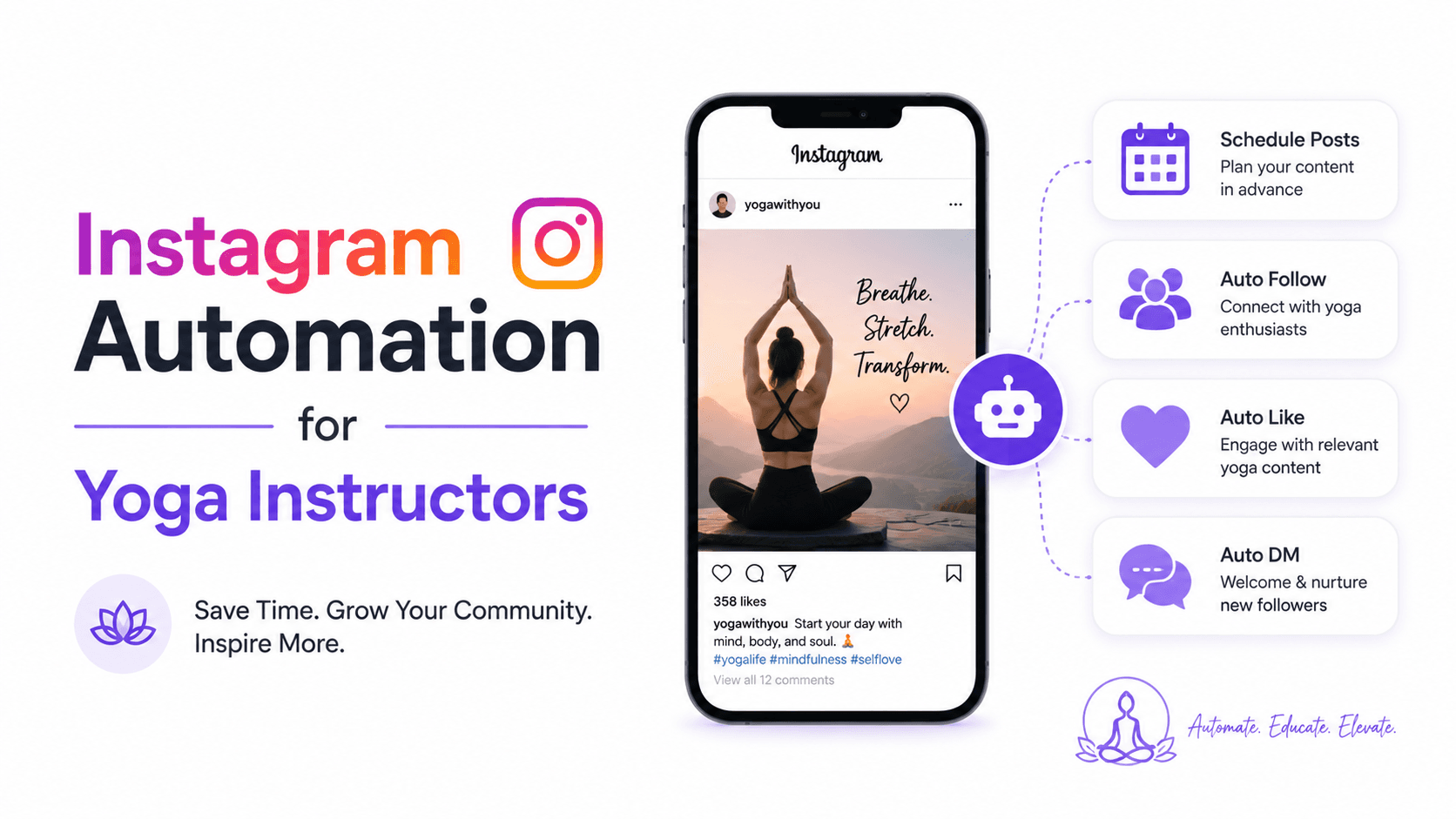
You finish teaching an evening class, roll up the mats, answer two student questions, and finally sit down to post on Instagram. You upload a short Reel from today’s flow, add a caption about breathwork, and hope it reaches someone beyond your usual few loyal students.
Then the post gets 11 likes.
That is the frustrating part of building a yoga audience online. You can be a thoughtful teacher, have a calming presence, and genuinely help people, but Instagram does not automatically reward that. The platform rewards consistency, signals, interaction, and visibility.
Most yoga instructors are not full-time marketers. You are teaching classes, planning sequences, managing bookings, handling private clients, promoting workshops, and maybe running a small studio or online program. Spending another hour every day manually following local accounts, replying to comments, watching Stories, and searching hashtags can feel like a second job.
Instagram automation can help, but only if it is used carefully. The goal is not to spam people or fake popularity. The real goal is to make your account more visible to the right students while you focus on teaching, creating useful content, and building actual trust.
Why Yoga Instructors Struggle to Grow on Instagram
Yoga is personal. People are not just choosing a class; they are choosing a teacher they feel safe with. That makes Instagram growth different for yoga instructors compared with generic lifestyle pages or viral meme accounts.
A potential student may follow you for weeks before booking a class. They want to see your teaching style, your energy, your class environment, your values, and whether your content feels welcoming. That trust takes time.
The problem is that Instagram often hides new or small accounts unless they already have engagement. If your audience is small, even good content can sit quietly with limited reach. You may post a helpful Reel about lower back stretches or breathing exercises and still barely get in front of the people who need it.
Manual engagement can work, but it is repetitive. You search local hashtags, visit profiles, follow people who seem interested in yoga, reply to comments on studio pages, and watch Stories from people in your area. Done consistently, this can build awareness. Done manually every day, it gets tiring fast.
What many yoga instructors get wrong is thinking they need to become influencers. You do not. You need to become visible to the right people, especially if your business depends on local classes, private sessions, retreats, workshops, or online programs.
What Instagram Automation Means for Yoga Instructors
Instagram automation means using software to handle some of the repetitive actions you would normally do by hand. This might include viewing Stories, visiting profiles, following relevant users, unfollowing inactive accounts, liking selected posts, or organizing engagement around specific audiences.
For yoga instructors, the most useful automation is usually discovery-focused. It helps people who already care about wellness, movement, meditation, breathwork, fitness, flexibility, or local studio classes notice your profile.
The safest approach is mobile-first automation. Instead of using desktop scripts or unofficial API shortcuts, real-device automation runs through an actual Android phone or emulator. It interacts with the Instagram app more like a real user would, with taps, waits, scrolling, and app-based behavior.
This is exactly what a platform like Appilot is built for. Appilot runs automation on real Android devices or emulators through a simple web dashboard, so you are not relying on browser bots, API calls, or keeping your laptop active all day. You configure the workflow once, set safe limits, and monitor the activity from your browser.
That does not mean automation is magic. It simply gives your account more consistent, targeted activity. Your content, niche, teaching style, and follow-up still matter.
How Yoga Instructors Use Instagram Automation in Practice
The best place to start is local audience discovery. If you teach in a specific city, neighborhood, studio, or community space, your audience is not “everyone interested in yoga.” It is people close enough to attend, or people aligned enough to join your online classes.
Manually, you might search hashtags like city yoga, local wellness, pilates studio, meditation class, mobility training, or nearby gym communities. You would then visit profiles, watch Stories, follow relevant people, and engage with content that feels connected to your teaching style.
Automation can handle a portion of that routine. It can visit profiles connected to local wellness hashtags, interact with followers of nearby studios, or engage with people already following related health and movement accounts. Instead of spending 60 minutes doing this after class, you can let the system run within controlled limits while you focus on students.
Appilot’s Instagram bot can help with this kind of workflow because it lets you run automation through mobile device sessions and manage targeting from a dashboard. A yoga instructor could focus on local hashtags, competitor studio followers, wellness creators, or location-based audiences while the bot handles repetitive engagement in the background.
Another useful workflow is Story viewing. For many yoga instructors, Stories are where relationships begin. People post about workouts, routines, stress, family life, injuries, and wellness goals. Story views can create soft visibility without immediately pushing a sale. When someone checks who viewed their Story and sees a local yoga teacher, they may visit the profile out of curiosity.
There is also workshop promotion. If you are launching a weekend breathwork class, beginner yoga series, prenatal yoga session, or retreat, automation can help warm up the right audience before you post the main announcement. You still need a strong offer and clear content, but automation can increase the number of relevant people who notice you.
DM workflows should be handled with care. Yoga is a trust-based service, so generic cold messages can feel uncomfortable. A better approach is to use automation for discovery and light engagement, then personally respond when someone follows, comments, asks a question, or shows interest in a class.
That balance is important. Automation should open doors, not replace your voice.
What Results Can You Realistically Expect?
Instagram automation will not turn a new yoga instructor into a famous creator overnight. That is not the point.
A realistic goal is steady visibility. For example, a small yoga account might start seeing more profile visits, more local followers, more Story interactions, and a gradual increase in class inquiries over several weeks. The first two to three weeks are usually about warming up the account, testing targeting, and learning which audiences respond.
Your results depend heavily on your content. If your profile is empty, unclear, or too generic, automation will not fix that. People may visit your page, but they need a reason to stay.
Strong yoga content usually feels specific. A teacher who posts “yoga tips” is easy to ignore. A teacher who posts “five-minute hip mobility for desk workers,” “beginner-friendly flows for stiff backs,” or “breathing exercises for anxious mornings” is easier to understand and follow.
Automation helps people find you. Your content tells them why they should care.
Setting Up Instagram Automation the Right Way
Before running automation, clean up your Instagram profile. Your bio should clearly say who you help, where you teach if location matters, and what someone should do next. A simple line like “Beginner-friendly yoga in Austin plus online mobility classes” is more useful than a vague spiritual quote.
You should also have enough content posted before increasing activity. A new visitor should immediately understand your teaching style. Short Reels, class clips, breathwork tips, student-friendly explanations, and behind-the-scenes studio posts all help.
Next, choose your device setup. Real Android devices are often better for account trust because they create a natural mobile environment. Emulators can also work, especially for controlled workflows, but consistency matters. Switching environments too often can create unnecessary risk.
Proxy setup matters more if you manage multiple accounts. A solo yoga instructor with one account may not need a complex setup, but a studio, agency, or multi-location wellness brand should separate accounts properly. Mobile and residential proxies can help keep sessions cleaner when used correctly.
One reason yoga instructors and small wellness teams may gravitate toward Appilot is the setup. Everything is managed through a browser dashboard, so you are not installing complicated desktop software, connecting phones through ADB, or dealing with command-line tools. For someone whose real work is teaching, not technical setup, that matters.
Once the setup is ready, keep limits conservative. Start with light profile visits, Story views, and follows. Watch the quality of followers, track which targets perform better, and adjust weekly. The goal is not maximum activity. The goal is natural, relevant, consistent activity.
Common Mistakes Yoga Instructors Should Avoid
Targeting Too Broadly
A yoga instructor should not target every account that likes wellness content. That creates weak engagement and attracts people who may never attend a class, book a session, or care about your teaching style.
Focus on your real audience. That may be local beginners, stressed professionals, athletes, pregnant women, seniors, remote workers, or people interested in meditation and mobility.
Automating Before the Profile Looks Trustworthy
If someone visits your page and sees two random posts, no clear bio, and no class information, they will probably leave. Automation can bring attention, but the profile has to convert that attention into interest.
Set up your page first, then increase discovery.
Sending Cold Sales Messages Too Quickly
Yoga does not sell well through pressure. A cold message pushing someone to book a class can feel awkward, especially if they have never interacted with you before.
Use DMs for real conversations, not generic pitches.
Ignoring Local Signals
If you teach in person, location matters. A beautiful audience in another country will not fill your Tuesday evening class.
Use city hashtags, local studio audiences, nearby wellness brands, and location-based content to keep your growth useful.
Letting Automation Replace Community
Yoga audiences grow through trust. Comments, replies, check-ins, and personal interaction still matter.
Automation should reduce repetitive work, not remove the human part of your brand.
Is Instagram Automation Right for You?
Instagram automation can be a good fit if you are already posting consistently, know who your ideal student is, and want more people to discover your profile without manually engaging for hours every week.
It is especially useful for yoga instructors who teach local classes, sell online sessions, promote workshops, run retreats, or manage a studio account with limited marketing time.
It may not be right if your profile has no clear offer, your content is inconsistent, or you expect automation to replace teaching credibility. It also may not be suitable if your brand has strict compliance or privacy concerns around outreach.
The best results come when automation supports a real content and community strategy. It should feel like an assistant, not a shortcut.
Final Thoughts
Building an audience as a yoga instructor is not about chasing random followers. It is about becoming visible to the people who are most likely to trust your teaching, attend your classes, and stay connected with your work.
Instagram automation can help you do that more consistently, especially when it runs through real-device workflows and careful targeting. But it still needs to be paired with helpful content, a clear niche, and genuine follow-up.
If you are tired of spending every evening manually searching hashtags and engaging with local accounts, Appilot is worth exploring. It has ready-to-use bots for Instagram, TikTok, LinkedIn, and other platforms, all managed through a web dashboard with no coding required. You can check it out at appilot.app.
FAQs
Q1: Is Instagram automation safe for yoga instructors?
It can be safer when used slowly through real-device automation, but no tool removes all risk. Keep limits conservative and avoid spammy behavior.
Q2: Can Instagram automation help me get local yoga students?
Yes, if your targeting focuses on local hashtags, nearby studios, wellness audiences, and location-based engagement. Broad targeting usually performs worse.
Q3: Do I need technical skills to automate Instagram?
Not necessarily. Tools like Appilot let you manage Instagram automation from a browser dashboard without coding or complex device setup.
Q4: What should I post before running automation?
Post class clips, beginner tips, short routines, breathwork guidance, studio moments, and clear content that shows who you help.
Q5: Should yoga instructors automate DMs?
DMs should be used carefully. Automation can help organize outreach, but personal replies are better for building trust and converting students.