Instagram Bot Detection: How They Identify Automation
Instagram is one of the most advanced platforms when it comes to detecting automation. With billions of users and constant bot activity, it relies on a combination of behavioral analysis, device fingerprinting, and machine learning models to identify non-human interactions. Unlike basic detection systems, Instagram evaluates users across multiple layers, making it difficult for automation to operate undetected.
Understanding how Instagram detects bots is important because it reveals how modern platforms analyze both identity and behavior. This guide explains the key techniques used in Instagram bot detection.
What Is Instagram Bot Detection?
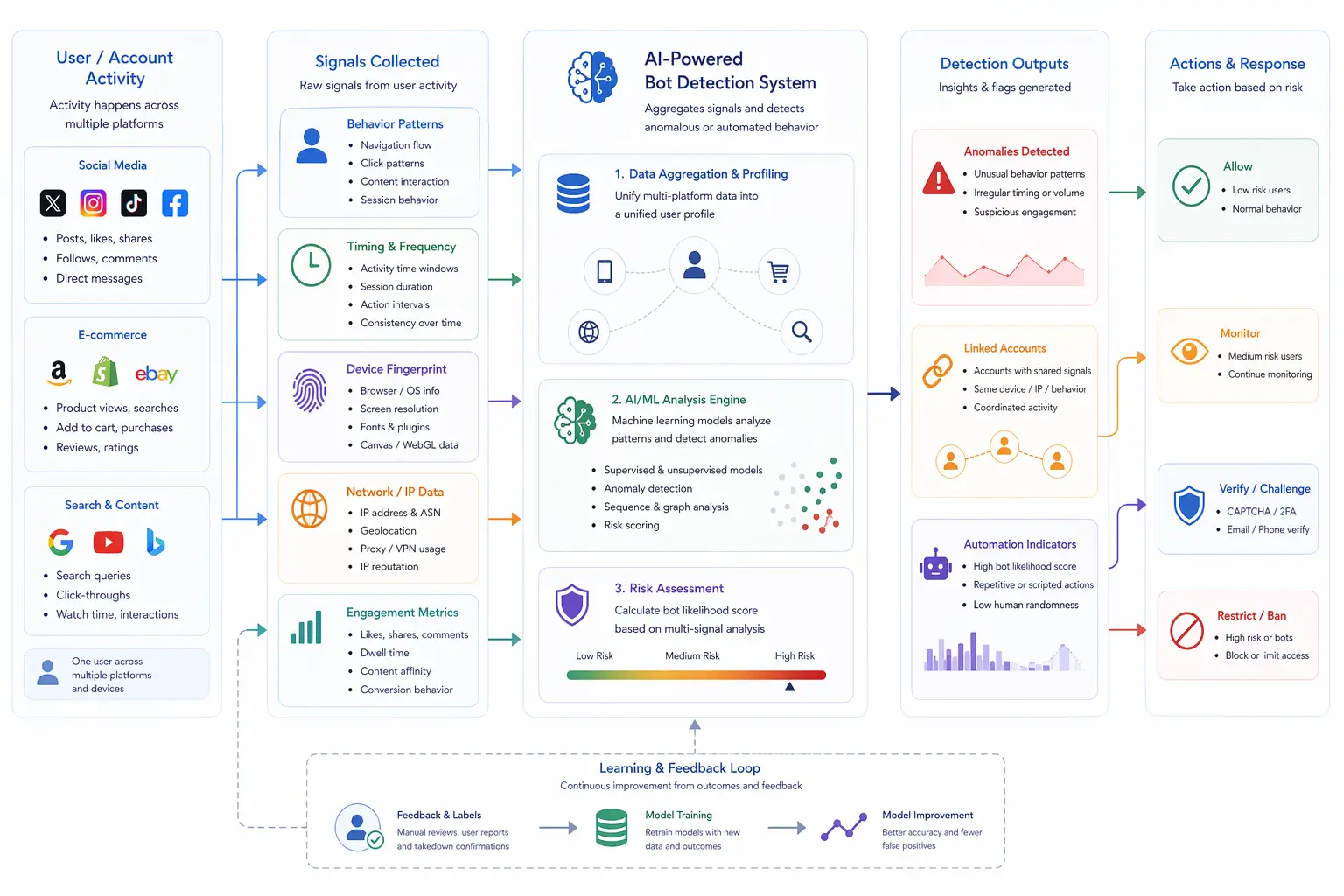
Instagram bot detection refers to the set of systems and algorithms used to identify automated accounts or scripted behavior on the platform, where it analyzes user actions, device data, and interaction patterns to determine authenticity. Instead of relying on a single signal, Instagram combines multiple data points to build a comprehensive profile of each account. This allows it to detect bots even when individual signals appear normal.
The Core Idea Behind Instagram’s Detection System
The core idea behind Instagram’s detection system is multi-layered analysis, where both static and dynamic signals are evaluated together. Static signals include device and network data, while dynamic signals include user behavior such as scrolling, liking, commenting, and following patterns. By correlating these signals, Instagram can identify inconsistencies that indicate automation.
Behavioral Analysis on Instagram
Behavioral analysis is one of the strongest signals used by Instagram, where it tracks how users interact with the platform over time. This includes actions such as liking posts, following accounts, watching stories, and sending messages. Human behavior is irregular and context-driven, while bots often perform repetitive or overly consistent actions. Patterns such as rapid liking, mass following, or identical interaction sequences are strong indicators of automation.
Timing and Activity Patterns
Instagram closely analyzes timing patterns, where it evaluates how frequently and how quickly actions are performed. Human users have natural delays and variability in activity, while bots may act too quickly or follow predictable schedules. Even when delays are added, unrealistic timing distributions can still be detected.
Device and Fingerprinting Signals
Instagram collects device-level data to understand the environment from which actions are performed, where this includes browser properties, mobile device characteristics, and app-level signals. Fingerprinting techniques allow Instagram to identify devices even if accounts change, making it difficult to operate multiple accounts from the same setup without detection. Inconsistencies between reported device data and actual behavior can raise flags.
Network and IP Analysis
Network analysis is another key component, where Instagram evaluates IP addresses, geolocation, and connection patterns. Sudden changes in location, use of suspicious IP ranges, or mismatches between device and network signals can indicate automation. Consistent behavior across different accounts from the same network can also trigger detection.
Interaction Quality and Engagement
Instagram does not only measure the quantity of actions but also their quality, where it evaluates how users engage with content. Real users spend time viewing posts, interacting with stories, and exploring content, while bots often perform shallow interactions without meaningful engagement. Metrics such as dwell time, session depth, and interaction diversity help identify authentic behavior.
AI and Machine Learning Models
Instagram uses machine learning models to analyze large volumes of data and identify patterns that indicate automation, where these models continuously learn from new data and adapt to evolving bot techniques. By combining historical behavior with real-time signals, the system can detect subtle anomalies that would be difficult to identify manually.
Account-Level Pattern Analysis
Detection is not limited to individual actions but extends to overall account behavior, where Instagram evaluates long-term patterns such as growth rate, interaction consistency, and activity trends. Accounts that grow too quickly, interact in repetitive ways, or show unnatural engagement patterns are more likely to be flagged.
Limitations and False Positives
Despite its sophistication, Instagram’s detection system has limitations because legitimate users can sometimes exhibit unusual behavior, such as rapid activity or frequent travel, which may resemble automation. These cases can lead to false positives, and the system must balance detection accuracy with user experience.
Instagram Detection vs Other Platforms
Compared to many platforms, Instagram uses a more advanced and integrated detection approach, where it combines behavioral, device, and network analysis with machine learning. This multi-layered strategy makes it more effective at identifying bots and adapting to new automation techniques.
Detection vs Real-Device Environments
A key distinction in modern detection is the difference between simulated environments and real-device environments, where simulated setups often struggle to maintain consistency across behavior, device signals, and network data. Real-device environments operate on actual hardware where all signals naturally align, and tools like Appilot follow this approach by running automation on real Android devices, ensuring that behavior, device characteristics, and network signals reflect real-world usage. This reduces inconsistencies that detection systems rely on.
When Instagram Bot Detection Is Most Strict
Instagram bot detection is most strict in scenarios involving rapid growth, mass interactions, or suspicious account activity, where the platform prioritizes preventing spam, fake engagement, and abuse. In these contexts, even small inconsistencies can trigger detection or restrictions.
Frequently Asked Questions
Q: How does Instagram detect bots?
By analyzing behavior, device data, and network signals.
Q: What actions trigger detection?
Rapid activity, repetitive patterns, and shallow engagement.
Q: Does Instagram use AI for detection?
Yes, machine learning models analyze patterns and anomalies.
Q: Can bots avoid detection?
It is difficult due to multi-layered analysis.
Q: Are false positives possible?
Yes, in cases of unusual user behavior.
Q: How do real-device solutions compare?
Real-device solutions like Appilot produce consistent signals across all layers, reducing detection risk.
Key Takeaways
Instagram bot detection uses a multi-layered approach that combines behavioral analysis, timing patterns, device fingerprinting, network signals, and machine learning. By analyzing both individual actions and overall account behavior, it can identify automation with high accuracy. Understanding how these systems work is essential for navigating detection on modern social platforms.