Instagram Bots for Stock Market Educators: Growing a Paid Community
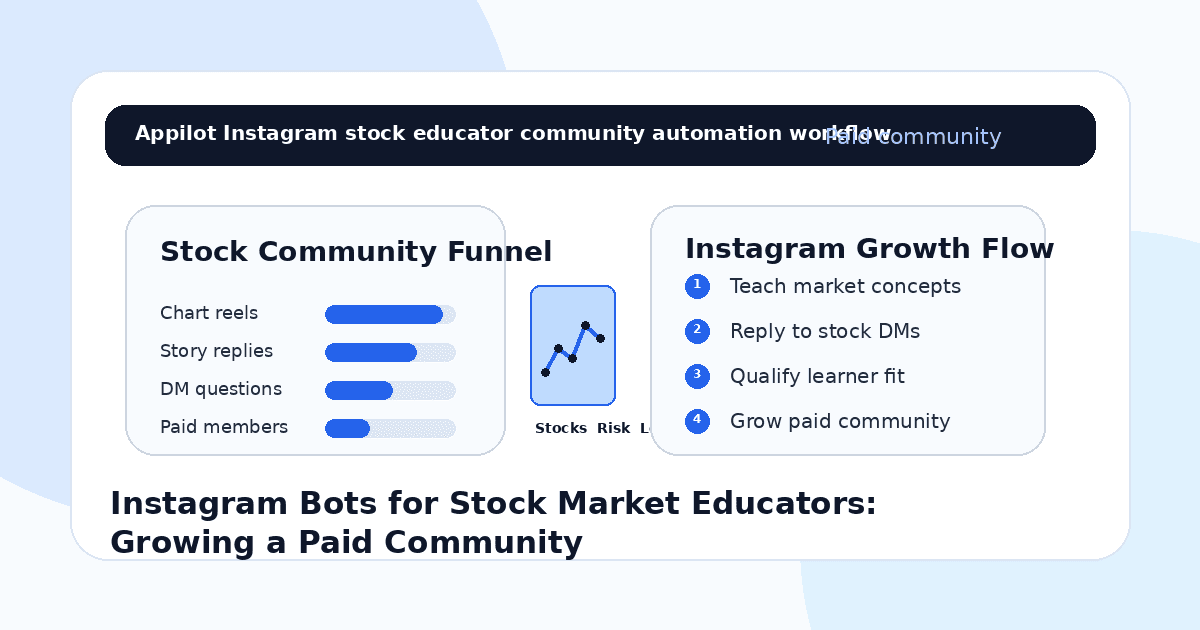
You post a chart breakdown on Instagram. The setup is clear, the caption explains the market lesson, and your story invites followers to DM you for the community details.
A few people save it. Someone asks if your group teaches beginners. Another wants to know the monthly price. A few viewers reply to your stories every week but never join the paid community.
Then the conversation slows down.
That is the challenge for stock market educators on Instagram. People are interested in learning how markets work, but they need trust, education, realistic expectations, and clear answers before they pay for a community.
Instagram bots help stock educators manage repeated questions, send resources, qualify learners, and route warm prospects toward a paid community without manually replying to every DM all day.
The goal is not to promise profits or give automated stock advice. The goal is to help interested learners understand your educational offer and join when it fits.
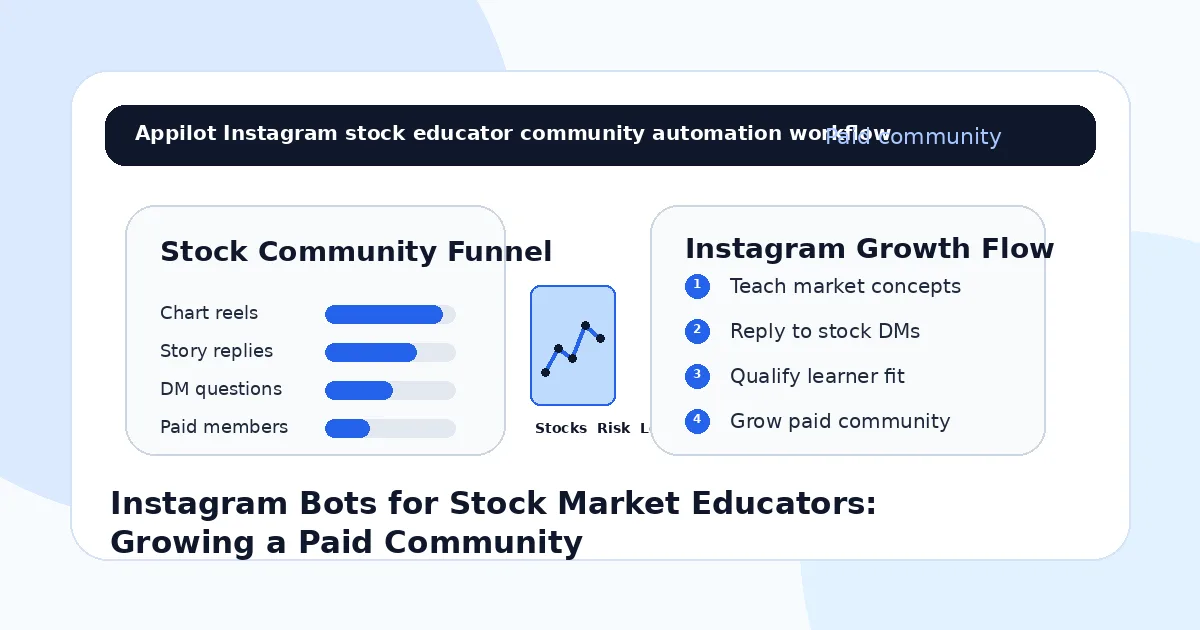
Why Instagram Works for Stock Market Educators
Instagram is visual, fast, and easy to use for market education.
Stock educators can share chart lessons, trading psychology tips, risk-management breakdowns, earnings-season explanations, ETF education, portfolio basics, options concepts, and beginner investing content. Reels and stories make complex topics easier to explain in short, repeatable formats.
But financial education requires trust.
A viewer may watch your content for weeks before paying. They may want to know whether your community is for beginners, swing traders, long-term investors, options learners, or market psychology students. They may also need reassurance that the community is educational, not a hype group.
Most stock pages lose trust when they focus only on wins, screenshots, and aggressive claims. Stronger educators focus on process, risk, learning, and responsible expectations.
Automation can support the funnel, but credibility still comes from the educator.
What Instagram Bots Mean for Stock Educators
Instagram bots use triggers and workflows to respond to comments, story replies, DMs, polls, and keyword requests.
For stock market educators, bots can send free resources, explain community benefits, answer pricing questions, route users to a webinar, deliver a watchlist template, ask basic qualification questions, or send the next step for joining a paid group.
Real-device automation is useful because it runs through the actual Instagram mobile app on Android devices or emulators. This behaves more like normal mobile usage than basic desktop scripts or fragile shortcuts.
A platform like Appilot is built for this type of workflow. It lets stock educators run Instagram automation on Android devices or emulators from a browser dashboard, without coding, ADB setup, or keeping a laptop connected all day. That means repeated DM replies and lead routing can keep moving while the educator focuses on research, lessons, community support, and content.
Automation should support responsible education. It should not replace human judgment.
Step 1: Define the Type of Learner You Want
Before using Instagram bots, define who your paid community is for.
A vague audience like “people who want to make money in stocks” is too broad and can attract the wrong expectations. A stronger audience is “beginner investors learning market basics,” “swing traders who want structure,” “options learners who need risk education,” “long-term ETF investors,” or “professionals who want weekly market education.”
This matters because automation magnifies your positioning.
If your audience is unclear, the bot may bring in people who expect guaranteed profits or unrealistic results. If your audience is clear, automation helps more qualified learners understand whether your community fits.
Your content, story triggers, DM replies, and lead magnets should all match that learner profile.
Step 2: Use Education Before Promotion
Stock market educators should lead with lessons, not sales pitches.
Educational content might explain support and resistance, risk-to-reward, earnings volatility, diversification, position sizing, stop losses, watchlist building, market cycles, or how to read a basic chart.
This kind of content builds trust because it teaches the viewer how you think.
Automation can support this by sending free resources when people ask. A user might comment “checklist” under a reel, reply “watchlist” to a story, or DM “community” after seeing a market breakdown.
This is where Appilot fits naturally. Stock educators can use Appilot to run Instagram workflows through Android devices or emulators while managing educational lead magnets and paid community inquiries from one dashboard.
Teach first. Sell only when the learner shows interest.
Step 3: Automate Replies to Repeated Community Questions
People interested in paid stock communities usually ask similar questions.
They ask about price, what is included, whether beginners can join, whether there are live sessions, whether trade ideas are shared, how risk is handled, whether the group teaches options, whether recordings are available, and what platform the community uses.
These questions are perfect for automation because they repeat often.
If someone asks “price,” the bot can send membership details. If someone asks “beginner,” the workflow can explain the skill level. If someone asks “what’s inside,” the bot can summarize lessons, community access, market breakdowns, and educational resources.
Keep replies short and clear.
A person asking about your community does not need a long sales page in the DM. They need the right information and a simple next step.
Step 4: Qualify Before Sending the Join Link
Not every follower should join your paid community.
Some people expect signals only. Some want guaranteed returns. Some do not understand risk. Some are complete beginners who need a starter course first. Some are serious learners who match your community well.
A simple qualification flow can help.
Ask about experience level, learning goal, market interest, and whether they are looking for education, community, or trade ideas. Keep the tone helpful, not judgmental.
For example, the bot can ask, “Are you mainly learning long-term investing, swing trading, options, or market basics?” That answer helps route the person toward the right explanation.
Automation can collect basic intent, but serious questions about risk, suitability, or expectations should get a human reply.
Step 5: Avoid Profit Promises and Personal Advice
Stock market education must be handled responsibly.
Bots should not tell people what stock to buy, how much to invest, when to sell, or whether a strategy is right for their personal situation. They should also avoid guaranteed-return claims, fixed-income promises, or exaggerated performance language.
Automated replies should make it clear that the community is educational and that markets involve risk.
This does not weaken sales. It improves trust.
People who join with realistic expectations are more likely to stay, participate, and respect the learning process.
Step 6: Use Stories to Trigger Warm DMs
Stories are one of the best ways to start paid community conversations.
A stock educator can post a market recap, lesson preview, member Q&A, watchlist process, trading psychology reminder, or community update. Then the story can invite viewers to reply with a keyword.
For example, “Reply COMMUNITY for details,” “Reply WATCHLIST for my free template,” or “Reply BEGINNER if you want the starter lesson.”
When someone replies, the bot can send the right resource or community information.
This works because the viewer starts the conversation. The automation simply helps respond quickly.
Warm-trigger DMs feel helpful. Cold financial pitches usually feel spammy.
Step 7: Move Serious Leads Into the Paid Community
Instagram is usually the discovery and conversation layer.
The paid community may live on Discord, Telegram, Circle, Slack, Skool, WhatsApp, a private app, or a course platform. Instagram bots can help move qualified prospects toward the correct place after they ask.
The handoff should be simple. Explain what the community includes, who it is for, what it does not promise, and how to join.
Appilot-style workflows can help manage the repeated reply and routing steps without scripts, command-line tools, or manual device work. The educator still controls the offer, risk language, and community experience.
The smoother the handoff, the easier it is for serious learners to join.
Step 8: Track Member Quality, Not Just DM Volume
Do not measure Instagram bots only by how many messages they send.
For stock market educators, better metrics include resource requests, qualified DMs, community-detail requests, trial signups, paid members, churn rate, member engagement, refund requests, and retention.
You should also track which content creates better members. Risk-management posts may attract serious learners. Profit-focused posts may attract unrealistic expectations. Beginner lessons may bring volume, while market-process breakdowns may bring stronger fit.
Automation gives you more signals. Tracking tells you which signals create a healthier paid community.
Common Mistakes Stock Educators Should Avoid
Promising Guaranteed Results
Markets involve risk. Avoid claims that imply guaranteed profits, fixed returns, or risk-free outcomes.
Automating Stock Recommendations
Bots should not recommend specific stocks, entries, exits, position sizes, or personal investment decisions.
Sending Join Links Too Early
Qualify the learner first. Make sure they understand the community, risk, and educational purpose before joining.
Using Only Hype Content
Hype may attract attention, but education, process, and responsible expectations build long-term trust.
Measuring Only Followers
Followers do not equal community growth. Track qualified leads, paid members, retention, and member engagement.
Is Instagram Automation Right for Stock Market Educators?
Instagram automation is a good fit if you already post market education, receive repeated DMs, use free resources, or run a paid community for investors or traders. It works especially well for stock educators, trading coaches, market analysts, investing creators, options educators, and finance communities.
It may not be right if the brand relies on hype, unclear claims, or unrealistic promises. Automation can scale conversations, but it cannot replace trust, education, and responsible communication.
Think of Instagram bots as community growth assistants. They help organize warm interest, but the educator still builds credibility.
Final Thoughts
Instagram bots can help stock market educators grow a paid community when they support education, trust, and clear onboarding.
The strongest workflow starts with useful market lessons, story triggers, resource delivery, repeated FAQ replies, basic qualification, realistic risk language, and a smooth handoff to the paid community. Automation handles the repetitive steps while the educator keeps guidance responsible and human.
If you want to run Instagram automation without coding, ADB setup, or manual device management, Appilot gives stock market educators a browser-based way to control Android devices, emulators, and ready-to-use bots for Instagram and other platforms. You can check it out at appilot.app.
FAQs
Q1: Can stock educators use Instagram bots to grow paid communities?
Yes, bots can answer FAQs, deliver resources, qualify learners, and route interested followers toward paid communities.
Q2: What should stock market educators automate first?
Start with replies for “community,” “price,” “beginner,” “watchlist,” “course,” “Discord,” “Telegram,” and “how it works.”
Q3: Is Instagram automation safe for stock educators?
It is safer when messages are educational, triggered by real interest, and avoid profit guarantees or personal advice.
Q4: Can Appilot help stock educators automate Instagram?
Yes, Appilot can run Instagram workflows on Android devices or emulators from a browser dashboard without coding or ADB setup.
Q5: Should bots give stock recommendations?
No. Bots should not recommend stocks, entries, exits, or position sizes. They should share general resources and route questions carefully.