Instagram DM Bots for B2B Lead Generation: Does It Work in 2025?
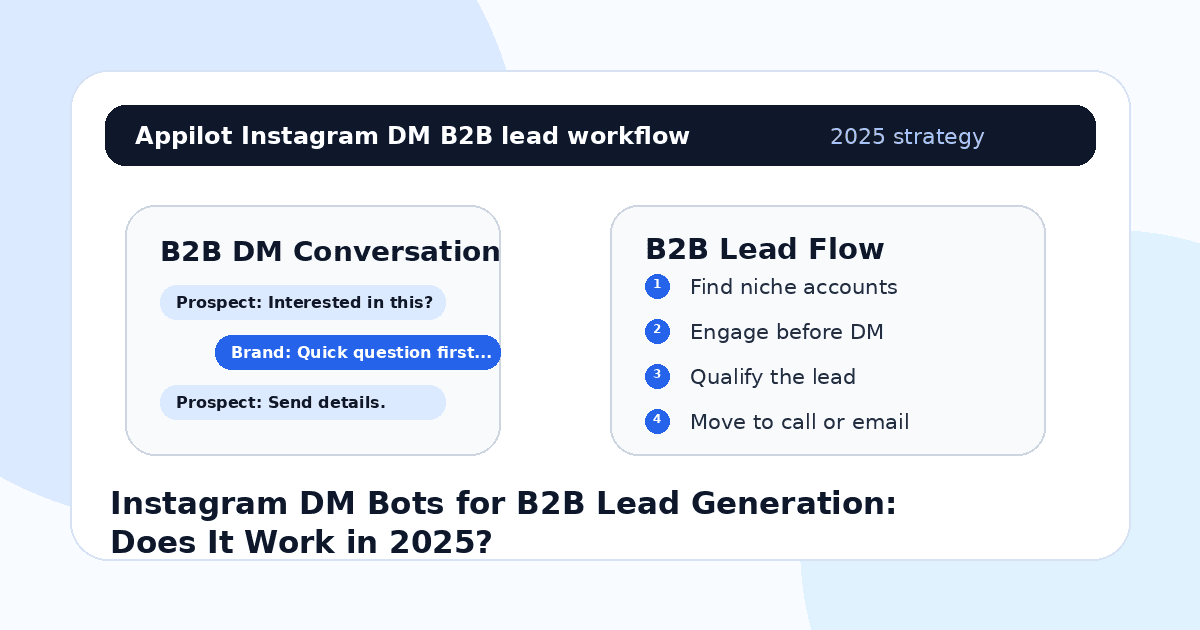
You find a perfect-fit prospect on Instagram. Maybe they run a boutique agency, fitness studio, beauty clinic, coaching business, real estate brand, local service company, or creator-led business.
Their account is active. They post often. Their audience matches your offer. You know there is probably a business problem you can help solve.
So you send a DM.
Then you send a few more. Some people open but never reply. Some ignore it completely. A few respond with “send details,” but most conversations do not turn into real leads.
That is the honest reality of Instagram DM outreach in 2025. It can work for B2B lead generation, but only when it is targeted, respectful, and built around real business relevance. Generic cold DM blasts are mostly dead.
Instagram DM bots can help with the repetitive parts of the process, but they cannot fix weak targeting, bad offers, or lazy messaging.
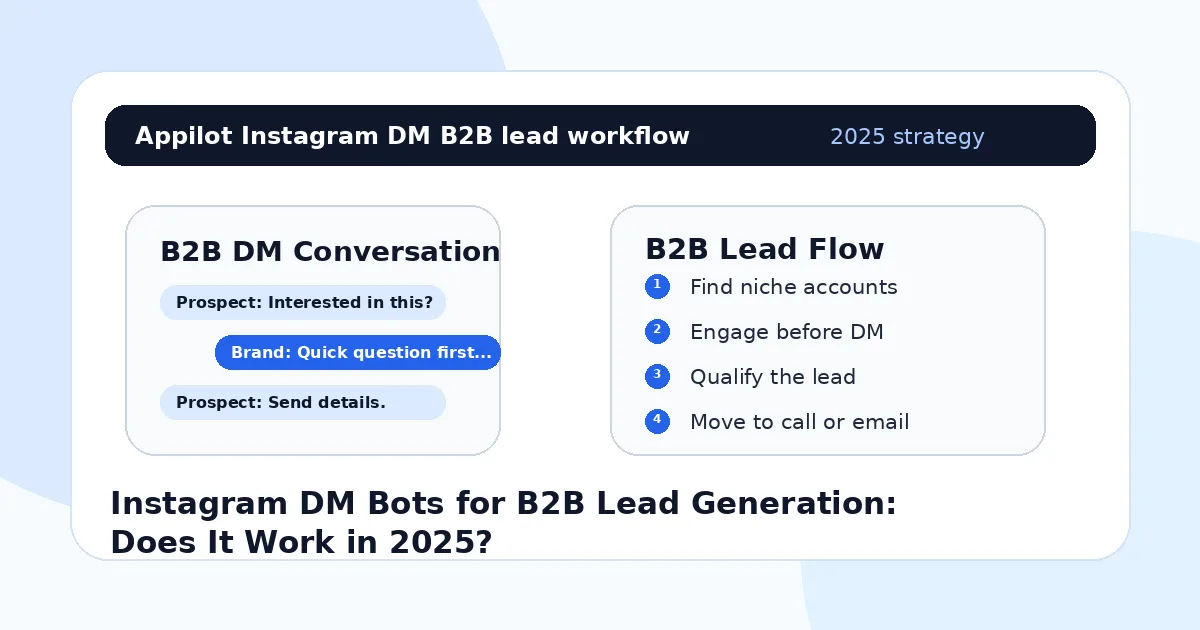
Why B2B Teams Use Instagram for Lead Generation
Instagram is not just a consumer platform anymore.
A lot of small business owners, consultants, coaches, agencies, creators, local brands, e-commerce founders, clinics, studios, restaurants, real estate professionals, and service providers are active there every day. For many of them, Instagram is their public storefront.
That makes it useful for B2B prospecting.
You can see how a business presents itself, what it sells, how active it is, whether it runs promotions, what customers ask in comments, and whether there are obvious gaps in content, automation, marketing, booking, lead capture, or customer follow-up.
The problem is that manual Instagram outreach is slow. You need to find prospects, check profiles, engage first, send messages, follow up, track replies, and move good leads into email, calendar, or CRM.
Most B2B teams get this wrong because they treat Instagram like an email list. They scrape accounts, send generic DMs, and wonder why nobody replies.
Instagram is more personal than email. The message has to feel like it belongs there.
What Instagram DM Bots Actually Do
Instagram DM bots automate repeated actions around outreach and response. They can help send first messages, reply to certain keywords, follow up with interested users, route leads, send links, or support simple qualification flows.
For B2B lead generation, the best use is not mass blasting. The better use is controlled outreach to specific prospects and fast replies when someone shows interest.
Real-device automation is usually a safer approach because it runs through the actual Instagram app on Android devices or emulators. Instead of relying only on desktop scripts or fragile API shortcuts, the automation behaves more like a mobile user.
A platform like Appilot is built around this real-device workflow. It lets B2B teams run Instagram DM automation on Android devices or emulators from a web dashboard, without coding, ADB setup, or keeping a laptop connected all day. That makes it easier to manage repetitive prospecting actions while keeping message strategy and sales conversations human.
The tool can help you move faster. It cannot make a bad pitch good.
Step 1: Decide Whether Instagram Fits Your B2B Buyer
Instagram DM bots only work when your buyers actually use Instagram for business.
If you sell to enterprise CFOs, cybersecurity directors, hospital procurement teams, or government buyers, Instagram probably is not your best cold channel. LinkedIn, email, events, partnerships, and referrals may work better.
But if you sell to businesses with visible consumer-facing brands, Instagram can be useful. This includes salons, gyms, coaches, creators, agencies, clinics, restaurants, boutiques, e-commerce stores, photographers, event promoters, musicians, real estate agents, and local service providers.
The more public and social the business is, the more useful Instagram becomes.
Before automating, build a clear prospect profile. Know the industry, account size, location, business problem, likely owner or manager, and reason your offer matters.
A DM bot should never be used to guess randomly at scale. It should support a clear lead-generation strategy.
Step 2: Warm Up Before Sending the DM
Cold DMs work better when the prospect has seen you before.
That does not mean fake engagement or spammy comments. It means light, relevant interaction before the message. View a story. Like a relevant post. Comment something specific. Follow only if it makes sense. Show that your account is real and connected to the prospect’s world.
This is where automation can help carefully.
Instead of jumping straight into DMs, a bot can support warm-up actions around a targeted prospect list. That makes the eventual message feel less random.
For example, if you sell booking automation to fitness studios, you might engage with studio posts about classes, schedules, waitlists, or member questions before sending a short message about missed booking opportunities.
Appilot’s Instagram automation can fit into this workflow because it runs actions through Android devices or emulators and lets teams manage the process from a dashboard. The outreach still needs strategy, but the repeated warm-up actions become easier to handle.
Step 3: Write DMs That Start Conversations
The first DM should not be a full pitch.
A good B2B Instagram DM is short, specific, and easy to answer. It should connect to something visible on the prospect’s account or business.
For example, instead of saying, “We help businesses grow with marketing automation solutions,” say something closer to, “Hey, noticed you’re promoting classes through IG stories. Are most bookings coming through DMs right now or a booking page?”
That opens a conversation.
Another example for an e-commerce brand might be, “Saw you’re getting a lot of product questions under reels. Are you replying manually or using any DM flow for link requests?”
The point is to ask a relevant business question, not dump a sales brochure.
DM bots can send the message, but the message still has to feel like it came from someone who understands the business.
Step 4: Use Bots for Follow-Ups Without Being Annoying
Follow-ups matter, but too many follow-ups damage trust.
A simple follow-up after a few days can work if it adds context. Something like, “Quick follow-up — I asked because we’ve seen stores lose buyers when product-link DMs get missed during launches.”
That is better than “Just checking in” or “Did you see my previous message?”
For B2B lead generation, one or two follow-ups are usually enough on Instagram. If someone does not respond after that, move on.
One reason teams use Appilot-style workflows is that the dashboard helps manage repeated outreach and follow-up actions without manually handling every account. But the follow-up logic still matters. Automation should keep outreach consistent, not make it pushy.
The best follow-up gives the prospect a reason to care, not a reason to block you.
Step 5: Qualify Leads Inside the Conversation
Once someone replies, do not immediately send a calendar link.
Qualify first.
Ask a simple question about their current process, pain point, volume, or priority. If you sell automation, ask what they currently do manually. If you sell ads, ask whether they are already running paid campaigns. If you sell CRM services, ask how they track leads today.
The goal is to understand whether there is a real fit.
A prospect saying “send info” is not always a qualified lead. They may be curious, polite, or trying to end the conversation. A qualified lead has a problem, interest, timing, and some ability to buy.
Automation can help route replies, send basic information, or ask simple qualifying questions. But once the prospect shows real interest, a human should take over.
This is where sales skill still matters.
Step 6: Move Serious Leads Off Instagram
Instagram is good for starting B2B conversations, but it is not always the best place to close them.
Once a lead is interested, move the conversation to email, a call, a demo, a form, or CRM. This keeps the process professional and easier to track.
A simple message can work: “Makes sense. Want me to send a quick breakdown by email?” or “Happy to show you how it works. Want to book a 15-minute call?”
Do not force the move too early. Wait until the prospect has shown enough interest.
Instagram DMs are the door opener. Your sales process should handle the rest.
Step 7: Track Results Beyond Reply Rate
Reply rate is useful, but it is not the only metric.
Track how many targeted prospects were contacted, how many replied, how many were qualified, how many booked calls, how many became opportunities, and how many closed.
Also track which industries respond best. A DM angle that works for Shopify stores may not work for clinics. A message that works for coaches may fail with agencies. A follow-up that gets replies from local businesses may feel wrong for creators.
This is why B2B Instagram automation should be tested in small batches.
Do not scale a campaign until you know the targeting and message work.
Common Mistakes B2B Teams Should Avoid
Sending Generic Cold DMs
A message that could be sent to any business usually gets ignored. Specificity is the difference between outreach and spam.
Skipping the Warm-Up
If the first time a prospect sees your account is a pitch, the reply rate will usually be lower. Light engagement before the DM helps.
Using Instagram for the Wrong Buyers
Some B2B buyers are not active on Instagram for work. Use Instagram where the buyer’s business presence is visible and active.
Over-Automating Replies
Once a lead shows real interest, do not keep them inside a robotic sequence. Hand serious replies to a real person.
Measuring Only Volume
Sending more DMs does not mean building more pipeline. Qualified conversations, booked calls, and revenue matter more.
Is Instagram DM Automation Worth It for B2B in 2025?
Yes, but only for the right buyers and the right approach.
Instagram DM bots can work for B2B lead generation when your prospects are active on Instagram, your targeting is specific, your message feels relevant, and your follow-up is respectful.
They do not work well when you blast generic pitches to random accounts.
Instagram is best for relationship-led, niche, visible businesses. If your offer helps creators, e-commerce stores, coaches, local services, agencies, salons, clinics, restaurants, event promoters, or consumer-facing brands, it can be a strong channel.
If your target buyer lives on LinkedIn or email instead, use those channels first.
Final Thoughts
Instagram DM bots can work for B2B lead generation in 2025, but they need to be used carefully.
The winning approach is not mass messaging. It is targeted prospecting, light warm-up, short relevant DMs, thoughtful follow-ups, simple qualification, and fast human handoff when someone shows real interest.
If you want to run Instagram DM automation without coding, ADB setup, or manual device management, Appilot gives B2B teams a browser-based way to control Android devices, emulators, and ready-to-use bots for Instagram, LinkedIn, Twitter/X, and other platforms. You can check it out at appilot.app.
FAQs
Q1: Do Instagram DM bots work for B2B lead generation?
Yes, they can work when prospects are active on Instagram and the outreach is targeted, relevant, and respectful.
Q2: What B2B niches work best with Instagram DMs?
Instagram works best for creators, agencies, e-commerce stores, coaches, salons, clinics, restaurants, event promoters, and local businesses.
Q3: Are Instagram DM bots safe in 2025?
They are safer when activity is gradual, targeted, and run through realistic mobile workflows. Spam-style mass messaging can still create account risk.
Q4: Can Appilot help with Instagram DM automation?
Yes, Appilot can run Instagram DM workflows on Android devices or emulators from a browser dashboard without coding or ADB setup.
Q5: Should Instagram replace LinkedIn for B2B outreach?
No. Instagram works well for visible, social-first businesses, while LinkedIn is usually better for corporate and professional buyers.