JavaScript Execution Time Analysis for Bot Detection
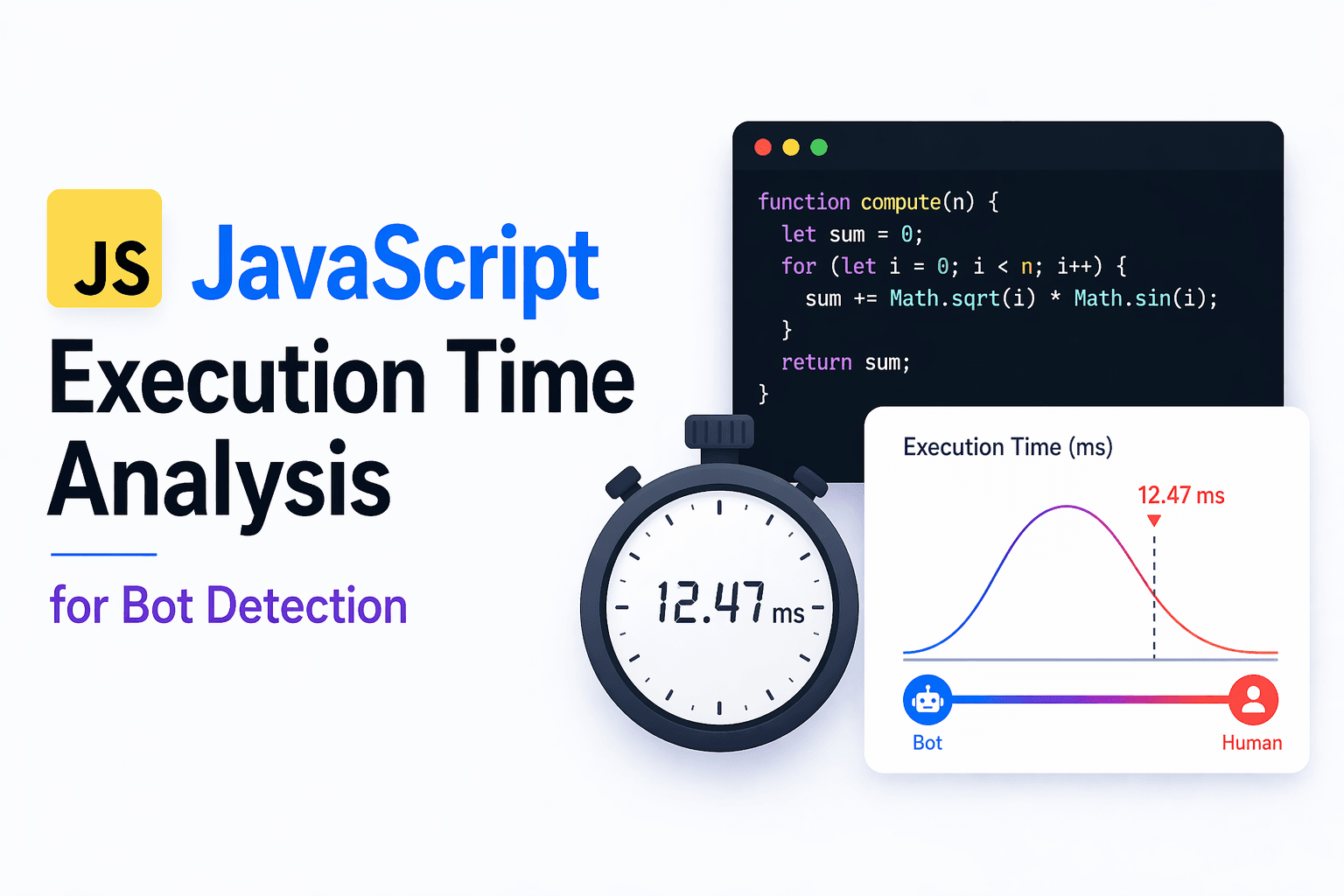
Modern bot detection systems have evolved beyond static fingerprinting and now analyze how browsers execute code in real time. One of the most effective techniques used in this process is JavaScript execution time analysis, which focuses on measuring how quickly and consistently a browser performs specific tasks. This approach provides deep insight into the underlying system and helps distinguish real users from automated environments.
Understanding execution time analysis is important because it relies on behavior rather than declared properties, making it harder to manipulate. This guide explains how it works and why it is widely used in bot detection.
What Is JavaScript Execution Time Analysis?
JavaScript execution time analysis is the process of measuring how long it takes for a browser to execute specific pieces of code, where these measurements are used to identify patterns in performance and behavior. Instead of relying on what the browser reports about itself, detection systems observe how it actually performs tasks. These timing patterns are influenced by hardware, system configuration, and browser implementation, making them useful for identifying unique environments.
The Core Idea Behind Execution-Based Detection
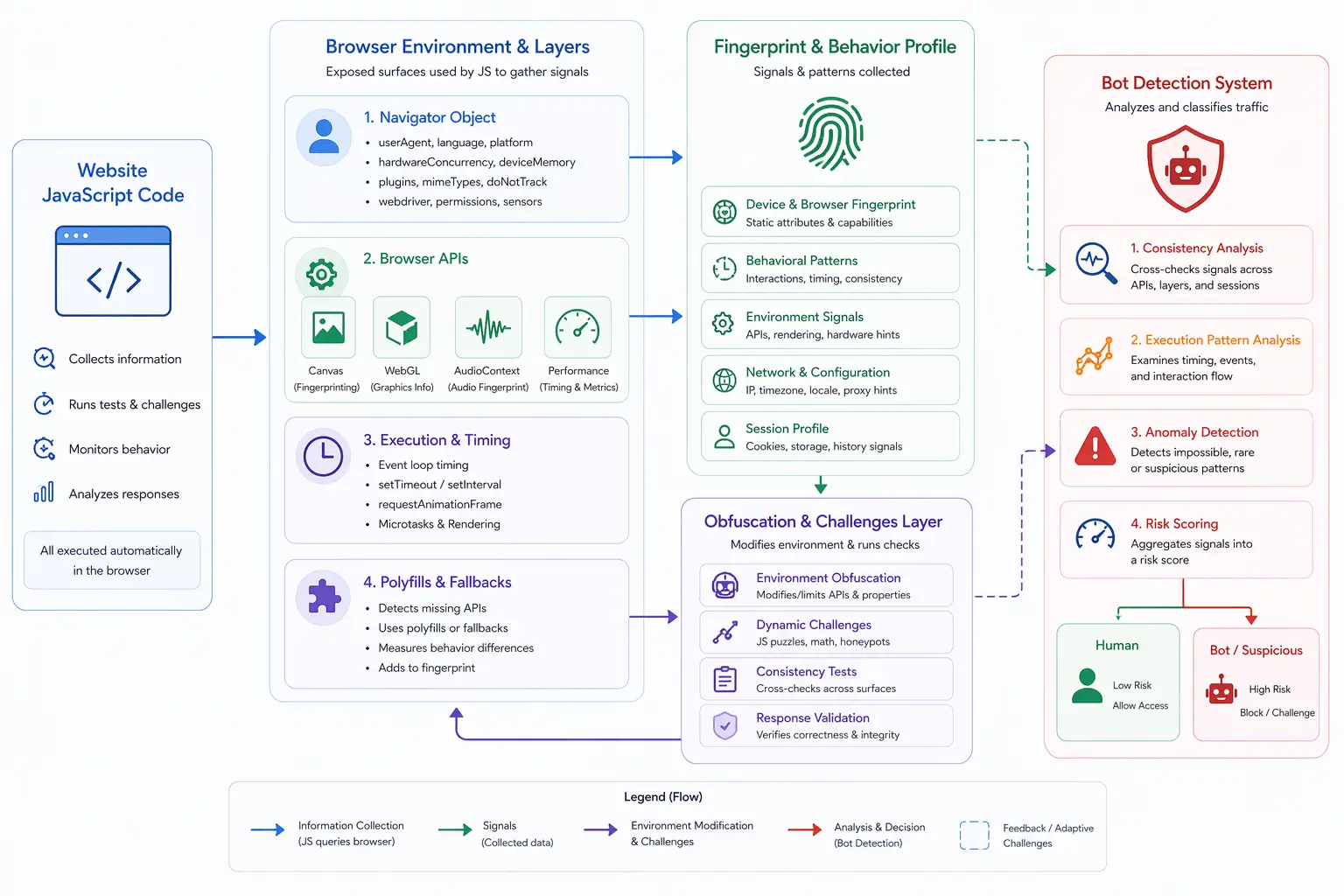
The core idea behind execution-based detection is that real devices produce natural timing variability, where factors such as CPU speed, memory, and system load affect how code is executed. Automated environments, on the other hand, often produce timing patterns that are too consistent, too fast, or otherwise unrealistic. By analyzing these differences, detection systems can identify anomalies that indicate automation.
How JavaScript Execution Time Is Measured
JavaScript execution time is measured using browser-provided timing tools such as the Performance API, where scripts record the start and end time of specific operations and calculate the duration. These operations can include loops, rendering tasks, API calls, or complex computations, and the results are collected over multiple runs to identify patterns. The precision of these measurements allows detection systems to capture even small differences in performance.
Common Execution Tests Used in Detection
Execution time analysis involves running various tests that stress different parts of the system, where CPU-bound tasks such as mathematical loops reveal processing speed, rendering tasks using Canvas or WebGL expose graphics performance, and asynchronous operations highlight event loop behavior. Timing consistency across repeated executions is also analyzed, as real devices typically show slight variations while automated environments may produce identical results. These tests are designed to create a comprehensive performance profile.
Why Execution Time Analysis Is Effective
Execution time analysis is effective because it focuses on actual behavior rather than reported data, where this makes it difficult for automation tools to fake results without replicating real hardware conditions. Even if surface-level properties are modified, underlying performance characteristics often remain unchanged. This makes timing-based detection a strong signal in identifying bots.
Execution Time Analysis and Bot Detection
Bot detection systems use execution time analysis to identify patterns that differ from real user behavior, where automated environments may execute code faster due to simplified environments or slower due to overhead from virtualization. These differences create identifiable signatures that can be used to classify traffic. By combining execution time data with other signals, detection systems can improve accuracy.
Execution Time Analysis vs Static Fingerprinting
Static fingerprinting relies on properties such as user agent and screen resolution, while execution time analysis focuses on dynamic behavior, where static properties can be modified or spoofed more easily. Timing behavior, however, is tied to real system performance and is harder to control. This makes execution-based analysis a more reliable method in many cases.
Limitations of Execution Time Analysis
Despite its strengths, execution time analysis has limitations because timing data can be affected by external factors such as system load, background processes, and network conditions. This variability can introduce noise into the data, making it less stable. Additionally, some browsers reduce timing precision to improve privacy, which can limit the effectiveness of this technique.
Execution Time Analysis vs Other Detection Methods
Execution time analysis is typically used alongside other detection methods such as fingerprinting, behavioral analysis, and network inspection, where each method provides a different perspective on user activity. While fingerprinting identifies the environment and network analysis evaluates routing, execution time analysis focuses on performance behavior. Combining these methods creates a more robust detection system.
Execution Time Analysis vs Real-Device Environments
A key distinction in modern detection is the difference between simulated environments and real-device environments, where execution time analysis can reveal inconsistencies in setups that attempt to mimic real hardware. Simulated environments often struggle to reproduce natural timing variability, leading to detectable patterns. Real-device approaches operate on actual hardware where execution timing, system load, and performance characteristics naturally align, and tools like Appilot follow this approach by running automation on real Android devices, ensuring that execution behavior reflects real-world conditions. This reduces mismatches that detection systems rely on.
When Execution Time Analysis Is Most Critical
Execution time analysis is most critical in scenarios where accurate identification of users is required, such as fraud prevention, account security, and high-value transactions, where distinguishing between human users and automated systems is essential. In these contexts, timing behavior provides a reliable signal for detection.
Frequently Asked Questions
Q: What is execution time analysis?
It is measuring how long code takes to run in the browser.
Q: Why is it used for bot detection?
Because timing behavior reveals real system characteristics.
Q: Can it be spoofed?
It is difficult to spoof accurately.
Q: What tools are used to measure it?
The Performance API and timing functions.
Q: Is it used alone?
No, it is combined with other detection methods.
Q: How do real-device solutions compare?
Real-device solutions like Appilot produce natural timing behavior, reducing detection risk.
Key Takeaways
JavaScript execution time analysis is a powerful technique used in bot detection that focuses on measuring how browsers execute code in real time. By analyzing timing patterns, variability, and performance characteristics, detection systems can identify anomalies that indicate automation. While effective, it has limitations due to variability and browser restrictions, and it is most powerful when combined with other detection methods. Understanding this approach is essential for navigating modern anti-bot systems.